


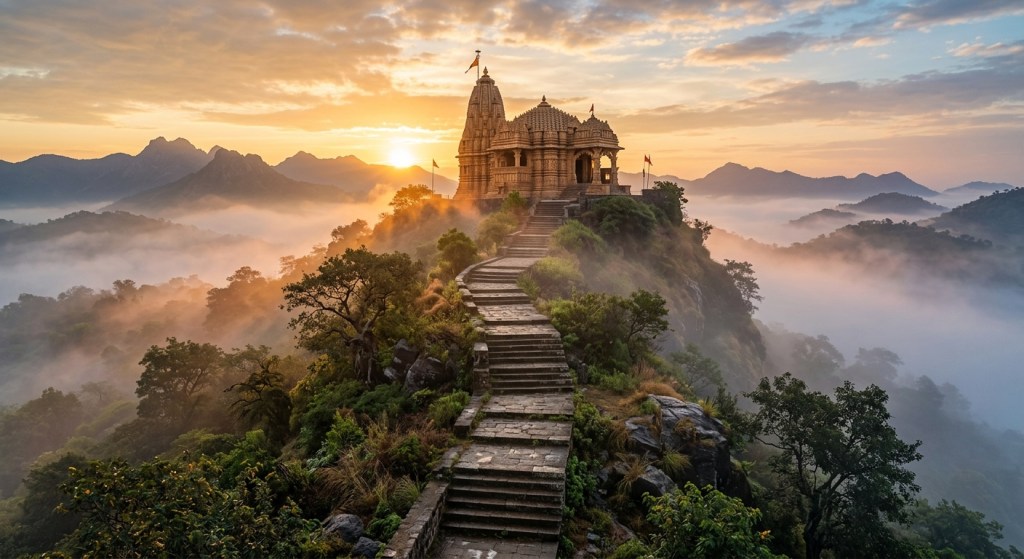
When Ketan and I planned our Gujarat spiritual circuit in early 2025, everyone pointed us to Somnath. The temple’s stunning. We went. We paid our respects. But the real spiritual moments? They happened in places nobody mentioned—a stepwell where silence felt louder than any chant, a hilltop shrine where we were the only visitors for two hours, a salt desert temple that made us question what devotion actually looks like.
Gujarat’s spiritual map doesn’t end at the famous Dwarka-Somnath-Ambaji triangle. It spreads into villages you’ve never heard of, ancient sites that predate the temples tourists flock to, and rituals that haven’t changed in centuries. Most couples chase Instagram shots at overcrowded shrines. We stumbled into experiences that felt like privilege—the kind you don’t plan, you discover.
This isn’t a list of “offbeat” places that everyone now visits. These are spiritual destinations in Gujarat where you’ll actually feel something shift. Where the journey teaches you as much as the arrival. Where “hidden” still means hidden in 2026—for now.


Why Gujarat’s Lesser-Known Spiritual Sites Hit Differently
Here’s what we learned: famous temples deliver spectacle. Hidden ones deliver stillness.
At Somnath, we stood in a queue for 40 minutes. Beautiful architecture, powerful history, but the crowd never thinned. At a small Shiva shrine near Junagadh two days later, we sat alone for an hour. Just us, the priest’s low chants, and a view across the Gir hills that made the silence feel sacred.
Gujarat’s spiritual geography runs deep. This state has Jain pilgrimage sites that rival anything in Rajasthan, Buddhist caves older than most Indian temples, and Shakti Peethas where locals still perform rituals unchanged since medieval times. But tourism routes skip them. Guidebooks stick to the big names. Which means if you’re willing to drive an extra 60 kilometres or wake up before dawn, you’ll have these places almost to yourself.
The difference isn’t just about crowd size. It’s about intent. People visit Somnath because it’s on every Gujarat itinerary. They visit these seven because they’re seeking something specific—silence, history, a break from performance spirituality. That intent changes the energy of a place. We felt it everywhere we went.
One practical note: don’t expect infrastructure. Most of these sites have basic facilities at best. That’s the trade. You get authenticity, solitude, and a kind of spiritual experience that hasn’t been packaged for tourists. You give up air-conditioned waiting halls and multilingual signboards.
Shamlaji Temple – The Tribal Shrine Where Faith Feels Unfiltered
Shamlaji sits on the Gujarat-Rajasthan border, about 180 kilometres north of Ahmedabad. It’s technically a Vishnu temple, but the worship style here doesn’t match anything you’ve seen in mainstream Hindu pilgrimage.
This is a tribal shrine. The Bhil community has worshipped here for centuries, long before Brahminical rituals formalised around it. The result is a fascinating blend—Vedic chants mixed with tribal songs, Sanskrit mantras alongside Bhili folk devotion. When we visited in November 2025, a group of Bhil families from Rajasthan had walked 80 kilometres to offer their harvest. No tour operator organised it. No social media documented it. Just faith moving people across state lines.
The temple itself is simple. Black stone idol, basic structure, no overwhelming ornamentation. But the energy? Dense. The kind of spiritual weight you feel in places where belief has accumulated over generations without interruption.
Timing matters here. Arrive during Kartik Purnima (usually November) and you’ll witness the Shamlaji Fair—thousands of tribal devotees, traditional dance, and a river crossing ritual that predates written records of the temple. Arrive on a random Tuesday morning like we did, and you’ll have the sanctum mostly to yourself.
Practical stuff: stay in Shamlaji village itself. Basic guesthouses run by the temple trust cost around ₹800 per night. Food is simple vegetarian thalis served in the dharamshala. Don’t expect variety. Do expect cleanliness and warmth.
The drive from Ahmedabad takes about 4 hours via Himmatnagar. Road conditions are decent until the last 30 kilometres, where it narrows and climbs slightly. We went in our hatchback with no issues, but an SUV would’ve been more comfortable.
What surprised us most: nobody asked us anything. No explanations of rituals, no “you should do this.” We watched, we participated where it felt natural, and we left feeling like we’d witnessed something that wasn’t performing for outsiders. That’s rare now.
Palitana – The Jain Pilgrimage That Tests Your Devotion
Palitana isn’t hidden. It’s one of Jainism’s holiest sites. But most Hindu pilgrimage circuits skip it entirely, which means it stays off the radar for couples doing the typical Gujarat spiritual tour.
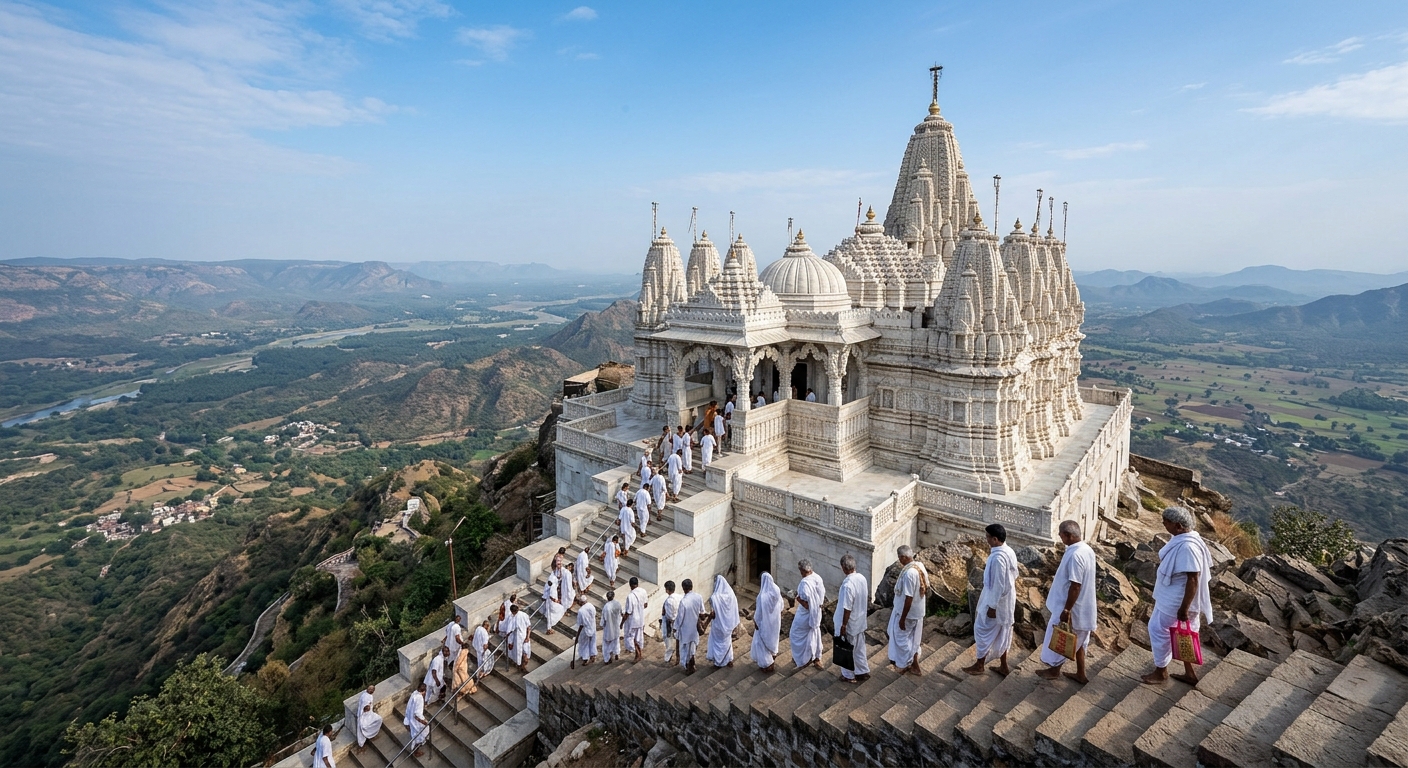
Here’s the deal: 863 temples spread across Shatrunjaya Hill. You reach them by climbing 3,950 steps. No vehicles. No palanquins for able-bodied visitors (they’re reserved for elderly and disabled pilgrims). Just your legs, your willpower, and about 3 hours of consistent upward movement.
We started at 6 AM in December 2025. The first 500 steps felt easy. The next 1,000 were manageable. After that, it became a meditation on why you’re here at all. Every rest stop forced us to confront the question: what does devotion actually cost?
The temples are stunning. White marble, intricate carvings, a kind of architectural devotion that matches the physical climb. But the real experience is the ascent itself. Watching elderly pilgrims climb with a calm pace while we huffed. Seeing families with young kids make the journey without complaint. Realising that this barrier to entry—the climb—filters out casual tourists and leaves only people who actually want to be there.
One rule: no food is allowed on the hill. Jain principles of non-violence extend to preventing any life forms from being harmed by leftover food. So you climb on an empty stomach or a light breakfast, and you don’t eat until you descend. We carried water. That’s allowed.
Cost to climb: free. Temple entry: free. But donations are expected at most shrines, and there’s a ₹25 fee for cameras. We spent around ₹500 in total including donations and the mandatory locker fee for shoes and bags at the base.
Stay in Palitana town, about 2 kilometres from the hill base. Dharamshalas start at ₹600 per night. We stayed at Hotel Sumeru (₹1,800 per night), which was clean and had decent food. The town itself is fully vegetarian, no eggs, no onions or garlic in most places. Plan accordingly.
Palitana taught us something about spiritual destinations in Gujarat that the crowded temples don’t: sometimes the filter itself—the difficulty, the rules, the physical cost—creates the sanctity. If Palitana had a ropeway, it would lose what makes it holy.
Girnar – The Sacred Mountain Where Five Faiths Converge
Girnar is the longer, harder, more spiritually complex cousin of Palitana. Five faiths claim it as sacred: Jainism, Hinduism, Buddhism, and two distinct sects within those traditions. The result is a mountain where every few hundred meters, the religious context shifts.
The climb is roughly 10,000 steps. Yes, ten thousand. It takes 5 to 7 hours to go up and come down, depending on your fitness and how long you spend at each temple. We did it in January 2026, starting at 5 AM with headlamps, because the first light hitting the mountain from the summit is the kind of thing you remember forever.
Here’s how it breaks down: the first 4,000 steps take you to the Jain temples at the top of Mount Girnar. Neminath Temple, the main Jain shrine, is 3,666 steps up. Intricate marble work, peaceful sanctum, and if you arrive early, total silence except for morning prayers.
Keep climbing and you hit the Hindu shrines. Amba Mata Temple sits at 4,500 steps. Gorakhnath Temple is higher still. At the summit—around step 9,000—Dattatreya Temple marks the spot where, according to legend, the sage Dattatreya meditated. The views at this point are absurd. The entire Saurashtra region spread below, the Arabian Sea visible on clear days, and the kind of wind that makes you feel small in a good way.
The climb broke us. Multiple times we questioned why we’d chosen this over sleeping in. But every rest stop, we met someone whose faith put ours to shame. A 70-year-old man doing his 50th annual climb. A mother carrying her toddler in a sling while her husband managed their older child. People for whom this wasn’t adventure tourism—it was devotion.
Practical reality check: there’s now a ropeway that covers the first 4,000 steps. Costs around ₹400 per person. Cuts the climb time significantly. But it also cuts the experience. We climbed the full way. No regrets. But if you’ve got knee issues or limited time, the ropeway isn’t cheating—it’s access.
Stay in Junagadh, about 5 kilometres from Girnar base. We stayed at Hotel Harmony (₹2,200 per night), clean and comfortable with helpful staff who gave us exact climbing advice. Start early. Carry water and light snacks—there are stalls on the way up, but they’re inconsistent. Wear proper shoes. The steps are uneven, sometimes steep, and your knees will remind you of every shortcut you take with footwear.
Girnar isn’t hidden, but it’s hard. And that difficulty keeps it real. We met couples from across Gujarat and Rajasthan, but almost no foreign tourists and very few casual visitors. The mountain self-selects for people willing to earn the experience.
Becharaji – The Bahuchara Mata Temple That Redefines Devotion
Becharaji is 110 kilometres north of Ahmedabad, and it centers around Bahuchara Mata, a goddess whose worship challenges a lot of conventional ideas about devotion, gender, and identity.
This temple is the spiritual home of the Hijra community in Gujarat. Bahuchara Mata is their patron deity, and Becharaji is where many come for blessings, rituals, and a kind of spiritual acceptance that mainstream society often denies them. When we visited in March 2025, we witnessed the community’s annual gathering—hundreds of Hijras from across India, dressed in vibrant saris, performing traditional dances, blessing devotees, and participating in rituals with a devotion that was both joyful and deeply serious.
The temple itself is small but active. Constant flow of devotees, continuous aarti, and an energy that feels less about grandeur and more about intimate faith. What struck us most: the openness. Nobody questioned our presence. Nobody explained the “unusual” aspects of the worship. It was simply a temple where everyone belonged.
There’s a ritual here where devotees tie miniature cradles to the temple trees, praying for children. We saw men and women, young couples and older ones, all performing the same ritual with the same hope. Faith here doesn’t discriminate by identity—it just responds to need.
Becharaji also has historical weight. The temple has been a pilgrimage site for centuries, predating most written records. The current structure was rebuilt in the 18th century, but the worship tradition goes back much further. The town around it remains small, uncommercial, and centered entirely on the temple.
Stay in Becharaji itself if you want the full experience. Dharamshalas cost ₹400 to ₹700 per night. Basic, clean, vegetarian meals available. Alternatively, stay in Mehsana (30 kilometres away) for more comfort and variety. We stayed in Mehsana at Hotel Jagdish (₹1,500 per night) and drove to Becharaji early morning.
What we learned: spiritual destinations in Gujarat aren’t all ancient kings and grand architecture. Some are about communities finding sanctuary in devotion. Becharaji is that. It’s powerful because it’s inclusive in ways that many mainstream pilgrimage sites aren’t.
Champaner-Pavagadh – The Hill Fort Where History and Faith Overlap
Pavagadh is a UNESCO World Heritage Site, but most visitors treat it as archaeology, not spirituality. That’s a mistake.
The Kalika Mata Temple sits at the summit of Pavagadh Hill, about 762 metres above sea level. It’s one of the 51 Shakti Peethas, where parts of Sati’s body are believed to have fallen. The temple dates back centuries, rebuilt and renovated multiple times, but the sanctity has remained constant.
You reach the top via ropeway (₹176 round trip per person as of 2026) or by climbing roughly 250 steps from the ropeway midpoint. The ropeway itself is an experience—rising above the Champaner ruins, the forests below, and the Gujarat plains stretching endlessly.
What makes Pavagadh different from other Shakti Peethas is the layering. The hill is sacred to Hindus, yes. But it’s also dotted with Islamic architecture from the 15th-century Sultanate period. Mosques, tombs, and granaries sit alongside temples and shrines. The result is a landscape where religious history doesn’t compete—it coexists.
We spent half a day exploring Champaner at the base (the archaeological park with ruins of the old capital city) and then climbed to Pavagadh in the afternoon. The temple was crowded—this is not an unknown site—but the hilltop, the breeze, the view, and the sense of standing on a geological and spiritual high point made the crowd irrelevant.
One thing nobody tells you: there’s a smaller temple dedicated to Lakshmi and Saraswati just below the main Kalika Temple. Quieter, less crowded, and equally beautiful. We spent more time there than at the main shrine simply because we could sit, think, and breathe.
Pavagadh is also a major pilgrimage site during Navratri. Lakhs of devotees climb the hill during those nine nights. If you want solitude, avoid Navratri. If you want to witness raw devotion at scale, go during Navratri and prepare for crowds, noise, and an energy that borders on overwhelming.
Stay in Champaner or Halol (12 kilometres away). We stayed at GMDC Hotel Champaner (₹2,000 per night), government-run, basic but clean. The location is perfect—walkable to the ruins and 10 minutes’ drive to the ropeway base.
Pavagadh reminded us that spiritual destinations in Gujarat often carry multiple histories. Muslim rulers respected the Hindu sanctity of the hill even as they built their capital around it. That layering is rare. And it’s worth experiencing beyond the ropeway and the temple crowd.
Ambaji – The Shakti Peeth That Stays Rooted in Ritual
Ambaji is not hidden. It’s one of the 51 Shakti Peethas and draws millions annually. But it belongs on this list because of how it maintains ritual integrity despite the crowds.
There’s no idol in the main sanctum. Just a Visa Yantra—a geometric mystical symbol carved into marble—where the goddess is believed to reside. This absence of a physical form forces a different kind of devotion. You’re not looking at a deity. You’re meditating on a symbol, a concept, an energy.
We visited in February 2026, mid-week, which meant the crowd was manageable. The temple complex is large, well-organised, and surprisingly peaceful despite the daily visitor count. What stood out: the rituals haven’t been simplified for tourists. Aarti timings are strict. Dress codes are enforced gently but clearly. Photography inside is banned. The temple trust has resisted the urge to modernise in ways that dilute the spiritual experience.
Ambaji also sits at the base of the Arasur Hills, and there’s a hilltop shrine—Gabbar Hill—3 kilometres away. You can trek (about 4 kilometres one way) or drive up. The hilltop gives you a panoramic view of Gujarat and Rajasthan, and the small temple there feels more intimate than the main one below.
One ritual we participated in: the Bhat Puja, where devotees offer chunri (cloth offerings) and recite lineage prayers. It’s an old tradition where families declare their heritage, their gotra, and their devotion out loud. The priest records it in a ledger that stretches back generations. Participating felt less like tourism and more like joining a continuum.
Ambaji town has plenty of stay options. We stayed at Shree Krishna Hotels and Resorts (₹2,500 per night), about 2 kilometres from the temple. Clean, good food, and run by people who understand pilgrimage rhythms—early check-ins, packed breakfast options, and taxi arrangements to Gabbar Hill without fuss.
The drive from Ahmedabad takes about 3.5 hours via Palanpur. Roads are excellent. If you’re coming from Udaipur (Rajasthan), it’s about 2.5 hours—many Rajasthan devotees combine Ambaji with their Gujarat spiritual circuit.
What we realised: even “famous” temples can deliver authentic spiritual experiences if the temple administration cares about preserving practice over profit. Ambaji does. And that intention is visible in how the space feels.
Koteshwar – The Coastal Shiva Temple at the Edge of Everything
Koteshwar sits at the westernmost tip of Gujarat, about 90 kilometres from Bhuj. It’s a Shiva temple that feels like it’s holding the edge of India together—literally. The Arabian Sea crashes against the rocks on three sides. The temple sits on a small platform, and during high tide, waves spray onto the temple walls.
This is the last Shiva temple before the sea. Beyond this, nothing but water until Africa.
We reached Koteshwar in late afternoon during our Kutch trip in January 2025. The sun was low, the tide was rising, and the temple priest was performing evening aarti with just four other people present. The sound of the conch mixed with the roar of waves. It wasn’t dramatic. It was elemental.
Koteshwar isn’t architecturally grand. It’s a small stone temple, ancient but not ornate. The power comes from location. Standing there, looking west at an endless horizon, you understand why people built temples at geography’s extremes. It’s where the human world ends and something bigger begins.
There’s a small cave adjacent to the temple where, according to local belief, a saint meditated for years. The cave is tiny, dark, and damp. We went in, sat for a few minutes, and felt the temperature drop and the sound outside muffle into a hum. It’s the kind of spot where meditation isn’t optional—it just happens.
Koteshwar is also tied to the Mahabharata. Local legend says this is where the Pandavas came during their exile. Whether that’s history or myth doesn’t matter much when you’re standing there—either way, the place carries weight.
Stay in Narayan Sarovar (about 8 kilometres away) or backtrack to Lakhpat (18 kilometres). We stayed at a basic guesthouse in Narayan Sarovar (₹800 per night). Very minimal, but the caretaker cooked fresh rotis and dal for us, and that simplicity fit the landscape.
The drive from Bhuj to Koteshwar takes about 2.5 hours. Roads are decent, but remote. Fuel up in Bhuj—petrol pumps are sparse beyond Nakhatrana. Carry water and snacks. This is desert coast. Beautiful, but unforgiving if you’re unprepared.
Koteshwar works best as part of a larger Kutch spiritual circuit: Narayan Sarovar (another sacred lake and temple complex nearby), Lakhpat (a ghost town with a beautiful gurudwara), and the White Rann if timing aligns.
What Koteshwar taught us: sometimes the most powerful spiritual destinations in Gujarat are the ones that don’t try. No marble, no crowds, no vendors. Just a temple, the sea, and silence.
How to Plan a Hidden Spiritual Circuit in Gujarat Without Losing the Plot
If you’re planning a week-long spiritual trip covering these seven sites, here’s what worked for us—and what didn’t.
Start in Ahmedabad. It’s the most connected city, easiest to fly into, and central to most of these destinations. Rent a car. Public transport exists but won’t give you the flexibility you need for places like Koteshwar or Shamlaji.
Divide the trip into three circuits: North (Shamlaji, Ambaji, Becharaji), Central-East (Palitana, Champaner-Pavagadh), and West (Girnar, Koteshwar). Don’t try to do all seven in a straight line—you’ll spend more time driving than experiencing.
Our mistake: we tried to do Palitana and Girnar on consecutive days. Both involve serious climbs. Your legs need recovery time. Space them out or accept that the second climb will hurt more than it should.
Accommodation: mix dharamshalas with budget hotels. Dharamshalas connect you to the pilgrimage culture and cost less, but they’re basic. Hotels give you comfort and rest, which matters when you’re climbing 10,000 steps. We alternated and found the rhythm worked.
Food: most of these towns are strictly vegetarian. Many don’t serve onion or garlic (Jain influence). If you need non-veg, eat in larger cities before heading to temple towns. We’re vegetarian, so this wasn’t an issue, but if you’re not, plan accordingly.
Timing: winter (November to February) is ideal. Cooler weather, better for long climbs, and most festivals fall in this window. Avoid May to July—heat will make outdoor temple visits miserable.
One big lesson: don’t over-schedule. We initially planned two temples per day. That turned every day into a checklist. When we slowed down—one major site per day, with time to sit, explore surroundings, and talk to locals—the trip became what we wanted: spiritual, not mechanical.
These aren’t Instagram destinations. Most don’t photograph as dramatically as Somnath’s seafront or Dwarka’s spires. But they reward presence over performance. If you’re willing to climb, drive the extra hour, and sit in silence without needing content for your feed, these places will teach you what pilgrimage used to mean.
Frequently Asked Questions
What is the best time to visit hidden spiritual destinations in Gujarat?
November to February is ideal. The weather is cool, which matters for temple sites involving long climbs like Palitana and Girnar. Major festivals like Kartik Purnima at Shamlaji and Navratri at Pavagadh also fall in this window, offering a chance to witness large-scale devotion if that interests you. Avoid peak summer (April to June) when temperatures cross 40°C regularly.
Are these spiritual places in Gujarat suitable for elderly visitors or those with mobility issues?
It depends on the site. Becharaji, Ambaji, and Champaner-Pavagadh (via ropeway) are accessible with minimal physical strain. Palitana and Girnar involve serious climbs—thousands of steps—and aren’t recommended unless you’re reasonably fit. Koteshwar and Shamlaji are manageable with basic mobility. Always check specific site conditions before planning.
How do these destinations compare to Somnath Temple in terms of spiritual experience?
Somnath delivers grandeur, history, and scale. These seven deliver intimacy, fewer crowds, and often more space for personal reflection. If you want the big pilgrimage experience with infrastructure and crowds, Somnath works. If you want quieter, deeper spiritual moments where you’re not competing for space, these hidden sites offer something Somnath can’t—solitude and unfiltered ritual.
Can I cover all seven spiritual destinations in Gujarat in one trip?
Yes, but you’ll need at least 8 to 10 days if you want to do it without rush. Girnar and Palitana alone take a full day each including climbs. Koteshwar requires a detour into Kutch, which adds travel time. We recommend splitting them across two trips—north and central Gujarat in one, and Kutch (including Koteshwar) in another—unless you have two weeks and high stamina.
Ready to Go Beyond the Obvious?
Gujarat’s spiritual map is bigger than the temples that make it onto every travel blog. These seven sites won’t hand you easy photo ops or crowds to blend into. What they will give you: space to think, moments that don’t perform, and a version of pilgrimage that still feels earned.
We’re Ketan and Samprita, and we’ve spent the last two years exploring spiritual destinations in Gujarat and beyond, documenting the ones that don’t scream for attention but quietly deliver meaning. If you’re planning a couple’s spiritual journey, a solo pilgrimage, or just want to experience Gujarat beyond the guidebook circuit, these places belong on your list.
Musafir Couple shares honest travel experiences rooted in real road trips, actual costs, and unfiltered reflections—because the best journeys aren’t the ones everyone talks about. They’re the ones you discover yourself. Start with one of these seven. Let us know where it takes you.