


You’ve scrolled past Lonavala’s traffic jams for the last time. Every weekend getaway blog repeats the same five names — Mahabaleshwar, Khandala, Matheran, repeat — and none of them mention the lake nobody’s heard of or the fort that doesn’t even show up properly on Google Maps. We’ve spent the last three years living out of our car every alternate weekend, hunting for places where the locals still look surprised to see tourists. And here’s what we learned: the best offbeat destinations near Pune aren’t offbeat because they’re bad. They’re offbeat because influencers can’t make them look good enough for Instagram — which is exactly what makes them perfect.
Most couples I meet tell me the same story. They want to escape. They Google “weekend getaways from Pune.” They end up in the same crowded hill station eating the same overpriced corn. Then they drive back tired, not recharged. This isn’t because Maharashtra ran out of beautiful places. It’s because everyone’s following the same five pins on Google Maps. Real discovery happens between those pins — in villages with no signboards, at dams with terrible road access, near temples the guidebooks forgot.
This isn’t another list that adds “offbeat” to the same mainstream spots and calls it done. These are places Ketan and I actually drove to, got confused reaching, paid real money to experience, and came back arguing whether the bumpy roads were worth it. Spoiler: they usually were.

Myth 1: Offbeat Means Far and Difficult to Reach
When people hear “offbeat,” they picture six-hour drives on broken roads with no phone signal. That’s not offbeat — that’s just poor planning. Some of the most unexplored places near Pune are shockingly close. You’re avoiding them not because they’re remote, but because nobody told you they exist.
Take Kas Plateau, for example. It’s about 130 km from Pune, roughly three hours if you avoid weekends. Everyone’s heard of the Valley of Flowers in Uttarakhand. Almost nobody knows Maharashtra has its own UNESCO World Heritage Site for biodiversity, covered in wildflowers from August to October. We went in early September 2025. The entry fee was ₹50 per person, parking was ₹30, and we spent five hours walking through flowers we couldn’t even name. No resort packages. No guided tours. Just a forest department checkpoint and fields that looked Photoshopped but weren’t.
Or Bhimashankar beyond the temple. Everyone visits the Jyotirlinga and leaves. We stayed back and trekked into Bhimashankar Wildlife Sanctuary — about 110 km from Pune. The roads are decent till the temple base. After that, it’s walking trails through thick forest where you might spot the Indian Giant Squirrel if you’re quiet. Cost us nothing except ₹40 sanctuary entry and packed lunch from home. Offbeat doesn’t mean isolated. It means ignored.
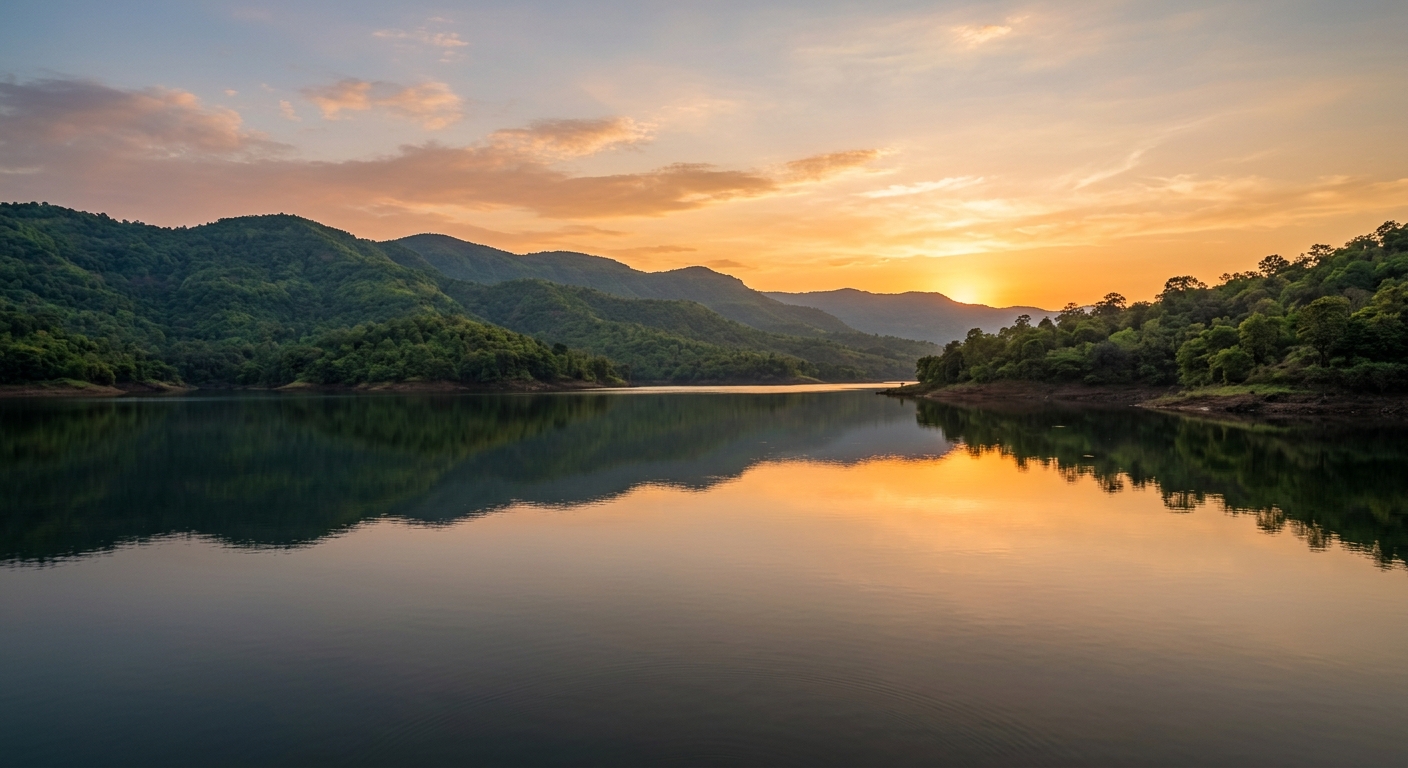
Panshet is another one. It’s 40 km from Pune, closer than Lonavala, yet people drive past it to reach Pawna Lake, which is now so commercialised you’re basically camping in a parking lot. Panshet’s backwaters during monsoon are stunning — wide, calm, surrounded by green hills — and you’ll find maybe three other cars there. We paid ₹200 for lakeside parking once, ate Maggi from a small stall, and spent the evening watching the water rise after the dam release. No Instagram props. Just space to breathe.
Offbeat isn’t about distance. It’s about ignoring the first three search results and driving fifteen minutes further.
Myth 2: Only Hill Stations Make Good Weekend Getaways
Pune is surrounded by hills, so everyone assumes the best escapes are upward. But some of the most memorable hidden gems within 200 km Pune are lakes, dams, plateaus, and grasslands that sit quietly at lower altitudes while everyone else climbs.
Mayureshwar Wildlife Sanctuary near Morgaon — about 70 km from Pune — is one of those places we stumbled into by accident. We’d gone for the Ganpati temple and noticed a forest gate nearby. The sanctuary is small, mostly open scrubland and patchy forest, but it’s empty. We walked a trail for two hours and saw exactly two other people.Entry is free. The roads are narrow but paved. And if you’re into birdwatching or just want silence, this beats any crowded viewpoint.
Then there’s the stretch along Ujani Dam backwaters — around 100 km from Pune near Bhimashankar road. The dam itself is massive, and the backwaters create these wide, shallow zones that look like mini fjords during the rains. We stopped at one such spot off the highway, no name, no board, just a dirt path leading to water. Spent three hours there. Zero facilities. Zero people. Ketan tried fishing with a stick and failed. I read a book. It was perfect.
Another surprise was the grasslands around Sinhagad base during post-monsoon. Everyone hikes up the fort. Almost nobody walks the plateau meadows at the bottom. We did, once, in late September. The grass was still green, dotted with wildflowers, and the views toward Khadakwasla were better than anything from the fort top. Cost: nothing. Effort: a twenty-minute walk from the parking area everyone ignores.
Hill stations are easy to recommend because everyone knows them. But the alternative travel destinations Pune offers — the lakes, the forests, the meadows — are where you actually feel like you discovered something.
Myth 3: You Need a Resort or Homestay to Enjoy a Destination
This is the biggest trap. Couples see a beautiful location and immediately search “resorts near [place].” Then they spend ₹5,000 on a room they barely use because they came for the destination, not the bed. For most of these offbeat destinations near Pune, you don’t need to stay overnight at all. And when you do, local options beat resorts every time.
We’ve done weekend trips to places like Malshej Ghat — 120 km from Pune — dozens of times. Everyone books those overpriced hillside resorts with terrible food and calls it a getaway. We tried that once. The view was nice, but the room smelled damp, and dinner was ₹800 for dal that tasted like depression. Next time, we drove up early Saturday, spent the day exploring the waterfalls and plateaus, ate at a roadside dhaba (₹300 for two, best chicken curry we’ve had), and drove back by evening. Saved ₹4,000 and enjoyed the place more because we weren’t stuck inside a resort compound.
Same with Bhandardara, which is technically just over 200 km but close enough to mention. It’s become so resort-heavy that people forget why they’re there. We skipped the lakeside resorts entirely and stayed at a villager’s house in Ghatghar — the guy’s wife cooked authentic Maharashtrian food, charged us ₹1,200 for the night including meals, and told us about a trail to a waterfall nobody lists online. That trail was better than the famous Umbrella Fall, less crowded, and free.
For day trips, places like Korigad Fort base (around 80 km), Tung Fort (90 km), or even the lakes around Mulshi don’t require accommodation at all. Pack your breakfast, carry water, reach by 7 AM, explore till afternoon, and leave. You’ll spend ₹500 on fuel and food versus ₹3,000 on a forgettable resort room.
The offbeat experience isn’t about where you sleep. It’s about what you see when you’re awake.
Myth 4: Offbeat Places Lack Good Food Options
People avoid lesser-known spots thinking they’ll starve or survive on stale biscuits. That’s mostly wrong. Some of the best food we’ve had has been at unnamed dhabas on roads leading to these places — food that no city restaurant replicates because it’s cooked by someone’s aunt who doesn’t care about plating.
On the way to Kaas Plateau, there’s a small dhaba in Satara — no name, just a tin shed with plastic chairs — where we had fresh jowar bhakri, spicy mutton curry, and sol kadhi that reset our tastebuds. Cost us ₹250 for two, and we still talk about it. Contrast that with the ₹600 tasteless thali at a “heritage resort” in Mahabaleshwar we tried once.
Same story near Varasgaon Dam, about 40 km from Pune. There’s a village on the approach road where a family sells homemade chakli, bhajani, and fresh buttermilk from their front porch. We stopped once for water and left with three packets of chakli that lasted us a month. ₹150 total. Better than any branded snack you’ll find at a highway rest stop.
Even in places like Rajgad base or Sinhagad, the local eateries near the parking lots serve hot poha, misal, and chai that beat any resort breakfast buffet. Freshly made. Cheap. Unfiltered. You’re not going to find avocado toast, but if that’s what you’re looking for, you’ve already missed the point of going offbeat.
The trick is simple: eat where the locals eat. If the place has a plastic menu with pictures, skip it. If it’s a lady cooking on a chulha in the corner and there’s no menu at all, sit down immediately.

Best Time to Explore Offbeat Destinations Near Pune
Timing changes everything. The same place can feel magical in October and utterly dull in May. We’ve learned this the expensive way — driving two hours to a dry lakebed because we didn’t check the season.
Monsoon — June to September — is the best window for waterfalls, dams, and greenery. Tamhini Ghat (around 85 km from Pune) is legendary during rains. The road itself becomes an attraction, with waterfalls crossing the tarmac and mist so thick you can’t see ten feet ahead. We’ve driven it four times. Every time felt like the first. But try visiting in March, and it’s just a normal ghat road with brown hills. Not worth it.
Post-monsoon — September to November — is ideal for plateaus and forts. The rains have done their job, everything’s green, but the trails aren’t slippery anymore. Kaas Plateau only blooms from late August to early October. Visit outside that window and it’s just rocky grassland. We went once in November, after reading a blog that didn’t mention seasons. Wasted trip.
Winter — December to February — works for wildlife sanctuaries and lakeside spots where you want to sit outside without sweating. Bhimashankar Wildlife Sanctuary is better in winter because the forest isn’t leechy and the animals are more active. Mornings are cold, though — we froze once at Panshet in January because I refused to carry a jacket. Learn from my stubbornness.
Summer — March to May — is honestly rough. Most of these spots are beautiful because of water, greenery, or mist, and summer kills all three. The only exception is if you’re going purely for a fort trek at dawn before it gets unbearable. We’ve done that at Rajgad and Torna. Start at 5 AM, finish by 9 AM, leave before the sun murders you.
Check the season before you plan. A bad timing choice turns an offbeat destination into a regret.
Real Costs, Real Routes, Real Confusion
Here’s what nobody tells you: offbeat places are offbeat partly because getting there involves moments where you’ll question your GPS, your partner, and your life choices. That’s normal. Embrace it.
Take Bedse Caves, about 50 km from Pune near Kamshet. Google Maps takes you confidently to a village and then just… gives up. The last 2 km is a narrow road through farmland where you’ll meet confused locals who’ve never heard of tourists asking for caves. We got lost twice. Parked near someone’s house. Walked up. The caves were stunning — ancient Buddhist rock-cut caves, empty, peaceful, no entry fee — but getting there required accepting that we might be wrong three times before being right.
Fuel costs for most of these trips range between ₹400-₹800 depending on your car and distance. Tolls are minimal unless you’re taking the expressway. Parking at offbeat spots is either free or ₹20-₹50, nowhere close to the ₹100-₹200 you pay at commercial tourist spots.
Food on the road: ₹200-₹400 for two if you eat at dhabas. ₹600-₹1,000 if you stop at those highway branded chains that serve identical paneer tikka everywhere.
Entry fees at most natural spots — dams, plateaus, trails — are either nothing or ₹20-₹50. Forts managed by the archaeology department sometimes charge ₹25-₹50. Wildlife sanctuaries are ₹40-₹100 depending on whether you’re walking or driving in.
The biggest cost isn’t money. It’s patience. You’ll take wrong turns. Locals will give you directions in Marathi using landmarks that don’t exist anymore. Your phone will lose signal. But that confusion is also what makes the destination feel earned.
Worth it? Almost always. Just carry offline maps, a full tank, and the ability to laugh when you’re wrong.
What We Wish Someone Told Us Before We Started
Don’t wait for the perfect weather forecast. We’ve cancelled trips because rain was predicted, and then spent the weekend watching Netflix while the sun shone outside. If it rains, you get waterfalls. If it doesn’t, you get clear views. Both are good.
Carry a physical map or download offline maps on Google Maps before you leave Pune. Signal drops faster than you expect, and asking a shepherd for directions to a dam is harder than it sounds.
Start early — like 6 AM early. Most of these places are beautiful in the morning and ordinary by afternoon. Plus, you avoid the weekend traffic leaving Pune, which can add an hour to any trip.
Don’t overdress. We see couples showing up at forts in fancy trekking boots and colour-coordinated athleisure like they’re climbing Everest. You’re walking up a hill in Maharashtra, not training for an expedition. Comfortable sneakers, a cap, sunscreen, and a water bottle are plenty.
Pack your own food and water. Small dhabas exist, but betting your day on finding one can backfire. We’ve been saved more times by the emergency Parle-G packet in the car than I’d like to admit.
And the biggest one: lower your expectations just a little. These aren’t postcard locations. They’re real places with real dirt, real bugs, and real moments where nothing Instagram-worthy happens. That’s the point. If you need everything to look perfect, stick to resorts. If you want to feel something real, these offbeat destinations near Pune will deliver.
Frequently Asked Questions
What are the best hidden gems within 200 km of Pune for couples?
Kaas Plateau, Panshet backwaters, Mayureshwar Wildlife Sanctuary, Varasgaon Dam, Bhimashankar Wildlife Sanctuary, and Bedse Caves are some of the best offbeat destinations near Pune that offer privacy, nature, and real experiences without commercialisation. Each offers something different — wildflowers, quiet lakes, forest walks, or ancient caves — and none are overrun by tourists yet.
Which offbeat destinations near Pune are best in monsoon?
Tamhini Ghat, Kaas Plateau (late monsoon), Malshej Ghat, and the backwaters of Panshet and Varasgaon Dam are ideal during monsoon. Waterfalls are active, greenery is at its peak, and these places transform completely. Just check road conditions before leaving, especially for ghat routes, as some stretches can be tricky during heavy rains.
Do I need a 4×4 vehicle to reach offbeat places near Pune?
Not for most spots. A regular hatchback or sedan works fine for places like Panshet, Mayureshwar, Kaas, Varasgaon, and even Malshej Ghat. Ground clearance helps during monsoon on village roads leading to some spots like Bedse Caves or Rajgad base, but even then, we’ve managed in a basic sedan with careful driving. Only extremely remote trails need a proper SUV.
Are offbeat destinations near Pune safe for couples travelling alone?
Yes, most of these destinations are safe, especially during daytime. We’ve travelled to all these spots as a couple without any issues. Stick to daylight hours, avoid completely isolated spots late evening, inform someone about your route, and trust your instincts. Local people in villages around these places are generally helpful and friendly, not threatening.
Ready to Skip the Crowds This Weekend?
You don’t need a week off or a flight ticket to feel like you’ve actually travelled. Some of the best escapes are two hours from your house, waiting quietly while everyone else fights for parking at the same five tourist traps. These offbeat destinations near Pune gave us stories, confusion, peace, and moments we’d never trade for a fancy resort.
Ketan and I share every one of these trips — real routes, honest costs, things that went wrong, and whether we’d go back — on Musafir Couple. No filters, no sponsorships telling us to say nice things, just two people who love discovering places before everyone else does. If you’re tired of planning trips that feel like obligations, follow along. We’ll keep finding the places Google forgets, and you can decide if they’re worth your weekend.
Pack light, start early, and go.