


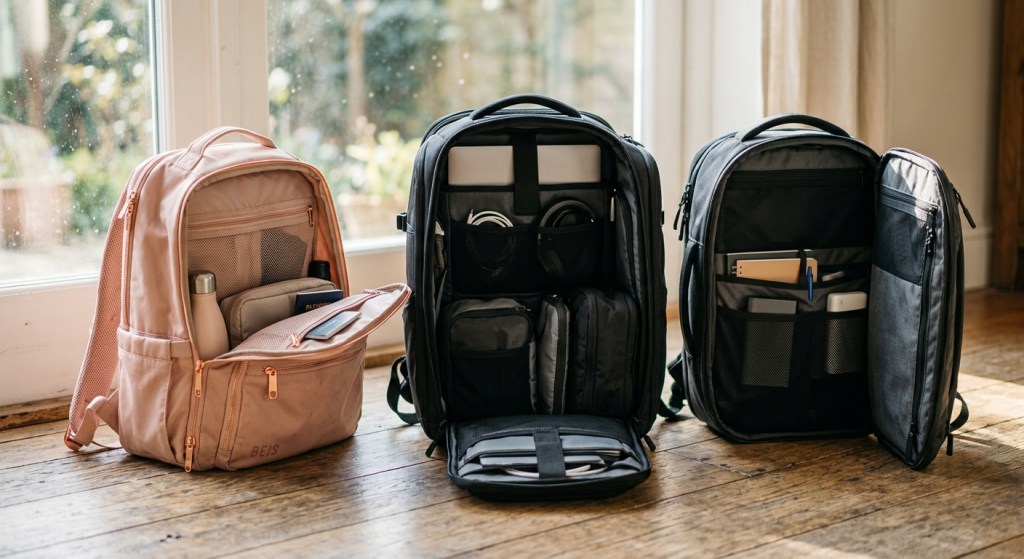
We’ve bought, tested, and traveled with all three brands. And here’s what nobody tells you upfront: the best travel bags comparison isn’t about which bag has more pockets or looks better on Instagram. It’s about which one doesn’t piss you off by day three of your trip.
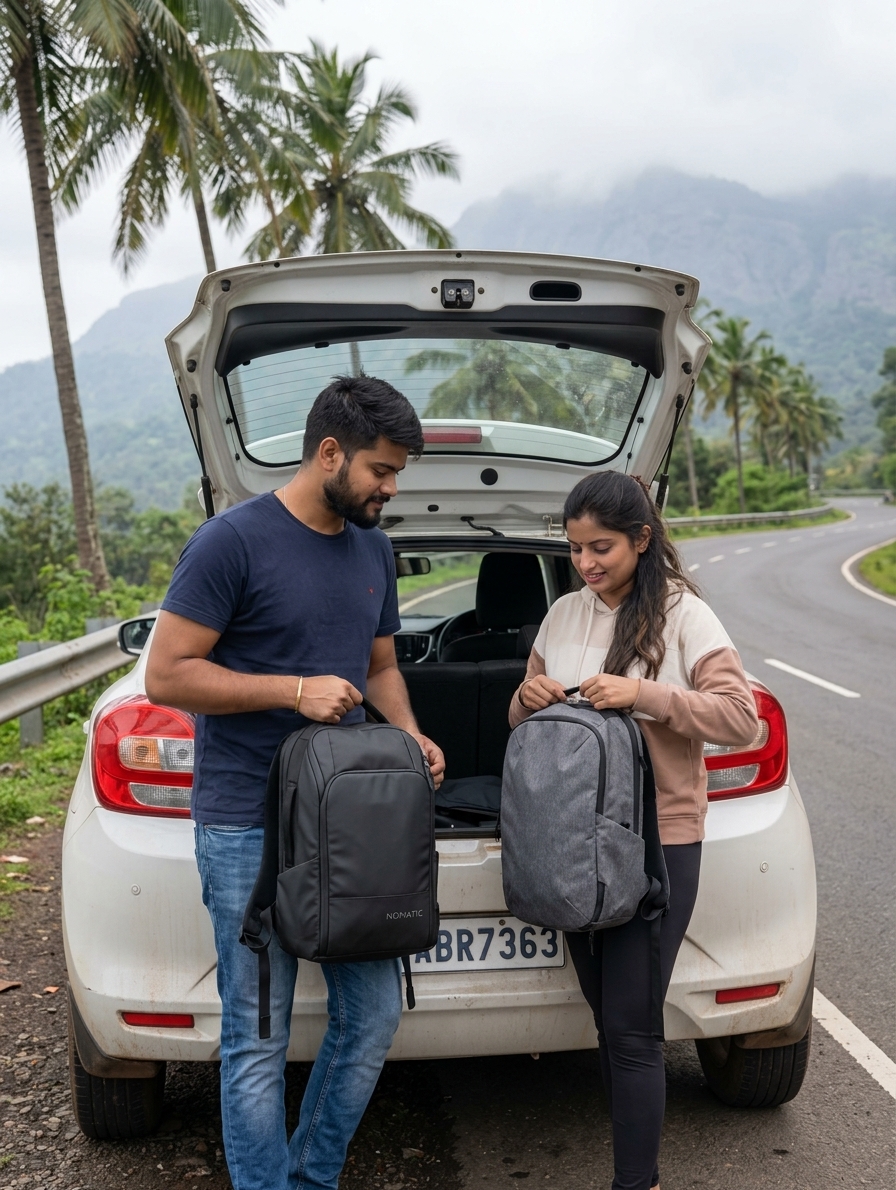
Ketan spent ₹18,500 on a Nomatic Travel Pack thinking it would solve all our packing chaos during our Kanyakumari road trip. It didn’t. Samprita loved her BEIS weekender for short Lonavala getaways but hated it the moment we went to Kashmir for ten days. The Aer Travel Pack 3? That one surprised us — in ways we didn’t expect.
This isn’t a sponsored listicle. We’re Musafir Couple, and we’ve lugged these bags through Mulshi farmstays, Goa beaches, spiritual journeys to Somnath, and even our Maldives trip. We’ve tested them in dusty Pune traffic, cramped hotel rooms, and overhead bins on budget airlines. Some held up beautifully. Others? Not so much.
If you’re standing at that decision point right now — scrolling through product pages at 11 PM trying to figure out which travel bag is actually worth your money — this guide will save you from expensive regrets.
Step 1: Understand What You’re Actually Comparing (Not Just Features)
Start here. Not with specs.
The biggest mistake we made? Comparing feature lists instead of actual travel scenarios. A BEIS travel bag looks gorgeous in flat lays. A Nomatic travel bag has every organizational pocket you could dream of. An Aer travel bag seems basic until you realize basic is exactly what works.
Here’s what matters more than laptop compartments and water bottle holders: how does the bag behave when you’re sprinting through an airport? When it’s stuffed in a car trunk for six hours? When you need to grab your power bank without unpacking everything else?
We learned this the hard way during our Salaulim Dam weekend trip. Ketan’s Nomatic had seventeen different compartments. Sounds perfect, right? Wrong. We spent ten minutes every morning trying to remember which zipper had the toiletries. Samprita’s BEIS? Beautiful, but the straps dug into her shoulders after twenty minutes of walking through Bedse Caves.
Before you compare anything, write down your last three trips. Where did you go? How long? What annoyed you about your current bag? That list matters more than any review.

Step 2: Compare Build Quality and Real-World Durability
Open your notes app. Create three columns: BEIS, Nomatic, Aer.
Now let’s fill them with facts that actually matter. Not marketing copy — real performance data from our experience and other travelers we’ve met at homestays and road trip stops.
BEIS Travel Bag Reality Check
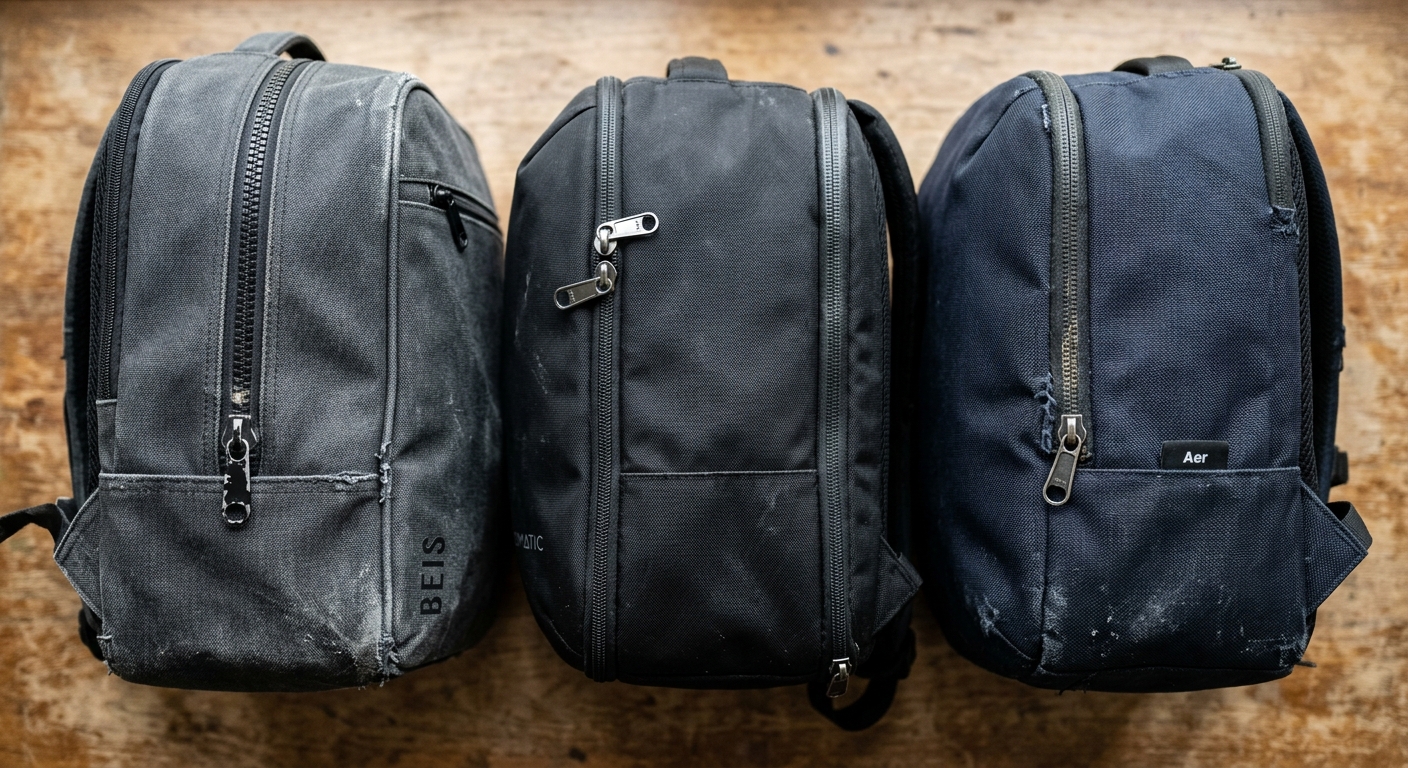
The fabric feels premium. It is premium. But premium doesn’t always mean durable. We used the BEIS Carry-On Roller for our Ahmedabad trip. The zippers are smooth, the interior lining is nice, and it photographs beautifully for travel content. After four months of regular use? The corners started showing scuff marks that won’t clean off.
Material: Recycled poly-canvas blend. Water-resistant, not waterproof. Got caught in Mahabaleshwar rain — contents stayed dry for about fifteen minutes, then moisture started seeping through the bottom.
Price point: ₹12,000 to ₹24,000 depending on the model. That’s not cheap. For that price, we expected it to look new longer than it did.
Nomatic Travel Bag Real Talk
The Nomatic Travel Pack 20L looks utilitarian. Feels bulletproof. The zippers are YKK — that’s the good stuff. The straps have more padding than a gaming chair. We tested this on our Kailash Mansarovar spiritual journey prep trips, and it held up through rough terrain.
Material: Waterproof tarpaulin liner with weatherproof exterior fabric. This isn’t marketing fluff. We tested it. Left it outside during a sudden Pune monsoon downpour. Everything inside stayed completely dry.
Price point: ₹16,000 to ₹19,500. Expensive, yes. But after eight months, it still looks almost new. That matters when you’re spending this much.
The problem? Weight. Empty, it’s heavier than both BEIS and Aer options. Add your stuff, and you’re feeling it within the first hour.
Aer Travel Pack 3 Honest Assessment
This was our surprise winner. Not because it’s perfect — it’s not. But because it works without demanding your attention.
We bought the Aer Travel Pack 3 after our Nomatic experiment. Used it for our Dal Lake Kashmir trip and every weekend getaway since. The build quality is somewhere between BEIS aesthetics and Nomatic durability. It doesn’t photograph as nicely as BEIS. It doesn’t have as many features as Nomatic. But six months in, and we haven’t cursed at it once. That’s rare.
Material: Cordura fabric with taped seams. Water-resistant enough for real travel. Not marketed as waterproof, but performs better than expected. Got caught in a Goa beach storm — everything stayed dry except the outer pocket contents.
Price point: ₹14,500 to ₹17,800. Middle of the road. Fair for what you get.
The real advantage? It compresses flat when you’re not using it. That sounds minor until you’re storing it in a small Pune apartment or trying to fit it under a homestay bed.
Step 3: Test Weight Distribution and Comfort Practically
Here’s a test nobody talks about: pack your bag completely full, then wear it while walking around your house for thirty minutes. Not standing. Walking. Up and down stairs if you have them.
We did this with all three brands before our long trips. Results were revealing.
The Shoulder Strap Reality
BEIS bags have thinner straps. They’re designed to look sleek, not to carry 15 kilos comfortably. Samprita could handle the BEIS Carry-On on wheels fine, but the BEIS Backpack? Her shoulders were sore after walking from our car to a Mulshi lakeview property — maybe 800 meters total.
Nomatic goes the opposite direction. Thick, heavily padded straps with a sternum strap and hip belt. Sounds perfect for long hauls. And it is — if you’re the one carrying it. But here’s what we noticed: the extra padding adds bulk. When you’re sitting in a car for five hours driving to Cola Beach, that bulk presses against the seat in annoying ways.
Aer strikes a middle ground. Padded enough for comfort, slim enough to not feel bulky. Ketan carried the Aer Travel Pack 3 through Pawna Lake to our campsite — about two kilometers of uneven terrain. No shoulder pain. No adjustment stops.
The Weight When Empty Problem
Write down the empty weight before you buy anything. This is critical.
BEIS Carry-On Roller: 3.4 kilograms empty. Add your stuff, you’re easily at 10-12 kilos. That’s manageable on wheels, but lift it into an overhead bin and you’ll feel it.
Nomatic Travel Pack 20L: 1.8 kilograms empty. Sounds light, but the construction makes it feel denser. It’s compact, so the weight sits differently than a larger bag.
Aer Travel Pack 3: 1.3 kilograms empty. Noticeably lighter when you pick it up. Over a full day of travel, that difference compounds.
During our Somnath Temple trip, we walked more than we planned. The extra half kilo of bag weight mattered by the end of day two. Not at first. But it adds up.

Step 4: Evaluate Organization Systems for Your Packing Style
Open every bag you’re considering. Fully. Empty out all the pockets.
Count them. Then ignore that number and focus on this instead: can you name what would go in each pocket right now? If you hesitate, that’s a bad sign.
BEIS Organization Philosophy
BEIS keeps it simple. One main compartment, usually one or two smaller pockets, and an external pocket. That’s mostly it. When we first saw this, we thought it was a limitation. It’s not. It’s intentional.
For short trips — Lonavala weekends, quick Mahabaleshwar escapes — this simplicity works beautifully. You throw in what you need, zip it up, and go. No decision fatigue about which pocket gets which item.
For longer trips? We struggled. The lack of internal organization meant everything piled together. Finding Samprita’s charger at the bottom of the bag required unpacking half our stuff.
Nomatic’s Compartment Obsession
Seventeen pockets. We counted. Seventeen different places to put things in the Nomatic Travel Pack.
Tech-organized travelers love this. If you’re the person who has a specific pocket for cables, another for adapters, a separate one for your power bank, and a different one for your earbuds — Nomatic is your dream bag.
We are not that person. Neither of us.
By our third day in Kanyakumari, we’d forgotten which pocket had our sunscreen. We kept opening the wrong zippers. The organization became disorganization because we couldn’t remember our own system.
Here’s who this works for: people who pack the same way every single time. If your packing routine is consistent, those seventeen pockets become muscle memory. If you’re more spontaneous like us? It’s too much.
Aer’s Balanced Approach
Aer gives you seven or eight pockets, depending on the model. Enough to keep things separate, not so many that you lose track.
The main compartment opens fully like a suitcase. This was game-changing for us. During our Girnar trip, we could see everything at once. No digging. No guessing. Grab what you need, close it back up.
There’s a separate shoe compartment at the bottom. Sounds small, but after walking around Dal Lake all day, being able to isolate dirty shoes from clean clothes was worth the price alone.
One external quick-access pocket for essentials: phone, wallet, travel documents. That’s it. That’s all you actually grab frequently anyway.
Step 5: Assess Durability Through Specific Use Cases
Don’t trust reviews that say “durable” without specifics. Test for your actual travel style.
The Overhead Bin Test
Budget airlines in India are ruthless. If your bag doesn’t fit, you’re checking it and paying extra. We’ve tested all three brands on IndiGo and SpiceJet flights.
BEIS Carry-On Roller dimensions: 55cm x 35cm x 23cm. Fits standard overhead bins, but just barely. The rigid frame means it doesn’t compress. On a full flight from Pune to Goa, we had to force it in, which bent the handle slightly. Still works, but it’s not perfectly straight anymore.
Nomatic Travel Pack 20L: Fits easily. Compresses enough to stuff it in even when the bin is nearly full. No damage after six flights. The soft-shell design is forgiving.
Aer Travel Pack 3: Maximum carry-on size at 45 liters, but because it’s soft-shell, it compresses when needed. We’ve squeezed it into overhead bins that looked completely full. Never had an issue.
The Road Trip Trunk Test
If you’re driving to destinations like we do — Mulshi, Pawna, Bedse Caves, Salaulim Dam — your bag lives in a car trunk that also contains groceries, camera equipment, a cooler, and whatever random stuff you picked up along the way.
BEIS bags keep their shape. That’s good for protection, bad for space efficiency. The roller took up a third of our trunk space on the Mahabaleshwar trip. We couldn’t fit the cooler and the bag comfortably.
Nomatic Travel Pack stood up on its own even when half-empty, taking up more space than necessary. We ended up laying it flat, but then accessing it required unpacking other things.
Aer Travel Pack 3 compressed down when we cinched the compression straps. We could stuff it into corners, lay it flat, or stand it up depending on what else was in the trunk. Most versatile by far.
The Monsoon Water Resistance Test
Mumbai and Pune monsoons don’t care about your travel plans. We got caught in heavy rain during three separate trips. All three bags got tested unintentionally.
BEIS claimed water-resistance failed after about twenty minutes of steady rain. The fabric darkened, and moisture started seeping through. Contents in the main compartment stayed mostly dry, but anything in the outer pockets got damp.
Nomatic’s waterproof liner performed exactly as advertised. After thirty minutes in heavy Lonavala rain, we opened it expecting the worst. Everything was completely dry. The outer fabric soaked through, but the inner layer held.
Aer’s water-resistance lasted about fifteen minutes before moisture started penetrating. Better than BEIS, not as good as Nomatic. For sudden showers, it’s fine. For sustained rain, you’ll want a rain cover.

Step 6: Calculate True Cost Per Use Over Two Years
Grab your calculator. This perspective changed how we think about travel bag investment.
Most people compare sticker prices. That’s wrong. Compare cost per use over your realistic usage period.
BEIS Math
Let’s say you buy the BEIS Carry-On Roller for ₹18,000. You use it for twelve trips per year — weekend getaways, longer vacations, work trips if relevant.
Year one: 12 trips = ₹1,500 per trip
Year two: 12 trips = ₹750 per trip
Total over two years: 24 trips = ₹750 per trip average
Now add this: after eighteen months, the wheels on our BEIS started catching on one side. Not broken, but annoying. If we need to replace it after two years instead of three or four, that cost per trip increases significantly.
Nomatic Math
Nomatic Travel Pack at ₹17,500. Same usage: twelve trips per year.
Year one: 12 trips = approximately ₹1,460 per trip
Year two: 12 trips = ₹730 per trip
After eight months of testing, our Nomatic shows almost no wear. The YKK zippers still glide smoothly. The fabric still looks nearly new. If this bag lasts four years instead of two, the cost per trip drops to around ₹365.
That changes the value equation completely.
Aer Math
Aer Travel Pack 3 at ₹15,200. Same usage pattern.
Year one: ₹1,267 per trip
Year two: ₹633 per trip
We’re six months in. Some wear is starting to show on the bottom where it sits on floors and car trunks, but nothing concerning. If it lasts three years — which seems likely — you’re looking at about ₹420 per trip.
The Replacement Cost Factor
Here’s what shifted our thinking during this best travel bags comparison: BEIS required replacing a wheel assembly after eighteen months. Cost: ₹2,400 plus shipping. That wasn’t in our original calculation.
Nomatic offers lifetime repairs if you register your bag within sixty days of purchase. We didn’t know this until month four. By then, too late. Read the warranty terms before you buy anything.
Aer provides a lifetime warranty against defects but not wear-and-tear damage. They replaced a zipper pull that broke on our bag at no cost, but we had to ship it to their service center and wait two weeks.
Factor these hidden costs and hassles into your decision. The cheapest upfront option isn’t always the cheapest long-term option.
Step 7: Match Bag Choice to Your Specific Travel Patterns
Open your calendar. Count your trips from the last twelve months.
How many were weekend getaways within 300 kilometers of home? How many were week-long vacations? How many involved flights versus car travel? This data matters more than features.
For Frequent Weekend Travelers (Musafir Couple’s Primary Pattern)
We do two to three weekend trips monthly — Mulshi, Lonavala, Pawna, Mahabaleshwar, nearby hidden gems. Pack Friday evening, return Sunday night.
For this pattern, BEIS actually works well. The aesthetic matters when you’re creating travel content like we do. It photographs beautifully in front of lakeview farmhouse plots and Cola Beach sunsets. The limited organization isn’t a problem for two-day trips.
But. Big but. The weight and bulk become annoying when you’re making these trips multiple times per month. By trip six or seven in a month, you start resenting the extra effort.
For Long-Distance Road Trippers
Kanyakumari. Kashmir. Kailash Mansarovar prep journeys. Somnath Temple and Girnar spiritual trips. These longer road journeys need different bags.
Nomatic excels here. The organization keeps things accessible during multi-day drives. The waterproofing protects contents when you’re dealing with unpredictable weather. The durability handles being thrown in and out of trunks daily.
Yes, it’s heavier. But on a ten-day trip where you’re not carrying it long distances frequently, that matters less than organization and protection.
For Mixed Travel (Flights + Local Exploration)
Our Maldives trip combined both: flight there, then lots of walking and boat transfers. Our Ahmedabad trip: flew in, then explored on foot and local transport.
Aer Travel Pack 3 performed best for this mixed scenario. Comfortable enough for walking kilometers through Dal Lake markets. Compact enough to stuff under airline seats. Versatile enough to work as a daypack after we reached our destination.
The compression feature became essential. On day trips from our base accommodation, we could pack just what we needed and cinch it down to a smaller profile. Can’t do that with rigid BEIS bags or the more structured Nomatic.
Step 8: Test Customer Service Before You Need It
Do this before you buy: email customer service with a basic question about the product. See how long they take to respond and whether the answer is actually helpful.
We did this with all three brands while researching for this best travel bags comparison.
BEIS Customer Service Experience
Sent an email asking about the warranty on wheel assemblies. Received an automated reply immediately, then a human response three days later. The answer was polite but vague — “covered under warranty if defect, not if wear and tear.” When we followed up asking how they determine the difference, no response.
When we actually needed to replace that wheel at month eighteen, the process took two weeks and required multiple follow-up emails. Communication was slow.
Nomatic Customer Service Experience
Sent an email asking about the lifetime warranty registration process. Got a helpful reply within 24 hours with step-by-step instructions. When we mentioned we were past the sixty-day window, they replied again explaining why the policy exists but were understanding.
Later, when we had a question about cleaning the waterproof liner, their response included specific product recommendations and a link to a video tutorial. Actually helpful.
Aer Customer Service Experience
Asked about zipper repair policy. Got a reply within 36 hours with the full warranty terms and a link to their repair request form. When our zipper pull actually broke, the repair process was straightforward — filled out the form, shipped it in, got it back repaired within three weeks.
Not perfect, but transparent. They told us upfront it would take 2-3 weeks, and it did. No surprises.
Customer service quality becomes critical when something goes wrong. And something always eventually goes wrong with travel bags.
Step 9: Consider the Resale Value Factor
Here’s something we didn’t think about until we decided to sell our BEIS bag after buying the Aer: resale value varies dramatically by brand.
Listed our eighteen-month-old BEIS Carry-On Roller on OLX and Facebook Marketplace at ₹9,000 (50% of retail). Got one inquiry in three weeks. Eventually sold it for ₹6,500 after two months. The scuff marks and wheel issue hurt its value.
We’ve seen used Nomatic bags selling for 60-65% of retail price even after significant use. The brand has strong retention in the travel community. The durability reputation helps resale value.
Aer bags seem to hold around 50-55% of value in the used market, similar to BEIS but selling faster based on listings we researched.
If you’re the type who upgrades gear regularly or might change your travel style in a year or two, factor this in. The difference between selling a used bag for ₹6,500 versus ₹10,500 is real money — enough for another weekend trip.
Step 10: Make Your Decision Based on Weighted Priorities
Open a fresh note. Write these categories with space between each:
- Primary use case
- Budget (including long-term cost per use)
- Weight and comfort priority
- Organization needs
- Durability requirements
- Aesthetic/content creation needs (if relevant)
Now rank each category from 1-10 based on importance to YOU. Not to us, not to other reviewers. Your actual priorities.
If Weight and Comfort Score 9-10
Choose Aer Travel Pack 3. It’s the lightest, most comfortable to carry over extended periods, and compresses when needed. We wish we’d started with this one.
If Organization and Tech Protection Score 9-10
Choose Nomatic Travel Pack. The compartment system and waterproof liner protect expensive gear better than the other options. Worth the extra weight if you’re carrying cameras, laptops, and multiple devices like we do for our travel content creation.
If Aesthetics Score 9-10 (And Trips Are Short)
Choose BEIS. It photographs beautifully, looks premium, and works fine for weekend trips where you’re not carrying it long distances. Just know you’re prioritizing appearance over functionality. Sometimes that’s the right call — our Instagram engagement was noticeably higher with BEIS content.
If Durability and Long-Term Value Score 9-10
Choose Nomatic or Aer. Both outlast BEIS significantly based on our testing. Nomatic edges ahead for extreme durability, Aer wins for balanced longevity and comfort.
Our Personal Choice After Testing All Three
We sold the BEIS. We kept the Nomatic for long trips where we’re carrying expensive camera gear and need maximum protection. We use the Aer Travel Pack 3 for 80% of our trips because it’s comfortable enough for all-day wear and versatile enough for everything from Mulshi farmstay weekends to Kashmir spiritual journeys.
That’s our answer. Yours might be different. And that’s fine.
Frequently Asked Questions
Is BEIS travel bag worth the price for Indian travelers?
BEIS bags work well for short trips and look premium for travel content, but durability doesn’t match the price point for frequent travelers. After eighteen months of regular use between Pune, Lonavala, and Goa trips, ours showed significant wear including wheel issues and corner scuffing. At ₹18,000+, we expected better longevity. Worth it if aesthetics matter most, not if you prioritize durability per rupee spent.
Which is more durable: Nomatic or Aer travel bag?
Nomatic edges ahead on pure durability based on eight months of testing. The YKK zippers, waterproof liner, and reinforced construction handle rough use better. Our Aer bag shows minor wear on the bottom after six months, while Nomatic still looks nearly new. However, Aer’s lighter weight and lifetime warranty on defects balance the equation. For extreme durability, choose Nomatic. For balanced durability with better comfort, choose Aer.
Can Aer Travel Pack 3 fit under airplane seats in India?
Yes, when not fully packed. We’ve tested it on IndiGo and SpiceJet flights from Pune to Goa, Pune to Ahmedabad, and other routes. Fully stuffed, it’s too thick for under-seat placement but fits overhead bins easily. At half capacity with compression straps tightened, it slides under seats on most aircraft. The flexibility is its advantage over rigid BEIS options.
How do these bags perform during monsoon travel in Maharashtra?
Nomatic performed best in heavy Lonavala and Mahabaleshwar monsoon conditions — its waterproof liner kept contents completely dry for 30+ minutes in steady rain. Aer lasted about 15 minutes before moisture penetrated. BEIS failed after 20 minutes with outer pocket contents getting damp. For monsoon season trips, Nomatic justifies its higher price, or buy any bag plus a rain cover for ₹400-600.
What’s the best travel bag for couple road trips with camera gear?
Nomatic Travel Pack wins for couples creating travel content like us. The organization keeps multiple camera batteries, lenses, and accessories separated and protected. The waterproof construction protects expensive gear during unexpected weather on routes to Mulshi, Pawna, or Salaulim Dam. Yes, it’s heavier, but protecting ₹75,000+ of camera equipment matters more than saving 500 grams of bag weight.
Still Deciding Between These Travel Bags? We’ve Actually Used Them All
Here’s what this best travel bags comparison comes down to: there’s no universal winner. Just the right bag for your specific travel style.
We’re Musafir Couple — Ketan and Samprita — and we’ve tested these bags across Maharashtra, Goa, Kashmir, and destinations spanning spiritual journeys to beach escapes. The Aer Travel Pack 3 is in our trunk right now, packed for this weekend’s trip to a hidden farmstay near Pune.
If you want honest destination guides, real road trip costs, and practical travel advice from a couple who actually lives this — not just writes about it — visit our website at travelheal.in or follow @musafircouple on Instagram. We share the routes nobody shows you, the costs everyone hides, and the mistakes we made so you won’t have to.
The right bag makes every trip easier. The wrong one makes you question your packing decisions every single time you zip it up. Choose based on your weighted priorities from step ten, not on which one looks best in product photos.
And if you’re still unsure? Start with Aer. It’s the middle-ground option that works for most travel patterns. You can always specialize later once you understand your exact needs better. That’s what we should’ve done from the beginning.
