


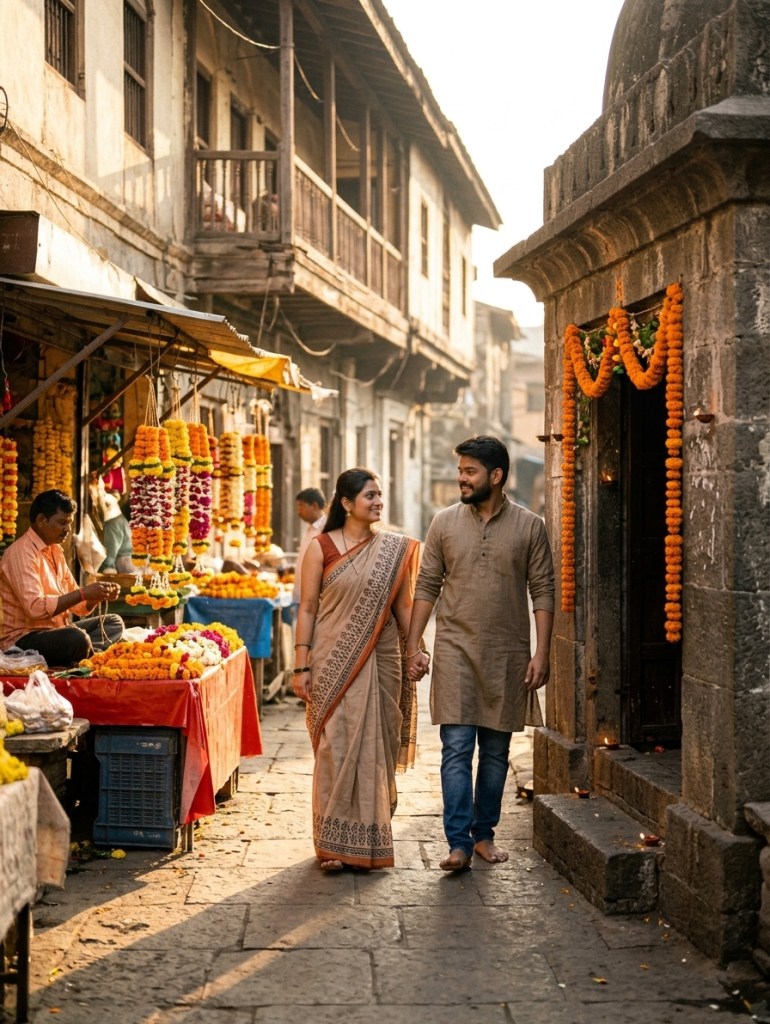
Most people visit exactly one of the Ganpati temples Pune is known for, take a photo outside Dagdusheth, and call it done. That’s a shame. The city has a whole chain of older, quieter Ganesh shrines, and the best way to feel them is on foot, one after another, on a slow morning.
We’re Ketan and Samprita from Musafir Couple. We’ve done this trail in Pune’s old city more times than we can count, once in monsoon rain with a broken umbrella and one very confused auto driver. This is what we’d tell a friend visiting this week.

Plan Your Ganpati Temples Pune Route Before You Start
Start at 6:30 or 7 AM, park once near Budhwar Peth, and walk. The old city lanes are narrow, and a two-wheeler or car between temples costs you more time than it saves.
Here’s the thing: most people plan by temple fame. Plan by geography instead. Five of these temples sit within a few kilometres of each other in the Peth areas. The other five are outliers that need a car and a separate half-day.
Keep small change for flowers and prasad. Wear footwear you can slip off fast. Avoid Sankashti Chaturthi evenings and the Ganeshotsav days unless you actually enjoy crowds, because lines can run for hours. Timings shift during festivals, so check with the temple trust or the [Maharashtra Tourism](https://www.maharashtratourism.gov.in) site before you go.

Kasba Ganpati
Start here. It’s considered the gram devta of Pune, the village deity of the city, and the shrine is tied to the Jijabai and young Shivaji era. It sits near Kasba Peth, a short walk from Shaniwar Wada.
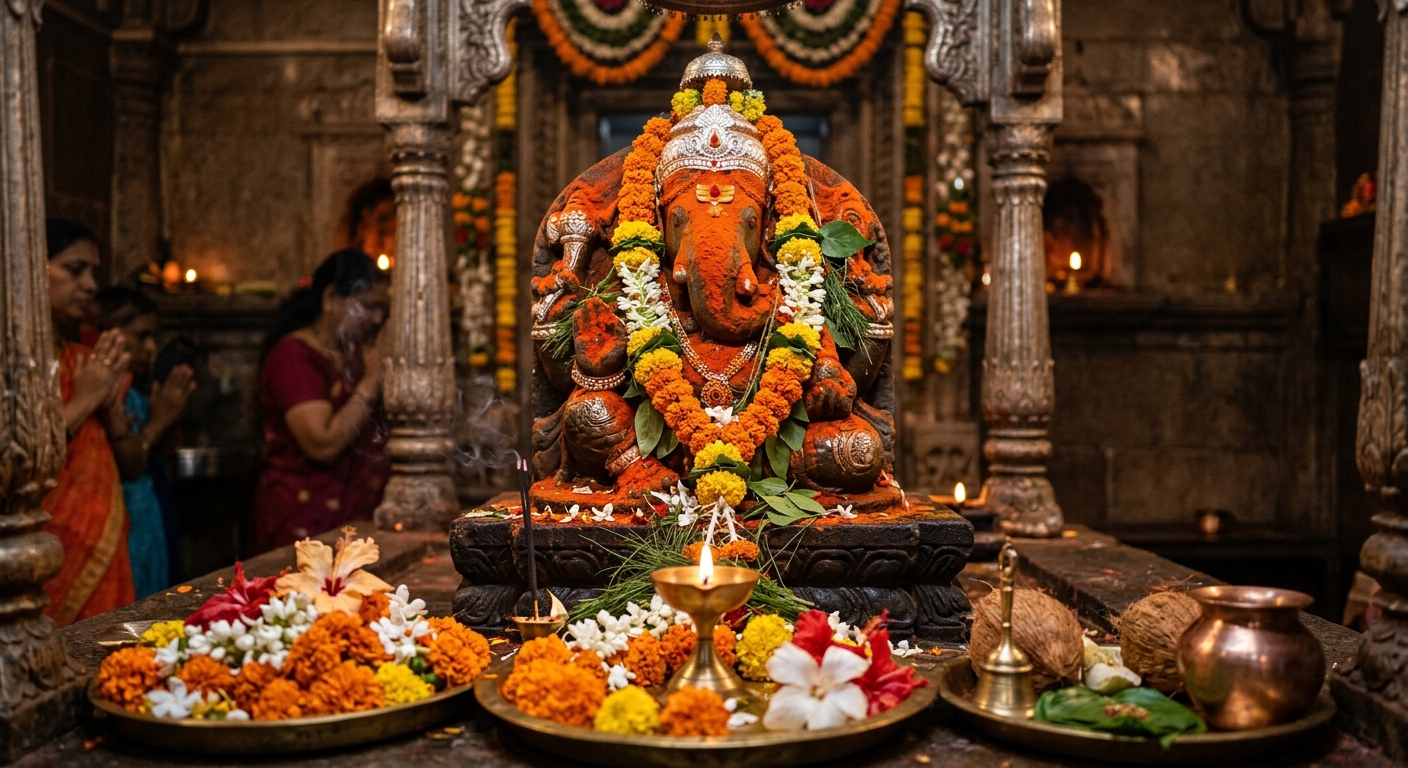
The idol is small and covered in sindoor, which surprised us the first time. No glitter, no big queue on a regular weekday. Ten minutes is enough, but stand quietly a moment longer than you think you need to.
Tambdi Jogeshwari Ganpati
Locals count this as the first of the five manache (honoured) Ganpatis of Pune’s Ganeshotsav processions. The temple is tucked inside Budhwar Peth, and you can walk past the entrance without noticing it. We did.
Ask any shopkeeper nearby and they’ll point you right. It’s a goddess shrine too, so the vibe is a bit different from a pure Ganesh temple. Free entry, quick darshan.
Guruji Talim Ganpati
This one is a wrestling akhada by origin, which is why people also call it the Talim Ganpati. The third manache Ganpati sits in Shaniwar Peth. You’ll see old Pune families here more than tourists.
Weekday mornings are calm. During festival processions, though, this lane becomes tight, and we’d skip it entirely if you’ve got kids or elderly parents.
Tulshibaug Ganpati
The fourth manache Ganpati stands inside the Tulshibaug market complex, and getting there means walking through steel utensils, bangles and flower stalls. That’s the fun part. Samprita bargained for brass diyas on the way out, and we paid maybe twenty percent less than the first quote.
Mind your bag in the market rush. Pickpockets love festival weeks. The temple itself is compact, with a Ram temple close by that’s worth a minute.
Kesariwada Ganpati
Kesariwada is the fifth manache Ganpati, set within the Kesari newspaper’s historic premises on Narayan Peth. The Ganeshotsav here is tied to Lokmanya Tilak’s public festival tradition, and that history is the reason to come.
It’s a cultural stop more than a long darshan stop. If you reach early, the wada courtyard is quiet and you can read a bit about the festival’s origin. Not every visitor does, and they should.

Dagdusheth Halwai Ganpati
You already know this one. It’s the most famous of the Ganpati temples Pune sends visitors to, and the idol is decorated with real gold. Expect a queue most days.
Our honest verdict: worth it, but only at opening hours or late evening on a weekday. We once arrived at noon on a Saturday and left without darshan. Parking near Budhwar Peth is awful, so use the paid lots toward Laxmi Road or take a cab and get dropped close by.
Saras Baug Ganpati
This temple stands in the middle of a small lake, reached by a short walkway through Saras Baug garden near Swargate. It dates to the Peshwa period and feels calmer than the Peth temples.
Go early evening. Families come for the garden, the bhel stalls outside, and a quick darshan. Entry to the garden is usually free or nominal, and the whole visit takes about forty minutes. Good place to end the old-city day.
Chintamani Ganpati, Theur
Theur is one of the Ashtavinayak temples, roughly 25 to 30 km east of Pune city, and it’s the easiest Ashtavinayak to add to this trail. The road is mostly fine. Traffic near Hadapsar and Loni Kalbhor is the real problem.
Reach before 9 AM. The temple sits near the Mula-Mutha river, and the area outside is calmer than you’d expect. For Ganesh worship Pune devotees treat Theur as a half-day trip, not a quick stop.
Mahaganpati, Ranjangaon
Ranjangaon lies about 50 km from Pune on the Pune-Ahilyanagar side, so it’s a proper outing. The Mahaganpati idol here is another Ashtavinayak stop, and the temple complex is well kept with clear parking.
Combine it with fuel and toll costs in your budget. We usually share the drive and keep a thermos of chai. Weekdays are far smoother than Sundays.
Mayureshwar, Morgaon
Morgaon is the first temple in the traditional Ashtavinayak order, around 65 km from Pune near Baramati. Treat it as a separate day trip, not part of the old-city walk.
The road is decent, but the final stretch has small-town traffic and unmarked turns. Samprita’s Google Maps trusted a shortcut once and we ended up behind a bullock cart. Leave early, carry water, and enjoy a simple lunch of local thali near the temple.
Frequently Asked Questions
What are the most famous Ganpati temples Pune visitors should see first?
Start with Kasba Ganpati and Dagdusheth Halwai Ganpati. Kasba is the city’s village deity, and Dagdusheth is the most visited. Add the other manache Ganpatis if you’ve got time and comfortable shoes.
How long does Ganesh temple hopping Pune take in one day?
The five Peth temples take about three to four hours on foot with a tea break. Adding Dagdusheth and Saras Baug stretches that to a full morning. Theur, Ranjangaon and Morgaon each need their own trip.
What is the best time for Ganesh worship in Pune?
Weekday mornings between 6:30 and 9 AM are calmest. Ganeshotsav and Sankashti Chaturthi bring huge crowds, which suits some people but not everyone. Check temple timings before travelling.
Is it better to walk or drive between the old city temples?
Walk. Lanes are narrow, parking is scarce, and most of these stops are within a short distance. Drive only for Theur, Ranjangaon and Morgaon.
Start Your Ganpati Temples Pune Trail This Weekend
Pick a weekday, park once, and walk the old city before the crowds wake up. You’ll see more of Pune in four hours than most visitors see in four days. Save Theur, Ranjangaon and Morgaon for a separate drive.
If you want our real costs, parking notes and route maps for the Ganpati temples Pune locals love, follow Musafir Couple (powered by Travelheal) on YouTube and Instagram. Tell us in the comments which temple surprised you most. We’ll plan the next walk around your answers.