


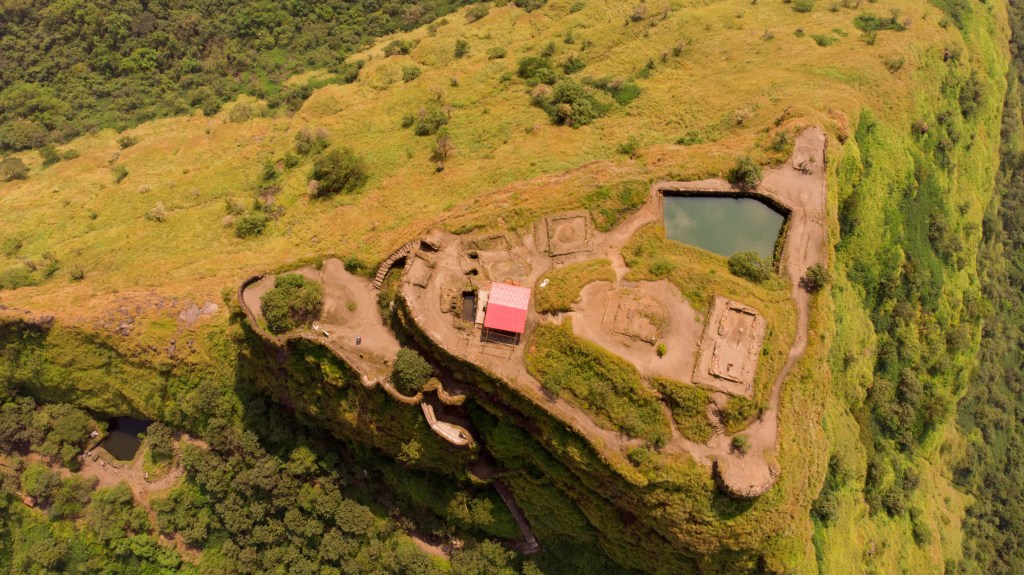
Mountains aren’t just about height; they’re about depth—of history, of silence, and of stories waiting to be discovered
The Tikona Fort Trek is the ideal option for anybody curious about history, the outdoors, or a short monsoon vacation from Pune or Mumbai. Tikona—also called Vitanadgad—is a triangular hill fort soaked in Maratha history and covered by beautiful topography, especially charming during the monsoon season. It is situated in the picturesque Maval Taluka in Pune district.

Location & Accessibility to Tikona Fort
Tikona Fort is readily reachable by car and is located between 50 and 52 kilometres from Pune. We chose to take a bike trip from Pune, and the adventure was amazing. Along the journey, we even came upon a small Kedarnath temple, and the street was shrouded in fog, framed by thick trees. It was the ideal prototype of what was to come, with mild rains and greenery all around.
Tikona Peth, the base settlement, greets you with a rock arch. From here, the mood for an exhilarating day is set by a view of the fort covered by clouds.

ALSO READ: Best monsoon trek near Pune and Mumbai
Tikona Fort Details
- Start Time: 9:30 AM
- Duration: Approx. 3–4 hours (to and fro)
- Difficulty Level: Easy to Moderate
- Altitude: ~3,500 feet above sea level
Parking Note:
Though vehicles are stopped slightly before the base, parking is available right near the foothills, which is convenient for trekkers.
My Tikona Fort Experience
As we started the trek, the path was slippery due to rain, so wearing proper trekking shoes is a must (avoid slippers at all costs—one woman actually slipped and got injured during our visit).
The trail is lush, filled with chirping birds, cloud-covered peaks, and some incredible panoramic views. Within just 20% of the trail, you’ll already feel like you’re in heaven, surrounded by clouds and cool breeze.
Historical Significance of Tikona Fort
Tikona Fort is said to have been built in the 13th century. It gained prominence when Chhatrapati Shivaji Maharaj included it in his kingdom in 1657, along with several other forts in the Konkan region.
The fort was a strategic military post due to its triangular shape and elevation, making it ideal for overseeing other forts. In clear weather, you can spot eight different forts from the top—Lohagad, Visapur, Tung, Rajgad, Torna, Sinhagad, Purandar, and Morgiri. No wonder it was used as a military watchtower.
In 1660, Netaji Palkar, one of Shivaji Maharaj’s trusted generals, was made the fort’s commander. Later, Chhatrapati Sambhaji Maharaj stayed here briefly in 1682, and interestingly, Mughal Prince Akbar (Aurangzeb’s son) also sought refuge here during his defection.
However, the fort suffered massive destruction in 1818, during the Anglo-Maratha war. British officer Colonel Kather bombarded the base of the fort with explosives and cannons, destroying nearly 70% of its structure.
Despite the damage, the fort continues to radiate historical importance and pride.

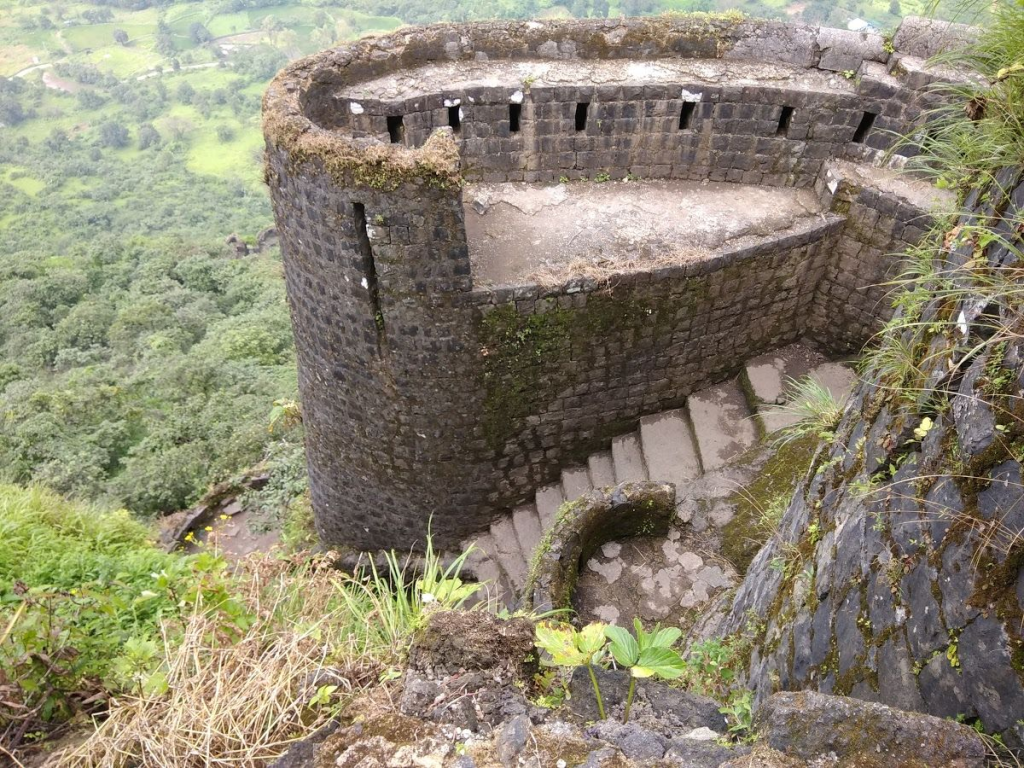
Architectural Remnants
As you ascend the fort, you’ll come across several intriguing features:
- Seven Wadas: These were residential complexes for the fort’s citizens and soldiers. One main wada was possible for the fort captain.
- Tulja Devi and Shri Ram Dhyan Temples: Found in a large cave split into five sections.
- Ancient Hanuman Idol: A striking 7-foot-tall Maruti idol etched into stone.
- Lime Kiln and Grinding Stone: Used for creating building lime for fort building—still intact!
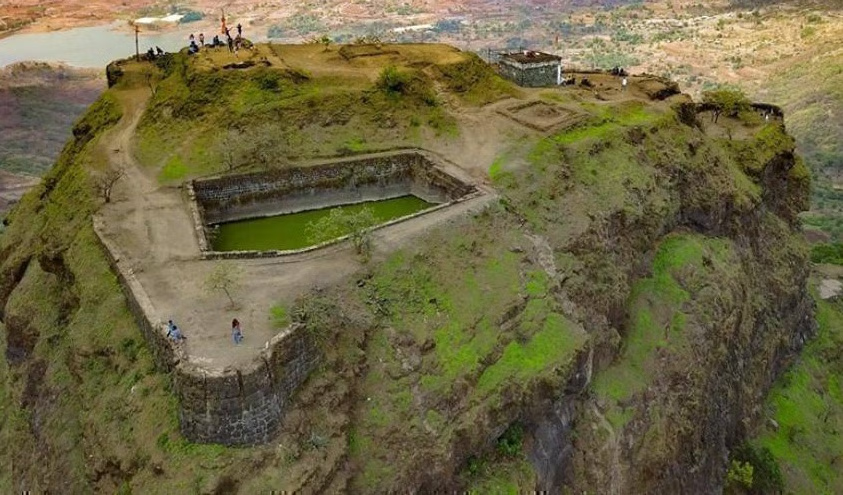
- Water Tank: Found below the temples, this tank, along with its surrounding greenery, contributes to the peaceful ambience.
- Vetala Gate: Offers stunning views and leads to the best point of the fort.
- Sadar (Court Area): An open stone platform where military and civic decisions were once taken.
From the summit, you’ll see Pawna Lake sprawling like a sapphire mirror, and consistently spot the shadow of Tung Fort in the water—a surreal moment etched in our memory.
Food & Refreshments
After soaking in the views and taking photographs, we dropped to the base village where we treated ourselves to hot bhajiyas and Maggi—the perfect comfort food after a trek in the rain.
Know Before You Go Tikona Fort
- Suitable for: All age groups (except pregnant women and children under 5)
- Best Time to Visit: Monsoon to Winter (July–February)
- ID proof is mandatory.
- Avoid alcohol or heavy food before trekking.
- Listen to your guide carefully.
- Carry personal medication if needed.
Things to Carry
- Raincoat/Poncho (during monsoons)
- Extra pair of clothes
- Trekking shoes
- Water bottle
- Energy bars or dry snacks
- Camera (optional but highly recommended)

Final Thoughts
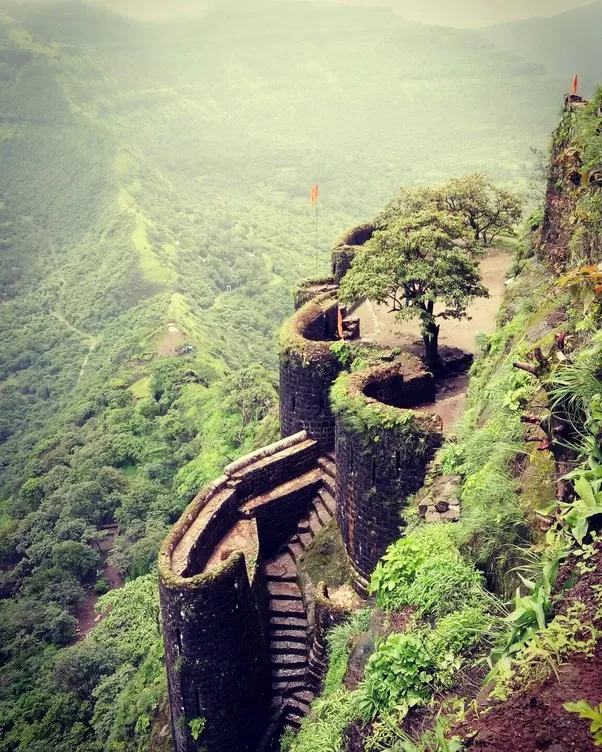
The Tikona Fort Trek is more than just a trail; it’s a journey through history, nature, and local pride. Whether you’re tracking clouds, studying Maratha valour, or just running city life for a few hours, Tikona won’t disappoint.
We left the fort with tired feet but full hearts, carrying stories of Shivaji Maharaj, the courage of Netaji Palkar, and the serene topography of Pawna back with us. And as always, we said—“जय शिवराय!”
FREQUENTLY ASKED QUESTIONS
Q. How long is the trek?
A. It takes about 1.5 to 2 hours one way, depending on fitness level.
Q. Is the trek suitable for beginners?
A. Yes. It’s rated Easy to Medium and is safe for families with proper precautions.
Q. Can I cover other locations in one day?
A. Yes! Pawna Lake and Tung Fort are nearby and make for a great combination for a one-day trip.