


Discover the best road trip destinations India offers. From mountain passes to coastal highways, these routes deliver real adventure with honest costs and tips.
Top 10 Road Trip Destinations in India You Must Visit
You’re tired of Instagram-perfect road trip posts that skip the real stuff — potholes, wrong turns, actual fuel costs, and where to pee when there’s nothing for 50 kilometers.
Here’s what we learned from covering road trip destinations India actually offers versus what brochures promise. Some routes are worth every rupee. Others? Not unless you enjoy back pain and overpriced chai stops.
We’re Ketan and Samprita from Musafir Couple, and we’ve driven these routes ourselves. Not in edited 30-second reels. Real drives with real confusion, real costs, and honest verdicts on whether you should pack your bags or save your weekend.
Why Road Trips Work Better Than Flight Vacations
Most couples waste money flying to destinations they could’ve reached by car. The journey becomes the destination only when you actually stop at random spots — that roadside waterfall, the village selling fresh mangoes, the viewpoint nobody tagged on Google Maps.
Flying skips all that. You land, check into a resort, take photos, leave. Road trips force you to discover. We found our favorite hidden beach near Goa because we took a wrong turn near Palolem. That wouldn’t happen at 35,000 feet.
But here’s where people mess up. They pick routes based on distance alone. A 300-kilometer drive through Western Ghats takes longer and beats you up more than 500 kilometers on smooth highways. Time isn’t just about kilometers — it’s about road quality, traffic, and how many trucks you’re stuck behind.

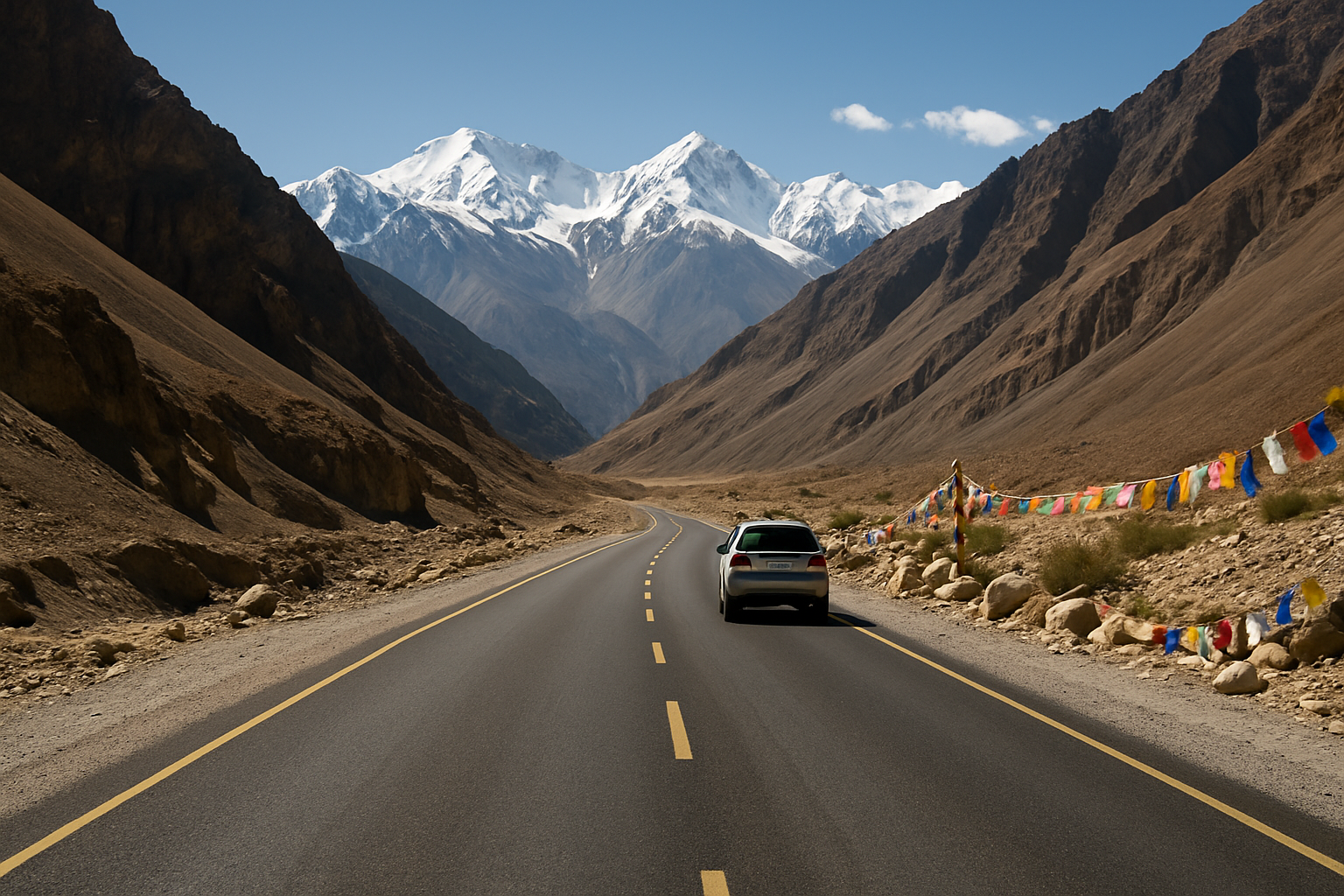
Leh-Ladakh Highway — The One Everyone Talks About for Good Reason
Yes, it’s crowded now. Yes, influencers ruined Pangong Lake. But Leh-Ladakh via Manali-Leh Highway remains one of the best road trip destinations India has because the road itself is the destination.
You cross Rohtang Pass, Baralacha La, and Tanglang La — some of the highest motorable passes on earth. The landscape shifts every 30 kilometers. Green valleys turn into brown mountains. Brown turns into lunar desert. It’s like driving through three countries in one trip.
Real costs for a couple in a sedan: ₹78,000 for 12 days including fuel (₹22,000), permits (₹1,200), accommodation (₹35,000), food (₹15,000), and buffer for breakdowns (₹5,000). Don’t attempt this in a low-ground-clearance car unless you enjoy scraping your underbelly on rocks.
The Manali-Leh stretch opens only June to mid-October. Don’t trust anyone who says May is safe — snowfall blocks passes without warning. We saw seven cars stuck near Baralacha La in early June. Not fun.
Spiti Valley Circuit — Ladakh Without the Crowd
Here’s a contrarian take: Spiti delivers more than Ladakh for half the crowd. You get similar landscapes, better roads in some sections, and way fewer Bullets creating traffic jams for Instagram photos.
The loop from Shimla via Nako, Tabo, Kaza, and back through Manali takes 9 days comfortably. Key Monastery and Chandratal Lake justify the entire trip. The lake sits at 4,300 meters — turquoise water surrounded by brown peaks and zero commercialization.
Musafir Couple covered this route in September when temperatures dropped to -2°C at night. Our homestay in Kibber had no heater. We slept in two blankets, a sleeping bag, and still shivered. Pack warm even if you’re going in summer — altitude doesn’t care what month it is.
Fuel stations exist only in Kaza and Tabo on the inner circuit. Fill up completely at both. We ran dangerously low near Losar because we skipped Tabo, assuming Kaza was close enough. It wasn’t.

Coastal Karnataka — Gokarna to Karwar via Beaches Nobody Knows
Everyone drives Goa. Almost nobody continues south into Karnataka’s coastline, and that’s a mistake. The stretch from Gokarna to Karwar packs better beaches, cheaper stays, and actual peace.
Om Beach gets crowded, yes. But Nirvana Beach, Half Moon Beach, and Paradise Beach require short treks from parking spots, which filters out 80% of tourists. You’ll find stretches where it’s just you, the waves, and maybe one other couple.
We stayed at a cliff-top homestay near Kumta for ₹1,800 a night — sea view, home-cooked Konkani food, and owners who didn’t try selling us packages or water sports. That’s rare now. Book through word-of-mouth or direct calls — aggregator apps don’t list these places.
The drive itself is easy. NH66 runs smooth through Kumta, Honnavar, and into Karwar. Total distance from Gokarna to Karwar: 97 kilometers. Budget 3 hours with stops. Fuel cost: ₹650 for a sedan.
Meghalaya — Shillong to Cherrapunji and the Living Root Bridges
This isn’t technically a single highway, but the network of roads connecting Shillong, Cherrapunji, Mawlynnong, and Dawki creates one of the most underrated road trip destinations India hides in the northeast.
The roads are narrow. GPS fails frequently. Locals give directions using landmarks like “turn left at the church with blue gate.” It’s frustrating and fantastic at the same time. You’re forced to interact, ask, stop — which is how you discover Mawlynnong, Asia’s cleanest village, or the double-decker living root bridge in Nongriat.
That bridge requires a 3,000-step descent and climb back. Don’t attempt it if you skip leg day. We saw three people give up halfway and turn back. The bridge itself is worth the pain — a 100% natural structure made from rubber tree roots that’s held steady for over 200 years.
Monsoon makes Meghalaya incredible but dangerous. Waterfalls appear everywhere, roads become slippery, and landslides block routes without warning. We visited in August and got stuck near Mawsynram for four hours waiting for debris clearance. Go September to November for safer roads and still-green landscapes.
Rajasthan Heritage Circuit — Jaipur to Jaisalmer via Sand and Forts
Most people fly between Rajasthan cities. That’s a waste. The drive from Jaipur to Udaipur to Jodhpur to Jaisalmer connects four visually distinct landscapes — pink city, lake city, blue city, golden city — and every segment teaches you something about Rajasthan’s scale.
The Jaipur-Udaipur section via NH58 takes about 7 hours for 394 kilometers. Stop at Chittorgarh Fort midway — it’s India’s largest fort and barely gets tourist attention compared to Amer Fort’s Instagram fame. Entry is ₹50. Parking is ₹30. Crowd is near zero.
Udaipur to Jodhpur is 258 kilometers through Aravalli hills and scrubland. Roads are excellent. Fuel stations appear every 60 kilometers. This is one of the easiest highway drives in India.
Jodhpur to Jaisalmer shifts everything. Greenery dies. Sand starts appearing. By the time you reach Jaisalmer, you’re in full desert. That 285-kilometer stretch takes 5 hours, but the visual transition is worth driving slow and watching.
Total trip: 10 days, ₹65,000 for a couple including mid-range hotels, fuel, food, and fort entries. Skip camel safaris in Jaisalmer — they’re overpriced and uncomfortable. The fort itself is free to walk through and far more interesting.
Konkan Coast — Mumbai to Goa the Slow Way
NH66 from Mumbai to Goa is common. Most people finish it in 10 hours straight and miss everything. The real road trip happens when you take 3 days and stop at Alibaug, Dapoli, Ratnagiri, Vengurla, and every beach that has a parking spot.
Musafir Couple takes this route twice a year. We’ve stayed at homestays in Dapoli for ₹1,200 a night that serve unreal crab curry and sol kadhi. We’ve stopped at Ganpatipule Beach at 6 a.m. when nobody’s there except fishermen pulling nets. We’ve bought alphonso mangoes directly from farms near Ratnagiri for ₹400 a dozen — the same box costs ₹1,200 in Pune.
The drive through Konkan forces you to slow down. Roads twist through coconut groves. Bridges cross small rivers. Trucks carrying fish dominate certain sections and you can’t overtake for kilometers. Accept it. That’s the rhythm here.
Ratnagiri to Vengurla is the best stretch — 152 kilometers of coastal scenery with minimal traffic. Budget 4 hours. Stop at Mochemad Beach near Vengurla. It’s empty, clean, and has a small shack selling fried fish that’s better than any Goa beach shack we’ve tried.
Himachal’s Kinnaur-Spiti Loop — For Drivers Who Don’t Scare Easy
This is not your first road trip. The loop from Shimla through Kinnaur, into Spiti, and back via Manali includes some of India’s most dangerous yet scenic roads. Hairpin bends with no railings. Landslide-prone sections. Narrow stretches where two cars can’t pass.
But if you can handle that, the Kinnaur-Spiti loop gives you everything — apple orchards in Kinnaur, the Sutlej River gorge, ancient monasteries, and roads that cling to cliffs in ways that seem structurally questionable.
The Hindustan-Tibet Road (NH5) from Shimla to Reckong Peo is stunning. The road follows the Sutlej River, which appears turquoise in some sections, muddy brown in others. Sangla Valley is worth a full day stop — wooden houses, apple farms, and Baspa River flowing clear and cold.
From Reckong Peo, the road climbs to Nako and enters Spiti. This section tests your driving. Gravel patches, broken edges, and steep drops appear regularly. We drove in July and crossed three landslide zones that were cleared just hours before we arrived. Keep buffer days — weather controls your schedule here, not you.
Total loop: 12 days minimum, ₹82,000 for fuel, permits, stays, food, and vehicle maintenance. Get your car serviced before starting. Brake pads, tires, and suspension take serious abuse on this route.
Northeast Circuit — Assam to Arunachal via Tea Gardens and Monasteries
Most Indian road trips skip the northeast. Permits, distance, and lack of information keep people away. That’s exactly why it belongs on any real list of road trip destinations India offers.
The circuit from Guwahati through Kaziranga, Tezpur, Tawang, and back via Bomdila covers wildlife, tea estates, mountain passes, and Buddhist culture in one trip. Kaziranga National Park alone justifies the journey — one-horned rhinos, wild elephants, and landscapes that look like Jurassic Park.
The drive from Tezpur to Tawang via Sela Pass is 12 hours of climbing. You start at 400 meters elevation and end at 3,048 meters. Sela Pass sits at 4,170 meters with a frozen lake and snow even in May. Carry woolen clothing regardless of season — temperature drops below 5°C at the pass.
Tawang Monastery is the second-largest monastery in the world after Lhasa. It sits at 3,000 meters with 360-degree mountain views. Entry is free. Monks are friendly. The morning prayer session at 6 a.m. is worth waking up for.
Permits are mandatory for Arunachal Pradesh. Apply online through Arunachal Pradesh government portal at least 15 days before travel. Costs ₹1,000 per person for Indian nationals. Keep two physical copies with you — checkpoints ask for it multiple times.
Tamil Nadu Temple Circuit — Chennai to Rameshwaram via Ancient Architecture
Road trips don’t have to mean mountains. The temple circuit through Tamil Nadu offers history, architecture, and roads smoother than most north Indian highways.
Start in Chennai. Drive to Mahabalipuram (58 kilometers), then Pondicherry (98 kilometers), Chidambaram, Kumbakonam, Thanjavur, and finally Rameshwaram. Each temple town has distinct architecture, gopurams, and energy.
The East Coast Road (ECR) from Chennai to Pondicherry is one of India’s best coastal highways. Sea views, cafes, resorts, and minimal traffic make this a relaxed 2-hour drive. Stop at Kovalam Beach midway — clean, quiet, and perfect for a chai break.
Thanjavur’s Brihadeeswarar Temple is a UNESCO site and the only temple in this circuit you must not skip. Built in 1010 AD, the central tower stands 66 meters tall and casts no shadow at noon. Entry is ₅50. Audio guide is ₹100 and worth it — the temple’s engineering is explained better than any guidebook.
Rameshwaram is where the circuit peaks. The sea bridge connecting mainland to Pamban Island is stunning — turquoise water on both sides, train tracks running parallel, and pelicans flying low over the waves. Arrive at sunrise if possible.
Total distance for the circuit: 897 kilometers. Budget 7 days. Costs: ₹48,000 for a couple including accommodation, food, and temple entries. Roads are excellent throughout.
Kerala Backwaters and Hills — Kochi to Munnar to Alleppey Loop
Kerala’s road trip loop combines three landscapes — city, hills, backwaters — in under 400 kilometers. You can finish it in 5 days or stretch to 10 if you stop everywhere worth stopping.
Kochi to Munnar is 132 kilometers uphill. The drive takes 4 hours through tea estates, spice farms, and switchbacks that climb from sea level to 1,600 meters. Stop at roadside tea stalls selling cardamom chai and banana chips fried in coconut oil. You won’t find this combination anywhere else.
Munnar itself is over-touristed but the surrounding areas aren’t. Skip the main town. Stay near Chinnakanal or Top Station. We stayed at a cardamom estate homestay near Chinnakanal for ₹2,000 a night. Our host gave us fresh cardamom tea every morning and walked us through the plantation explaining harvest cycles. That taught us more about Kerala than any museum.
From Munnar, drive to Alleppey via Kottayam — 171 kilometers that drop from hills to plains to waterways. Alleppey’s houseboats are expensive (₹8,000 to ₹20,000 for 24 hours) but worth doing once. If that’s too much, take a 3-hour public ferry ride for ₹30 that covers the same backwaters without the luxury markup.
Musafir Couple skipped the houseboat and stayed at a homestay on Vembanad Lake instead. Cost: ₹1,800 a night with breakfast. We took a canoe out at dawn — zero engine noise, just water, paddles, and egrets. Better than a houseboat full of strangers.
What Every Road Trip in India Actually Needs
Here’s what nobody tells you before your first long drive: road trips fail not because of bad destinations but bad planning.
Pack a printed map. Yes, physical paper. GPS fails in mountains, deserts, and rural highways. We got stuck near Spiti without signal for 6 hours. The only reason we found our way was asking locals and using a map.
Carry ₹500 in ten-rupee notes. Toll plazas, small dhabas, and parking lots don’t always have change for ₹500 notes. Paying ₹10 with ₹500 slows you down and annoys everyone behind you.
Download offline maps on Google Maps before starting. Download the entire state or region you’re driving through. It saves data and works without signal.
Keep a car toolkit including jumper cables, tire pressure gauge, spare fuses, and duct tape. We’ve used duct tape to temporarily fix a cracked headlight cover, a loose side mirror, and a torn seat. It’s the most versatile thing you can pack.
Every road trip destination India offers has something worth seeing. But the best trips happen when you stop treating the road as a thing to finish and start treating it as the actual experience. That shift in mindset changes everything.
Frequently Asked Questions
Which is the best road trip route in India for couples?
The Konkan Coast from Mumbai to Goa works best for couples — scenic, safe, flexible stops, and full of hidden beaches and homestays. Musafir Couple takes this route twice a year because it balances adventure and comfort without extreme driving.
What is the cheapest road trip destination in India?
Tamil Nadu’s temple circuit from Chennai to Rameshwaram costs around ₹48,000 for a couple for 7 days including fuel, accommodation, and food. Roads are excellent, fuel costs are lower in Tamil Nadu, and temple towns have budget stays for ₹800 to ₹1,200 per night.
Is it safe to drive Leh-Ladakh in a sedan?
Yes, but only if your sedan has decent ground clearance (160mm+). We’ve seen Maruti Ciaz and Honda City complete the route. Avoid low-clearance cars like sedans below 140mm — you’ll scrape frequently and risk damage. An SUV is safer but not mandatory.
What should I pack for a 10-day road trip in India?
Pack three types of clothing — light for plains, warm layers for altitude, and rain gear. Carry a physical map, offline GPS, ₹10 notes, basic toolkit, reusable water bottle, phone charger with car adapter, first-aid kit, and snacks like nuts and energy bars for stretches without food stops.
How much does fuel cost for a Pune to Goa road trip?
A sedan covering Pune to Goa (450 kilometers one way, 900 round trip) costs ₹5,850 in fuel at ₹100 per liter and 15 km/liter mileage. Add ₹600 for tolls. Budget ₹6,500 total for fuel and tolls for the round trip.
Start Planning Your Road Trip With Real Information
Road trip destinations India offers are endless. But the best ones aren’t always the most famous. They’re the routes where you stop more than you drive, where wrong turns lead to better discoveries, and where costs match what you actually paid — not some influencer’s sponsored version.
Musafir Couple shares unfiltered road trip experiences, actual costs, real routes, and honest reviews of destinations across India. No picture-perfect reels. Just two people discovering roads, making mistakes, and figuring out what’s worth your time and money.
If you’re planning a couple’s getaway or looking for hidden road trip spots that actually deliver, follow Musafir Couple on YouTube and Instagram. We share route guides, budget breakdowns, and real-time updates from every destination we cover.
Your next weekend road trip is waiting. Pick a route, pack your car, and stop planning perfect — just start driving.