

 by
by We travelled to the holy city of Amritsar, which is home to the famous Golden Temple and is regarded as a sacred site by millions of people worldwide. The Golden Temple, formally known as Sri Harmandir Sahib, is the holiest in Sikhism. It draws pilgrims from all walks of life with its glistening gold exterior, serene atmosphere, and potent spiritual force.
Early in the morning, we set off on our adventure, full of dedication and expectation. Here is a thorough description of our amazing trip to this hallowed location.
Arrival in Amritsar
Around 3:00 AM, we arrived in Amritsar. Exhausted yet excited, we made our way directly to Guru Kripa Guest House, a reasonably priced motel. The hotel was spotless, reasonably priced, and ideal for those seeking comfort without going over their spending limit.
We immediately showered before heading straight to the Golden Temple. The city was already a hive of dedication despite the early hours of the morning.

First Impressions of the Golden Temple
We arrived at the Golden Temple complex at around 4:15 AM. Everyone is required to cover their head and place their shoes at a designated counter as one of the first things they do before entering. You can either bring your own scarf or use one that is provided at the door.
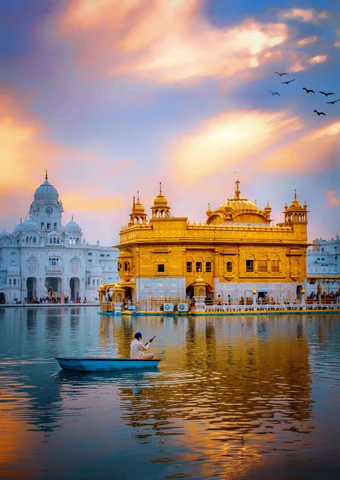
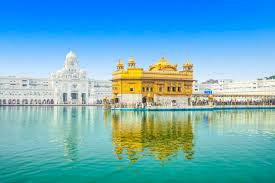
The air was infused with angelic tranquillity as soon as we entered. It was just captivating to see the lit Golden Temple reflected in the nearby sacred water, the Amrit Sarovar.
The Golden Temple’s “Amrit Vela” vista in the morning is very breathtaking. It’s difficult to describe the atmosphere created by the tranquillity and the gentle melody of religious melodies.
A Glimpse into History
The Golden Temple’s history is incredibly motivating:
Guru Ram Das Ji, the fourth Sikh Guru, started building the Golden Temple in 1581, and Guru Arjan Dev Ji finished it in 1604.
Remarkably, Hazrat Mian Mir, a revered Muslim saint, placed the foundation stone, signifying inclusion and harmony.
The temple was reconstructed under the direction of Maharaja Ranjit Singh after it was damaged by invading armies in 1762. He embellished it with more than 500 kilograms of 24-carat gold. The unrivalled splendour of the gold plating gave it the moniker “Golden Temple.”
The shrine is now a representation of tenacity, devotion to religion, and architectural genius.
Significance of the Holy Amrit Sarovar
The Amrit Sarovar, a holy pool thought to have therapeutic properties, encircles the Golden Temple. It is said that bathing in these sacred waters may cure illnesses and provide spiritual vigour. As part of their religious rite, pilgrims go from all over the world to take a dip in this Sarovar.
It is recommended (but not required) to bathe in the Sarovar to cleanse oneself both physically and spiritually before approaching the main shrine.
ALSO READ: Winter vs. Summer – What is the Best Time to Visit Kashmir?
The Universal Appeal of the Golden Temple
The Golden Temple’s open-door policy, which welcomes individuals of all castes, faiths, and nations without distinction, is among its most endearing features.
The Golden Temple is one of the most popular religious destinations in India and the globe, with around 70% of tourists being non-Sikhs.
The Golden Temple receives more tourists per day than the Taj Mahal, according to the World Book of Records. Roughly 3 million people visited the Golden Temple in a single month, compared to roughly 3 million who visited the Taj Mahal in a single year (2011)!
Nearly 100,000 people visit the Golden Temple every single day. It’s no wonder that it was ranked above the Taj Mahal in the BBC’s list of “Places to Visit Before You Die.”
The World’s Largest Community Kitchen — Langar
The Golden Temple’s Langar, the biggest free communal kitchen in the world, is another intriguing element.
All guests are given free meals here, regardless of their social standing, caste, or religion. Every day, the langar feeds over 100,000 people, and all of the staff members are volunteers.
Simple, healthful vegetarian fare like dal, roti, sabzi, and kheer are usually served for the dinner. All social barriers are broken down when strangers eat together on the floor, emulating the Sikh values of equality, humility, and volunteerism.
Baba Deep Singh — The Warrior Saint
We discovered a striking artwork of Baba Deep Singh approaching the Golden Temple while clutching his severed head in his palm when we were touring the grounds.
This is the backstory:
When Ahmad Shah Abdali, an Afghan conqueror, demolished the Golden Temple in 1757, 75-year-old Baba Deep Singh promised to keep it safe. He fought with amazing bravery even though he was severely injured in combat—his skull was almost severed. Baba Deep Singh fulfilled his commitment by walking to the holy shrine and passing away there while holding his own head in his hands.
Baba Deep Singh continues to be a timeless symbol of bravery and selflessness, and this tale of unparalleled bravery and dedication is among the most well-known in Sikh history.
The Divine Rituals and Services in Golden Temple, Amritsar
There are several spiritual experiences available at the Golden Temple:
Darshan: Seeing the magnificent temple that houses the sacred text known as the Guru Granth Sahib.
Kirtan: The continuous playing of religious hymns that fill the air with heavenly sounds.
Akhand Path: Reading the Guru Granth Sahib nonstop for a number of days at a time.
Prasad: To symbolize heavenly benefits, devotees are served Karah Prasad, a delectable treat prepared of wheat flour, ghee, and sugar.
In order to ensure the comfort of every pilgrim, the temple complex also provides amenities including free lodging, medical assistance, wheelchair help, shoe storage, and free drinking water.
Best Time to Visit Golden Temple
October through March is the ideal time of year to visit Amritsar and the Golden Temple. The temperature is comfortable throughout these months, ranging from 10°C to 25°C.
The trip is made even more memorable by the fervent celebration of festivals like Diwali (October–November), Baisakhi (April), and Guru Nanak Jayanti (November).
The temple is open everyday from 2:15 AM to 10:45 PM; for a more tranquil experience, it is best to visit in the early morning or late evening.
Nearby Attractions
There are a number of more local sites to check out if you have more time:
Jallianwala Bagh: A memorial place and historic garden connected to the horrific 1919 tragedy.
Wagah Border: Take in the India-Pakistan border’s pounding retreat ceremonial.
Discover the traumatic history of India’s 1947 Partition at the Partition Museum.
The Khalsa’s (Sikh community’s) greatest seat of earthly power is Akal Takht.
Conclusion
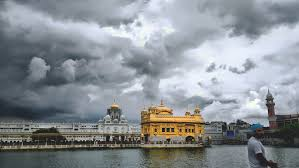
The Golden Temple was a place of religion, history, culture, and humanity that left us feeling deeply moved. It is more than simply a house of worship; it is a representation of the ageless principles of dedication, equality, and service.
A trip to the Golden Temple will undoubtedly leave you with memories and emotions that last long after your trip is over, regardless of whether you are a history buff, spiritual seeker, or inquisitive tourist.
The Golden Temple is a symbol of harmony and serenity in a world where differences separate people.