

 by
by I’ve always thought that certain travels are more about self-discovery than about travel. My experience with the Kailash Mansarovar Yatra was a combination of faith, adventure, and spiritual revelation. Standing in front of Mount Kailash, the world’s holiest peak, was more than simply a sight for me; it was a profound spiritual experience. For ages, Hindu, Buddhist, and Jain worshipers have flocked to the black granite summit, which is considered to be Lord Shiva’s home. Walking this hallowed road, known as the ultimate Tirth Yatra, seemed like more than just a pilgrimage; it was a life-changing adventure that taught me new things about faith, tranquility, and purpose.
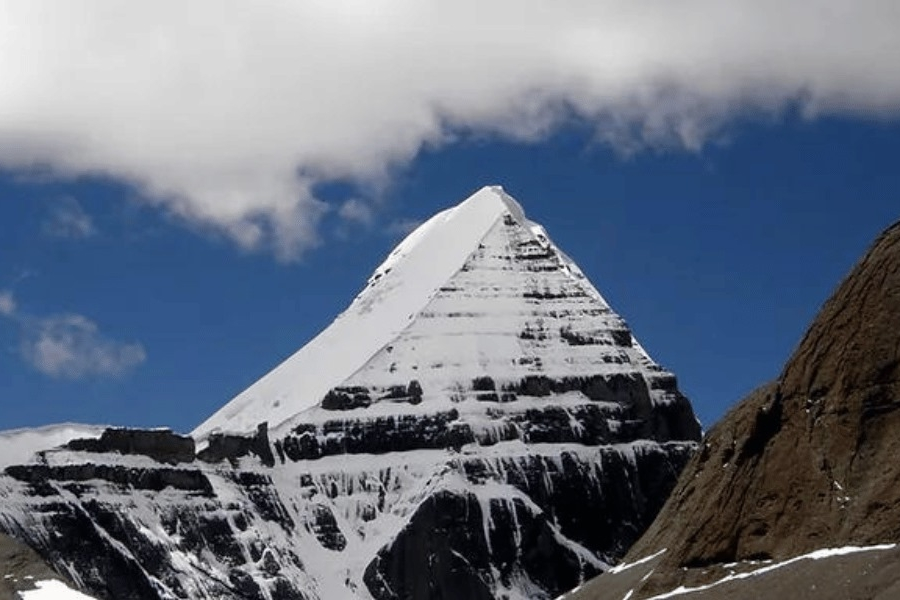
The Significance of Mount Kailash?
Mount Kailash, the world’s holiest peak, is honored by four religions. It is Shiva’s throne in Hinduism, and Demchong, the tantric meditation deity in Buddhism, resides there. Mount Kailash is also considered sacred in the local Bon religion, with its creator Shenrab descending down from heaven. The area around Kailash is mysterious, with the peak representing a nine-story swastika encompassing all spiritual force. The earth is divided into four sections by the rivers Indus, Brahmaputra, Sutlej, and Karnali, all of which are thought to provide life.
The Highlights of Mansarovar Yatra
Mythological Significance
Mount Kailash is honored by Hindus, Buddhists, Jains, and Bon. Hindus believe Lord Shiva and his wife Parvati live at the summit, whilst Jains believe that is where the first Jain Tirthankara attained Nirvana. Buddhism thinks Kailash Parvat is where the Buddha lives, whilst Bon religion believes the location contains all spiritual force.
Visit to Lake Mansarovar
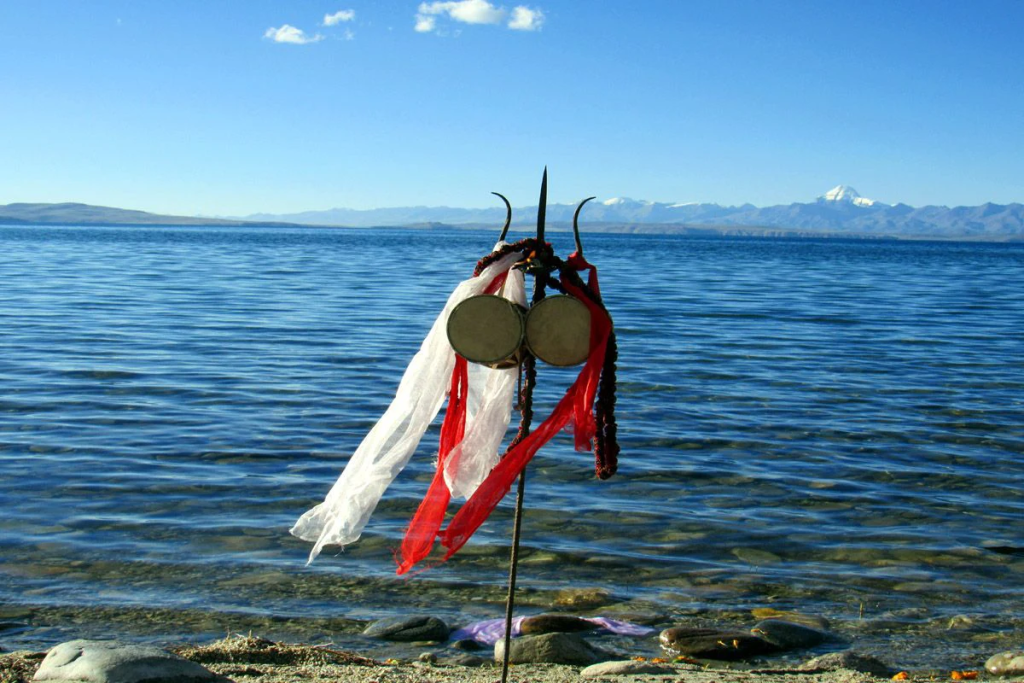
Lake Mansarovar, located at the base of Mount Kailash, is the world’s highest freshwater lake and has religious importance. Its hues shift from pure blue at the coasts to emerald green in the center, creating a bizarre and lovely scene under the moonlight. The reflection of Mt. Kailash’s peak on the lake surface heightens its sacredness.
Exploring the mystic temples
Mount Kailash is encircled by five monasteries: Nyari, Drirapuk, Dzultripuk, Selung, and Gyangzha. Each is decorated with distinctive Tibetan cultural relics and tales, making it a spiritual place for tourists.
The sacred walk of Kailash
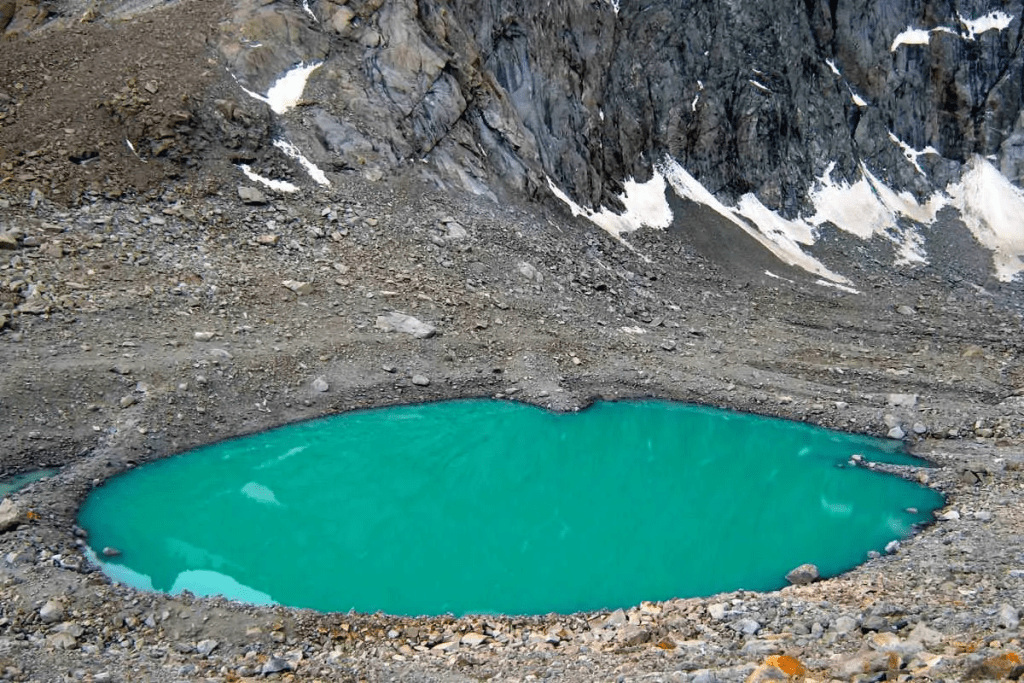
The Kailash Kora is a 52-kilometer pilgrimage road that gives religious thought around Mount Kailash. It begins in Darchen and passes via Derapuk and Zutulpuk Monastery before reaching the highest point of the Kailash Yatra, Dolmala Pass.
What Is Kailash Charan Sparsh
- A Kailash Sacred Walk known as Touch Kailash, a day trip from Derapuk monastery.
- The walk starts from the north face of Mt. Kailash, a glacier walk along the Gange river bank.
- Participants can touch Mt. Kailash’s feet from the bottom of the pyramid, receiving blessings from Lord Shiva and a shann from Sahashra Dhara fallig jal from Kailash Parvat.
- The yatra offers opportunities for prey, meditation, and puja offerings.
- The walk is challenging due to glacier melt, and requires a full day return trip.
- Charan Sparsh, also known as Touch Kailash Parvat, is a must-see hike spot during a Kailash tour.
Also read: Complete Guide to Kailash Mansarovar Yatra – Routes, Cost, Permits & Tips
Inner Kora – Nandi Parikrama in Kailash
- A challenging sacred walk to the highest point of Kailash.
- Begin from Darchen via Sealong Monastery to Saptarishi Cave.
- Make a 5800 meter circle of Nandi Mountain.
- Return to Darchen via Gyandrak Monastery.
- Limited participation due to geographical difficulty, weather conditions, and permit access.
Rakshas Tal – The Poison Lake dedicated to Ravana
- Located west side of Lake Mansarovar.
- Believed to have originated from Demon King Ravana.
- Known for its salty water and lack of living thins.
- Legend suggests King Ravana fell with God Ram’s wife Goddess Sita after bathing in the lake.
- Some Hindus visit the lake for spiritual puja and hawan to clean negative energy.
How difficult is Kailash Mansovar Yatra?
- The Kailash Mansarovar Yatra is challenging but rewarding due to its altitude of around 5,000m.
- The best time to visit is from May to October, with weather conditions being ideal from May to June and September to mid-October.
- The weather conditions are refreshing with high visibility, beautiful views, and comfortable temperatures between 0 to 33 C.
- The most auspicious time to visit is during the Saga Dawa Festival (May and June), which is believed to bring 13 times more blessings than usual and is also the birthday of Lord Buddha Sakyamuni.
- During this festival, Tibetans from all over Tibet gather in the area of Mt. Kailash, replacing the giant flagpole at Tarboche with prayer flags.
- Despite the crowds, the visit to Kailash Mansarovar is considered the most auspicious place to receive blessings.
My Experience of Kailash Mansarovar Yatra
When I planned my Kailash Mansarovar Yatra, I was filled with both excitement and nervousness. This wasn’t just a trip—it was a spiritual calling. Through my journey, I explored the different routes, faced the challenges of high altitudes, and experienced the divinity of standing before Mount Kailash. Here is a detailed breakdown of my travel experience that may help anyone who is planning this sacred journey.
🚩 Routes to Kailash
There are mainly two routes:
- By Road via Kathmandu (14–15 days) – A longer but gradual journey, easier for acclimatization.
- By Air (9–11 days) – Faster and more convenient, but costlier (₹50,000–70,000 higher than the road route).
🛣️ My Road Journey Experience
- I first reached Kathmandu, Nepal, and visited holy sites like Pashupatinath Temple and Budhanilkantha Temple.
- From Kathmandu, the journey went through Syabrubesi, where we crossed the China border, then towards Saga, where an extra day was kept for acclimatization.
- The next stop was Lake Mansarovar, where I stayed for a day, performed rituals, and experienced the breathtaking parikrama (circumambulation) of the lake.
- En route, I also saw Rakshas Tal, believed to be linked to Ravana, and had my first darshan of Mount Kailash—an unforgettable moment.
- After this, we proceeded to Darchen (base camp), where another acclimatization day was necessary before starting the 52 km Kailash Parikrama over three days.
🕉️ Kailash Parikrama (My Highlight)
- Day 1: Started from Yam Dwar, trekking 12 km up to Dirapuk (horses and porters were available but needed advance booking).
- Day 2: A tough 22 km trek via Dolma La Pass (18,500 ft), the highest point, and darshan of the sacred Gauri Kund.
- Day 3: A shorter 7–8 km trek to return and complete the parikrama.
This part of the journey was physically demanding but spiritually the most rewarding. Deep breathing and pranayama really helped me manage altitude sickness.
🏨 Stay & Food
- In cities like Kathmandu, Nepalgunj, Saga, and Darchen, I stayed in 3–4 star hotels with good vegetarian food.
- Near Mansarovar and during the parikrama, accommodation was basic guesthouses/dormitories with shared facilities. The tour team prepared simple but wholesome food—dal, rice, roti, vegetables, fruits, and soup. Carrying dry fruits, chocolates, and energy bars was a big help.
📜 Permits & Documents
- A valid passport, Chinese & Tibet permits, and medical fitness certificate were mandatory.
- I booked only through an authorized tour operator, as there are many frauds outside.
- Government/defense employees require special approval.
⛰️ Health & Acclimatization
- The highest altitude was 18,500 ft at Dolma La Pass.
- I practiced daily walking, pranayama, and light exercises weeks before the trip.
- Carried basic medicines and a small oxygen cylinder for emergencies.
🎒 Packing Essentials
- Warm thermals, down jacket, waterproof gloves, trekking shoes.
- Lip balm, sunscreen, moisturizer, sanitizers, wet tissues.
- Torch, walking stick, raincoat.
- Only 5–7 sets of lightweight clothes—avoid heavy luggage.
- Trolley bags had to be left behind; tour operators provided duffle bags for the trek.
💰 Costing of the Yatra
- By Road (14 days): ₹1.8–2.2 lakh/person
- By Air & Helicopter (10 days): ₹2.3–2.8 lakh/person
- Extras:
- Horse for 3 days: ₹40,000 approx.
- Porter for 3 days: ₹15,000–20,000 approx.
✨ Major Highlights I Experienced
- Darshan at Pashupatinath Temple (Kathmandu).
- Holy dip and puja at Lake Mansarovar.
- Rakshas Tal with its mythological link to Ravana.
- 52 km Kailash Parikrama – once-in-a-lifetime experience.
- Dolma La Pass at 18,500 ft, the highest and most challenging point.
- Gauri Kund, considered the birthplace of Lord Ganesha.
⚠️ My Tips for Future Travelers
- Weather and permits can be unpredictable; stay flexible.
- Be mentally prepared for basic hygiene and facilities.
- Always book with trusted tour operators.
- Start fitness training well in advance.
- Carry patience, faith, and devotion—it makes the journey smoother.
For me, this yatra was more than just a travel experience. It was a test of my endurance, faith, and spirit. Standing before Mount Kailash, I felt a deep sense of peace and connection—something words can hardly capture. Truly, the Kailash Mansarovar Yatra is not just a trip, but a life-transforming pilgrimage.


One thought on “How to Plan Kailash Mansarovar Yatra”