

If you’re someone who loves monsoon treks, majestic views, and exploring forts soaked in Maratha history, then Korigad Fort near Lonavala is a perfect one-day getaway.
Recently, we planned a weekday trek to Korigad Fort and trust us – that was the best decision we made. While weekends are usually packed with trekkers, we chose a Friday to avoid the crowd and enjoy nature peacefully.

🌧️ Best Time to Visit Korigad Fort
Without a doubt, monsoon is the best time to visit. The lush green surroundings, misty fog, light drizzles, and cool breeze make the entire atmosphere feel surreal. June to August is ideal if you love rain-drenched landscapes. If you’re not fond of rain but still want greenery, then winter months like October to February are perfect.
ALSO READ: Tikona Fort Trek
🏞️ The Journey to Korigad
We started from Lonavala and headed towards Peth Shahpur, a small village at the base of the fort. You can take a train to Lonavala from Pune or Mumbai, then catch a bus to Peth Shahpur (buses usually run between 9–10 AM and return around 3 PM). If you have your own vehicle, even better!
On our way, we explored tourist spots like Tungarli Dam, Bhushi Dam, Tiger Point, and Lion’s Point. These scenic spots added to the excitement before we reached the starting point of the trek.


🧗♀️ The Trek Experience
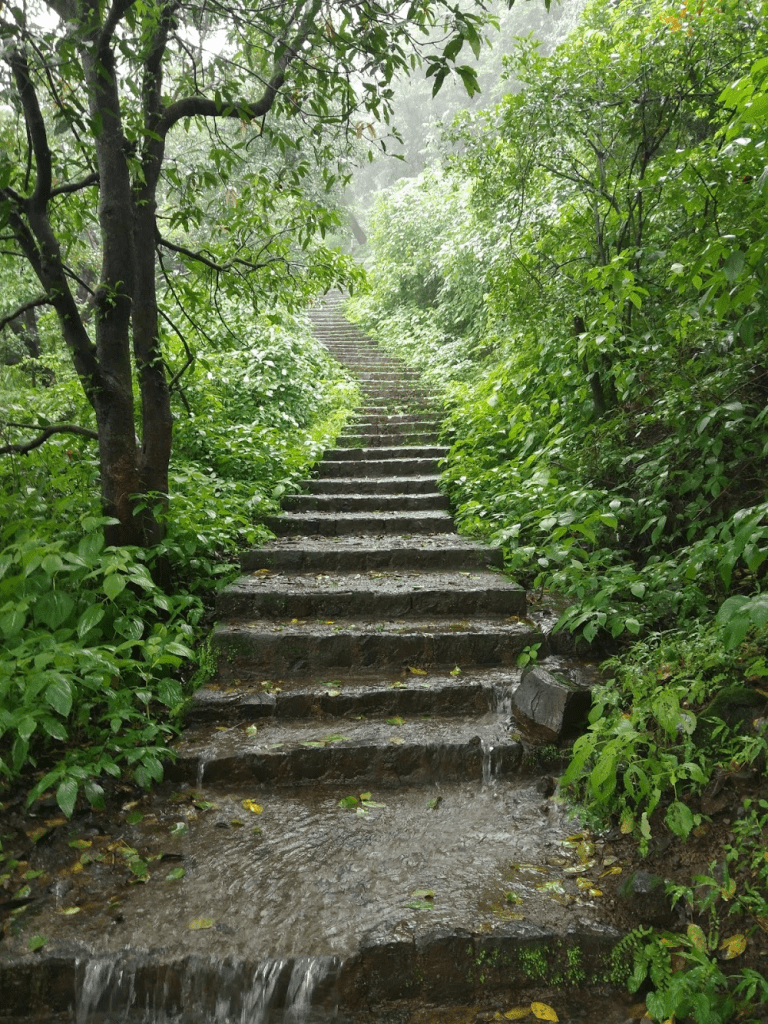
Korigad is a beginner-friendly trek and ideal for families or groups of friends. The trek is relatively easy, with around 400 stone steps to the top. It usually takes 1–1.5 hours depending on your pace and the number of photos you click along the way!
One unique tip: there are sometimes two routes visible during the trek. Just follow the path marked with white arrows (रो mark) – that’s the correct route to the top.
As we ascended, we saw carved water tanks, ancient Ganesh idols, and stone-carved caves. One of the caves was suspended between two stone pillars — a marvel in itself. The rain began to pour heavily midway, making the atmosphere magical.
🏰 A Glimpse into Korigad’s History
Korigad Fort is part of the Girdurg (Hill Fort) category. It stands tall at 929 meters above sea level and was incorporated into the Maratha Empire in 1647 by Chhatrapati Shivaji Maharaj. The fort is also known by other names like Shahagad and Kuwarigad.
Interestingly, the name ‘Korigad’ comes from the Koli community, an indigenous fishing tribe that has deep roots in this region.

🛕 Exploring the Korigad Fort
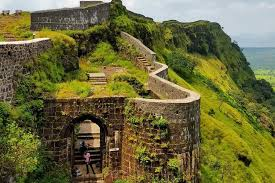
As we entered through the majestic Ganesh Darwaja, we were welcomed by two watchtowers and the remnants of old fortification. The main attractions on the fort include:
- Mahadev Temple – Centrally located and surrounded by four ancient cannons
- A large water tank – still filled with clean water
- Remains of old wadas (residences)
- Laxmi Toap (Cannon) placed on a raised platform
- Korai Devi Temple – The guardian deity of the fort, beautifully restored
What’s most fascinating is the 1.5 km long fort wall which is still intact. One can walk around the entire fort perimeter and witness views of Amby Valley, Pavana Lake, and surrounding Sahyadri ranges.

📝 Key Highlights & Travel Tips
- 🗓 Best Time: Monsoon (June–Aug), Winter (Oct–Feb)
- 🚶♀️ Difficulty: Easy
- ⏱ Trek Duration: 1–1.5 hours (one way)
- 🚗 How to Reach: Via Lonavala – Peth Shahpur by bus/train/private vehicle
- 🧳 Carry: Raincoat (monsoon), water bottle, snacks, dry clothes, and good trekking shoes
- ⚠️ Tip: Be cautious while clicking reels or videos on the edge during rain; it gets slippery
- 🎒 Must-visit Nearby Forts: Sudhagad, Ghangad, Sarasgad – all doable in a 2–3 day trip
🙏 Our Final Thoughts
Korigad Fort isn’t just a trekking destination; it’s an emotion. Standing on the top, with clouds around and the sound of ancient silence, you feel closer to our rich heritage and to nature itself.
It’s a perfect blend of natural beauty, history, and spiritual calmness. If you haven’t visited Korigad yet, add it to your trekking bucket list now. And remember, weekdays are the best if you wish to skip the crowd and embrace serenity.
So, that was our one-day adventure at Korigad Fort!
Let us know in the comments how you liked our blog. And if you plan to visit – don’t forget to like, share, and Comment.
Till then, keep trekking, keep exploring!