
 by
by Most travel blogs will show you polished photos of Bedse Caves. They’ll tell you it’s a “hidden gem” and leave it at that. What they won’t mention is the confusion at the diversion point, the parking chaos during weekends, or the fact that your car’s ground clearance actually matters here.
We’re Ketan and Samprita from Musafir Couple, and we drove to Bedse Caves on a Saturday morning expecting a peaceful Buddhist heritage site. We got that — but also a reality check on navigation, parking politics, and why visiting before 8 AM changes everything.
This bedse caves travel guide isn’t about inspiring you with scenic descriptions. It’s about making sure you don’t waste 45 minutes looking for the right turn like we did.
How to Actually Reach Bedse Caves from Pune (The Route That Works)
Google Maps will get you close. Not exact.
Here’s the bedse caves pune route that worked for us: Take the old Pune-Mumbai Highway through Kamshet. About 55 km from Pune, just after Kamshet town, there’s a diversion. The signboard exists — but it’s small, faded, and easy to miss if you’re doing 60 kmph. We missed it. Turned around after 3 km.
The diversion is on your left if you’re coming from Pune. Once you turn, it’s a narrow village road for roughly 4 km. The road is paved but tight — two cars can’t pass comfortably in most sections. We met a Fortuner coming down while we were going up. That was fun.
After the village stretch, you’ll hit an incline. Not steep, but uneven. Hatchbacks manage fine, but sedans with low ground clearance scrape occasionally. We saw a City struggling near the final 200 meters.
Total driving time from Pune: 1 hour 20 minutes without traffic. On weekends, add 15 minutes because the highway gets crowded near Lonavala.
Musafir Couple’s hack: Use the old highway, not the expressway. The expressway exit adds unnecessary distance. Old highway keeps you closer to the Kamshet diversion.
Bedse Caves Parking Information Nobody Posts Online
This is where most blogs fail you. They say “parking available” and move on. Let me be specific.
There are two parking zones. The first one is about 300 meters before the caves — a flat mud patch on the roadside. Locals wave you in. It’s unofficial. They’ll ask for ₹20-30. We paid ₹30 on a Saturday.
The second parking zone is 100 meters from the cave entrance. It’s better — firmer ground, closer to the climb. But it fills up by 9 AM on weekends. Weekdays? Empty till noon.
Here’s what nobody tells you: if you park at the first spot, you’ll walk an extra 10 minutes uphill on the road. It’s doable, but unnecessary if you arrive early. We parked at the second spot at 8:15 AM. By 10 AM, cars were lining the entire road.
Ground clearance matters for the second parking zone. The access path has a couple of rocks and a dip. SUVs and crossovers have zero issues. Sedans need careful maneuvering. We saw a Verna scrape its underbelly. Not badly, but enough to hear it.
Our take: Arrive before 8:30 AM. Park at the second zone. Save your knees the extra walk.
The Climb to Bedse Caves: What Your Fitness App Won’t Capture
From the second parking zone, the climb begins. It’s not Lohagad. It’s not flat either.
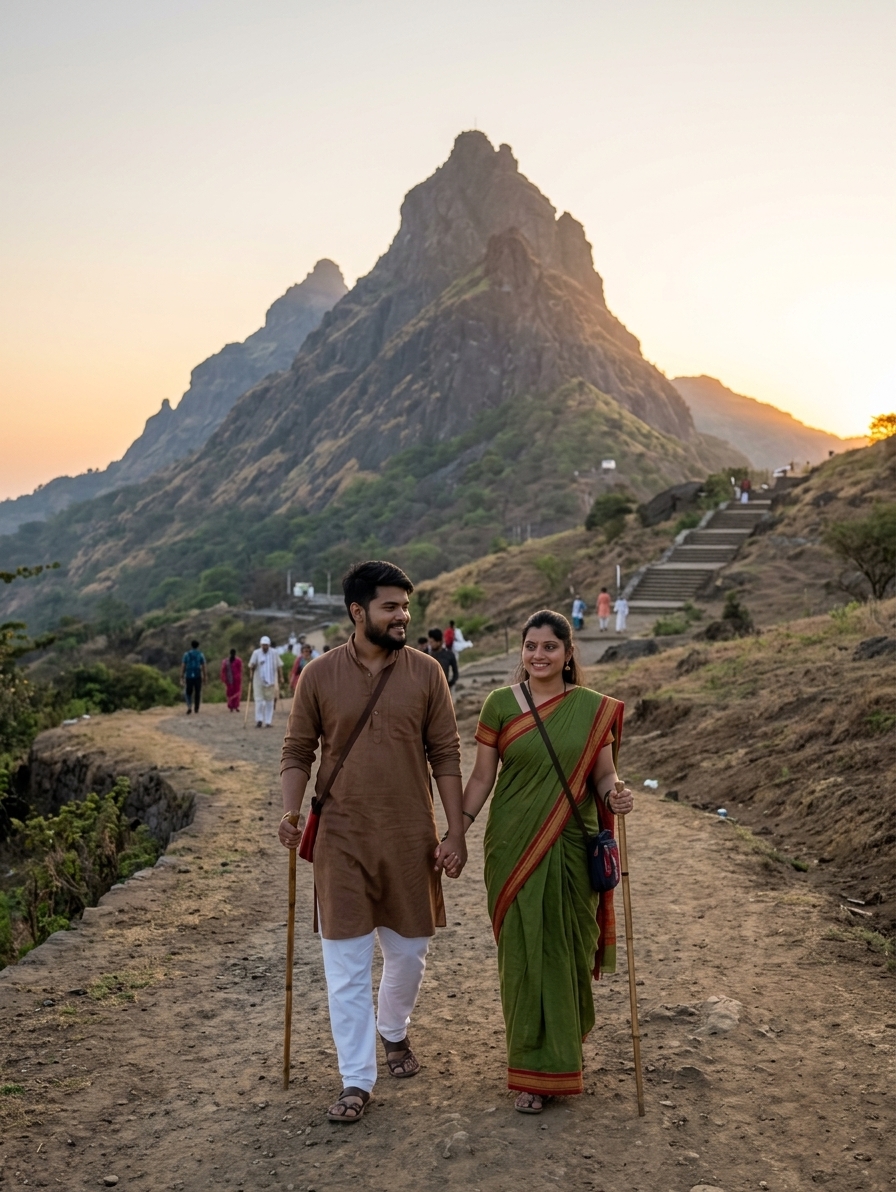
Roughly 100 meters of stone steps — uneven, ancient, moss-covered in some sections. The steps aren’t uniform. Some are knee-high. Some are just raised rocks. Wear shoes with grip. Samprita wore sneakers. I wore floaters. Bad idea. I slipped twice.
The climb takes 8-12 minutes depending on your pace and how often you stop for photos. We took 11 minutes, including two water breaks. There are no railings. One side is open hill. The other is rock face.
Monsoon changes everything. The moss turns slippery. The rocks glisten. If you’re visiting between June and September, the climb becomes a negotiation with physics. We haven’t been during monsoon, but locals warned us. They said people slip every week.
There’s no entry fee. No ticket counter. No guards. Just you, the caves, and occasionally a guide offering history lessons for ₹100-150. We didn’t take one. The ASI board near the entrance gives enough context.
Bedse Caves Entry Fee and Timings (The Real Answer)
Here’s the short version: there’s no bedse caves entry fee. Zero. It’s an ASI-protected site, but unlike some other monuments, they haven’t installed a ticketing system here.
Timings? Officially, sunrise to sunset. Practically, nobody stops you if you arrive at 7 AM or stay till 6:30 PM. We’ve seen photographers camp there till twilight. No one enforces anything strictly.
Best time to visit Bedse Caves: Early morning between October and February. The light is soft. The crowd is thin. Temperature is perfect for the climb. We went in November at 8 AM. We had the caves to ourselves for 40 minutes.
Worst time: Weekends after 10 AM, and any afternoon between March and June. The heat is brutal. The caves face east, so afternoon sun hits hard. Plus, weekend crowds kill the vibe. You came for peace and ancient history, not Instagram queues.
Musafir Couple’s timing strategy: Start from Pune by 6:45 AM. Reach by 8:15 AM. Spend an hour exploring. Leave by 10 AM. Stop at a local joint in Kamshet for poha. You’re back in Pune by noon.
What You’ll Actually See Inside Bedse Caves (And What’s Overhyped)
Bedse Caves are rock-cut Buddhist caves dating back to the 1st century BCE. There are two main caves — a chaitya (prayer hall) and a vihara (monastery). The chaitya is the highlight. The vihara is smaller, less dramatic.
The chaitya has a horseshoe-shaped entrance, carved pillars, and a stupa inside. The pillars have octagonal shafts. The carvings are weathered but visible. The ceiling is high — around 12-15 feet. The acoustics are strange. Whisper at one end, and it echoes differently at the other.
The vihara has smaller chambers — monk cells, essentially. Some still have stone beds carved into the rock. We sat in one. It’s cramped. Hard to imagine spending years meditating there.
Photography is allowed. No flash restrictions mentioned anywhere. We shot everything on our phone. The natural light inside the chaitya is beautiful between 8 and 10 AM. After that, it’s dim and tricky.
Now, the overhyped part: some blogs call Bedse Caves “as impressive as Ajanta.” That’s a stretch. Bedse is intimate, historically significant, and peaceful. But the scale, detailing, and preservation don’t match Ajanta or even Karla Caves. If you expect grand murals or intricate sculptures, you’ll be disappointed.
What Bedse does better: solitude. Unlike Karla Caves (just 12 km away), Bedse doesn’t attract bus tours. You can sit inside the chaitya, breathe, and actually feel the history. That’s rare.
Bedse Caves vs Karla Caves: Which One Should You Visit?
We’ve been to both. Here’s the honest comparison most blogs won’t give you.
Karla Caves are larger, more grand, better preserved. The main chaitya there is one of the biggest rock-cut halls in India. The detailing is finer. The pillars are more ornate. There’s also a proper approach road, clearer signage, and a developed parking area.
But Karla is crowded. Weekends bring school groups, tourist buses, and vendors selling everything from coconut water to plastic flutes. The experience feels touristy, not spiritual.
Bedse Caves are smaller, rougher around the edges, harder to access. The carvings are simpler. The infrastructure is minimal. But the vibe is pure. You climb, you explore, you sit in silence. No hawkers. No loudspeakers. Just wind, rock, and history.
Our verdict: If you want the “best” Buddhist cave in terms of architecture, go to Karla. If you want an experience that feels like discovery, not sightseeing, choose Bedse.
Or do both. They’re 12 km apart. We did Bedse first, then Karla. Bedse set the mood. Karla impressed the eyes. Together, they made sense.
Musafir Couple’s recommendation: Visit Bedse Caves on a weekday or early weekend morning. Visit Karla if you’re okay with crowds and want more dramatic architecture. Don’t skip either if you’re genuinely into heritage travel.
Things We Wish We Knew Before Visiting Bedse Caves
Carry water. There’s nothing on the climb or near the caves. The small shops are down near the village, not up by the parking zones.
Wear real shoes. Not chappals, not fancy sandals. The steps are uneven. Ankles twist easily.
The phone signal is weak. Jio worked intermittently. Airtel was better. VI was dead. Don’t rely on maps or calls once you’re past Kamshet.
Toilet facilities don’t exist near Bedse Caves. Use the restroom at a dhaba in Kamshet before the diversion. We learned this the hard way.
Monkeys are rare but present. We didn’t see any, but locals mentioned occasional sightings near the lower parking zone. Don’t leave food visible in your car.
Sunrise visits are magical but risky if you’re not familiar with the road. The village stretch has no streetlights. Drive slow.
The caves close to vehicular access during heavy rains. The road floods in two sections. Locals block it for safety. If you’re planning a monsoon visit, call ahead. There’s a small tea stall near the base — the owner, Baban Kaka, knows the daily road status. His number isn’t online, but ask any local when you reach. Everyone knows him.
Is Bedse Caves Worth It? Our Real Answer
Worth it if you care about history, Buddhist heritage, or offbeat escapes. Not worth it if you’re chasing Instagram aesthetics or expect Ajanta-level grandeur.
We spent ₹450 total for two people: ₹300 on fuel (round trip from Pune in a hatchback), ₹30 for parking, ₹60 for chai and biscuits at Kamshet, ₹60 for breakfast poha post-visit. No entry fee. No guide fee. No tourist trap pricing.
Time investment: 4 hours total from Pune including travel, climb, exploration, and breakfast stop. You’re back by lunch.
The bedse caves travel guide experience is simple, raw, and real. It’s not Disneyfied. It’s not over-commercialized. You feel like you discovered something, even though it’s been there for 2100 years.
Musafir Couple has covered 100+ destinations across India. Bedse Caves won’t make your “Top 10 India trips” list. But it’ll make your “glad I went” list. There’s a difference.
If you’re in Pune, Lonavala, or anywhere near the Mumbai-Pune belt and you have a free Saturday morning, go. If you’re flying in from Delhi specifically for this, maybe reconsider. Context matters.
Frequently Asked Questions
What is the best time to visit Bedse Caves?
Early morning between October and February works best. Arrive by 8 AM to avoid crowds and heat. Weekdays are quieter than weekends. Monsoon makes the climb slippery but the surroundings greener — visit only if you’re confident on wet rocks.
Is there any entry fee for Bedse Caves?
No. Bedse Caves has no entry fee. It’s an ASI-protected site but ticketing hasn’t been implemented. You can explore freely. Some guides offer history tours for ₹100-150, but that’s optional.
How do I reach Bedse Caves from Pune by car?
Take the old Pune-Mumbai Highway toward Kamshet. About 55 km from Pune, look for a small diversion on your left just after Kamshet town. Follow the village road for 4 km. The final stretch is uneven — SUVs handle it better than low-clearance sedans.
Where can I park at Bedse Caves?
There are two parking zones. The first is 300 meters before the caves — unofficial, ₹20-30 charge. The second is 100 meters from the cave entrance — better but fills up by 9 AM on weekends. Arrive early to secure the closer spot.
How long does it take to explore Bedse Caves?
The climb takes 8-12 minutes. Exploring both caves takes 30-45 minutes. Total time at the site: 1 hour including photography and rest. Add travel time based on your starting point. From Pune, plan 4 hours round trip including breaks.
Plan Your Bedse Caves Visit with Musafir Couple
We’ve walked these steps. We’ve missed the turn. We’ve sat inside the chaitya when the morning light hit just right. This bedse caves travel guide is built from real confusion, real costs, and real timing mistakes.
If you’re planning a trip to Bedse Caves or exploring hidden heritage sites around Pune and Maharashtra, follow Musafir Couple on YouTube and Instagram. We share unscripted travel moments, honest route details, real budgets, and the kind of information that makes trips smoother — not just prettier.
No fluff. No filters. Just Ketan and Samprita figuring out roads, parking, and whether it’s actually worth it. Because that’s the guide we wish we had.
Pack your shoes. Carry water. Start early. Bedse Caves is waiting — exactly as it was 2100 years ago.