

 by
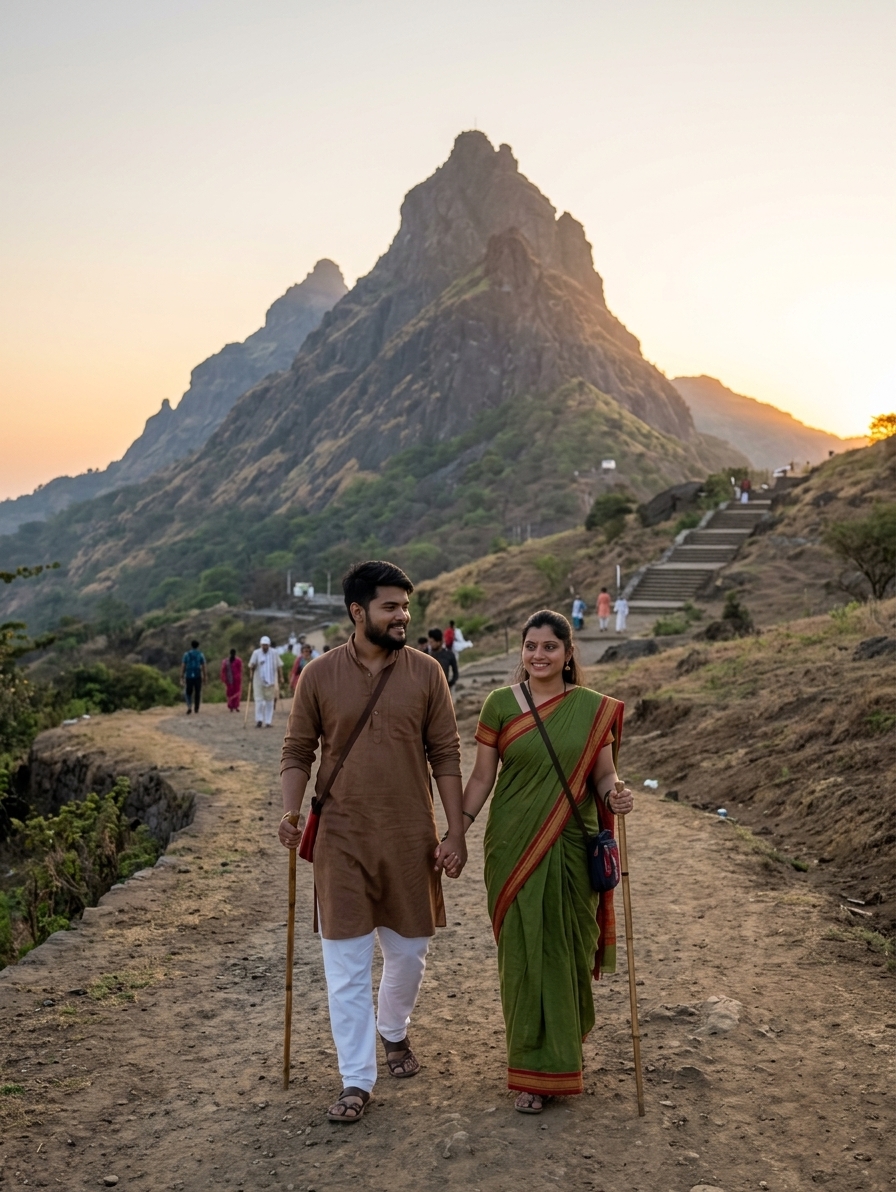
by We completed the Girnar Parikrama in November 2025. Ketan and I — that’s us, Musafir Couple — started from Junagadh at 4 AM and finished the 36-kilometre loop around this sacred mountain by late afternoon. The route isn’t clearly marked everywhere, some stretches feel endless, and the exhaustion hits hard after kilometre 20. But we made it. And we’re writing this so you don’t go in blind like we did.
This isn’t a tourism board overview. This is the actual route, turn by turn, with what to expect at each stage, where we screwed up, where you’ll struggle, and what you absolutely need to carry. If you’re planning to do the Girnar Parikrama, read this twice. Once now, once the night before you start.

What Is the Girnar Parikrama Route and Why People Walk It
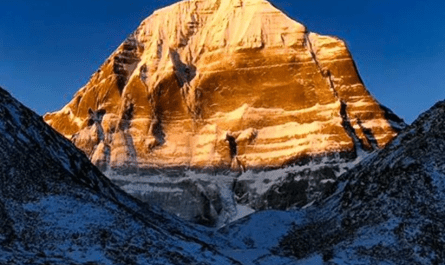
The Girnar Parikrama route is a 36-kilometre circumambulation of Girnar mountain near Junagadh, Gujarat. Pilgrims walk this circuit as a spiritual offering, particularly during Kartik Purnima when thousands gather. The path loops around the base of the mountain, passing temples, small villages, dry riverbeds, and long stretches of open scrubland.
You’re not climbing Girnar’s summit. That’s a separate trek with 10,000 steps. The Parikrama is mostly flat with gentle slopes, but the distance is what breaks you. Most people finish in 10 to 14 hours depending on pace, stops, and fitness level.
We started from Bhavnath Gate, the traditional starting point. You can technically begin anywhere on the loop, but Bhavnath is where most infrastructure is — water, food, rest spots, and the crowd. The route is considered auspicious, especially for couples and families seeking blessings for health, prosperity, and togetherness.
Here’s the thing: it’s not difficult terrain. It’s the sheer length and the mental game after hour six that gets you. People underestimate it because it sounds like a walk. It’s not a walk. It’s an endurance test disguised as a pilgrimage.
Step 1: Start at Bhavnath Mahadev Temple Before Sunrise
You begin at Bhavnath Mahadev Temple, located at the base of Girnar near Junagadh. This is kilometre zero. Most pilgrims arrive by 4 AM, do a quick darshan, and set off by 4:30 AM. Starting early is non-negotiable. The November sun gets harsh after 9 AM, and you want those first 15 kilometres done in cooler hours.
We reached Bhavnath at 3:45 AM. The temple was lit, crowded, and buzzing with energy. We took our shoes off, did a quick prayer, filled our bottles at the water station near the gate, and started walking. Don’t linger. The crowd thins out quickly, and you want to keep pace with the early wave.
Watch out for: Locals offering paid puja services right at the gate. Politely decline if you’re in a hurry. Also, the initial stretch is paved and lit, so it feels easy. Don’t sprint. Conserve energy. You’ve got 35 more kilometres to go.
Carry a headlamp or phone torch for the first hour. Street lights end within 2 kilometres, and some sections are pitch dark until sunrise. We used our phone torch and regretted not bringing a proper headlamp. Battery drained by kilometre 8.
Step 2: Follow the Paved Road Out of Bhavnath Toward Girnar Taleti
After leaving Bhavnath, you’ll walk on a paved road heading southeast. This section is well-marked and easy to follow. You’ll pass small dhabas, chai stalls (mostly closed at 4 AM), and a few ashrams. The road is flat, smooth, and comfortable.
At around kilometre 3, you’ll reach Girnar Taleti, the base camp for the summit trek. You’ll see the ropeway station on your right and a cluster of shops selling snacks, water, and trekking gear. Don’t stop here unless you need the toilet or forgot something critical. The real Parikrama route veers left here, away from the ropeway.
This is where we made our first mistake. We stopped for chai, got distracted, and wasted 15 minutes. The early crowd moved ahead, and we ended up walking alone for the next 5 kilometres. Not dangerous, just less motivating.
The route after Taleti is still paved but narrows. You’ll start seeing painted arrows and small signboards in Gujarati. Follow the arrows. They’re faint in some spots, but they’re there.
Step 3: Navigate the Village Stretch from Taleti to Khapra Kodiya Caves
Between kilometre 4 and kilometre 10, the Girnar circumambulation path cuts through small villages and farmland. This is the least scenic part of the trek. Dusty roads, barking dogs, curious locals, and zero shade. The sun rises around 6:30 AM, and by 7 AM, it’s already warm.
You’ll pass through two main villages: Girnar Taleti and Khapra Kodiya. The route is straightforward but not always obvious. At one point, around kilometre 7, we hit a fork with no signboard. We asked a farmer. He pointed left. Always ask if you’re unsure. Locals know the route better than any GPS.
At Khapra Kodiya, around kilometre 10, you’ll see the entrance to ancient Buddhist caves carved into the hillside. These caves are beautiful and worth a 10-minute detour if you’re not in a rush. We skipped them on the way out and stopped on the way back. Big mistake. By then, we were too exhausted to climb up.
Watch out for: Loose dogs in the village sections. They bark but don’t chase. Still, carry a stick if you’re nervous. Also, public toilets are rare here. We used a field. Not proud, but that’s the reality.
Step 4: Cross the Open Scrubland Between Kilometre 10 and Kilometre 20
This is the hardest mental stretch of the Girnar trek guide. After Khapra Kodiya, the route opens into dry scrubland. No trees, no shade, no buildings. Just dirt paths, scattered rocks, and Girnar mountain looming to your left. The path is wide but not paved. It’s dusty, uneven in places, and relentless.
We hit this section around 8 AM. The sun was already brutal. We drank through our first litre of water by kilometre 12 and started rationing. There’s one water station around kilometre 15, near a small shrine. It’s a hand pump with decent water. Fill everything you’ve got.
The path here is mostly flat with gentle undulations. You’ll cross a dry riverbed twice. Both crossings are easy — just sandy patches. No water, even after monsoon. The route curves east, then north, keeping Girnar on your left the entire time.
Mentally, this stretch broke us. It felt like it would never end. Every kilometre looked identical. We played music, talked nonsense, and counted steps to stay sane. If you’re walking with someone, this is where conversation matters. Alone, you’ll struggle.
Watch out for: Dehydration. Carry at least 3 litres per person. We carried 2 and regretted it. Also, the path splits in a few places. Always take the path closer to the mountain. The outer paths loop into farmland and dead ends.
Step 5: Reach Datar Hill and the Midpoint Rest Area Around Kilometre 18
Around kilometre 18, you’ll reach Datar Hill, a small elevated area with a temple dedicated to a local saint. This is the unofficial midpoint of the Junagadh pilgrimage. There’s a rest shed, a water tap, and a few vendors selling bananas, biscuits, and cold drinks.
We collapsed here. Sat for 20 minutes, ate two bananas each, and refilled our bottles. The rest area was crowded with other pilgrims, all in the same state of exhaustion. This is where you realise you’re not alone in the struggle. Everyone’s limping by this point.
The temple at Datar is small but peaceful. We went in, sat for five minutes, and caught our breath. The priest offered us prasad — a handful of roasted chana. We took it. Energy is energy.
After Datar, the route starts curving west, heading back toward Bhavnath. You’re past the halfway mark, but the terrain doesn’t get easier. The path is still dirt, still exposed, and still unforgiving.
Watch out for: The temptation to quit. At kilometre 18, with 18 more to go, a lot of people call it. They hitch a ride on a tractor or call a taxi. Don’t. You’ve come this far. The second half moves faster psychologically.
Step 6: Push Through the Western Stretch from Kilometre 20 to Kilometre 30
The western side of the Girnar mountain circuit is slightly more forgiving. The path is still unpaved, but you’ll pass more trees, occasional streams (dry most of the year), and a few scattered shrines. The crowd thins out here. Most casual pilgrims turn back at Datar or take shortcuts.
We hit kilometre 25 around 1 PM. Ketan’s knees were screaming. My feet were blistered. We stopped under a tree, took off our shoes, and aired out our socks. Best decision of the day. Five minutes of rest, feet elevated, changed everything.
At kilometre 27, you’ll pass a small Hanuman temple. There’s another water source here, but the water tasted metallic. We drank it anyway. No choice. Dehydration is worse than bad-tasting water.
The path here is wider and more defined. You’ll see tractor tracks and occasional vehicle marks. Some locals use this route to access their fields. Don’t expect traffic, but don’t be surprised if a bike or tractor passes you.
Watch out for: Foot pain. Blisters are common by this point. Carry band-aids or duct tape. We used duct tape on our heels. Looked ridiculous, worked perfectly. Also, don’t skip the small shrines. They often have water or someone who can point you in the right direction.

Step 7: Complete the Final 6 Kilometres Back to Bhavnath
The last 6 kilometres feel longer than the first 30. You’re exhausted, your body hurts, and you can see Girnar’s silhouette in the distance but it doesn’t seem to get closer. The path here is a mix of dirt and paved sections as you re-enter the outskirts of Junagadh.
Around kilometre 32, you’ll rejoin the paved road you started on. Street lights, houses, and chai stalls reappear. We stopped for chai at kilometre 33. Hot, sweet, and ridiculously satisfying. The chai wallah asked where we’d come from. We said Bhavnath this morning. He laughed. “Parikrama?” We nodded. He gave us free biscuits.
The final stretch back to Bhavnath Mahadev is downhill and paved. You’ll see the temple’s flagpole from kilometre 34. That sight pushed us through the last 2 kilometres. We reached Bhavnath at 3:45 PM. Exactly 12 hours after we started.
We did the final darshan, sat outside the temple for 20 minutes, and just breathed. People congratulated us. Strangers patted Ketan’s back. An old woman handed us prasad and said, “Bhagwan khush hoga.” We believed her.
Watch out for: The urge to rush the finish. Walk slowly, especially downhill. Your knees are cooked by now. Rushing invites injuries. Also, the temple area is crowded in the evening. Keep your belongings close.
What to Carry for the Girnar Parikrama Route
You don’t need much, but what you carry matters. Here’s what worked for us and what we wish we’d brought.
Water: Minimum 3 litres per person. We carried 2 and ran dry by kilometre 20. There are refill points at kilometre 10, 15, and 27, but don’t count on them. Carry your own.
Food: Bananas, energy bars, roasted chana, and biscuits. Avoid heavy meals. We ate light, every 2 hours. Small bursts of energy work better than one big meal.
Shoes: Comfortable, broken-in sneakers or trekking shoes. Not new shoes. Ketan wore new Nikes. Huge mistake. Blisters by kilometre 8. I wore my old Decathlons. Zero issues.
Clothing: Light, breathable clothes. A cap or scarf for sun protection. Sunglasses. The sun is merciless between 9 AM and 2 PM. We both wore cotton tees and track pants. Worked fine.
First aid: Band-aids, pain balm, and any personal medication. We carried Volini spray. Used it twice. Helped.
Torch or headlamp: Essential for the first hour if you’re starting before sunrise. We used our phone torch and drained the battery. Stupid move.
Cash: Small notes. Some vendors don’t take UPI. We carried Rs 500 in change. Enough for chai, bananas, and temple donations.
Don’t carry: Backpacks heavier than 5 kg, unnecessary gadgets, or multiple pairs of shoes. Every extra kilogram will hurt by kilometre 15.
Best Time to Walk the Girnar Circumambulation
Kartik Purnima (usually in November) is the most auspicious time. Thousands of pilgrims gather, the path is lit at night, and the atmosphere is electric. But it’s also crowded. We did it two weeks after Kartik Purnima and found the sweet spot: fewer crowds, same spiritual vibe, better weather.
November to February is ideal. Cool mornings, manageable afternoons, and pleasant evenings. We walked in late November. Perfect conditions.
Avoid March to June. The heat is unbearable. We met a guy who attempted it in May. He quit at kilometre 12, vomited twice, and needed medical help. Don’t be that guy.
Monsoon (July to September) makes the path slippery and unpredictable. The riverbeds fill, which sounds scenic but complicates crossings. Locals say it’s doable, but we wouldn’t risk it.
Start early. 4 AM is standard. Starting at 6 AM means you’ll be walking in peak heat by 10 AM. We started at 4 AM and still felt the sun by kilometre 18.
What Most Guides Don’t Tell You About the Route
The Girnar Parikrama isn’t technically difficult, but it’s mentally exhausting. Hours 6 to 10 are brutal. You’re tired, the scenery is monotonous, and every step feels like three. We hit a low around kilometre 22. Ketan wanted to call it. I snapped at him. We fought. Then we laughed. Then we kept walking.
There’s no single “hard part.” The whole thing is hard. But it’s not impossible. We’re not athletes. We’re a regular couple from Pune who travels on weekends. If we finished it, you can too.
Don’t expect clear signage everywhere. Some stretches have no markers at all. Ask locals, follow the crowd, and trust the path closer to the mountain. We got confused three times. Each time, a local pointed us right.
The route is safe. We walked through isolated sections and never felt unsafe. Locals are helpful, other pilgrims are friendly, and the vibe is peaceful. But carry a charged phone and let someone know your plan.
Most people focus on completing the Parikrama. That’s fine. But take a moment at Datar, or kilometre 20, or wherever you need it — stop, breathe, and look at Girnar. The mountain is stunning. The silence is rare. The whole experience is bigger than the distance.
How Musafir Couple Approached the Girnar Trek Guide
We didn’t prepare much. That’s honest. We’d read one blog, watched two YouTube videos, and figured we’d wing it. Bad idea. We should’ve trained. A few practice walks of 10 to 15 kilometres would’ve helped. Our legs were destroyed by kilometre 25.
But we also didn’t overthink it. We carried what we needed, started early, and trusted the process. The Girnar Parikrama isn’t Everest. You don’t need a sherpa or a satellite phone. You need decent fitness, mental grit, and a reason to finish.
Our reason was simple. We’d visited Somnath, walked Girnar’s summit trek, and wanted to complete the full spiritual circuit. The Parikrama felt like the final piece. And it was. We left feeling lighter, calmer, and honestly proud of ourselves.
If you’re reading this and wondering whether you should do it — yes. Do it. Not because it’s easy. Because it’s worth it.
Frequently Asked Questions
How long does the Girnar Parikrama route take?
Most people finish in 10 to 14 hours. We took 12 hours with breaks. Faster walkers complete it in 9 hours. If you’re slower or stop often, plan for 14 to 15 hours. Starting at 4 AM means you’ll finish by 4 to 6 PM.
Is the Girnar circumambulation path clearly marked?
Not everywhere. Bhavnath to kilometre 15 is fairly clear with painted arrows and signboards. After that, sections around kilometre 18 to 25 have fewer markers. Ask locals or follow other pilgrims. GPS works but isn’t always accurate in open scrubland.
Can you do the Girnar Parikrama alone?
Yes, it’s safe. We saw solo pilgrims, especially during Kartik Purnima. But walking with someone makes it easier mentally. The long stretches get boring. Having company helps. If you’re alone, start early and stick with the crowd.
What’s the total distance of the Girnar mountain circuit?
The complete loop is 36 kilometres. Some sources say 35, some say 38. It’s roughly 36. Don’t fixate on the exact number. It’s long either way.
Start Early, Walk Steady, and Finish the Girnar Parikrama
You’ve got the route. You know what to carry. You know where it gets hard. Now it’s on you.
The Girnar Parikrama route isn’t a sightseeing walk. It’s a test. Of your legs, your patience, and your ability to keep moving when everything in you wants to stop. But crossing that finish line at Bhavnath, exhausted and filthy and proud — that feeling stays with you.
We’re Musafir Couple, powered by Travelheal, and we share real travel experiences from real journeys. No filters, no sponsorships on this one, just honest advice from two people who walked 36 kilometres and lived to tell you about it.
If you’re planning the Girnar Parikrama, DM us on Instagram. We’ll answer whatever we can. And when you finish — and you will — tag us. We want to see it.