

 by
by Mahabaleshwar in 3 Days: The Itinerary That Actually Works (Not the Tourist-Trap Version)
A practical 72-hour guide to Mahabaleshwar from a couple who learned the hard way — including real routes, honest timings, hidden spots the bus tours skip, and the truth about what’s worth your time and what isn’t.
Let’s be honest upfront. Most Mahabaleshwar itineraries online send you chasing 15 viewpoints that look identical, standing in queues at Mapro Garden for an hour, and wondering why your weekend feels more exhausting than relaxing.
We’ve done Mahabaleshwar wrong twice before getting it right. The first trip, we followed a popular blog’s itinerary and spent more time in traffic between points than actually experiencing anything. The second time, we overcompensated and picked only offbeat spots — which meant missing some genuinely beautiful places just because they were crowded. This third attempt? We finally cracked the balance. You can actually see Mahabaleshwar properly in three days if you know what to skip, what to prioritize, and which hours to move.
This isn’t the version where you tick 25 spots off a checklist. This is the version where you leave feeling like you actually travelled, not just toured.
Day 1: Arrival, Old Mahabaleshwar, and the Sunset Most People Miss
Start early. Really early.
If you’re driving from Pune like we did, leave by 6:30 AM. The 120-kilometer route via NH48 takes around three hours without breaks, longer if you stop for breakfast. We’ve tried both — leaving at 9 AM lands you in Mahabaleshwar right when every tour bus and family car does. You spend the first hour just finding parking.
Reach Mahabaleshwar by 9:30 or 10 AM. Check into your hotel, drop the bags, and head straight to Old Mahabaleshwar. Don’t wait till afternoon. This is where most itineraries mess up — they put Old Mahabaleshwar on Day 2 or 3 because it’s “just a temple town.” Wrong. It’s the soul of the place, and it’s best experienced in the morning before the crowd thickens.
Old Mahabaleshwar Circuit (10 AM to 1 PM):
Park near Mahabaleshwar Temple. Entry is free. The temple itself is ancient, dedicated to Lord Shiva, and sits at the origin point of the Krishna River. You’ll see the river emerging from a cow’s mouth sculpture — it’s small, almost underwhelming if you expect Ganga-scale drama, but it’s genuine. The priest will offer you a small puja. Take it. Costs ₹50-₹100, takes five minutes, and feels right.
Walk down to Panch Ganga, literally five minutes away. It’s the confluence of five rivers — Krishna, Venna, Koyna, Savitri, and Gayatri. Honestly, you won’t see five distinct streams. What you will see is a quiet, tree-lined spot where older locals come to sit. We spent 20 minutes here just watching the water. No viewpoint crowd. No selfie chaos.
From Panch Ganga, drive or walk to Atibaleshwar Temple, another two kilometers. Smaller, quieter, older than the main temple. The priest here is chatty if you speak Marathi, and he’ll tell you stories about the Peshwa-era history that no guide board will. If you’re not into temples, skip this one — but if you appreciate old stone architecture and quiet spaces, don’t.
Lunch back in main Mahabaleshwar. Avoid the big restaurants on the main road for now. Head to Grapevine Restaurant or The Grill Room at Brightland Resort. Expect ₹800-₹1200 for two. The food isn’t fancy, but it’s hot, filling, and you’re not eating in a tourist mill.
Afternoon: Venna Lake and Reality Check (2 PM to 5 PM):
Most people will tell you to boat at Venna Lake. We’ll tell you something different.
Go to Venna Lake. Walk around it. The periphery is actually beautiful — tree-lined, breezy, relatively clean. But skip the boating unless you’re traveling with kids who insist. It’s ₹150-₹200 per person for a paddleboat or rowboat, and it’s… fine. Just fine. The water isn’t crystal clear, the boats are old, and you’re mostly dodging other boats. We did it once. Didn’t regret it, didn’t remember it either.
What’s better: walk to the far side of the lake where the horse rides and food stalls thin out. There’s a small hill path that almost no one takes. Climb it. Ten minutes, nothing strenuous. At the top, you get a clean view of the lake and the valley beyond without the noise. We sat there for half an hour. That’s the Venna Lake experience worth having.
From Venna, drive to Connaught Peak (also called Mount Olympia). It’s about 4 kilometers, takes 15 minutes. Park at the base and walk up — don’t drive all the way unless mobility is an issue. The walk is short, shaded, and honestly more pleasant than the viewpoint itself. Connaught Peak is the second-highest point in Mahabaleshwar. The view? Valleys, hills, greenery. It’s pretty. Not life-changing. But the walk and the breeze make it worth the detour.
Evening: Wilson Point Sunset (5:30 PM to 7 PM):
Here’s the move most itineraries miss. Wilson Point (Sunrise Point, they call it) is famous for sunrise. Everyone goes at 5:30 AM. Almost nobody goes at sunset.
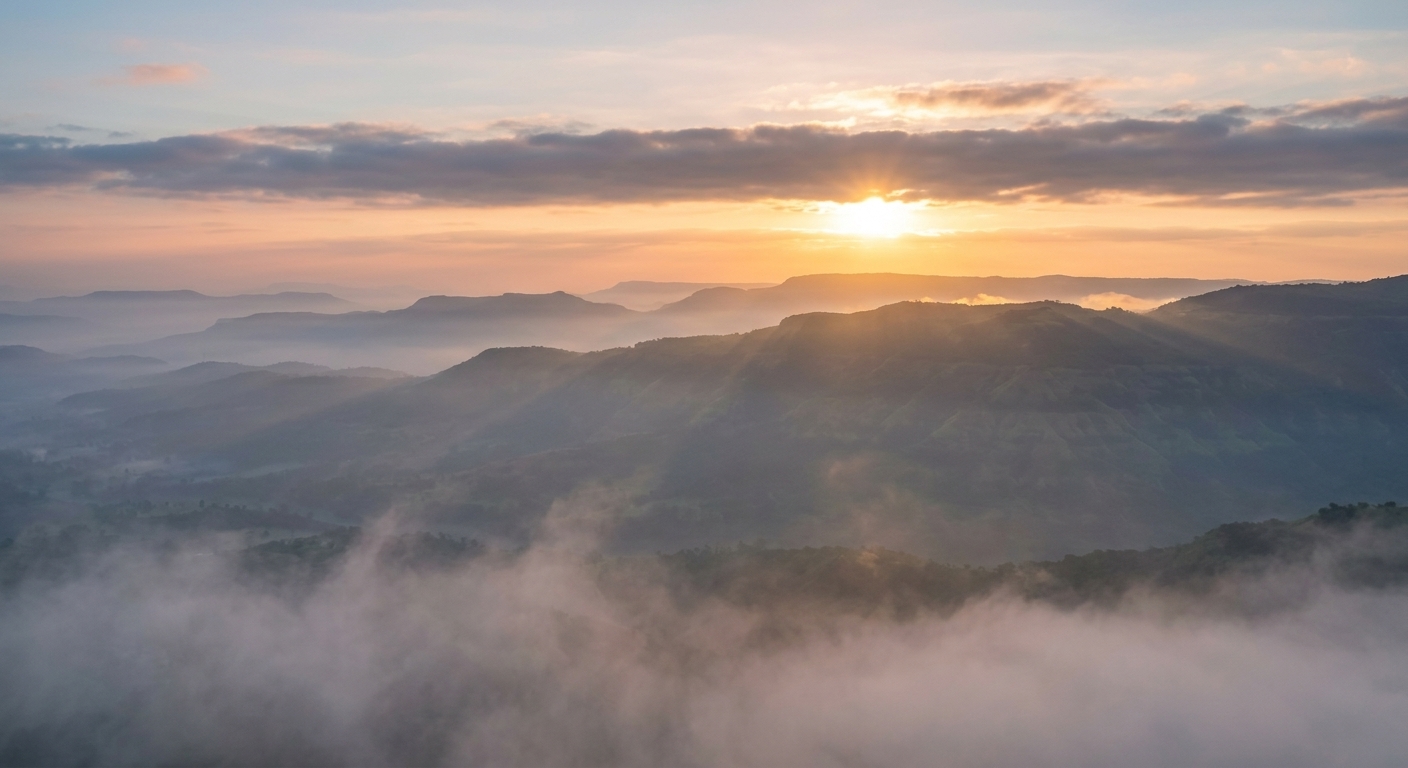
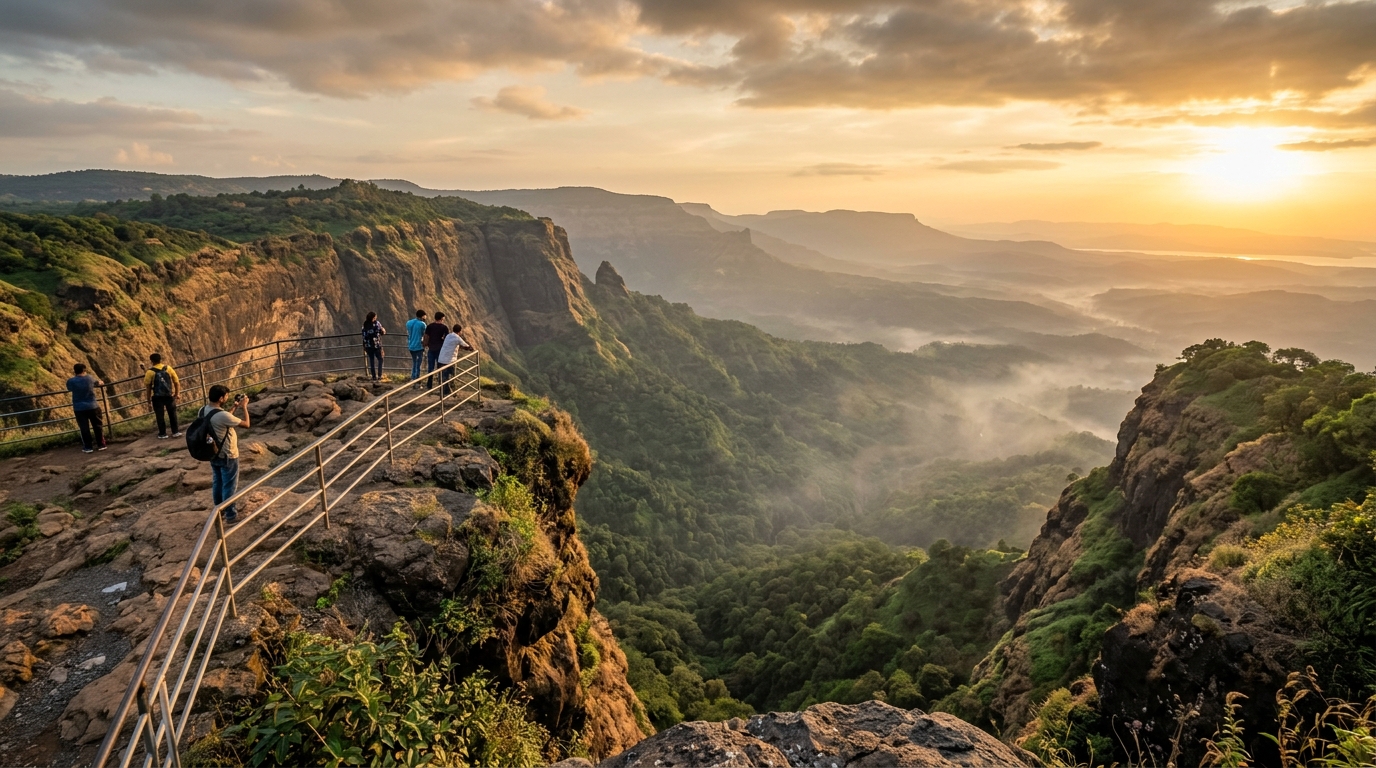
We stumbled on this accidentally. Wilson Point at sunset is stunning, nearly empty, and the light hits the valley in a completely different way than dawn. The western side glows orange while the eastern side fades into shadow. You can actually hear the silence between the wind gusts.
Reach by 5:45 PM. Stay till the light fully fades. There’s a small snack vendor at the top who sells chai and Maggi. The chai is watery, but drinking it while watching the valley darken is the kind of moment you came to Mahabaleshwar for.
Drive back to your hotel. Dinner at Bagicha Corner or Farmhouse Bistro. Budget ₹1000-₹1500 for two. Rest. Day 2 is longer.

Day 2: The Viewpoint Circuit Done Right (and the One Strawberry Farm Worth Visiting)
Here’s the thing about Mahabaleshwar viewpoints. There are at least 15 marked on Google Maps. Most look similar. Same valley. Same hills. Slightly different angle. If you try to cover them all, you’ll finish the day exhausted and unable to remember which point was which.
We’ve done the viewpoint marathon. Don’t repeat our mistake. Pick five, space them out, and actually spend time at each instead of just snapping a photo and running.
Morning: The North Circuit (7 AM to 12 PM):
Start early again. Eat a quick breakfast at the hotel or grab puff pastry and chai from a local bakery. Mahabaleshwar has multiple small Irani bakeries that open by 6:30 AM — fresh bun maska and chai costs ₹80 for two and fuels you better than a hotel buffet.
Drive to Arthur’s Seat first. It’s the most famous viewpoint, and for once, the fame is justified. Arthur’s Seat overlooks the Savitri River valley, and on a clear day, you can see the backwaters of Konkan. The cliff edge has a proper railing, but the drop is dramatic. Go to the left side, away from the main viewing platform. Fewer people, same view, better photos.
There’s a small Parsi Point right next to Arthur’s Seat. It’s technically a separate viewpoint but honestly, it’s a 2-minute walk and offers a slightly different angle. Do both in one stop.
From here, drive to Elephant’s Head Point (also called Needle Hole Point). It’s around 5 kilometers, takes 10 minutes. The rock formation genuinely looks like an elephant’s head and trunk if you use a little imagination. The fun part here isn’t the main viewpoint — it’s the short trail that loops around the hill. Takes 20 minutes, mostly flat, and gives you three different vantage points of the same valley. We saw a couple of groups completely miss this trail because there’s no big sign. Look for the dirt path on the right side of the parking area.
Next: Lodwick Point, another 3 kilometers away. This one’s quieter, smaller, and skippable if you’re tired. We include it because the drive itself is beautiful — tree-lined, winding, barely any traffic. Lodwick Point is good for a quick 10-minute stop, stretch your legs, move on.
Late Morning: Mapro Garden (11:30 AM to 1 PM):
Okay. Mapro Garden.
Every itinerary includes it. Every local will tell you it’s overrated. Both are right.
Mapro Garden is a commercial strawberry product outlet with a garden, a restaurant, and a chocolate factory tour. It’s crowded, it’s touristy, and yes, it’s a bit of a tourist trap. But here’s the truth — if you’ve never been, go once. The strawberry cream, the fresh fruit, the milkshakes — they’re genuinely good. The garden itself is maintained well, and kids love the play area.
What we do differently: skip the main restaurant. It’s packed, slow, and overpriced (₹1500+ for two for average food). Instead, buy fresh strawberries from the outlet (₹150-₹250 per box depending on season), grab a strawberry cream cone (₹80), eat it while walking the garden, and leave. In and out in 30 minutes. You’ve done Mapro Garden without the chaos.
Lunch at Rustom’s Strawberry Inn or Durvankur Veg Restaurant. Both are on the main road, both serve simple, affordable Maharashtrian thalis. ₹400-₹600 for two. Filling, fast, no fuss.
Afternoon: Pratapgad Fort (2:30 PM to 5:30 PM):
Here’s the comparison that matters. Most people spend their Day 2 afternoon chasing more viewpoints — Babington Point, Carnac Point, Falkland Point. They all blur together.
Instead, drive to Pratapgad Fort. It’s about 24 kilometers from Mahabaleshwar town, takes 40 minutes, and it’s the single best historical site in the region.
Pratapgad is where Shivaji Maharaj killed Afzal Khan in 1659. The fort itself is massive, perched on a hill, surrounded by clouds if you visit in monsoon or winter. The climb to the top is steep — around 500 steps — but it’s paced with resting spots. Once you’re up, the view from Pratapgad’s upper fort (Balekilla) is better than any Mahabaleshwar viewpoint. You see the entire Konkan stretch, the Sahyadri range, and on clear days, even the distant plains.
There’s a small temple at the top dedicated to Goddess Bhavani and a statue of Shivaji Maharaj. The fort also has a museum (entry ₹10) with old cannons, swords, and information boards about the Battle of Pratapgad. We spent two hours here. It’s the kind of place that pulls you in if you care even a little about history.
One warning: the local guides at the base will offer to take you up for ₹300-₹500. You don’t need one unless you specifically want historical commentary. The fort is well-marked, and you can explore on your own.
Drive back to Mahabaleshwar by 6 PM. Dinner at Grapevine or The Olive Garden. Budget ₹1200-₹1800 for two. Try the corn palak or mushroom chilly dry if you’re vegetarian.
Day 3: Tapola, the Backwaters, and Why You Should Skip Panchgani
Day 3 is the wildcard day. Most itineraries will tell you to do a half-day in Panchgani (20 kilometers from Mahabaleshwar) — Table Land, Parsi Point, Sydney Point, etc.
We’ve done Panchgani three times. It’s… fine. Table Land is a massive laterite plateau, and walking on it is pleasant if it’s not too crowded. But if you’ve already done Arthur’s Seat and Wilson Point, Panchgani’s viewpoints feel repetitive. Sydney Point and Parsi Point offer the same valley-and-hills view you’ve been seeing.
Here’s the better option: Tapola.
Morning: Tapola Backwaters (8 AM to 1 PM):
Tapola is 35 kilometers from Mahabaleshwar, about an hour’s drive through winding ghats. It’s called the “Mini Kashmir” of Maharashtra, which is marketing exaggeration, but it’s genuinely beautiful and shockingly undervisited.
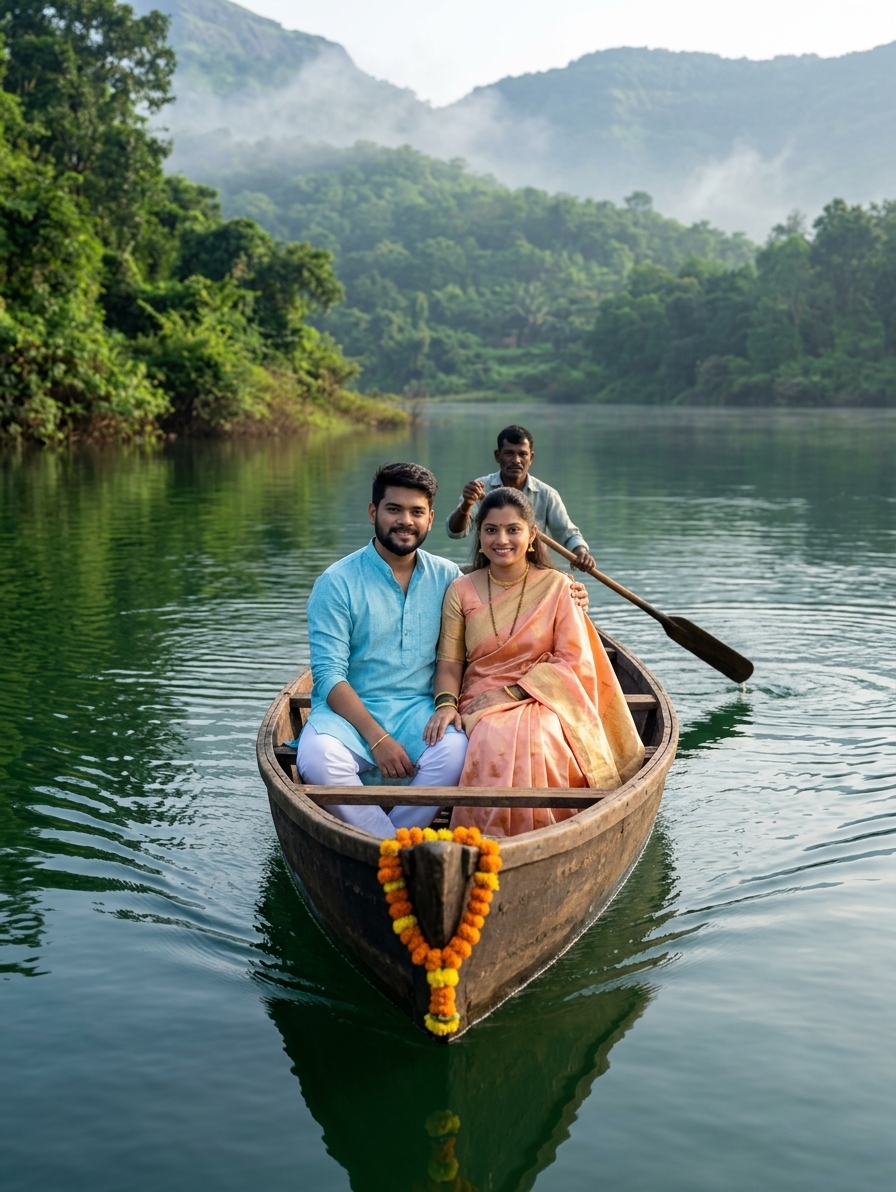
Tapola sits on the edge of Shivsagar Lake, a massive reservoir created by the Koyna Dam. The backwaters here are deep green, surrounded by hills, and far quieter than anything in Mahabaleshwar itself.
Reach Tapola by 9 AM. Park near the main lake area (free parking, or ₹20-₹30 depending on who’s managing it). You’ll immediately see boat operators offering rides. This is where you actually want to boat, unlike Venna Lake.
Shivsagar Lake boat rides cost ₹300-₹500 per person depending on distance and duration. We paid ₹800 for a private boat (₹400 per person) for a one-hour ride. The boat takes you deep into the backwaters, past small islands, through narrow channels, and into sections where the water is glass-still. No crowds. No noise. Just water, hills, and the sound of the motor cutting off halfway so you can drift for a few minutes.
If you want kayaking, several operators offer it for ₹400-₹600 per person per hour. We did it on a previous trip — peaceful, good workout, and you can explore smaller channels the big boats can’t access.
After the boat ride, have breakfast/brunch at one of the small lakeside eateries. They serve basic Maharashtrian food — poha, misal, upma, chai. ₹200-₹300 for two. It’s simple, but eating it with the lake view makes it feel special.
Spend another hour just walking along the lake. There are several small trails and viewpoints around Tapola that nobody marks on maps. One route takes you up a small hill behind the main village — 15-minute climb, uneven path, but the top gives you a full panoramic view of the lake and the hills beyond.
Afternoon: Return and Final Mahabaleshwar Stops (2 PM to 5 PM):
Drive back to Mahabaleshwar by 2 PM. You still have a few hours before you need to leave.
If you skipped any key spots earlier (Venna Lake walk, a particular viewpoint, or a strawberry farm visit), now’s the time. Otherwise, do this: drive to Lingmala Waterfall. It’s 6 kilometers from Mahabaleshwar town, slightly off the main circuit, and worth it only if there’s been recent rain. We visited in December once — dry season — and the waterfall was a trickle. Not worth it. But we visited in August, and the waterfall was crashing down hard, surrounded by mist and greenery. Completely different experience.
Check the season before you go. If it’s dry, skip it and spend the time at Kate’s Point instead, which offers a wide valley view with far fewer crowds than Arthur’s Seat.
Late Afternoon: Strawberry Shopping and Departure (5 PM onwards):
Before leaving Mahabaleshwar, buy strawberries. Fresh, jam, crush, whatever you want. But buy from the roadside stalls on the main road, not from Mapro or the big shops. The roadside stalls sell the exact same strawberries for ₹100-₹150 per box (vs. ₹250+ in branded outlets). The quality is identical because most of them source from the same local farms.
We also pick up fresh strawberry crush (₹200 per bottle) and strawberry jam (₹150 per jar). They last weeks, taste better than store-bought versions, and make good gifts.
Leave Mahabaleshwar by 5:30 or 6 PM if you’re driving back to Pune. The return drive takes 3.5 to 4 hours depending on traffic at Khandala and Lonavala. If you’re staying another night, good choice — you’ll leave more rested.
What to Skip (and Why Most Itineraries Won’t Tell You This)
Let’s talk about what doesn’t work, because avoiding bad stops saves you more time than adding good ones.
Skip the Horse Rides: Venna Lake and several viewpoints offer horse rides for ₹100-₹200. They’re short (5 minutes), the horses look tired, and the handlers rush you. If you’ve never been on a horse and really want to try, fine. Otherwise, it’s a skip.
Skip Shooting Point (Kate’s Point): Wait, didn’t we just recommend Kate’s Point? Yes. But Shooting Point, which is technically part of the same area, is just a less interesting angle of the same view. People get confused and do both. You don’t need to.
Skip Morarji Castle: It’s a private property, you can’t enter, and the exterior isn’t interesting enough to justify the drive unless you’re really into old British-era architecture.
Skip the Toy Train: There’s a small toy train near Venna Lake. It’s slow, rickety, goes around a tiny loop, and costs ₹50 per person. It’s for kids under 8. If you don’t have toddlers, skip it.
Skip Overcrowded Strawberry Farms: Mahabaleshwar has dozens of strawberry farms offering “farm tours” and “pick your own strawberries” experiences. Most charge ₹200-₹300 per person entry and then charge separately for the strawberries you pick. The experience is fine, but unless you’re traveling with kids who’ll enjoy it, you’re better off buying fresh strawberries from the roadside and saving an hour.
Where to Stay (and Why Location Matters More Than Star Rating)
We’ve stayed in three different parts of Mahabaleshwar, and location makes a huge difference.
Stay near the main market area if you want easy access to restaurants, shops, and quick exits to viewpoints. Hotels like Brightland Resort, Hotel Dreamland, and Royal Blue Resort are solid mid-range options (₹3000-₹5000 per night). They’re clean, comfortable, and you’re not stuck far from civilization.
Stay near Old Mahabaleshwar if you want quiet. The hotels here are fewer, smaller, and often homestays. It’s a 15-minute drive from the main town, which means you’re away from the crowds but also away from easy food options. Good if you value peace over convenience.
Avoid staying near Panchgani unless you’re specifically planning a Panchgani-heavy itinerary. It’s technically close, but the 30-minute drive each way to Mahabaleshwar starts feeling long by Day 2.
One surprise winner for us: Rosebell Cottages. It’s a small property near Wilson Point, ₹4000-₹6000 per night depending on season, run by a local family. The cottages are basic but clean, the location is quiet, and the family serves simple home-cooked Maharashtrian meals if you ask in advance. We stayed there in December 2025 and left wishing we’d found it earlier.

The Weather Truth Nobody Explains Properly
Mahabaleshwar’s weather is unpredictable, and that changes your entire itinerary.
Monsoon (June to September): Everything is green, waterfalls are active, mist covers the viewpoints. It’s stunning. It’s also wet, slippery, and several roads get damaged. If you’re okay with rain and leeches on trails, monsoon is magical. If you want clear viewpoint photos, skip it.
Post-monsoon (October to November): Best time. The greenery from monsoon is still around, the weather is cool, waterfalls are drying but still visible, and crowds are manageable. We think this is the ideal window.
Winter (December to February): Cold, especially at night. Temperatures drop to 10-12°C, and if you’re from Mumbai or Pune, you’ll feel it. Viewpoints are clear, the air is crisp, and strawberries are in peak season. Just pack layers and a jacket.
Summer (March to May): Crowded. Dry. Hot by Mahabaleshwar standards (20-25°C), which is still pleasant compared to Pune or Mumbai, so everyone flocks here. Viewpoints are packed, hotels are expensive, and the charm fades under the crowd pressure. If you can avoid summer, do.
Real Costs for a 3-Day Mahabaleshwar Trip (for a Couple)
Let’s break down what we actually spent on our most recent trip in January 2026:
Travel: Pune to Mahabaleshwar self-drive (both ways): ₹1200 (fuel) + ₹200 (tolls) = ₹1400
Accommodation: 2 nights at a mid-range hotel: ₹8000
Food: Breakfast, lunch, dinner for 3 days: ₹3500 (₹500-₹600 per meal for two on average)
Entry tickets and activities: Pratapgad Fort (₹40), Tapola boat ride (₹800), misc parking (₹200) = ₹1040
Shopping: Strawberries, jam, crush: ₹800
Total: Around ₹15,000 for two people for three days, including travel, stay, food, and activities.
If you’re on a tighter budget, you can do it for ₹10,000-₹12,000 by staying in budget hotels (₹2000-₹2500 per night), eating at local joints, and skipping Tapola. If you want more comfort, expect ₹20,000-₹25,000 with a nicer resort and more dining flexibility.
What Worked for Us (and What Might Work for You)
Three days in Mahabaleshwar is enough if you structure it right. You don’t need five. You definitely don’t need to see every single viewpoint.
What worked: Mixing one historical site (Pratapgad), one offbeat experience (Tapola), and selective viewpoints instead of a viewpoint marathon. We left feeling like we’d seen the place, not just checked boxes.
What didn’t work the first time: Trying to do Panchgani and Mahabaleshwar together. It’s possible, but it’s rushed, and you end up with two half-experiences instead of one full one.
What we’d change: We wish we’d spent more time in Old Mahabaleshwar. We rushed through it, and looking back, that’s where the real culture and history sit. Next time, we’d do a slower morning there, maybe have breakfast at a local spot, talk to the temple priests, and just soak in the old-world feel.
One last thing: If you’re visiting Mahabaleshwar for the first time, let go of the “we must see everything” mindset. The hill station is beautiful, but the beauty is in the slowing down, not the speeding up. Pick fewer spots. Stay longer at each. That’s the itinerary that actually works.
Frequently Asked Questions
How many days are enough for Mahabaleshwar?
Three days is the sweet spot for Mahabaleshwar. You can cover the key viewpoints, explore Old Mahabaleshwar, visit Pratapgad Fort, and add a side trip to Tapola without feeling rushed. Two days works if you skip Tapola and focus only on Mahabaleshwar itself. Four or five days is too long unless you’re planning a pure rest-and-relax trip with no sightseeing agenda.
What is the best time to visit Mahabaleshwar?
October to November is ideal — the post-monsoon greenery is still fresh, weather is cool, crowds are manageable, and waterfalls are visible. December to February is also good if you don’t mind cold nights (temperatures drop to 10-12°C). Avoid peak summer (April-May) when crowds overwhelm the town and avoid monsoon (June-September) unless you specifically want misty views and don’t mind heavy rain and leeches on trails.
Is Tapola worth visiting from Mahabaleshwar?
Yes, absolutely. Tapola is 35 kilometers from Mahabaleshwar and offers a completely different experience — peaceful backwaters, boat rides on Shivsagar Lake, and far fewer crowds. If you’ve already done the main Mahabaleshwar viewpoints and want something quieter and more immersive, Tapola is worth the one-hour drive. Skip it only if you’re very short on time or not interested in water-based activities.
Should I visit both Mahabaleshwar and Panchgani in 3 days?
You can, but we don’t recommend it. Panchgani’s viewpoints (Table Land, Sydney Point, Parsi Point) feel repetitive if you’ve already covered Arthur’s Seat, Wilson Point, and Elephant’s Head Point in Mahabaleshwar. Instead, use that time for Pratapgad Fort or Tapola, which offer more distinct experiences. Visit Panchgani only if you’re specifically interested in paragliding or have extra time beyond three days.
What are the must-visit places in Mahabaleshwar?
Arthur’s Seat (the best viewpoint), Wilson Point for sunset, Old Mahabaleshwar Temple and Panch Ganga, Pratapgad Fort for history, and Tapola for backwaters and boating. Skip the viewpoint marathon — most look similar. Focus on quality over quantity, and spend actual time at each place instead of rushing through a checklist.
Plan Your Mahabaleshwar Trip with Real Insights from Musafir Couple
We’ve spent multiple trips figuring out what actually works in Mahabaleshwar — not what looks good on a blog, but what feels right when you’re there. Whether you’re planning a weekend escape, a couple’s getaway, or your first Mahabaleshwar visit, we share honest itineraries, real costs, and the kind of details you’d get from a friend who just got back.
Follow Musafir Couple for more unscripted travel stories, destination guides, and honest reviews from real trips across Maharashtra and beyond. We’re Ketan and Samprita, based in Pune, and we document the roads, the detours, the good stops, and the overhyped ones — so you can travel smarter, not harder.