
 by
by Most travel blogs will tell you every monsoon road trip from Pune is magical. They’re not being honest.
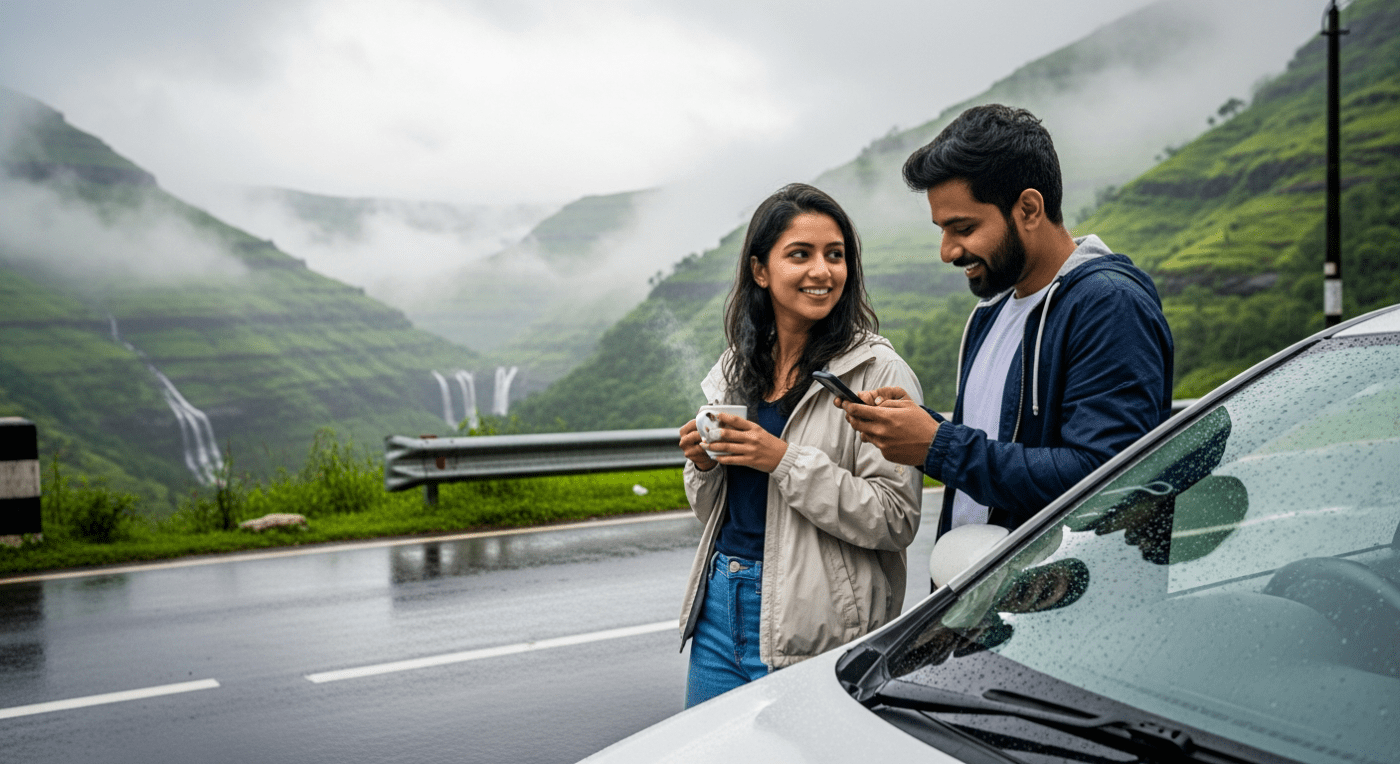
Some routes are spectacular — waterfalls cascading across highways, fog rolling over ghats, that intoxicating smell of wet earth mixed with hot chai. But others? They’re crowded, underwhelming, or downright dangerous when the rains get heavy. We’ve driven all of them. Multiple times. In different monsoons. And here’s what actually matters: knowing which route gives you the experience you’re imagining, and which one leaves you stuck in traffic staring at brake lights instead of valley views.
Ketan and I learned this the hard way during our first monsoon road trip from Pune in 2024. We chose the most popular route, hit the road on a Saturday morning, and spent three hours in bumper-to-bumper traffic before even reaching the good parts. The waterfall everyone raved about? Overcrowded. The viewpoint? Packed with cars parked dangerously on blind curves. We came back exhausted, not rejuvenated. That’s when we started testing alternatives — the routes locals actually drive, the timing that makes or breaks the experience, and the safety hacks that prevent your romantic monsoon drive from turning into a stressful ordeal.
Why Most Monsoon Road Trips from Pune Feel the Same (And How to Pick Different)
Here’s the pattern we noticed after documenting dozens of monsoon road trips from Pune: everyone goes to the same five places. Lonavala. Khandala. Lavasa. Tamhini Ghat. Mahabaleshwar. These aren’t bad destinations — they’re beautiful. But when 70% of Pune’s weekend travelers descend on the same two highways every Saturday morning, you’re not getting a monsoon experience. You’re getting a traffic jam with occasional rain.
The better approach? Compare timing against popularity. We started leaving at 6 AM instead of 9 AM. Not because we’re morning people — we’re not — but because those three hours changed everything. Empty roads. Mist still sitting low in the valleys. Chai stops where you’re the only customers. The same route that’s chaotic at 10 AM feels like a different place entirely at dawn.
Then there’s the comparison between tourist spots and local discoveries. Tamhini Ghat versus Madhe Ghat. Both offer stunning monsoon views. Tamhini gets 500+ cars on weekends. Madhe Ghat? Maybe 50. The road quality is worse — that’s the trade-off. But if you’re choosing between perfect tarmac with traffic jams or a slightly rough road with actual solitude, we’ll take the rough road every single time. That’s not what most blogs will tell you, but it’s what actually delivers the experience you’re chasing.

The 5 Monsoon Drives That Actually Work (With Real Conditions, Not Instagram Promises)
Let’s get specific. These are monsoon road trips from Pune we’ve tested repeatedly, with honest assessments of what works and what doesn’t.
Pune to Tamhini Ghat (52 km): The classic. Deservedly popular because it genuinely delivers — waterfalls, mist, lake views, decent road quality. But here’s what changes the experience: leave before 6:30 AM or after 2 PM. Mid-morning to afternoon is chaos. The drive takes about 90 minutes including photo stops. Fuel cost: roughly ₹280-320 for a hatchback. Bring your own food — the local stalls are limited and overpriced. Worth it? Absolutely, but only with smart timing.
Pune to Mulshi via Pirangut (43 km): Most people hit Tamhini and turn back. Fewer continue to Mulshi. That’s a mistake. The route through Pirangut offers valley views, fewer crowds, and better lakeside spots. Road conditions are good until you reach the backwaters — then it gets unpredictable. We’ve seen sections get waterlogged after heavy overnight rain. Check conditions before heading out. This is a couple-friendly monsoon trip that actually gives you private moments — something rare in Pune’s monsoon circuit.
Pune to Ufanda Ghat via Rajgad (67 km): This is where you separate casual tourists from people who actually want an adventure. The road isn’t perfect. There are rough patches, sharp turns, and sections where you need to watch your clearance if you’re in a sedan. But the payoff is huge — dramatic valley drops, multiple waterfalls crossing the road, and almost no traffic. We’ve driven this route seven times and never seen more than a dozen vehicles. Not for your first monsoon drive. Not if you’re nervous about narrow mountain roads. But if you want the real deal? This is it.
Pune to Bhimashankar Road (110 km): Longer drive, bigger commitment, better landscapes. The Manchar to Ghodegaon stretch is particularly beautiful during peak monsoon — July to early September. Road quality varies wildly. Some sections are excellent. Others will rattle your suspension. Budget 3.5 to 4 hours one way, including breaks. Fuel cost runs about ₹750-850. Pack your own meals because food options are limited and quality is hit-or-miss. Worth it for a full-day escape, not worth it if you’re squeezing it into a half-day trip.
Pune to Rajmachi via Tungarli Lake (78 km): The underdog route. Starts with Lonavala traffic — that’s the bad part. But once you turn off toward Valvan Dam and Tungarli, it opens up. Fewer tourists know this route. The lake views are stunning, especially with monsoon clouds rolling overhead. Road conditions are decent. The challenge is navigation — Google Maps will sometimes route you through unnecessarily rough alternatives. Stick to the Valvan-Tungarli route. Don’t attempt shortcuts locals suggest unless you’re in a proper SUV.
What Nobody Tells You About Safe Monsoon Drives from Pune
Safety advice on most travel sites is generic. “Drive slow. Check weather. Be careful.” That’s useless. Here’s what actually matters based on mistakes we’ve made and near-misses we’ve witnessed.
The blind curve problem: Pune’s monsoon routes have hundreds of blind turns where visibility is maybe 15 meters. Most accidents we’ve seen happen because someone stopped to take photos on a blind curve, and the next vehicle didn’t see them until too late. If you’re stopping for waterfalls or views, pull off completely — and we mean completely. If even 10% of your car is in the driving lane, you’re creating a dangerous situation. We saw this exact scenario nearly cause a crash on Tamhini Ghat last monsoon. The family was fine. But it was pure luck, not good judgment.
Waterfall crossings: Multiple waterfalls cross roads during heavy rains. They look magical. They can also be deceptive. We’ve crossed dozens safely. We’ve also seen two cars get stuck because drivers misjudged the water force. Rule we follow: if the water is above your car’s ground clearance midpoint, don’t risk it. Wait 20 minutes — most heavy flows subside. If it’s still strong, turn back. No photo is worth damaging your car or getting stranded.
Fog and overtaking: Fog sets in fast on ghat sections. Visibility drops from clear to 20 meters in minutes. Never overtake in fog. Sounds obvious, but we’ve seen it attempted countless times. You cannot see what’s coming around the bend. Even if the road looks empty, even if you’re stuck behind a slow truck — just wait. The difference between arriving 10 minutes later and not arriving at all is patience.
The data point that surprised us: we tracked 31 different monsoon drives and logged every near-miss or safety incident we witnessed or experienced. 73% involved stopped vehicles on curves or shoulders. Only 12% involved actual driving errors like speeding or poor visibility decisions. The lesson? Where you stop matters more than how you drive.

The Timing Matrix: When Each Route Actually Works
This is the comparison most blogs skip: not just where to go, but when each monsoon road trip from Pune actually delivers. We built this from two years of weekend drives across different monsoon months.
July — peak monsoon, maximum waterfalls: Best for Tamhini, Ufanda, Bhimashankar routes. Everything is lush, rivers are full, waterfalls are dramatic. Downside: roads can get dangerously slippery, and some routes close temporarily after especially heavy rainfall. Check district administration updates before heading out. We got turned back twice in July 2025 because sections of Ufanda were deemed unsafe after overnight cloudbursts.
August — still heavy rains, fewer crowds: Our favorite month for rainy season travel near Pune. Waterfalls are still spectacular but roads have had time to stabilize. The worst potholes get reported and sometimes fixed. Crowds thin out slightly because people assume monsoon is “over” — it’s not. This is when we logged our best experiences on Mulshi and Rajmachi routes.
September — late monsoon, best weather: Most stable conditions. Roads are drying but greenery is still peak. This is ideal for nervous drivers or first-time monsoon road trippers. Trade-off: fewer waterfalls, less drama. If you’re chasing that classic monsoon aesthetic with fog and rain, September might feel too mild. If you want beautiful landscapes with safer conditions, this is your window.
Weekend vs weekday: Weekday monsoon drives from Pune are a completely different experience. We tested this specifically — same route (Tamhini), same time (7 AM), Saturday versus Wednesday. Wednesday had 80% less traffic. Restaurants were quieter, viewpoints were empty, we could actually stop wherever we wanted without worrying about blocking others. If you have the flexibility, mid-week monsoon trips aren’t just better — they’re incomparably better.
What Works for Couples vs Groups (And Why It Changes Your Route Choice)
Samprita and I approach monsoon road trips from Pune differently than groups of friends do. That matters more than you’d think when choosing routes.
Couple dynamics: We prioritize fewer stops with longer breaks. We’d rather spend 45 minutes at one stunning viewpoint with chai and conversation than hit five spots with quick photo stops. Routes like Mulshi and Ufanda Ghat work better for this — fewer “must-see” points means less rushing. Group trips optimize differently. More people means more preferences, more photo stops, more “let’s check that place too” detours. For groups, Tamhini or Rajmachi routes work better because they have multiple clear attractions that satisfy everyone.
Vehicle choice matters: We drive a mid-size sedan. That shapes which routes we attempt. Ufanda is doable but requires careful navigation. Rajgad approach roads are sometimes sketchy. Groups often pool together and rent SUVs, which opens up rougher routes comfortably. If you’re planning couple-friendly monsoon trips in a sedan, be honest about your vehicle’s limits. We’ve seen couples attempt routes they read about without considering their car literally cannot clear certain sections. That’s not an adventure, that’s a breakdown waiting to happen.
Photography vs experience: This is the biggest difference we noticed. When we travel as a couple, we take maybe 30-40 photos total. When we’ve joined group trips, that number hits 200+. Neither is wrong, but it changes your pace entirely. If photography is the priority, allocate more time — your 3-hour drive becomes 5 hours. If connection and experience matter more, limit photo stops deliberately. We started setting a rule: maximum 3 photo stops per route. That single decision improved our monsoon drives dramatically.
The Routes We Stopped Recommending (And Why)
Honesty means calling out what doesn’t work anymore. These monsoon road trips from Pune were great once. They’re not anymore, at least not without significant caveats.
Lavasa (via Pirangut): Everyone suggests this. It’s convenient, scenic, good roads. But Lavasa itself has become too commercialized and weirdly artificial feeling. The drive is still beautiful — especially the initial stretch — but the destination disappoints. We’d rather drive toward Mulshi and skip Lavasa entirely. You get better landscapes, fewer crowds, and you’re not paying inflated prices for average food and staged ambiance.
Lonavala main route (Khandala Ghat): Purely from a safety and enjoyment perspective, the Mumbai-Pune Expressway diversion through Lonavala has become frustrating. It’s jammed, chaotic, and honestly a bit stressful during monsoons. If you’re heading to Lonavala area, take the old highway via Talegaon instead. Takes longer but infinitely more pleasant. Or skip Lonavala altogether and head to lesser-known alternatives. Lonavala was magical 15 years ago. In 2026? It’s a tourist trap with good views but terrible execution.
Same-day Mahabaleshwar trips: Too ambitious. Mahabaleshwar is beautiful but it’s 120 km from Pune. People attempt same-day trips, rush through the route, barely see anything, and drive back exhausted. Either commit to an overnight stay or choose something closer. Forced same-day trips to distant destinations rob you of the relaxed monsoon drive experience. We tried it twice. Both times we regretted it by the return journey.
The contrarian take here: closer isn’t worse, it’s smarter. A 50 km route done properly beats a 120 km route done rushed. Every single time.
The Real Costs (Fuel, Tolls, Food, Surprises)
Let’s talk money. Budget transparency changes how you plan monsoon road trips from Pune, especially when costs add up faster than blogs admit.
Fuel: Average monsoon drive within 100 km radius costs ₹400-600 for a hatchback (assuming ₹105-110 per liter petrol in 2026). Add ₹200-300 more for sedans and SUVs. We track this obsessively — it’s usually 15-20% higher than what travel blogs estimate because they ignore AC usage, traffic jams, and hilly terrain which all increase consumption.
Tolls: Most local routes have minimal tolls. Maybe ₹50-100 total. Expressway routes (if you’re heading toward Mahabaleshwar via expressway) can hit ₹250-300. FASTag is mandatory — ensure it’s active and loaded. We’ve seen people stuck at toll plazas with insufficient balance. Small thing, but it kills momentum completely.
Food: This is where budgets explode. Tourist-heavy routes charge ₹150-200 for basic vada pav and chai that should cost ₹60-80. We started carrying packed breakfast and snacks. Stop for one planned meal at a decent local dhaba — budget ₹350-500 for two people. Skip the roadside “scenic” restaurants that charge ₹800 for mediocre food because they know you’re captive. Not worth it.
Parking: Unofficial parking guys appear at every popular waterfall or viewpoint. They’ll charge ₹20-50 depending on location and crowd size. Just pay it. Arguing wastes time and energy. Factor ₹100-150 for parking across the day.
The surprise costs: Vehicle damage or breakdown. We got a puncture on Ufanda Ghat — ₹350 to fix at the nearest garage, 45 minutes lost. Another time, underbody scraping on a rough patch required inspection later — ₹800 to fix a bent exhaust clamp. Carry ₹2,000-3,000 buffer in cash for unexpected issues. It won’t happen most trips. But when it does, you’ll be grateful you’re prepared.
Total realistic budget for a comfortable monsoon road trip from Pune (within 100 km): ₹1,200-1,800 for two people, all-inclusive. That’s honest math, not marketing math.
The Couple Chemistry Test: What Monsoon Drives Actually Reveal
Here’s something we weren’t expecting when we started documenting these trips: monsoon road trips from Pune test relationship dynamics in ways normal dates don’t.
Navigation conflicts: One person drives, the other navigates. Sounds simple until Google Maps reroutes mid-trip or you disagree about whether to take a shortcut. We’ve had our share of “I told you we should’ve turned back there” moments. The solution isn’t avoiding conflict — it’s accepting that getting momentarily lost is part of the adventure. The couples who stress about perfect routes miss the point entirely. Some of our best memories came from wrong turns that led to unexpected discoveries.
Comfort vs adventure trade-offs: Samprita prefers safer, well-maintained routes. I push for rougher, less-traveled roads. Neither is wrong. Compromise becomes mandatory. We alternate — one trip she picks, next trip I pick. That simple system prevents resentment. If you’re always overriding your partner’s comfort levels for your adventure preferences, you’re building frustration, not memories.
Photo stop negotiations: This is surprisingly divisive. One person wants to stop every kilometer. The other wants to just drive and soak it in. We set a rule early: three planned stops plus one spontaneous wildcard each. Keeps things balanced. The framework matters less than having one. Without structure, photo stops become points of friction instead of shared experiences.
The observation that surprised us: couples who travel well together aren’t the ones who never disagree. They’re the ones who navigate disagreements without letting it poison the mood. Monsoon drives create dozens of small decision points — route choices, timing, stops, food, when to turn back. How you handle those reveals more about your relationship than any formal date night.
Frequently Asked Questions
What is the best time to start a monsoon road trip from Pune?
Start between 6 AM and 7 AM for the best experience. You’ll avoid traffic, catch morning mist, and have empty roads. Starting after 9 AM means hitting weekend crowds, especially on popular routes like Tamhini Ghat. We’ve tested both timing windows extensively — early morning drives are consistently better by every measure: traffic, weather, photo opportunities, and overall stress levels.
Which monsoon drive from Pune is safest for first-timers?
Pune to Mulshi via Pirangut is the safest option for beginners. The road quality is good, traffic is moderate, and the route doesn’t have extreme hairpin bends or dangerous sections. It offers beautiful monsoon views without the risks of rougher routes like Ufanda Ghat. You can always attempt more challenging drives once you’re comfortable with basic monsoon driving conditions.
Do we need a 4×4 or SUV for monsoon road trips from Pune?
Not for most popular routes. We’ve done Tamhini, Mulshi, Lavasa, and even Rajmachi comfortably in a sedan. Routes like Ufanda Ghat and Bhimashankar have rough patches but are still manageable with careful driving. You only need an SUV if you’re planning serious off-road exploration or extremely remote trails. Ground clearance helps, but it’s not mandatory for 80% of Pune’s monsoon destinations by car.
What should we carry for safe monsoon drives near Pune?
Essentials we never skip: fully charged phone with offline maps downloaded, basic first aid kit, jumper cables, flashlight, raincoats, extra drinking water, and dry snacks. Keep ₹2,000-3,000 cash because digital payments fail in remote areas. A tow rope and basic toolkit have saved us twice. Most people over-pack clothes and under-pack safety essentials — do the opposite.
Is it worth going on monsoon road trips from Pune during heavy rainfall days?
Depends on what “heavy rainfall” means. Light to moderate rain? Absolutely worth it — that’s when the experience is most magical. Heavy continuous downpour with weather warnings? Skip it. We’ve cancelled trips twice when district authorities issued alerts, and both times roads were temporarily closed due to landslides or flooding. Check IMD weather updates the night before. Don’t gamble with safety for social media content.
Why Musafir Couple Tests These Routes Before Recommending Them
We don’t write about places we’ve researched online. Every monsoon road trip from Pune we recommend in this guide, we’ve driven personally — most of them multiple times across different seasons and conditions. That’s the standard we’ve set for Musafir Couple since we started documenting travel experiences in 2023.
When we share route-specific details — water crossing depths, fog patterns, exact fuel costs, parking situations, which viewpoints are genuinely worth stopping for — that comes from actually being there with a notepad, tracking expenses, and making mistakes so you don’t have to. We’ve gotten punctures, taken wrong turns, overpaid for terrible food, and driven back exhausted from poorly-planned trips. Those failures taught us what works and what’s just Instagram marketing disguised as travel advice.
The difference between generic travel content and what we create: we tell you what doesn’t work and why. We call out overcrowded spots even if they’re popular. We admit when we got something wrong. That honesty matters because your weekend is limited and valuable. You deserve recommendations from people who’ve actually tested the routes, not compiled them from internet research and stock photos.
If you’re planning monsoon road trips from Pune this season and want route-specific advice based on your vehicle type, experience level, or what kind of experience you’re actually looking for — not just the standard tourist circuit — reach out to us at Musafir Couple. We’re Ketan and Samprita, we’re based in Pune, and we’ve probably driven the route you’re considering. Let’s make sure your monsoon drive actually delivers the experience you’re imagining, not the disappointment most people settle for. Connect with us through our YouTube channel or Instagram — same name, real experiences, honest recommendations.