


 by
by You’re scrolling through pretty pictures of misty valleys and strawberry farms, already imagining your Mahabaleshwar weekend. But here’s what those Instagram posts won’t tell you—the road between Pune and Mahabaleshwar can turn from smooth to nerve-wracking in less than 10 kilometres, and we learned that the hard way on our third trip when monsoon fog reduced visibility to barely 20 metres on the ghats.
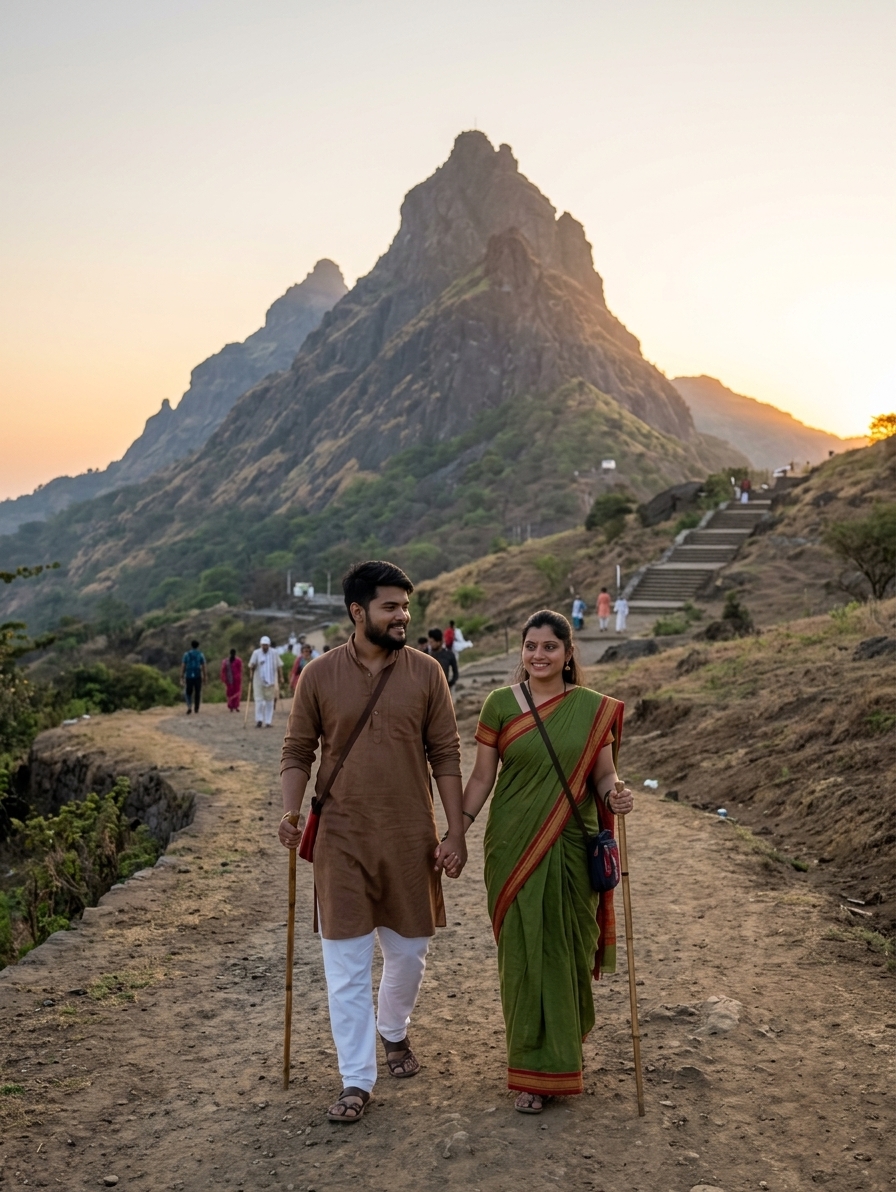
We’re Ketan and Samprita, and we’ve driven the Pune to Mahabaleshwar route at least eight times now—during peak summer, mid-monsoon, and winter mornings. We’ve taken the old Panchgani route, the faster NH 48 stretch, and even tried leaving at 4 AM to “beat the traffic” (spoiler: didn’t work as planned). What we’re sharing here isn’t pulled from travel forums or Google reviews. It’s what actually happened when we took wrong turns, faced sudden landslides, got stuck behind tourist buses crawling at 15 kmph, and discovered which petrol pumps have clean washrooms.
If you’re planning a couple’s trip and want to know the actual road conditions—not the sanitised version—this is for you.
Which Route Should You Actually Take from Pune?
There’s no single “best route”—just the one that matches your departure time and driving confidence.
Most couples default to the NH 48 route through Khandala and Wai because Google Maps suggests it. It’s roughly 120 kilometres, and on a perfect day with zero traffic, you’ll cover it in about 2.5 hours. But perfect days are rare. We tried this route on a Saturday morning last April, left Pune at 8 AM, and hit bumper-to-bumper traffic near Khandala that added 45 minutes. Tourist buses, families stopping for corn, and people taking photos on hairpin bends—it’s a slow crawl during weekends and holidays.
The alternate route through Panchgani is about 15 kilometres longer but often faster if you’re leaving after 9 AM on a weekend. You take the Satara Road, bypass the Khandala chaos, and enter Mahabaleshwar from the other side. The roads are narrower in patches, especially after Wai, but traffic is noticeably lighter. We’ve shaved off 30 minutes using this route during peak season.
Then there’s the old Paud-Pirangut-Wai route that some locals still use. Don’t. The road quality is inconsistent, villages slow you down, and you won’t save any meaningful time. We tried it once in 2024 thinking we’d discovered a “hidden” shortcut. We hadn’t.
Your choice should depend on this: leaving before 7 AM or after 3 PM? Take NH 48. Leaving between 9 AM and 1 PM on a weekend or holiday? Take the Panchgani route. The half-hour you lose in distance, you gain back by avoiding gridlock.
Road Quality Reality Check (Stretch by Stretch)
Let’s talk about what the road actually feels like under your tyres.
Pune to Khandala on NH 48 is mostly excellent—four-lane expressway quality, well-marked lanes, and you can comfortably cruise at 80-90 kmph. The stretch between Lonavala and Khandala has improved dramatically since the expressway expansion. But don’t get too comfortable. The moment you exit toward Panchgani-Mahabaleshwar near Khopoli, the road character changes.
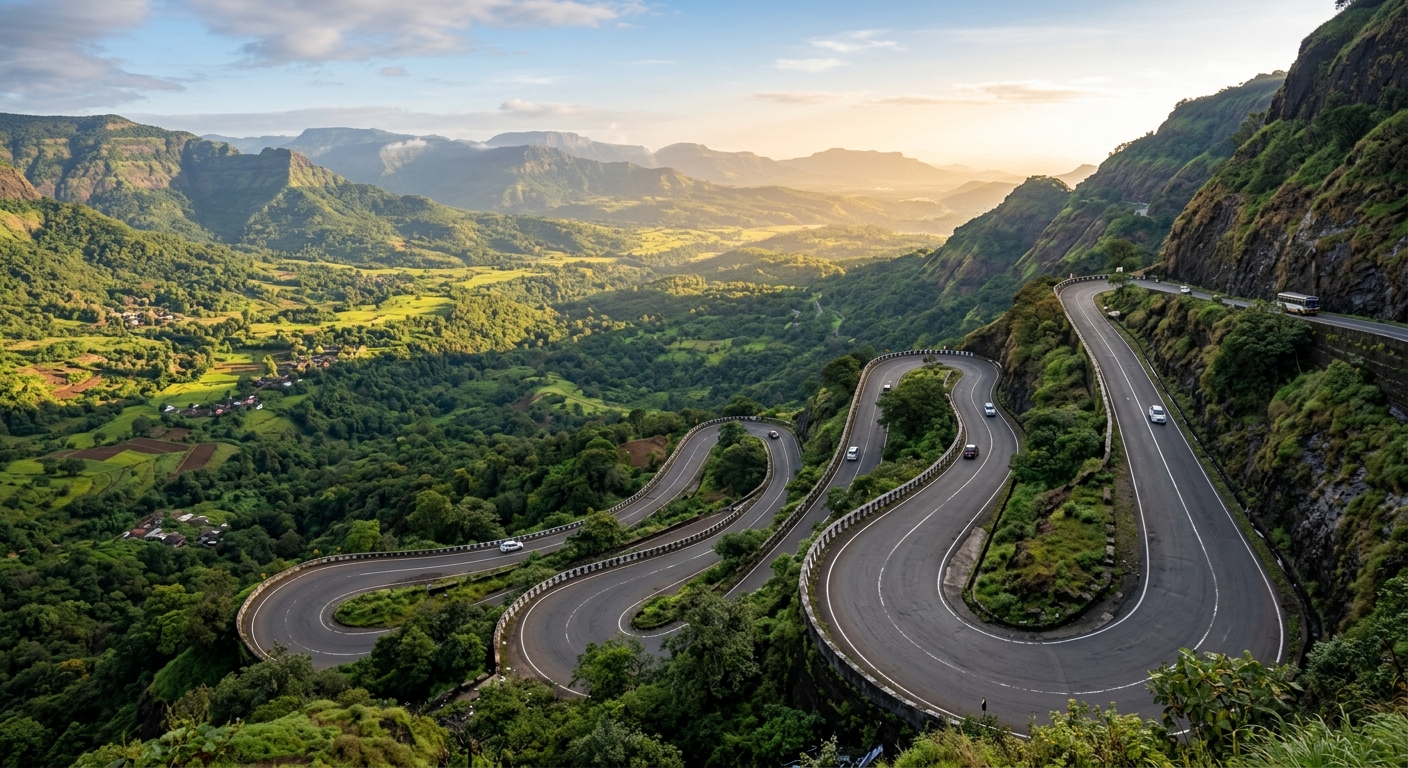
Khandala to Wai is where things get interesting. The ghat section starts, roads narrow to two lanes, and you’re sharing space with heavy vehicles, bikes, and the occasional tempo carrying vegetables. Potholes appear near Ambenali village, especially on the right lane after the monsoon. We hit one bad enough in September 2025 that our car’s alignment went off—cost us ₹1,800 to fix in Mahabaleshwar.
Wai to Panchgani climbs steadily. Roads are decent but not wide. Overtaking is tricky because of blind curves. Couples in hatchbacks or sedans—don’t rush this section. We’ve seen cars scrape their underbelly on speed bumps near Dhom Dam that aren’t painted or signposted. Go slow, especially if you’re in a low-ground-clearance sedan.
Panchgani to Mahabaleshwar is the final 18 kilometres, and it’s a mixed bag. The main road is fine, but side roads leading to popular points like Arthur’s Seat or Elephant’s Head Point are narrower, poorly lit, and have loose gravel on edges. If you’re reaching after sunset, those internal roads can be genuinely confusing. We once spent 20 minutes looking for our homestay because Google Maps took us down a kutcha road that didn’t exist.
One more thing most guides skip: speed bumps. There are unmarked speed bumps scattered between Wai and Mahabaleshwar—some near schools, some just randomly placed near villages. They aren’t painted yellow. You won’t see them until you’re 10 metres away. Keep your speed under 50 in populated patches.
Monsoon Driving (July to September): What Actually Happens
Everyone tells you “don’t drive in monsoon.” We did anyway—twice. Here’s what they don’t mention.
The roads don’t just get wet; they get slippery with a thin layer of moss and mud, especially on the ghat curves. Traction drops noticeably. We were driving a front-wheel-drive hatchback in August 2025, and even at 30 kmph, the tail felt loose on some turns. If you’re in a sedan without decent tyre tread, reconsider the trip or at least get your tyres checked before leaving Pune.
Visibility is the bigger issue. Fog rolls in thick and fast, usually between Ambenali and Panchgani. One moment it’s drizzling and you can see 100 metres ahead; the next moment it’s pure white and you can barely see the car in front. Happened to us near Tapola. We had to slow down to 20 kmph, hazard lights on, following the tail lights of a bus because we couldn’t see the road edge. It’s unnerving, especially if it’s your first time.
Landslides are real. Not the dramatic kind you see in movies, but small rock falls and mud slips that block one lane. We’ve seen traffic stopped twice because of this—once near Pratapgad diversion, once just before Wai. Local authorities clear it within an hour usually, but if you’re on a tight schedule, this will mess it up.
Here’s what worked for us: leave Pune early (6 AM or earlier), finish the ghat climb before 9 AM when fog is lighter, avoid driving back after 5 PM when visibility drops again. Keep a microfiber cloth in the car to wipe your windshield from inside—it fogs up constantly. And for the love of all that’s holy, do not use high beam in fog. It reflects back and blinds you worse.
Should couples avoid monsoon trips entirely? Not necessarily. The landscapes are stunning, crowds are thin, and hotel rates drop. But if either of you isn’t confident driving in low visibility or on slippery roads, take a cab or bus. We’ve met couples who did that and had a much more relaxed trip.
Petrol Pumps, Washrooms, and Pit Stops That Don’t Waste Time
You’ll need to refuel and stretch your legs. Not all stops are equal.
There’s a Bharat Petroleum pump right after Lonavala (on the left if you’re heading toward Mahabaleshwar) that’s clean, quick, and has a decent washroom. We stop here almost every trip. Fuel prices are standard highway rates—expect to pay ₹3-5 more per litre than Pune city pumps, but it’s reliable and the attendants don’t push you to buy overpriced engine oil.
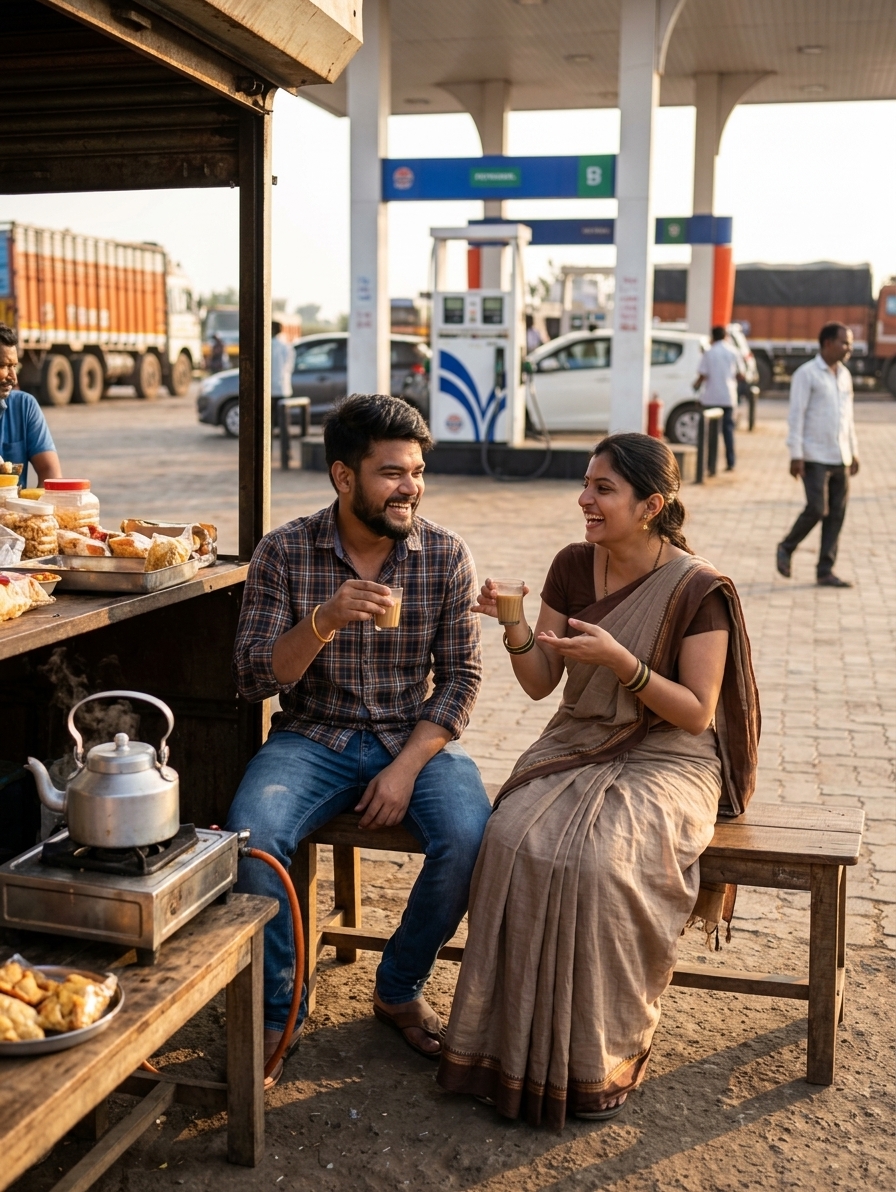
The next good stop is near Wai—there’s an HP petrol pump with an attached Café Coffee Day. Washrooms are acceptable (not sparkling, but not terrible either), and if you need a quick chai or snack, it works. The CCD is overpriced as usual, but Samprita insists the cold coffee is decent. I wouldn’t know; I stick to cutting chai from the stall outside that costs ₹10.
Avoid the random dhabas immediately after Khandala. We tried one in 2024 because it looked “authentic,” and the food was fine but the washroom situation was rough. If you need to eat, wait till you reach Wai or go straight to Mahabaleshwar. There are cleaner options once you’re in town.
One thing we learned the hard way: fill your tank before leaving Pune if you’re driving back the same day or next morning. Mahabaleshwar has petrol pumps, but they’re often crowded during weekends and holidays, and you’ll waste 15-20 minutes just waiting in line. We once spent half our Sunday morning stuck at a pump near the market because everyone else had the same idea.
Pro tip for couples: pack your own snacks and water. The roadside stalls sell packaged water at ₹40-50 per litre (it’s ₹20 in Pune), and the “fresh” fruit they sell isn’t always that fresh. We carry a small cooler bag with sandwiches, fruit, and cold drinks. Saves money, saves time, and you’re not dependent on finding a decent stop.
Traffic Pattern Reality (When to Leave, When to Avoid)
If there’s one thing that’ll make or break your road trip experience, it’s timing.
Friday evenings are a nightmare. Everyone with a weekend plan is leaving Pune between 5 PM and 8 PM. We tried it once—took us four hours to reach Mahabaleshwar because of sheer traffic volume from Khadakwasla onward. Saturday mornings between 8 AM and 11 AM are almost as bad, especially during summer (April-May) and Diwali-Christmas holiday windows.
Here’s what works: leave Pune by 6 AM on Saturday. Roads are empty, ghats are clear, and you’ll reach Mahabaleshwar by 8:30 AM, which gives you the whole day. Or leave on Friday after 10 PM if you’re comfortable driving at night—we’ve done this twice, and the roads are dead quiet. You reach by midnight, check into your hotel, and wake up fresh without wasting half of Saturday in traffic.
Return traffic on Sunday evenings is brutal. Everyone wants to get back to Pune by 8-9 PM for work the next day. We got stuck in a 5-kilometre jam near Ambenali once that didn’t move for 40 minutes. Start your return by 3 PM at the latest, or wait till 8 PM when most traffic has cleared—you’ll reach Pune by 10:30 PM, which is late but not terrible.
Long weekends and public holidays—Diwali, Holi, Independence Day, Ganesh Chaturthi—are different. Traffic volume doubles. If you’re planning a trip during these windows, either leave super early (5 AM or earlier) or shift your plan to a weekday. We did a Wednesday-Thursday trip in January 2026 and had the roads almost to ourselves. Hotels were cheaper too.
What Couples Miss (and Regret Later)
Most couples plan the destination but underestimate the drive. Here’s what we got wrong on our early trips and what you should prepare for.
First: underestimating how tiring the ghats are. Even if you’re an experienced city driver, driving uphill with sharp hairpin bends for 40 kilometres straight is mentally draining. Samprita doesn’t drive on ghats anymore because the steep drops on the side make her anxious—and that’s completely fine. If your partner isn’t comfortable, don’t force it. Let one person handle the ghats, switch drivers on the flat stretches.
Second: not accounting for phone network drops. Airtel and Jio work fine until Wai, but once you enter the interior ghat roads, signal drops in patches. If you’re relying entirely on Google Maps and haven’t downloaded offline maps, you’ll panic when the screen goes blank mid-route. Download the offline map for Mahabaleshwar region before you leave Pune. We learned this after taking a wrong turn near Metgutad and driving 6 kilometres in the wrong direction because Maps couldn’t load.
Third: assuming your car is “good enough.” If you’re driving a 10-year-old hatchback that hasn’t been serviced in six months, don’t attempt this trip—especially in monsoon. Check your tyre tread, brake pads, coolant level, and wiper blades before leaving. We once saw a couple stranded near Panchgani with an overheated engine because they ignored the temperature warning. It’s not a fun situation.
Fourth: not carrying a basic emergency kit. We keep a small toolkit, jumper cables, a spare phone charger, a flashlight, and basic first-aid in the car. You probably won’t need it, but if you do—say, a flat tyre at 7 PM on a ghat curve—you’ll be grateful. Mechanics are scarce once you’re between towns.
And here’s something Samprita insists on sharing: carry tissues and hand sanitiser. Washroom situations on highways are unpredictable. The “clean washroom” sign doesn’t guarantee much. Be prepared.
Vehicle Choice and Driver Comfort Matters More Than You Think
You can do this trip in a hatchback, sedan, or SUV. We’ve done all three. But the experience differs.
Hatchbacks are fine if you’re two people with light luggage and you’re not driving in heavy rain. Ground clearance isn’t a huge issue on the main route, but if you plan to explore offbeat spots like Tapola backwaters or take internal village roads, you’ll scrape the underbody. Our Alto scraped twice on unmarked speed bumps near Metgutad.
Sedans are comfortable for highway stretches and give you better stability on ghats compared to hatchbacks. But the same ground clearance issue applies. If you’re renting a car, ask specifically about the suspension and ground clearance if you plan to go beyond the main tourist circuit.
SUVs or crossovers are overkill for the main route but worth it if you’re exploring surrounding areas or driving in monsoon. Higher seating gives you better visibility on curves, and the weight helps with stability on wet roads. We rented a Creta once for a monsoon trip and felt noticeably more confident on slippery patches.
Driver comfort is non-negotiable. If one partner is doing all the driving, plan for breaks every 60-70 kilometres. Fatigue leads to mistakes. We’ve had arguments mid-drive because I was too stubborn to stop and Samprita could see I was zoning out. Now we take a mandatory 10-minute break at Wai, no debate.
And if you’re someone who gets carsick on winding roads, sit in the front, keep a window cracked open, carry ginger candy or medication, and avoid looking at your phone. Samprita learned this the hard way on our second trip.
Final Real-Talk: Is the Drive Worth It?
Short answer: yes, if you prepare for it properly.
Longer answer: Pune to Mahabaleshwar isn’t a difficult drive, but it’s not a casual Sunday joyride either. The ghats demand attention, the traffic can test your patience, and the weather can surprise you. But if you time it right, leave early, drive defensively, and set realistic expectations, it’s genuinely enjoyable.
The views between Ambenali and Panchgani—especially during monsoon when the valleys are green and waterfalls appear on cliff sides—are worth every tense moment on hairpin bends. We’ve done this route enough times that it feels familiar now, but it still hasn’t become boring.
What makes it work as a couple’s trip is that you’re in it together. You navigate, your partner drives. You argue about which dhaba to stop at, you laugh when Google Maps takes you down a dirt road, you hold hands during the scary fog patches. That’s the part nobody puts in travel blogs but it’s what makes the trip memorable.
So yeah, the Pune to Mahabaleshwar road has its challenges. But it’s manageable, and it leads to a beautiful destination that’s perfect for a weekend reset. Just don’t expect it to be as smooth as those travel vlogs make it look.
Frequently Asked Questions
Is the Pune to Mahabaleshwar road safe for first-time ghat drivers?
Yes, but drive during daylight and avoid monsoon if it’s your first time. The NH 48 route via Khandala has clear markings and isn’t technically difficult—just mentally tiring because of continuous curves. Start early when traffic is light, drive at your own pace (ignore honking from behind), and take breaks when you feel fatigued. We’ve seen plenty of first-timers handle it fine as long as they don’t rush.
What’s the total fuel cost for a round trip from Pune to Mahabaleshwar?
For a regular hatchback or sedan, expect to spend around ₹1,200 to ₹1,600 on fuel for the round trip depending on your car’s mileage and current petrol prices. The distance is roughly 240 kilometres return, and ghat driving reduces fuel efficiency slightly. Fill up in Pune before leaving—it’s cheaper than highway pumps.
Can we drive to Mahabaleshwar in monsoon or is it too risky?
You can, but only if you’re a confident driver and your car is well-maintained. The roads get slippery, fog reduces visibility, and landslides can cause delays. We’ve done it twice and it’s manageable if you leave early, avoid evening drives, and keep speeds low on wet curves. If either partner is nervous about it, skip monsoon and go in winter (October to February) instead—clearer skies, better visibility, and roads are in better shape.
Which petrol pump between Pune and Mahabaleshwar has the cleanest washroom?
The Bharat Petroleum pump after Lonavala (left side heading toward Mahabaleshwar) is reliably clean and well-maintained. The HP pump near Wai with the attached CCD is decent too. Avoid random roadside dhabas unless you’re desperate—washroom conditions vary wildly and aren’t great for couples looking for basic hygiene standards.
Planning your couple’s escape to Mahabaleshwar and need honest advice on routes, stays, or hidden spots? Musafir Couple (powered by Travelheal) shares real road experiences, actual costs, and practical tips from multiple trips we’ve taken ourselves—including the mistakes we made so you don’t have to. Follow us for travel content that skips the filters and gives you the full picture, confusion and all. Because the best trips aren’t perfect—they’re just well-prepared.