


 by
Most hotel reviews you read online? They’re written after one perfect night in a complimentary room, shot during golden hour, posted with a tag that says #ad in tiny letters at the bottom. We know because we’ve been pitched that deal at least fifty times. We’ve turned it down every single time.
Here’s what we do instead: Ketan and I (Samprita) book hotels the same way you do. We pay full price. We show up without telling them we’re content creators. We deal with the same check-in confusion, the same broken geyser at 6 AM, the same breakfast that looked better in photos. Then we decide—worth it or not. That’s how honest hotel reviews actually work. Not the Instagram version.
This isn’t about being negative. It’s about being useful. You’re spending your hard-earned money and limited leave days. You deserve to know what you’re actually getting—not what the marketing team wants you to see.

Why Most Hotel Reviews Miss the Reality
Walk into any hotel listed as “4.5 stars” on a booking site and you’ll find at least three things that don’t match the photos. The pool is under maintenance. The lake view room actually faces the parking lot. The “spacious” balcony fits one plastic chair. How does this happen when there are thousands of reviews online?
Because most reviews are written in the emotional high of vacation mode. Everything feels great when you’re away from work. Or they’re written after a sponsored collaboration where the hotel rolled out the red carpet, and the reviewer feels obligated to be nice. We’ve seen both patterns. Neither tells you what a regular paying guest actually experiences.
That’s the first thing we track: the gap between what’s promised and what’s delivered. When we stayed at a boutique property near Mulshi last year, the listing said “serene lakeside escape.” What they didn’t mention? The construction site fifty metres away that started drilling at 7 AM. That’s not a deal-breaker for everyone, but you should know before you book a “peaceful” weekend.
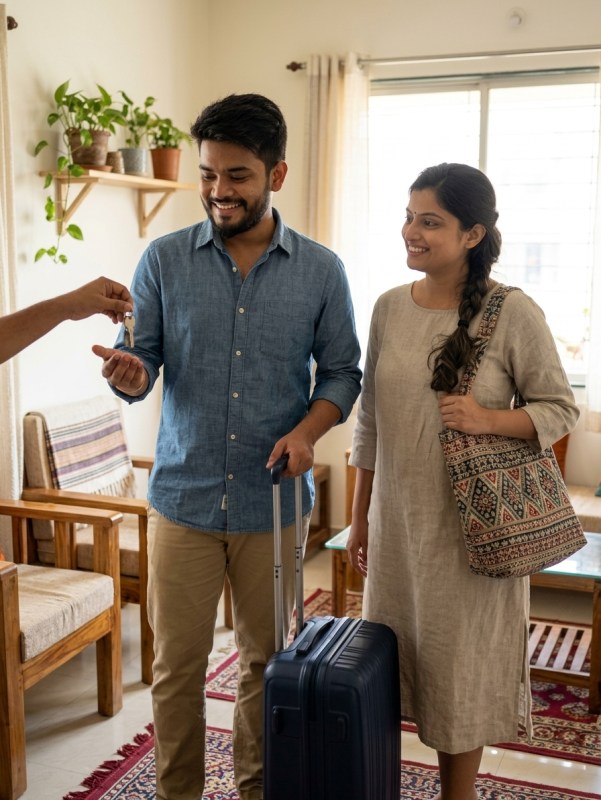
Real hotel testing means checking in as a normal guest. No advance emails saying we run Musafir Couple. No expectation of upgrades or special treatment. If the reception staff is rude to a regular couple, we experience that rudeness. If the towels are old and rough, we use those same towels. That’s the only way to write honest hotel reviews that actually help someone make a decision.
We Actually Sleep There—And Pay For It
Let’s talk money. Every hotel we review, we pay for. Full booking cost, full taxes, no media rates, no barter deals. When we reviewed that farmhouse property in Lonavala during monsoon 2025, it cost us ₹4,800 for one night. The AC didn’t work properly. We still paid full price. We still wrote about the AC.
Why does this matter? Because when a hotel gives you a free stay, there’s an unspoken pressure to be kind. Even if you promise yourself you’ll be objective, you soften the edges. You focus on what worked and downplay what didn’t. That’s human nature. So we removed the variable. We pay, we stay, we tell the truth.
Here’s how we budget for this: we don’t review every single place we stay. If we’re just passing through and need a place to sleep, that’s not a review—that’s just travel. But when we’re specifically testing a property to recommend (or not recommend) to you, we factor that cost into our content expenses. Some months that means we’re spending ₹15,000 to ₹20,000 just on accommodation testing. It’s worth it because you’re trusting our word.
And we actually sleep there. Not just show up for photos and leave. We spend the night. We test the bed for comfort—because a bed that looks great in photos can still feel like plywood. We check if the geyser works at 6 AM when everyone’s bathing. We see if the restaurant serves decent breakfast or just sad toast and watery chai. We listen for noise—traffic, other guests, that random dog that barks all night. These things only reveal themselves when you’re actually staying overnight.
One property near Pawna Lake looked perfect online. The room was clean, the view was lovely, the staff was polite. But at 11 PM, music from a nearby wedding started blasting. It went on till 2 AM. Nobody mentioned that in any review we read before booking. So we mentioned it in ours. Because if you’re booking that place for a peaceful anniversary weekend, you need to know there’s a wedding hall next door.
What We Actually Check—The Real Testing Methodology
You can’t evaluate a hotel stay the way you evaluate a blender. There’s no single metric. But there are patterns. After reviewing stays across Pune, Maharashtra, Goa, and Karnataka over three years, we’ve built a testing methodology that’s half checklist, half instinct. Here’s the breakdown.
The first thing we check? Access and arrival. How hard was it to find this place? Was the Google Maps pin accurate or did we spend twenty minutes calling the property and taking wrong turns? When we reached, was there clear signage, safe parking, a welcoming entrance? These aren’t minor details. If you’re arriving after dark in an unfamiliar area, access matters more than the thread count of the sheets.
For that homestay near Bedse Caves we reviewed in early 2026, the location was stunning—but the last kilometre was an unpaved road full of potholes. The host never mentioned that in the listing. It’s fine if you’re driving an SUV in daylight. It’s stressful if you’re in a sedan arriving at sunset. We wrote that in our review. That’s the kind of real-world detail most hotel reviews skip.
Next: the room itself. Not the photos. The actual room. We check the basics first—bed comfort, bathroom cleanliness, hot water pressure, air conditioning or fan effectiveness, windows that close properly, curtains that actually block light. Then the less obvious stuff: does the door lock feel secure? Are there enough power points near the bed? Is the WiFi strong enough for a work call or just strong enough to load WhatsApp occasionally? Is there a weird smell?
We take photos and videos of the actual room—not just the pretty corners. The bathroom tiles, the view from the window, the breakfast spread, the parking area. When you see our hotel reviews, you’re seeing what we saw, not what the marketing team shot.
Staff behaviour and responsiveness. This is hard to quantify but easy to feel. When we asked for an extra pillow, did someone bring it in ten minutes or did we have to call three times? When we had a question about checkout timing, was the response helpful or dismissive? Were they friendly only at check-in and then invisible for the rest of the stay?
Staff attitude can make or break a stay. We’ve stayed at budget properties where the host went out of their way to help us find a local bike mechanic when our scooter broke down. We’ve also stayed at expensive resorts where the staff barely made eye contact. Guess which one we recommended?
Food quality and honesty. If a property offers meals, we eat there—and we pay for it separately unless it’s included. We’re checking two things: is the food actually good, and does the price match the portion and quality? A ₹300 breakfast is fine if it’s filling and fresh. It’s not fine if it’s two pieces of toast and a banana.
One resort in Mahabaleshwar charged ₹1,200 for a basic veg thali that you’d get for ₹250 outside. They justified it saying “resort pricing.” We mentioned it in the review. You should know if you’re better off eating at a nearby restaurant.
Noise levels and surroundings. You can’t judge this from photos. You have to be there at night. Is the room soundproof or can you hear every conversation from the next room? Is there a highway nearby? A temple with early morning loudspeakers? A farm with roosters?
We stayed at a property near Cola Beach in Goa that was perfect in every way except one—there was a beach shack fifty metres away that played loud music till midnight. The host didn’t mention it. Most reviews didn’t mention it. We did. Because some people don’t mind that. Others will hate it. You deserve to decide.
Value for money. This is the final lens. After experiencing everything, we ask: if we were spending our own money—which we are—would we book this again? Would we recommend it to a friend? At what price point does this place make sense?
A ₹2,000 homestay with basic amenities and warm hosts can be great value. A ₹6,000 resort with Instagram-worthy decor but terrible service can be a waste. Honest hotel reviews have to answer the value question clearly. That’s what you’re really asking when you read a review—should I spend my money here?
The “Hidden Costs” Test
Every property has costs that don’t show up in the booking price. We track these because they add up fast and most reviews never mention them.
Parking fees. Some hotels charge ₹200 to ₹500 per day just to park your car. Others include it. We mention which.
Meal costs if breakfast isn’t included. A ₹3,500 per night room feels very different if breakfast costs another ₹800 for two people versus ₹200.
Extra guest charges. Booking sites show pricing for two adults. But if you’re traveling with a kid or a third person, some properties charge ₹1,000 extra per person per night. Others don’t. We ask and we write it down.
Activity or amenity fees. That beautiful pool in the photos? Some resorts charge you to use it if it’s part of a separate “club” facility. That yoga session or guided nature walk? Often extra. We check if the experiences they promote online are included in your stay or priced separately.
Early check-in or late checkout fees. Standard check-in is usually 2 PM and checkout at 11 AM. But if you’re on a weekend trip, you might want to arrive at noon or leave at 1 PM. Some places are flexible. Others charge you half a day’s rate for two extra hours. We test the flexibility by asking at the desk.
For a resort we reviewed near Mulshi, the room rate was ₹5,000. But by the time we added parking, lunch, dinner, and a late checkout, the real cost was closer to ₹8,000. That’s a big difference. We listed every charge in the review so you can budget properly.
What We Don’t Do—And Why It Matters
We don’t accept free stays in exchange for coverage. Not from luxury resorts, not from homestays, not from brand partnerships. If we can’t pay for it, we don’t review it. That’s the line. The day we blur that line is the day Musafir Couple stops being useful to you.
We don’t do “first impressions” reviews based on a few hours at a property. We’ve been approached by hotels saying “just come visit for the evening, shoot some content, post a story.” That’s not a review. That’s a photoshoot. If we haven’t spent a night there, we won’t call it a hotel review.
We don’t let the property know we’re coming to review them. Once in a while, a hotel figures it out mid-stay because someone recognizes us from YouTube. That’s fine. But we never tell them in advance. We want to see what a normal guest sees, not what they show to influencers.
We don’t write a review for every hotel we stay at. Some stays are just logistical—we needed a place to sleep between drives, or we were attending a wedding and stayed where the family booked. If we didn’t go there specifically to evaluate it for you, we don’t write it up as a recommendation.
We don’t sugarcoat problems. If the bathroom was dirty, we’ll say the bathroom was dirty. If the photos online were misleading, we’ll point it out. If the staff was rude, you’ll read about it. This has cost us some potential collaborations. Hotels have told us they won’t work with us because we’re “too honest.” Good. That means you can trust what we do publish.
How We Decide What’s “Worth It”
After every stay, we sit down—usually in the car on the drive back—and ask each other the same question: would we send a friend here?
Not “was it okay?” or “was it Insta-worthy?” but genuinely, if someone we cared about asked for a recommendation for this area and this budget, would this property make the list?
If the answer is yes, we write the review. If it’s “maybe” or “not really,” we skip it. We’d rather recommend ten great places than fifty average ones.
“Worth it” depends on context. A ₹1,500 budget stay near Lonavala with basic rooms and a kind host can absolutely be worth it if you’re just looking for a clean place to crash. A ₹10,000 luxury villa can not be worth it if the service is cold and the amenities don’t work. Price doesn’t determine value. Experience does.
We also think about who this place works for. Some properties are perfect for couples looking for privacy but terrible for families with kids. Some are great for a solo workation but awkward for a group. We try to be specific about who’ll enjoy this stay and who should probably look elsewhere.
One farmstay near Karjat was rustic, simple, no AC, limited menu. But it was ₹2,200 a night, the host was wonderful, and the property was surrounded by greenery and silence. We called it worth it—for couples who want an offbeat weekend, not for people expecting resort-style comfort. That clarity matters.
Real Example: When We Almost Got It Wrong
We’re not perfect. There’s been one stay where we initially loved the place—and then changed our mind after thinking about it for a week.
It was a boutique property in the hills near Panchgani. Beautiful decor, lovely host, great food, stunning views. We shot content there, posted stories, and almost wrote a full review recommending it. Then we remembered something. The bathroom had no hot water for our entire stay. The host kept apologizing and blaming it on a geyser issue. We were understanding. We didn’t make a fuss.
But a week later, Ketan said, “Would we have been that understanding if we’d paid ₹8,000 instead of ₹4,000?” The answer was no. And would we recommend a place to someone if they might also not get hot water in January in the hills? Also no.
So we didn’t publish the review. We reached out to the host privately and let them know. They appreciated the honesty and said they were fixing the system. If we stay there again in future and it’s resolved, we’ll reconsider. But we weren’t going to recommend it based on potential. We recommend based on what we experienced.
That’s the honesty standard we’re trying to hold. It’s not about trashing places. It’s about only vouching for what we’d genuinely send a friend to experience.
Why This Approach Takes Longer—And Costs More
We publish far fewer hotel reviews than most travel creators. That’s intentional. Most travel bloggers review ten to fifteen properties a month. We review maybe two or three. Because we’re actually staying there, paying full price, and spending time evaluating honestly instead of posting and moving on.
This model is slower. It’s more expensive. And it limits how much we can publish. But it’s the only model that produces honest hotel reviews you can actually use to make decisions.
When you read a review from Musafir Couple, you know it’s not a brand deal. You know we paid to be there. You know we’re telling you what we’d tell our friends. That trust is worth more than any sponsored post revenue we’d get from saying yes to free stays.
Some months we spend over ₹20,000 just testing stays. That’s real money for us, not a marketing budget. We make that back through YouTube ads, affiliate links when you book through our recommendations, and occasionally partnerships with travel platforms that don’t require us to compromise our reviews. It’s a balancing act, but it works because you keep watching, reading, and trusting what we say.
Frequently Asked Questions
Do you ever accept sponsored hotel stays?
No. We don’t accept free or discounted stays in exchange for reviews. If a hotel wants us to promote them, we discuss a flat collaboration fee for content creation—but that’s separate from a review. We won’t tie payment to a positive review. If we didn’t pay for the stay ourselves, we won’t review it as a recommendation.
How do you decide which hotels to review?
We pick properties in areas where we’re already planning to travel, or places that viewers and readers keep asking about. We prioritize locations within driving distance from Pune, across Maharashtra, Goa, and nearby states. We also focus on mid-range and offbeat stays because luxury resorts already get plenty of coverage, and ultra-budget places often aren’t worth the risk.
What if a hotel offers you a free stay after you’ve already reviewed it?
It’s happened a few times. A property saw our honest review, appreciated it, and offered a complimentary return stay. We politely decline. If we’ve already reviewed it, we don’t need to stay there again for content. If we do visit again for personal travel, we book and pay normally, and we don’t update the review unless something major has changed.
How can readers tell if your review is honest or sponsored?
If we stayed somewhere for free or received any discount, we clearly disclose it at the start of the post or video. But we don’t publish reviews for those stays. So if you’re reading a full hotel review on our blog or watching a detailed stay review on our channel, you can assume we paid for it ourselves. That’s our baseline standard for authentic hotel reviews.
Stop Trusting the 5-Star Rating—Start Asking Better Questions
If there’s one thing we want you to take away, it’s this: ratings don’t tell the full story. A 4.8-star property can still have terrible WiFi, no hot water, and rude staff. A 3.5-star homestay can be one of the best experiences you’ll have.
Stop filtering by stars. Start reading detailed reviews that answer your real questions. Does the bed feel comfortable? Can I actually work from there? Is the location safe for couples? Is parking easy? Will I be able to sleep through the night?
We built Musafir Couple because we got tired of booking hotels based on pretty photos and then feeling disappointed. Now we do the testing so you don’t have to guess. Every review we write, we’re asking ourselves—would we send someone we care about here? If the answer isn’t a clear yes, we don’t hit publish.
That’s the model. That’s the standard. And that’s why our honest hotel reviews take time, cost money, and sometimes frustrate properties who want only glowing coverage. But you’re the reason we do this. Your weekend matters. Your money matters. And you deserve to know the truth before you book.
Want to see which stays made our “actually worth it” list? Head over to the blog at Musafir Couple where we’ve listed every property we’ve reviewed in 2026, organized by region, budget, and vibe. Or explore our YouTube channel for full video walkthroughs of the rooms, food, and surroundings. No filters. No fluff. Just two travelers sharing what worked—and what didn’t.