

 by
Two hours outside Pune, our car started making a noise we’d never heard before. Middle of nowhere. No mechanic in sight. Samprita kept asking if I’d checked the engine oil. I hadn’t. That’s when we realised something—most couple road trips in India don’t fail because of the destination. They fail because of what you didn’t pack, didn’t check, or didn’t talk about before you left.
We’ve driven across 12 states now. Kashmir to Kanyakumari. Ahmedabad to the Northeast. Some trips were magic. Others tested our patience and our relationship. But every single one taught us something you won’t find in a glossy travel magazine. This couple road trip guide India is built from those lessons—the stuff that actually matters when you’re on the road, not posing for photos.
If you’re planning your first long drive together, or you’ve done a few weekend getaways and want to go bigger, you’re in the right place. We’re not going to tell you which route is “most romantic.” We’re going to tell you how to pick tyres, split driving hours, handle arguments at toll plazas, and actually enjoy the journey instead of just surviving it.
Why Road Trips Work Better for Couples Than Group Tours
Group tours move on someone else’s schedule. Road trips move on yours. That’s the real reason couples love them. You want to stop at that random temple? Stop. You want to skip the touristy lunch spot and find local food? Do it. You’re driving, so you decide.
But here’s what most couples don’t expect—road trips also expose how you handle stress together. Traffic jams. Wrong turns. Flat tyres. If you can navigate those without fighting, you’ll come back closer. If you can’t, you’ll know what to work on. Either way, it’s more real than any resort package.
We’ve noticed this working with couples who follow Musafir Couple: the ones who plan together before leaving enjoy the trip more. The ones who don’t plan usually have one person silently frustrated by day three. A road trip isn’t just about driving. It’s about shared decisions, shared responsibilities, and knowing when to let the other person take the wheel—literally and otherwise.
Picking the Right Route for Your First Couple Road Trip
Don’t start with Manali to Ladakh. Start with something closer. Something you can finish in three to four days. Something that doesn’t require a 4×4 or winter tyres. We made this mistake. Our first long trip was ambitious, and we spent more time worrying about the car than enjoying the views.
For couples based in or around Maharashtra, these routes work well as starters: Pune to Goa via the coastal route through Ratnagiri. Pune to Mahabaleshwar and down to Panchgani. Mumbai to Daman and then Gujarat’s southern towns. Each of these gives you decent roads, clear signage, and backup options if something goes wrong.
North India couples—try Delhi to Jaipur and Pushkar, or Delhi to Rishikesh and Mussoorie. South India—Bangalore to Coorg, or Chennai to Pondicherry and Mahabalipuram. These aren’t hidden routes. They’re tested. That’s the point. You want your first road trip to build confidence, not break it.
Once you’ve done a short one and know how your car handles, how you split tasks, and what you actually need in the boot, then plan the bigger ones. Rajasthan circuit. Spiti Valley. Northeast loop. Kerala backroads. Those require more prep, but they’re worth it.
What to Check in Your Car Before You Leave
This isn’t exciting, but it’s non-negotiable. We’ve seen couples stuck on highways because they skipped basic checks. Here’s what you do one week before leaving, not the night before.
Engine oil level and quality. If it’s been more than 5,000 km since your last service, get it done. Brake fluid and brake pad thickness—ask your mechanic to confirm. Tyre pressure and tread depth on all four tyres plus the spare. Battery charge, especially if your car’s more than three years old. Coolant level if you’re driving in summer or through hills.
Wiper blades and washer fluid. You’ll need them. Headlights, taillights, indicators—check every single one. Jack, wheel spanner, and puncture kit. Confirm they’re in the car and you know how to use them. Insurance and pollution certificate—keep physical copies, not just digital.
Also check your phone’s offline maps. Download the entire route on Google Maps before you leave. Mobile networks drop in rural areas and hill sections. You don’t want to be guessing directions when there’s no signal.
Packing for Two Without Overpacking
Couples overpack. Always. You don’t need six outfit changes for a four-day trip. You need practical clothes, a medical kit, and things that’ll actually save you when something goes wrong.
Clothes: three sets per person, one extra pair of socks and undergarments. One hoodie or jacket each, even if the forecast says warm—hills get cold at night. Comfortable shoes, not new ones. Pack a cap and sunglasses.
Medical kit: basic painkillers, antacids, motion sickness tablets, band-aids, antiseptic cream, any prescription medicines you’re already on. Oral rehydration salts if you’re driving through Rajasthan or Gujarat in summer. We learned this the hard way after Samprita got dehydrated near Udaipur and we had no chemist for 40 km.
Car essentials: phone charger and car adapter, power bank, torch, a printed map as backup, notebook and pen, reusable water bottles, some dry snacks, wet wipes, and a small towel. Trash bag for the car—don’t litter, and don’t let wrappers pile up on the seat.
One bag per person, plus one shared bag for car stuff. That’s it. The boot shouldn’t look like you’re moving cities.
Managing Driving Hours Without Burning Out
This is where most couples mess up. One person drives the whole way. The other scrolls Instagram. By day two, the driver’s exhausted and annoyed. If both of you can drive, split it. If only one of you drives, plan shorter days.
We follow a simple rule now: maximum four hours of driving per day. After that, your focus drops. You miss exits. You get irritated. It’s not worth it. If a route needs eight hours, split it across two days and find a place to stay midway.
Take a break every 90 minutes. Doesn’t have to be long. Just step out, stretch, drink water, switch drivers if needed. Toll plazas and fuel stations work fine. Don’t push through fatigue. That’s how accidents happen.
Agree on this before you start: the person driving gets to control the AC, the music volume, and the snack breaks. The other person navigates, picks the playlist, and stays awake to keep them company. Don’t let the driver do everything while you nap. It’s disrespectful.
Handling Arguments on the Road
You will argue. Doesn’t mean the trip’s ruined. It means you’re two people with different stress responses stuck in a small metal box. What matters is how you handle it.
We’ve had fights over wrong turns, over skipping a stop I wanted to see, over how fast Ketan was driving on a narrow hill road. What worked for us: pausing the argument until we could pull over. Never fight while driving. It’s unsafe, and no one wins.
Pull over somewhere safe. Take five minutes separately. Then talk. Usually the argument isn’t about the route or the speed. It’s about feeling unheard or unsafe. Address that, not the surface issue. Apologise if you need to. Move on. Don’t let it poison the rest of the day.
Also, build buffer time into your plan. Most arguments happen when you’re running late and stressed. If you’re not racing a clock, you’ll argue less.
Budget Breakdown for a Week-Long Couple Road Trip
Let’s talk real numbers. This is for a seven-day road trip covering around 1,500 km total, staying in budget hotels or homestays, eating at local places, and driving a mid-size petrol car. Based in 2026 prices, here’s what we typically spend.
Fuel: approximately ₹5,000 to ₹6,500 depending on your car’s mileage and petrol prices. Tolls: around ₹1,200 to ₹1,800 total depending on the route. Accommodation: ₹1,000 to ₹2,000 per night for decent couple-friendly stays, so about ₹7,000 to ₹14,000 for the week. Food: ₹800 to ₹1,200 per day for two people eating three meals at local spots or dhabas, roughly ₹6,000 to ₹8,000 total.
Miscellaneous: parking, entry fees, water, snacks, random expenses—budget another ₹2,000 to ₹3,000. Total for the week: ₹21,000 to ₹33,000 depending on your choices. That’s for two people. Split it, and it’s very reasonable compared to flights, cabs, and hotels in tourist hubs.
These numbers assume you’re not staying in resorts or eating at touristy restaurants. If you want more comfort, add 30 to 40 percent. If you camp or cook some meals, you can go lower. Either way, road tripping is one of the most budget-friendly ways to travel as a couple in India.
Safety Tips for Couples Driving in Rural and Hill Areas
India’s roads vary wildly. What works on a highway doesn’t work on a village road. What’s safe during the day isn’t safe at night. You need to adapt constantly.
First rule: avoid driving after sunset in rural or hilly areas. Roads narrow. Lighting’s poor. Trucks speed up. Locals drive without indicators. Animals cross randomly. We broke this rule once near Girnar and swore never again. It’s not worth the risk.
Second rule: always tell someone your route and expected arrival time. Share your live location with a family member or friend. If you get stuck or lost, someone should know roughly where you are.
Third rule: trust your instincts. If a road looks too rough or a situation feels off, turn back. Don’t push it just because the map says it’s a shortcut. We’ve abandoned routes midway when the road turned into broken gravel and there was no village in sight. It’s fine to change plans.
Carry cash. UPI and cards don’t work everywhere. Keep ₹5,000 to ₹10,000 in small notes for tolls, dhabas, and emergencies. Keep your phone charged, keep your fuel tank above half when you’re far from towns, and lock your car doors in crowded or unfamiliar areas.
Best Seasons for Road Tripping Across Different Regions
Timing changes everything. The same route that’s stunning in October can be a nightmare in July.
For hill stations and northern regions—September to November and March to May. Skip December to February unless you’re prepared for snow and ice. Skip June to August in areas prone to landslides. We’ve been stuck in traffic for hours near Manali because the rain triggered a mudslide. Not fun.
For Rajasthan and Gujarat—October to March. Summer’s brutal. April to June temperatures cross 40°C regularly. You’ll spend the whole trip sitting in air-conditioned rooms instead of exploring.
For southern coastal areas like Goa, Karnataka, and Kerala—October to February. Monsoon’s beautiful but risky for driving, especially through forests. March to May is hot and humid.
For the Northeast—October to April. Monsoon closes roads and causes floods. Winter’s cold but clear. Spring’s perfect if you want greenery without the rain.
Monsoon road trips are possible, but only if you’re experienced and flexible. Roads close. Visibility drops. Plans change hourly. If it’s your first trip, pick the dry season.
Romantic Stops That Aren’t Just Scenic Viewpoints
Every couple road trip needs moments where you actually connect, not just take photos. Viewpoints are fine, but they’re crowded and rushed. Look for these instead.
Quiet lakes where you can sit for an hour. Salaulim Dam in Goa. Pawna Lake near Lonavala. Dal Lake if you’re near Kashmir. These aren’t photo ops. They’re places to talk, to breathe, to remember why you’re doing this.
Small temples or heritage sites off the highway. Bedse Caves near Pune. Somnath Temple on the Gujarat coast. Places with history and calm, not tourist chaos. We’ve had some of our best conversations sitting in old temple courtyards, just the two of us and maybe a caretaker.
Local food stops that aren’t on Google Maps. Ask locals. The best meals we’ve had were in nameless dhabas where the aunty cooking asked where we’re from and insisted we try her special dish. That’s the real romance of road tripping—unplanned human moments.
Also, just pull over sometimes. Middle of nowhere. No destination. Watch the sunset from the roadside. Make chai on a portable stove if you’ve packed one. These unscripted stops end up being the memories you talk about later, not the planned ones.
What We’d Do Differently If We Started Over
We’d start smaller. Our first trip was too ambitious. We tried to cover too much and ended up exhausted. Now we know—fewer places, more time in each. Quality over distance.
We’d invest in a better phone mount and a dashcam earlier. Phone mount keeps navigation visible and hands free. Dashcam’s useful if you’re in an accident or need to prove something to insurance or police.
We’d pack a portable tyre inflator. We’ve had slow punctures twice where the tyre wasn’t flat but losing pressure. A small electric inflator bought us time to reach a repair shop instead of changing the tyre on the highway.
We’d talk about money before the trip, not during. Who’s paying for what, or are you splitting everything? Decide upfront. It avoids awkward moments at petrol pumps and hotels.
And honestly, we’d argue less about small stuff. Which route to take. Where to eat. Whether to stop or keep going. None of it matters as much as just being present with each other. That’s the real point of a couple road trip.
Frequently Asked Questions
Is it safe for couples to road trip alone in India?
Yes, if you’re sensible. Stick to daytime driving in unfamiliar areas, share your location with someone, avoid isolated roads at night, and trust your instincts. We’ve done over 20 trips without major issues. Common sense goes a long way.
How much should we budget per day for a couple road trip?
Around ₹3,000 to ₹5,000 per day for two people, covering fuel, food, and budget accommodation. Add more if you want resorts or guided activities. This estimate’s based on our actual spending tracked over multiple trips across India in 2026.
Can we road trip if only one of us knows how to drive?
Yes, but keep daily driving under four hours and take frequent breaks. The non-driver should stay awake, navigate, and keep the driver company. Don’t attempt difficult routes like Spiti or Ladakh with a single driver—it’s too tiring and risky.
What’s the best first road trip route for couples in India?
Depends where you’re based, but we recommend something three to four days long with decent roads. Pune to Goa, Delhi to Jaipur, Bangalore to Coorg, or Mumbai to Gujarat’s coast. Test your car, your planning, and your teamwork before going bigger.
Ready to Plan Your Couple Road Trip?
Road tripping across India as a couple isn’t about perfect planning. It’s about starting, learning as you go, and being willing to laugh when things go sideways. You’ll take wrong turns. You’ll eat questionable food. You’ll have at least one fight. And you’ll come back with stories no resort package could ever give you.
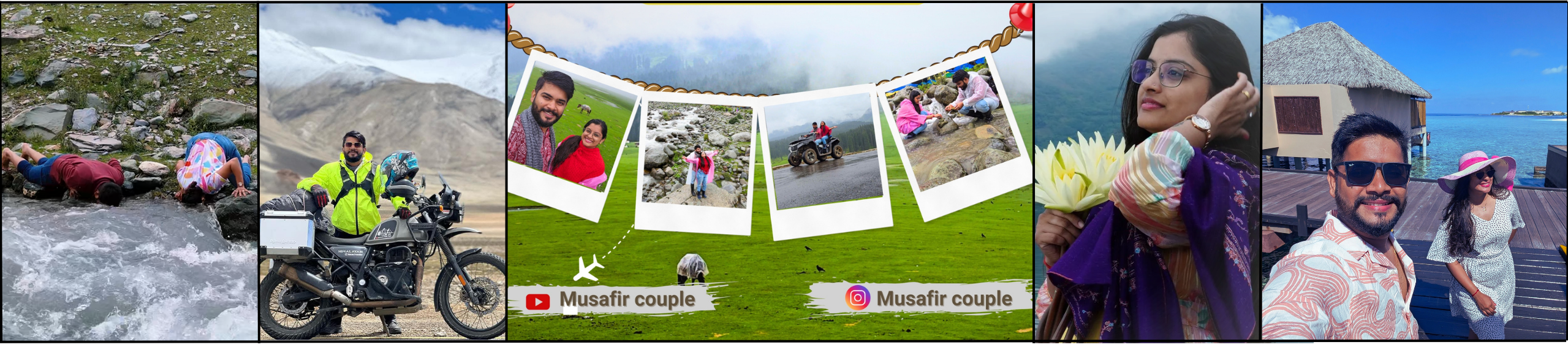
At Musafir Couple, we share every honest detail from our trips—the good, the messy, and the unexpectedly beautiful. Real routes, real costs, real mistakes. If you’re planning your couple road trip across India and want route suggestions, budget breakdowns, or just someone to ask “is this realistic?”, follow us on YouTube and Instagram. We’re Ketan and Samprita, and we’re figuring this out one kilometre at a time, just like you.
Pack light. Drive safe. Talk to each other. The road’s waiting.

