

 by
by We started couple travel vlogging in 2021 with a scratched phone camera and no idea what we were doing. Our first video from Mulshi included 40 seconds of Ketan’s thumb covering the lens, shaky footage that made viewers seasick, and audio where the wind drowned out everything we said. We published it anyway. That disaster taught us more than any tutorial ever could.
Here’s what nobody tells you upfront: couple travel vlogging isn’t about having the best gear or the prettiest locations. It’s about capturing the parts of travel that make people lean forward and say, “That’s exactly how it feels.” The confusion at wrong turns. The small fight over where to eat. The unexpected moment when a local aunty insists you try her homemade pickle. That’s the content people actually remember.
Most travel vlogs you see online follow the same tired formula—slow-motion drone shots, perfectly timed sunsets, couples who never sweat or argue or get lost. Real couple travel content creation means showing the trip as it actually happened, not as it looked in your head.

Why Couple Travel Vlogging Works Right Now
Something shifted in how people consume travel content around 2024. The glossy, heavily produced influencer reels started feeling hollow. Viewers got tired of seeing the same Santorini sunset from 50 different accounts. They wanted real voices, real budgets, real mistakes.
Couples bring something solo creators can’t—natural banter, shared reactions, two perspectives on the same moment. When Samprita spots a hidden café and Ketan’s more interested in finding the nearest petrol pump, that’s not a problem in the footage. That’s the story. People watch because they see themselves in those small conflicts and compromises.
The algorithm’s caught on too. YouTube and Instagram both reward longer watch times now, and couple vlogs hold attention better than solo content. Viewers stick around to see how a disagreement resolves or whether you actually find that waterfall you’ve been searching for. They’re not just watching a destination guide—they’re following a relationship navigate a journey together.
The Gear You Actually Need to Start
Stop waiting for the perfect camera. Seriously.
We’ve filmed entire weekend trips on a phone that cost ₹15,000. The video quality’s not going to win awards, but it’s good enough to tell the story. What matters more than megapixels is stability, decent audio, and enough battery to make it through the day.
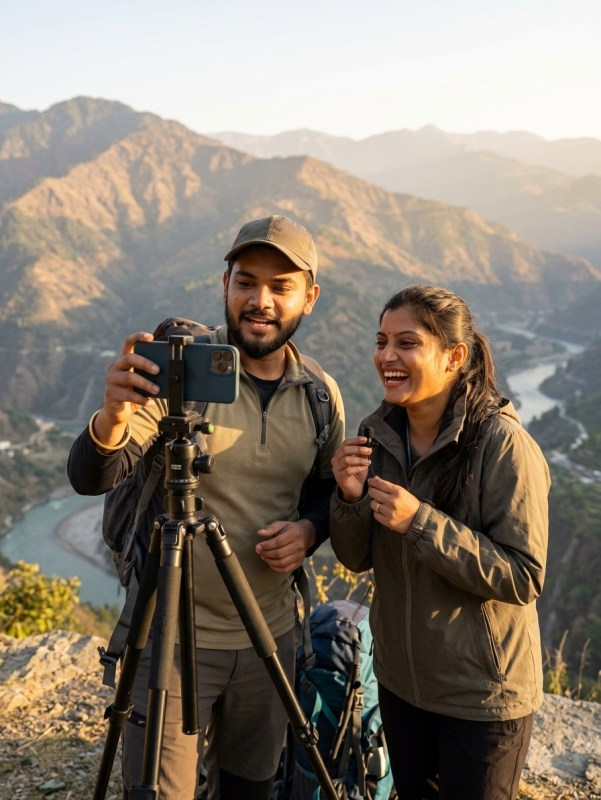
Here’s what’s in our current setup after three years of testing: One phone with a good camera (we use a mid-range Android), a small gimbal for smooth walking shots (₹3,000-₹5,000), a wireless mic that clips to our shirts (game-changer for audio, around ₹4,000), two power banks, and a flexible tripod that wraps around railings and branches.
That’s it. Total investment under ₹25,000. You don’t need a DSLR to start. You need the discipline to actually film consistently.
The one piece of gear worth spending on early is audio equipment. Viewers will tolerate average video quality, but bad audio makes people click away in seconds. Wind noise, muffled voices, background traffic drowning out your words—these kill watch time faster than shaky footage.
We learned this the hard way at Pawna Lake. Beautiful visuals, terrible audio. Comments kept asking what we were saying. Now we use a wireless lavalier mic for any outdoor talking-head shots and always carry a backup wired mic in case the Bluetooth acts up.
How We Plan Content Before Each Trip
This part trips up most beginners. They think travel vlogging means just hitting record and seeing what happens. Sometimes that works. Most times it doesn’t.
We spend about two hours before any trip sketching out a rough content plan. Not a script—scripts kill spontaneity. Just a loose structure of what we want to capture and why someone would watch the full video.
The framework we use: opening hook (what’s the unique angle on this destination), three main story beats (usually the journey, the experience, and the honest verdict), B-roll shot list (specific visuals we need to tell the story), and potential talking points (questions we know viewers will have).
For our recent Bedse Caves trip, the plan looked like this: Hook—why these caves stay empty while Karla Caves get crowded. Beat one—the confusing access road and where to actually park. Beat two—what makes the ancient carvings worth the climb. Beat three—is it worth it versus better-known spots nearby. B-roll needed—wide shots of cave entrances, detail shots of carvings, the view from the top, our reactions during the climb.
That one-page plan kept us focused during filming without making the vlog feel forced or overly produced. We still caught spontaneous moments—Samprita nearly stepping on a snake, the local guide who shared stories the internet doesn’t mention—but we also didn’t come home with five hours of random footage and no clear narrative.
Planning also helps with travel content creation beyond just vlogs. The same trip gives us material for Instagram Reels, photo carousels, blog posts, and YouTube Shorts. We’re not creating seven different pieces of content—we’re capturing one trip smartly and slicing it for different platforms.
Filming Techniques That Don’t Require Training
Nobody taught us how to frame a shot. We learned by watching what worked in other people’s vlogs and trying it ourselves.
Start with the basic rule of thirds—your subject shouldn’t sit dead center. Put yourself slightly off to one side, with the destination filling the rest of the frame. It looks more natural and gives the viewer context for where you are.
For walking shots, slow down. Way down. Your normal walking pace creates footage that feels rushed and shaky. We walk at about 60 percent of normal speed when the camera’s rolling, even with a gimbal. The footage looks like normal movement, but it’s smooth enough to watch comfortably.
Always shoot more B-roll than you think you need. Those short clips of details—chai being poured, a door opening, hands pointing at a map, feet walking on different terrain—become the glue that holds your edit together. We try to capture at least 30 seconds of random detail shots every 20 minutes during a trip.
The talking-head shots where you address the camera directly need better light than you’d expect. Shade works better than direct sun, which creates harsh shadows and makes you squint. Overcast days are secretly ideal for filming. If you’re shooting in bright sun, position yourself so the sun’s behind you and lighting your face, not creating a backlit silhouette.
One technique that upped our production value instantly: varied shot distances. Don’t film everything at arm’s length. Get some wide shots where you’re small in the landscape, some medium shots for walking and talking, and close-ups for reactions and details. Cut between these distances in your edit, and the vlog suddenly feels more dynamic.
The Art of Authentic Travel Storytelling
This is where most couple travel vlogging falls apart. Great footage doesn’t automatically equal great storytelling.
A travel story needs tension. Not fake drama—real friction. What went wrong? What surprised you? What didn’t match your expectations? Our most-watched vlog isn’t from Maldives or Kashmir—it’s from a road trip where we took a wrong turn, ended up on a terrible mud road, fought about whether to turn back, and eventually found a hidden waterfall we didn’t know existed.
Viewers stayed for the uncertainty. They wanted to see if we’d make it, if the detour would be worth it, if we’d still be laughing by the end. That’s narrative tension.
Every good travel story also needs specific details that only you would notice. The smell of fresh bread from a roadside bakery. The way the hotel owner’s dog followed you around. The exact price the street vendor quoted before you bargained it down. These specifics make viewers feel like they’re there with you.
We use a simple three-act structure stolen from filmmaking: setup (here’s where we’re going and why), confrontation (here’s what made it harder or different than expected), resolution (here’s how it turned out and whether we’d recommend it). Even a 10-minute vlog follows this arc.
Another storytelling trick that works: address the camera like you’re talking to one friend, not an audience. Ketan and I often film our talking segments as if we’re explaining the trip to our actual friend Priya back in Pune. What would she want to know? What would make her laugh? That mindset keeps the tone conversational instead of presentational.
Authenticity also means showing the boring or frustrating bits. Sitting in traffic. Waiting for food. The homestay that looked better in photos. You don’t dwell on these moments, but acknowledging them builds trust. Viewers know you’re not selling them a fantasy—you’re sharing a real experience.
Editing Your Couple Vlog Without Losing Your Mind
Editing takes longer than filming. Accept this now and you’ll save yourself frustration later.
A 10-minute finished vlog usually means we’re cutting down 60-90 minutes of raw footage. For a full weekend trip, we might have three hours of clips to sort through. The first edit always feels overwhelming.
We use CapCut for mobile editing and DaVinci Resolve (the free version) when we’re editing on a laptop. Both work fine. The tool matters less than understanding pacing.
Here’s the pacing rule that helped us most: if a shot doesn’t add new information or emotion, cut it. Viewers don’t need to see the entire walk from the car to the hotel entrance. They need the moment you react to seeing the hotel, then a quick cut to you inside. Trust the audience to fill in the gaps.
Music choice changes everything. The same footage feels adventurous with upbeat music and reflective with soft background tracks. We pull most of our music from YouTube’s Audio Library and Epidemic Sound. The free options work fine for starting out—just make sure you have the license to use them.
For couple travel vlogging specifically, balance screen time between both of you. We noticed early on that Ketan appeared in twice as many shots because he was holding the camera more often. Now we’re deliberate about handing the camera back and forth so viewers connect with both perspectives.
Titles and text overlays help more than you’d think. When we’re explaining costs or directions, putting the key info on screen as text while we’re talking increases retention. People can watch without sound or rewind to screenshot the details.
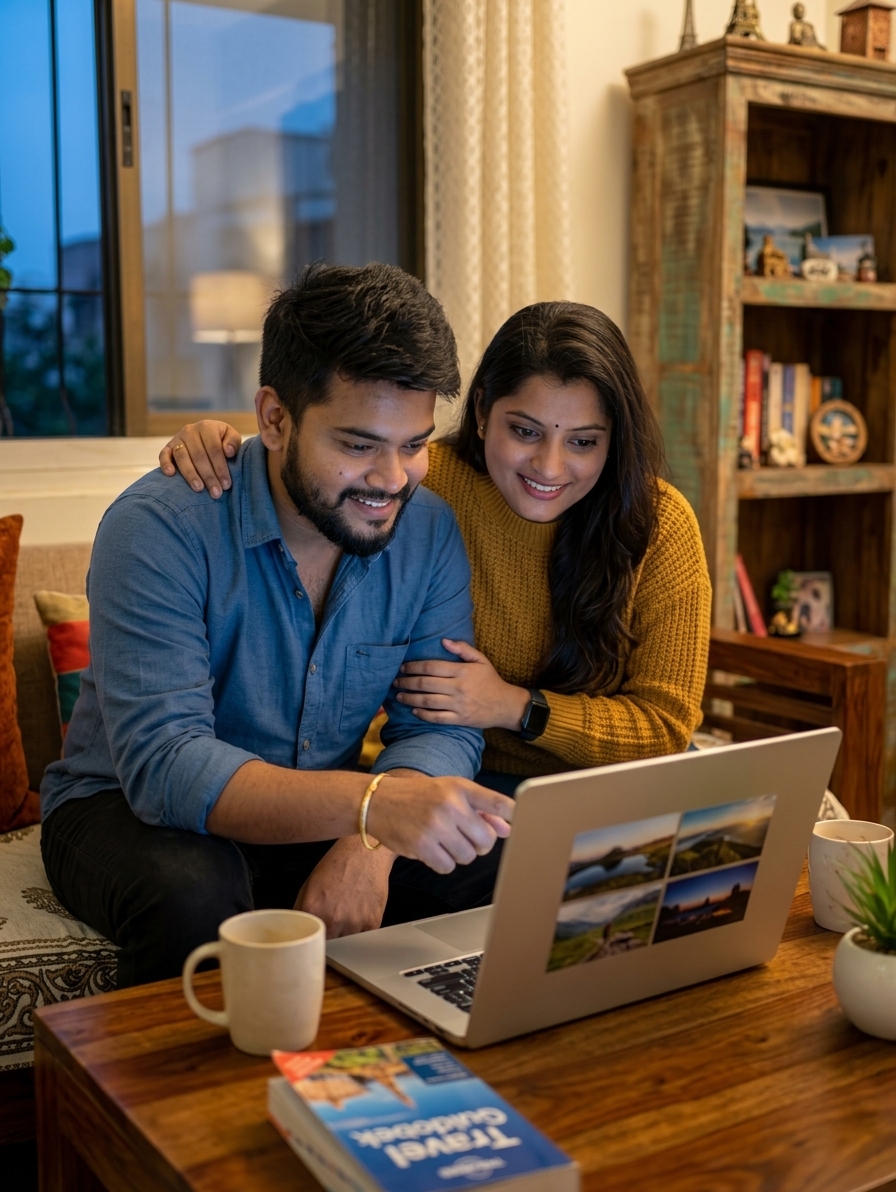
One editing habit that saves us hours: we film a quick voice note on our phone right after each day of travel, describing what happened and what moments stood out. When we sit down to edit days or weeks later, that voice note reminds us which clips to prioritize. Without it, we’d forget half the context behind the footage.
Building Your Content System Across Platforms
A single trip should feed content for weeks. That’s not being lazy—that’s being strategic with travel content creation.
Here’s how we slice up one weekend getaway: One main YouTube vlog (10-15 minutes), three to four YouTube Shorts or Instagram Reels pulled from the best moments, a photo carousel for Instagram with the story in the captions, a blog post with the full itinerary and costs, and maybe a Twitter thread with quick tips.
Same content, different formats. The people who want the full story watch YouTube. The people scrolling during lunch watch the Reel. The people planning their own trip read the blog.
Instagram Reels need a hook in the first two seconds. We open with either a surprising visual, a bold statement, or a question. “We paid ₹800 for this room—here’s what we actually got” works better than showing the journey to get there first.
YouTube wants longer watch time, so we bury the headline. Don’t reveal whether the place was worth it in the first 30 seconds—make people stick around for the verdict. The algorithm rewards videos that keep viewers watching past the halfway mark.
For travel storytelling on Instagram, captions matter as much as visuals. We’ve had photo posts with average images get more engagement than stunning shots because the caption told a specific story. Write captions the way you’d tell the story to someone sitting next to you—not like you’re writing a newspaper article.
Cross-promotion across platforms works if you’re subtle about it. We’ll mention in a YouTube vlog that the detailed costs and map are in the blog post (linked in description), or tease in an Instagram Reel that the full experience is on YouTube. But we never make one platform feel like just an ad for another.
Monetizing Couple Travel Content the Honest Way
Let’s talk money, because most vlogging guides skip this part.
You won’t make a rupee from YouTube ads until you hit 1,000 subscribers and 4,000 watch hours. That took us 11 months of consistent posting. In the meantime, you’re funding trips out of pocket.
The first money usually comes from brand collaborations—hotels, resorts, tourism boards, travel gear companies. They’ll offer free stays or products in exchange for coverage. Some offer payment on top. We’ve worked with homestays in Lonavala, farm resorts near Pune, and travel accessory brands.
Here’s the part nobody tells beginners: only promote what you’d genuinely recommend. We’ve turned down paid collabs because the property didn’t match our audience’s budget or the product didn’t work as advertised. One bad sponsored post kills more trust than the money’s worth.
Our standard collaboration terms: free stay or product, plus payment for the content creation work (filming, editing, posting). We price based on our average video views and engagement rate. Starting out, you won’t command high rates. That’s fine—the early collabs build your portfolio.
Affiliate marketing works once you have consistent traffic. We use Amazon affiliate links for gear we actually use and booking platform links for hotels. The earnings are small but add up—maybe ₹3,000-₹8,000 per month once you’re established.
YouTube ad revenue kicked in around month 14 for us. Now it covers about 40 percent of our travel costs. Not enough to quit our jobs, but enough to justify more frequent trips.
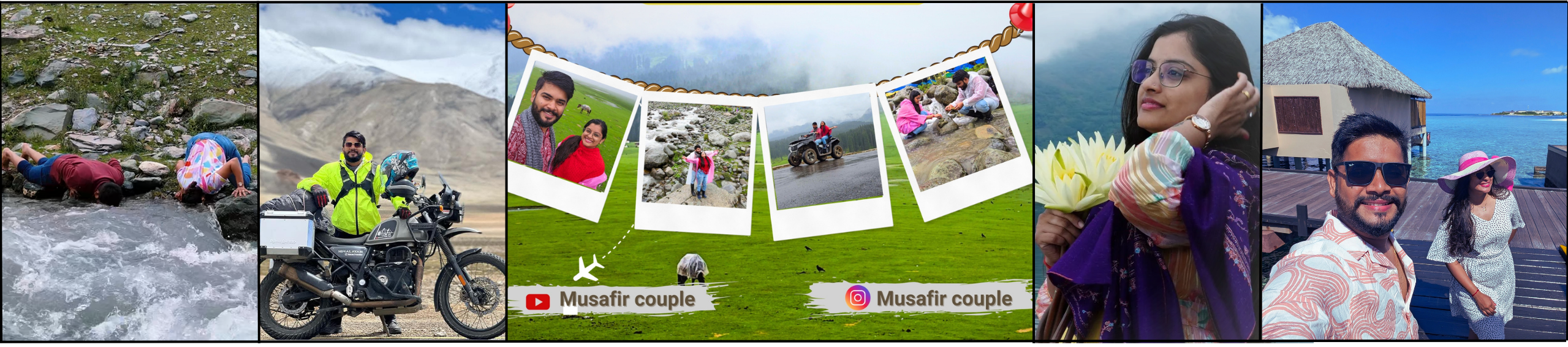
The real monetization comes from treating couple travel vlogging as a media brand, not just a hobby. Musafir Couple works with tourism departments, creates destination guides for travel platforms, and occasionally does photography for resorts. The vlog itself doesn’t pay all the bills—the opportunities it creates do.
Common Mistakes We Made So You Don’t Have To
We’ve messed up more than we’ve gotten right. Here’s the short list of mistakes that cost us time, money, or both.
Mistake one: filming everything in landscape and then realizing we needed vertical footage for Reels. Now we film key moments in both orientations, even though it feels redundant.
Mistake two: not backing up footage during the trip. We lost an entire day’s content from a memory card failure in Goa. Now we transfer files to a phone or laptop every evening and keep two copies before we format the card.
Mistake three: trying to vlog every single moment. You’re on a trip—experience some of it without the camera. Some of our best memories didn’t make it into vlogs because we were too present in the moment to film it. That’s not a failure. That’s the point of travel.
Mistake four: copying other creators’ styles instead of finding our own voice. Early on, we mimicked the fast-cut, music-heavy style popular on YouTube. Our audience didn’t connect. When we slowed down, talked more, and showed the imperfect bits, engagement doubled.
Mistake five: ignoring analytics. YouTube Studio tells you exactly where viewers drop off, which videos bring in subscribers, what traffic sources work. We didn’t look at this data for the first six months. When we finally did, we realized our audience loved budget stays and honest reviews but didn’t care about our daily routine vlogs.
Mistake six: posting inconsistently. We’d upload three videos in one week, then nothing for a month. The algorithm punished us for it. Now we aim for one vlog every 10-14 days, even if it’s shorter. Consistency beats perfection.
Handling the Reality Nobody Talks About
Couple travel vlogging sounds romantic until you’re both exhausted, arguing about whether to film the sunset or just watch it, and wondering if anyone even cares about the video you’ll spend 12 hours editing.
The hard part isn’t the filming. It’s the mental load of always thinking about content. Every restaurant becomes a potential review. Every scenic spot becomes a filming location. You start experiencing places through the lens instead of with your eyes.
We set boundaries to protect the relationship. No filming during meals unless it’s a specific food review. No filming the first hour after we wake up. One day per month where we travel without creating any content at all.
The comparison trap hits hard too. You’ll see couple creators with better gear, bigger budgets, and more subscribers. You’ll wonder why their basic hotel room tour got 100,000 views and your detailed destination guide got 800. The answer’s usually luck and timing, not quality.
Privacy becomes complicated. How much of your relationship do you show? We don’t film serious arguments, personal conversations, or anything that feels too intimate. The vlog shows a real version of us, not the complete unfiltered version. Some moments stay private.
Comments can be rough. People will criticize your filming, your choices, your budget, your face. Most comments are supportive, but the negative ones stick with you. We’ve learned to ignore the trolls and engage with genuine questions or feedback.
There’s also the pressure to keep topping yourself. Your audience loved the Maldives vlog, so now they expect every trip to be equally exotic. The truth is, most of our content is weekend getaways within 200 kilometers of Pune. We’ve had to make peace with the fact that consistent, helpful content beats occasional big-budget trips.
Growing Your Audience Without Losing Your Voice
Growth happens slowly, then suddenly. We were stuck at 600 subscribers for months. Then one vlog about a hidden beach in Goa got shared in a travel Facebook group, hit 80,000 views, and we jumped to 3,200 subscribers in two weeks.
You can’t predict what’ll hit. You can only keep showing up.
SEO matters more than most travel vloggers admit. We title our videos with the exact phrases people search—”Lonavala budget stays under ₹2000″ performs better than “Our Lonavala Weekend Adventure.” Boring but true.
Thumbnails need to be clean and readable on a phone screen. We use bright colors, clear text, and our faces showing genuine emotion. The YouTube Creator Academy actually has useful thumbnail tips—we watched those tutorials and our click-through rate improved.
Engage with your early audience like they’re friends. Reply to every comment in the first few months. Ask what they want to see next. Feature their questions in your content. We’ve built genuine friendships with people who started as viewers and now share trip tips with us.
Collaborating with other small creators helps. We’ve done joint trips with two other couple travel vloggers—filming together, sharing audiences, learning from each other’s approaches. Their subscribers discover us, ours discover them. Everyone grows.
Stick to a niche, at least at first. We’re the couple that focuses on real costs, hidden spots in Maharashtra and nearby states, and honest reviews. That’s specific enough to stand out but broad enough to create consistent content. Once you’re established, you can expand.
The Content Formats That Actually Get Watched
Not all couple travel vlogging content performs equally. Here’s what we’ve learned about which formats resonate.
Full destination vlogs (10-15 minutes) work when people are planning a trip. They want the complete picture—how to get there, where to stay, what it costs, whether it’s worth it. These videos have the longest watch time but slower initial growth.
Quick tips and hacks (60-90 second Reels or Shorts) go viral more easily. “How to reach Bedse Caves without Google Maps lying to you” or “What ₹1500 gets you at this Mahabaleshwar homestay” perform consistently.
Honest reviews hit different than promotional content. Our video titled “We regretted booking this resort—here’s why” got more views and trust than any glowing review we’ve posted. People appreciate the honesty.
Budget breakdowns win every time. When we show the exact costs—tolls, parking, entry fees, food, stay—with receipts on screen, the comments fill with people saying “finally, someone who shows real numbers.” This transparency builds the audience that actually books trips.
Comparison videos help decision-making. “Lonavala vs Khandala: Which one for your weekend?” or “Pawna camping: Tent stay vs farmhouse” guide people stuck between options.
Behind-the-scenes content about the vlogging process itself creates a different kind of connection. Showing our editing setup, how we choose locations, or our filming mistakes humanizes the brand.
Technical Tips That Improve Watch Time
YouTube’s algorithm cares about one thing above all: keeping people on the platform. If your video does that, it gets promoted.
Hook them in the first 10 seconds. We open with the most interesting visual or statement, then briefly introduce what the video covers. No long intros with channel name and “hey guys” fluff.
Pattern interrupts every 20-30 seconds keep attention from drifting. This means changing the shot, adding text on screen, switching speakers, or including a quick joke. The human brain craves variety.
End screens and cards matter. In the last 20 seconds, we point viewers to another relevant video. “If you liked this Lonavala guide, check out our Khandala stay review next.” About 8-12 percent of viewers actually click through.
Chapter markers let viewers jump to the section they care about most. We divide longer vlogs into chapters: Intro, Journey, Hotel Review, Local Food, Final Verdict. This helps watch time because people can rewatch specific sections or skip ahead without leaving the video entirely.
Audio levels need to be consistent. Viewers shouldn’t have to adjust volume when you cut from talking to B-roll with music. We use audio compression in editing to smooth this out.
Color grading keeps the visual tone consistent across different filming conditions. We use a simple warm preset that makes footage feel cohesive even though we’re filming across different times of day and weather.
What We’d Do Differently If We Started Today
Knowing what we know now, we’d change a few things.
We’d niche down harder from day one. Instead of “couple travel,” we’d start with “budget weekend getaways from Pune.” Once that audience was solid, we’d expand.
We’d batch-create content during trips. Film enough on one weekend to create content for two weeks—one full vlog, three Reels, one blog post, multiple Instagram stories. We eventually figured this out, but it took too long.
We’d invest in audio gear before camera gear. Good sound makes average visuals feel professional. Bad sound makes great visuals unwatchable.
We’d study YouTube analytics from week one. Understanding audience retention, traffic sources, and click-through rates earlier would’ve saved months of guessing.
We’d be more consistent with posting schedule, even if that meant shorter videos. The algorithm rewards reliability.
We’d ignore vanity metrics like subscriber count and focus on building genuine connection with the people who do watch. A thousand engaged viewers matter more than 10,000 passive ones.
Most importantly, we’d worry less about what other creators were doing and trust our own voice sooner. The unpolished, honest style that eventually worked for Musafir Couple is what we hesitated to show at first because it didn’t look like “professional” travel content.
Frequently Asked Questions
Do we need expensive equipment to start couple travel vlogging?
Not at all. Start with a decent smartphone, a small tripod, and a basic wireless microphone. We’ve created videos with over 50,000 views using a phone that cost under ₹20,000. Gear matters far less than storytelling, consistency, and genuine perspective. Upgrade equipment only after you’ve proven you’ll stick with vlogging for at least six months.
How do we balance filming and actually enjoying the trip together?
Set clear boundaries before the trip. We film actively for about 60-70 percent of the experience and keep the camera away for the rest. Mornings and golden hour get priority for filming. Meals and late evenings are usually camera-free unless we’re doing a specific food review. The point of couple travel vlogging is sharing experiences, not documenting every single second.
How long does it take to grow a travel vlog channel to monetization level?
Most couple creators hit YouTube’s monetization threshold (1,000 subscribers and 4,000 watch hours) between 8 and 18 months of consistent posting. We took 11 months posting roughly 2-3 times per month. Growth depends heavily on your niche, consistency, and whether a video gets shared outside your existing audience. Don’t count on making money in year one—create because you enjoy it.
What’s the best platform to start with: YouTube or Instagram?
YouTube for long-form storytelling and sustainable growth. Instagram for quick wins and brand collaborations. We recommend starting both simultaneously but focusing your energy on YouTube. Instagram Reels can drive traffic to your YouTube channel, and YouTube builds a library of content that keeps working for you months after posting. YouTube also pays better once you’re monetized.
Ready to Start Your Own Couple Travel Vlogging Journey?
The best time to start couple travel vlogging was three years ago. The second best time’s your next trip.
You don’t need perfect conditions. You don’t need a big budget. You don’t need to quit your job and travel full-time. You need a phone, a travel plan, and the willingness to show up consistently even when the first 20 videos feel like nobody’s watching.
Musafir Couple started exactly where you are now—unsure, under-equipped, and wondering if anyone would care about our unpolished take on travel. Turns out, people were craving the honest, practical, occasionally messy reality of couple travel more than another perfectly curated highlight reel.
Your perspective is unique. The way you and your partner navigate destinations, make decisions, handle setbacks, and discover hidden spots—that’s content someone’s looking for. They want to know if the trip’s worth it before they book. They want to see what ₹3,000 actually gets them. They want to watch a real couple figure things out together, not a scripted performance.
Start small. Film your next weekend getaway. Edit it on your phone. Post it. See what happens. Then do it again. And again.
If you’re ready to document your couple travel stories authentically or want to learn more about creating travel content that actually helps people plan better trips, follow Musafir Couple on YouTube and Instagram. We share our real experiences, real costs, and real opinions—no filters, just honest travel stories from two people figuring it out one destination at a time.
The roads are waiting. So is your story. Film it.


