

 by
Kanyakumari Road Trip From Pune Worth It Or Not 15 Days Real Review
We just drove 3,000+ kilometres to India’s southernmost tip and back. Here’s everything that went right, wrong, and cost more than we expected — Ketan and Samprita from Musafir Couple sharing the unfiltered truth.
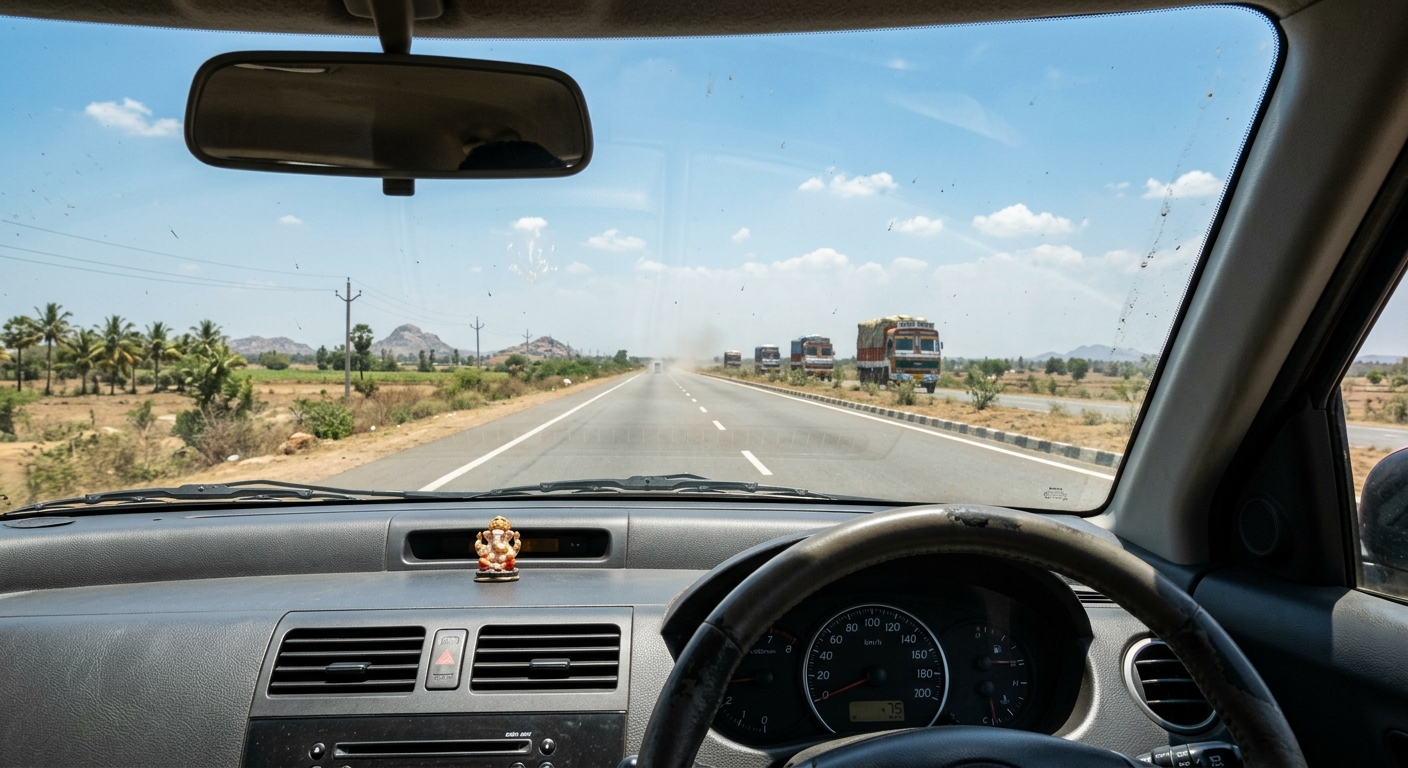
Most travel blogs make long road trips look like a romantic movie montage. They skip the part where you’re stuck behind a truck convoy at 3 pm in Tamil Nadu heat with no decent restaurant for 80 kilometres. That’s the real Kanyakumari road trip from Pune — spectacular in places, exhausting in others, and absolutely worth planning carefully before you commit 15 days and a decent chunk of savings.
We left Pune on a December morning with an overambitious plan, two duffel bags, a playlist nobody agreed on, and ₹85,000 budgeted for everything. Fifteen days later, we’d crossed five states, fought over directions at least twelve times, eaten at roadside dhabas we’ll never forget, and returned with a fuel bill that made us reconsider our life choices. Here’s the honest breakdown.
Why We Chose 15 Days Instead of 10
Short answer? Because 10 days felt rushed the moment we mapped it out.
The Pune to Kanyakumari stretch is roughly 1,500 kilometres one way. Most couples try cramming it into 8-10 days, spending six hours daily just driving. That sounds doable until you factor in bad roads through Karnataka’s interior, unexpected detours, early sunsets, and the fact that South Indian highways — especially once you cross Bengaluru — aren’t the smooth Mumbai-Pune Expressway you’re used to.
We wanted time to actually stop. Not just click photos at the destination board and leave. Fifteen days gave us breathing room to explore Gokarna properly, spend a sunrise at Murudeshwar without rushing breakfast, and take an unplanned day in Madurai because the Meenakshi Temple deserved more than a two-hour slot. That buffer saved our sanity and our relationship. Samprita will confirm — day six would’ve been a disaster if we’d been on a tight 10-day schedule.
The fifteen-day structure also meant we didn’t have to drive in the dark. We learned this the expensive way on our Kashmir trip last year: night driving in unfamiliar terrain kills both your energy and your safety margin. This time, we stopped by 6 pm most days, checked into budget stays, and actually enjoyed our evenings instead of collapsing from fatigue.

The Route We Actually Took and What We’d Change
Pune → Belgaum → Gokarna → Murudeshwar → Mangalore → Udupi → Coorg → Mysore → Bangalore → Salem → Madurai → Rameswaram → Kanyakumari.
That was the plan. Reality looked messier.
Belgaum was a transit stop, nothing more. We spent the night near the Karnataka border, ate at a mediocre dhaba, and left early next morning. First lesson: don’t expect much from highway towns built purely for truckers. Gokarna, though — that’s where the trip properly started. We gave ourselves three days there, split between Om Beach and a quiet homestay tucked behind Kudle Beach. Worth every extra kilometre off the main route.
Murudeshwar to Mangalore was smoother than expected. The coastal roads through Kundapura are stunning if you time it right — early morning, before the fish trucks clog the highway. We skipped Udupi because Ketan got food poisoning from prawns in Mangalore (his fault, not the city’s), so we rested an extra day and pushed Coorg back by 24 hours. That unplanned stop turned into one of our favourite memories — a tiny Airbnb overlooking coffee plantations, zero agenda, just recovery and hill station air.
Coorg to Mysore to Bangalore was the longest stretch. Mysore Palace is a tourist factory, but go late afternoon when the crowd thins. Bangalore we used purely for car servicing and rest — if you’re doing this trip, get your vehicle checked around the halfway mark. We spent ₹4,200 at a Bosch service centre near Whitefield. Oil change, brake check, tyre rotation. Not optional. South Indian summer heat and long drives will expose every weak point in your car.
Salem was forgettable. Madurai wasn’t. Meenakshi Temple is chaos — spiritual, loud, crowded, overwhelming chaos. Go early morning, 6 am if possible, before the tour buses arrive. We spent a full day there and still felt like we missed half of it. Rameswaram came next, another spiritual heavyweight. The Ramanathar Temple and Dhanushkodi Beach are non-negotiable stops, but keep a day and a half minimum or you’ll regret rushing.
Kanyakumari itself? Smaller than you think. More crowded than you hope. Beautiful at sunrise if you wake up at 5 am and beat the crowd to the viewing point. We stayed two nights, watched both sunrise and sunset, visited Vivekananda Rock Memorial and Thiruvalluvar Statue, then started the return journey.
If we did it again, we’d skip Bangalore entirely, add another day in Gokarna, and take the return route through Kerala’s backwaters instead of retracing the same highway. The drive back felt longer because we’d already seen it all. Monotony is the hidden cost of round trips.
Real Costs Breakdown Because Nobody Else Tells You
₹85,000 was our budget. We spent ₹91,400.
Here’s where every rupee went, because this is the part most travel blogs mysteriously skip. Fuel was the biggest chunk — ₹38,600 total. We drove a Maruti Ertiga diesel, averaging about 16 km per litre on highways and closer to 12 in city traffic and ghats. Diesel prices varied from ₹86 in Karnataka to ₹94 in Tamil Nadu, so fill up strategically when you cross state borders. We didn’t, and that cost us an extra ₹800 across the trip.
Tolls and parking came to ₹4,100. Not massive, but it adds up — especially near Bangalore and on the Tamil Nadu stretches where every 60 kilometres there’s another toll plaza. Keep ₹500 in cash daily just for this. Some plazas still don’t accept UPI reliably, and we wasted twenty minutes once arguing with a toll attendant whose card machine was “not working.”
Accommodation was ₹22,800 across thirteen paid nights. We mixed budget hotels (₹1,200–1,800/night), homestays, and one splurge property in Coorg at ₹3,400. Gokarna and Kanyakumari were pricier during peak season — December and January bring the crowd and the rates. Book a week ahead if you’re traveling during winter. We didn’t, and paid ₹2,200 for a room in Kanyakumari that should’ve been ₹1,500.
Food was ₹18,700 for both of us. Breakfast usually cost ₹180–250 at small roadside places, lunch ₹300–400, dinner ₹400–600 depending on whether we ate local or ordered in hotel rooms. Mangalore seafood and Coorg pork pushed the average up. The best meals came from random dhabas we stopped at out of hunger, not intention. There’s a place near Kundapura — name painted in Kannada, no English board — that served fish curry rice for ₹90 per plate that we’re still thinking about.
Temple entry and sightseeing added ₹3,200. Most temples are free, but Vivekananda Rock Memorial charges ₹50 per person plus ₹30 for the ferry. Madurai temple has free entry but paid queues for special darshan. We skipped those. Dhanushkodi doesn’t charge entry but you pay ₹500 for a shared jeep to reach the beach tip. Non-negotiable unless you’re okay walking 6 kilometres in sand.
Miscellaneous costs — water bottles, snacks, medicines, emergency raincoats when we got caught in unexpected rain near Udupi, SIM recharge because Samprita’s Jio stopped working in Tamil Nadu’s interior — came to ₹4,000. That’s the hidden tax of long road trips. Small purchases every day that you don’t track until you check your account at the end.

The Roads Nobody Warns You About
The Pune-Bangalore section is mostly manageable. NH48 through Karnataka is decent, though construction work near Hubli slowed us to 40 km/hour for almost 30 kilometres. That stretch alone ate two extra hours we hadn’t planned for.
Gokarna’s access road from the main highway is narrow, poorly lit, and filled with potholes that’ll test your car’s suspension. Drive slow after sunset or you’ll regret it. Mangalore to Udupi coastal stretch is beautiful but winding. If anyone in your car gets motion sickness, carry Avomine. Samprita needed it twice.
The Mysore-Bangalore highway is excellent, four lanes most of the way, good surface. Bangalore to Salem gets rougher — lots of truck traffic, random speed breakers that appear without warning, and toll plazas every 40 kilometres. Tamil Nadu’s state highways between Salem and Madurai are inconsistent. Some stretches feel smooth as an expressway, others feel like you’re driving through a construction zone that’s been abandoned mid-project.
Madurai to Rameswaram is single-lane most of the way. Overtaking trucks requires patience and nerve. Rameswaram to Kanyakumari via the coast is scenic but slow. Narrow roads, frequent villages, speed breakers every 500 metres. Budget five to six hours even though the distance looks short on the map. Google Maps estimated four hours. It took us six and a half.
The return route retraced most of the same roads, which made it feel longer and more tiring. If we could redo this, we’d return through Kerala — Kanyakumari to Trivandrum to Kochi to Goa to Pune. Longer distance, more variety, less highway fatigue.
Where We Actually Felt the Trip Was Worth It
Gokarna’s early morning beach walks. No agenda, no crowd, just Samprita collecting shells and Ketan pretending to meditate while actually just sitting in the sand. That’s the stuff you don’t plan but end up remembering most. The homestay owner made us filter coffee every morning without us asking. That detail mattered more than the beach itself.
Coorg’s unplanned rest day. We did nothing. Sat on the balcony, ate Maggi, watched the mist roll over coffee estates, napped twice. Zero content creation pressure, zero “we must see this or the trip’s incomplete” stress. Sometimes the best parts of long trips are the gaps between destinations.
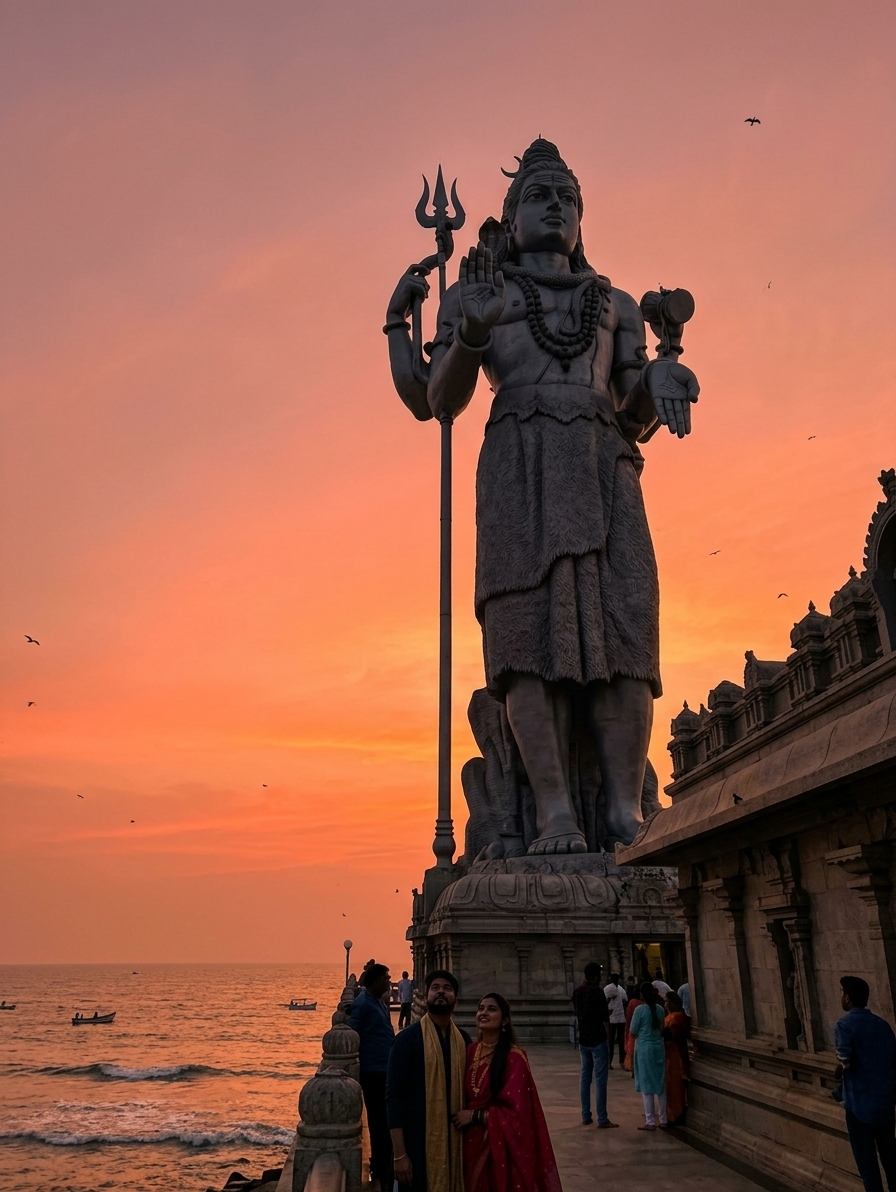
Murudeshwar’s Shiva statue at sunset. Touristy, sure. Crowded, absolutely. But standing there looking at that 123-foot statue against an orange sky with the Arabian Sea in the background — it’s one of those visuals that justifies the entire drive south. We spent forty minutes there, barely talked, just stood and watched the light change.
Madurai’s street food. We ate more in two days there than anywhere else on the trip. Jigarthanda, kothu parotta, mutton dosa at a small shop near the temple whose name we forgot to note down. The food made Madurai worth the detour. Meenakshi Temple was spectacular, but honestly, the lanes around it where locals eat — that’s the real experience.
Kanyakumari’s sunrise. We woke up at 4:45 am, walked to the viewpoint in the dark with about 200 other people, and waited. When the sun came up over the confluence point where three seas meet, nobody spoke for a solid two minutes. It’s a cliché to say it, but you feel something shift. Maybe it’s just exhaustion and endorphins, or maybe driving 1,500 kilometres to watch the sun rise at India’s edge does something to your perspective. Either way, worth it.
Where It Felt Like a Waste of Time and Money
Belgaum. Purely a sleep stop, nothing to see, bad food, worse accommodation. If you’re doing this trip, push through to Gokarna or stop earlier in Kolhapur. Belgaum exists for trucks, not tourists.
Bangalore servicing stop. Necessary, yes. Enjoyable, no. We spent an entire day in traffic and a service centre waiting room. The city offered nothing to us as travelers except functioning mechanics. If your car’s in good shape, skip the city entirely and service in Mysore instead. Smaller town, better access, less stress.
Rameswaram’s Dhanushkodi Beach tourist circus. The beach itself is stunning — the ruins, the endpoint where the land meets the ocean, the history. But getting there involves jeep drivers who overcharge, demand tips, rush you through, and try selling you packaged snacks at 300% markup. It felt transactional, not explorative. We spent ₹500, got fifteen minutes at the actual spot, and left annoyed.
Kanyakumari’s hotel choice. We stayed near the main beach area thinking convenience mattered. Wrong. It’s noisy until midnight, overpriced, and every restaurant serves the same mediocre thali at inflated rates. Better to stay 3-4 kilometres away in quieter areas and drive in for sunrise. We’d have saved ₹700 per night and slept better.
The entire return journey felt like diminishing returns. Same roads, same tolls, same dhabas. We were tired of driving by day twelve. That’s not the trip’s fault, that’s just the reality of 3,000-kilometre round trips. If you can take a different return route or even consider a one-way flight back from Trivandrum and transport your car separately, factor that in. The monotony of backtracking is a hidden cost nobody mentions.
The Mistakes We Made So You Don’t Have To
We under-packed medicines. Samprita got a stomach bug in Mangalore, and we spent two hours finding a pharmacy that stocked the right antibiotics. Carry a basic medical kit — Norflox TZ, Avomine, Digene, bandages, Dettol, and any prescription meds you’re already on. South India’s pharmacies are good, but finding one at 9 pm in a small town is unnecessarily stressful.
We overpacked clothes. Fifteen days sounds long, so we brought fifteen outfits. Idiotic. We wore the same four comfortable things on rotation and washed them twice at homestays. Pack light, wear repeats, wash in between. Nobody cares what you wore yesterday except you.
We didn’t pre-book accommodations in Kanyakumari and Gokarna. Both are seasonal hotspots, and December is peak season. We paid premium rates for average rooms because we showed up assuming we’d find options. Book ahead for tourist-heavy destinations. Off-the-path places like Kundapura or Salem, you’ll find rooms easily. Kanyakumari? Not so much.
We didn’t budget for car servicing. That ₹4,200 Bosch bill wasn’t in our original plan. It should’ve been. Long road trips demand vehicle maintenance halfway through, especially if your car isn’t brand new. Budget ₹3,000–5,000 for this or risk a breakdown in Tamil Nadu with no backup plan.
We skipped travel insurance. Nothing went badly wrong, so we got lucky. But if the car had broken down seriously, or one of us needed hospitalization, we’d have been in trouble. Get basic travel insurance that covers road trips, medical emergencies, and vehicle issues. It’s ₹800 for fifteen days. Cheaper than regret.
Practical Hacks That Actually Helped
We filled fuel every morning before starting, even if the tank was half full. Avoided the stress of hunting for pumps in unfamiliar areas and kept us on schedule. Diesel prices didn’t vary enough within states to make “fuel strategy” worth the mental energy.
We kept ₹5,000 cash on us at all times. UPI fails in rural Tamil Nadu and Karnataka’s interior more often than you think. Some dhabas, small hotels, and toll plazas still operate cash-only. Don’t assume digital payments work everywhere south of Bangalore.
We started driving by 7 am most days. Beat the heat, beat the truck traffic, reached destinations by early afternoon with time to rest before exploring. The 10 am starts people do on vacation don’t work on road trips this long. You’ll spend your afternoons driving in 35-degree heat and arrive exhausted.
We used Google Maps offline downloads for entire state sections. Mobile networks drop completely in some stretches between Madurai and Rameswaram. Offline maps saved us twice from wrong turns that would’ve added an hour to already long days.
We ate breakfast at local restaurants, not hotels. Hotel breakfasts cost ₹300+ for toast and eggs. Local South Indian spots gave us idli-vada-dosa combos with filter coffee for ₹120 total. Better food, better price, better experience. This alone saved us ₹2,500 across the trip.
Is the Kanyakumari Road Trip from Pune Worth It?
Depends what you’re comparing it to.
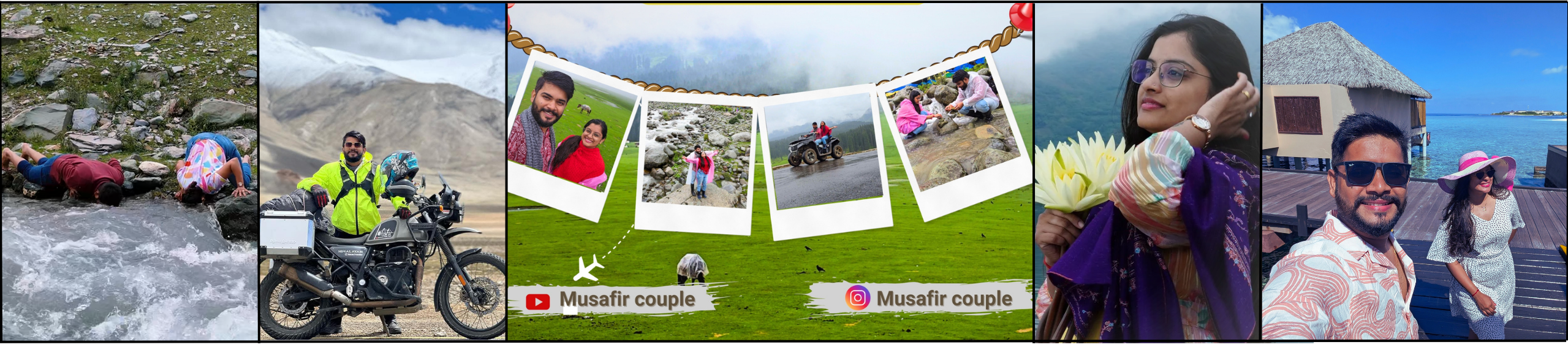
If you’re asking whether it’s worth it versus flying to Goa for five days — that’s not the same kind of trip. This is for couples who like long conversations in the car, unplanned stops, the satisfaction of covering serious distance together, and the kind of travel stories you can’t get from a weekend resort stay. Musafir Couple exists because we believe in this style of travel — the kind that’s imperfect, tiring, real, and deeply satisfying in ways a packaged holiday never is.
If you’re asking whether Kanyakumari itself justifies 3,000 kilometres — no. It’s a small town with a famous viewpoint, a couple of temples, and not much else. You’ll be done in a day and a half. But the road trip isn’t about Kanyakumari. It’s about Gokarna’s beaches, Coorg’s hills, Madurai’s chaos, the random dhaba where you ate the best fish curry of your life, the argument you had about directions that turned into a joke by evening, and the quiet moments staring at the sea wondering why you don’t do this more often.
Fifteen days is long. The costs add up. You’ll get tired. There’ll be bad roads, bad meals, and at least one fight. But if you’re a couple that enjoys road trips, values real experiences over Instagram backdrops, and wants to see a massive chunk of South India in one journey, this route delivers. Just go in with realistic expectations, a proper budget, and the understanding that half the value is in the journey, not the destination board photo.
We’d do it again. Differently, yes. Same route, no. But the concept — taking two weeks, a car, and each other to explore a region most people only fly over — that’s still worth it. Just pack better, book smarter, and for the love of all things holy, don’t eat the prawns in Mangalore unless you’re absolutely sure the restaurant’s legit.
Frequently Asked Questions
Is 15 days too long for a Pune to Kanyakumari road trip?
No. Fifteen days is ideal if you want to actually explore destinations instead of just driving through them. Ten days is possible but exhausting — you’ll spend most of your time in the car. Fifteen gives you buffer days for unplanned stops, rest, and vehicle servicing. We used every single day and still felt some sections were rushed.
What is the total cost for two people on this road trip?
We spent ₹91,400 total for two people over 15 days, including fuel (₹38,600), accommodation (₹22,800), food (₹18,700), tolls (₹4,100), sightseeing (₹3,200), and miscellaneous expenses (₹4,000). Your cost will vary based on accommodation choices and food preferences, but budget at least ₹85,000–95,000 to be comfortable.
Which is the best time of year for a Kanyakumari road trip from Pune?
December to February. Weather is cooler, roads are drier, and visibility is better for coastal drives. Avoid monsoon (June to September) — roads get dangerous, especially in the ghats. April and May are too hot for long drives through Karnataka and Tamil Nadu. Winter is peak season, so book accommodations ahead in tourist spots like Gokarna and Kanyakumari.
Do I need to service my car during the trip?
Yes, especially if you’re doing a round trip over 3,000 kilometres. We serviced our car in Bangalore at the halfway point — oil change, brake check, tyre rotation. Cost ₹4,200 and gave us peace of mind for the second half. Don’t skip this unless your car is brand new and already in perfect condition.
Is it safe for couples to do this road trip alone?
Yes, but follow basic precautions. We stopped driving by 6 pm most days, avoided isolated areas after dark, and stayed in verified accommodations. South India is generally safe for couples, but don’t take unnecessary risks. Keep emergency contacts saved, share your live location with family, and trust your instincts if any place feels off.
Ready to Take Your Own Kanyakumari Road Trip from Pune?
We’ve covered everything we learned the hard way so you don’t have to. The costs, the routes, the mistakes, the moments that made it all worthwhile. If you’re planning your own 15-day couple journey and want honest advice from someone who just did it, reach out to us at Musafir Couple. We’ll tell you which homestay in Gokarna to book, which dhaba near Kundapura serves the best fish curry, and exactly where we went wrong so you can go right.
Follow our journey on YouTube where we’ve documented the entire trip — the good roads, the terrible traffic, the sunrise at Kanyakumari, and yes, the prawn incident in Mangalore. Real travel, real costs, real conversations. Because that’s the only way we know how to share.
Pack light, budget properly, and don’t skip Coorg. You’ll thank us later.