



 by
by Homestay vs Hotel: Which is Better for Traveling India in 2026
Meta Description
Homestay vs hotel — honest breakdown from real travelers. Cost, experience, privacy, food, safety compared. Know which works for couples, families, solo trips across India.
Full Article
Homestay vs Hotel: Complete Guide for Travelers in India
You’re planning a trip. The destination is locked. Now comes the question that can make or break your entire experience — homestay vs hotel?
We’ve stayed in both. A lot. From ₹800 homestays in Mulshi to ₹12,000 resort rooms in Mahabaleshwar. And here’s what nobody tells you upfront — neither is always better. It depends on what you’re actually looking for, and most travelers get this choice wrong because they’re chasing Instagram moments instead of real comfort.
Let’s fix that.
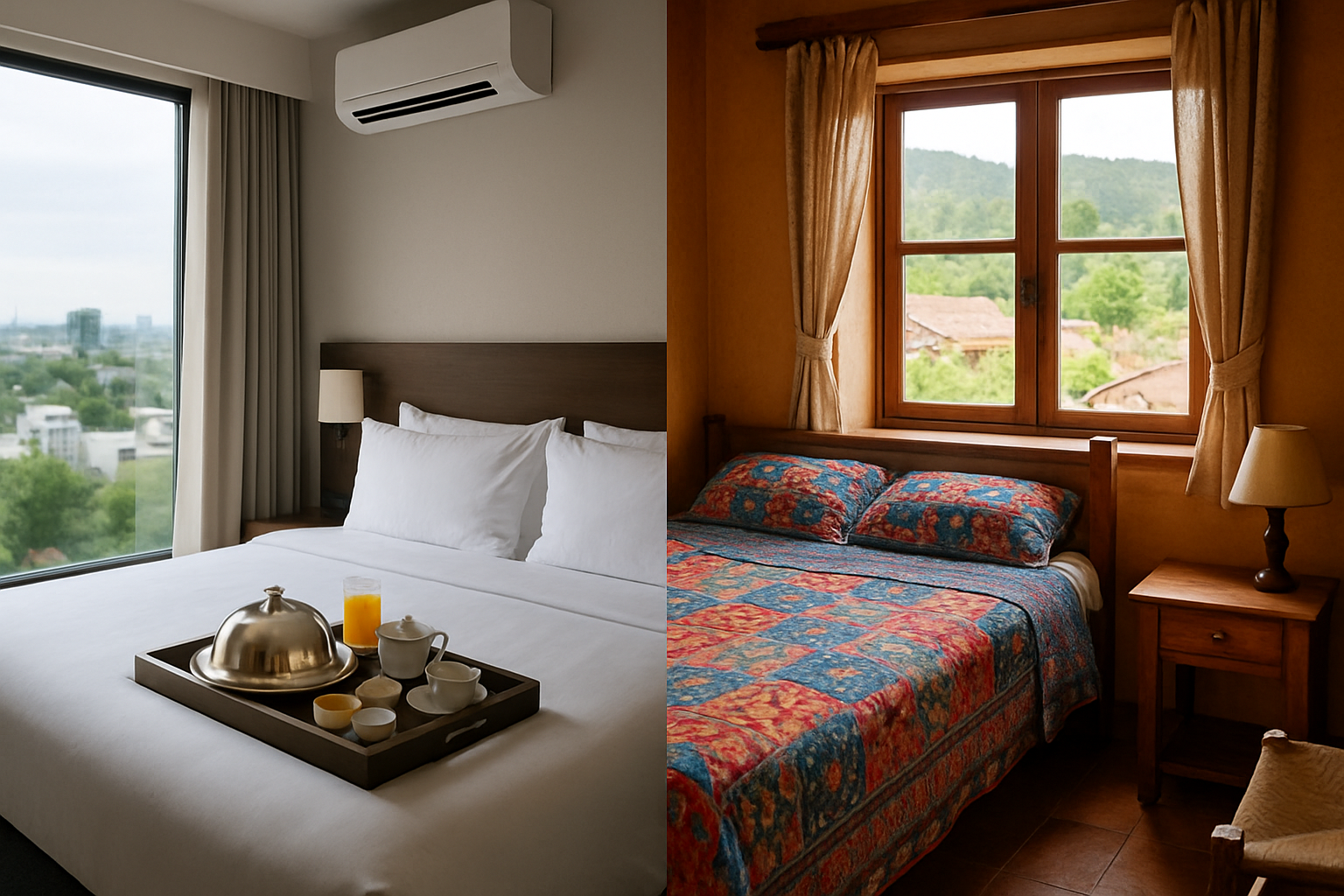
What’s the Real Difference Between a Homestay and Hotel?
A hotel is a business. You’re a customer. Check-in, room service, checkout. Transactional, predictable, designed for volume.
A homestay is someone’s home. You’re a guest. The host lives there or nearby. Breakfast might include conversation. The dog might greet you. Things feel personal because they are.
Sounds simple, right? But the gap between these two experiences is massive — and it affects everything from what you eat to how safe you feel at 11 PM.
When we stayed at a homestay near Pawna Lake, the host told us about a hidden trail to the water that no hotel concierge would know existed. But that same homestay had no room service, limited privacy, and we had to adjust our schedule to match the host’s dinner timing.
The hotel we stayed at in Lonavala the next week? Crisp service, 24-hour hot water, nobody bothered us. But it felt like we could’ve been anywhere. No local stories. No inside tips. Just a bed and a checkout time.
Neither was bad. They were just built for different traveler mindsets.
When Homestay Wins: Real Situations Where It’s the Better Choice
Let’s talk specifics. Homestays work best when you want immersion, not isolation.
You’re traveling as a couple and want to experience how locals actually live. You want home-cooked Maharashtrian food, not a buffet that tastes the same in Pune and Goa. You’re okay with shared spaces — a common living room, a host who might ask where you’re headed that day.
Homestays are perfect for weekend getaways in lesser-known spots. Places like Bedse Caves, Salaulim Dam, or small villages around Mulshi. Why? Because hotels either don’t exist there, or they’re overpriced and soulless. A homestay in these locations usually costs ₹1,200 to ₹2,500 per night and comes with someone who knows the area inside out.
We’ve found the best local food spots, the safest roads, and the actual sunset points only because a homestay host told us. Google Maps didn’t know. Travel blogs guessed. The host lived it.
Homestays also win when you’re on a tighter budget but refuse to compromise on cleanliness and safety. A decent hotel room in a tourist zone starts at ₹3,500. A great homestay in the same area? ₹1,800. That difference adds up over a four-day trip.
But here’s where homestays lose — when you value privacy and flexibility more than connection.
When Hotel Wins: Situations Where Homestay Becomes a Liability
Hotels exist for a reason. They deliver consistency, anonymity, and infrastructure.
You’re traveling for work and need reliable Wi-Fi, a proper desk, and no distractions. You want to come and go at 2 AM without feeling like you’re disturbing someone’s sleep. You want room service, laundry, a gym, and a lobby where you can take calls without a dog barking in the background.
Hotels win when you’re traveling with elderly parents or very young kids. Medical emergencies, specific dietary needs, mobility issues — hotels are equipped. Most homestays aren’t. We’ve seen homestays with steep staircases, no backup power, and kitchens that can’t handle food allergies. A hotel has protocols. A homestay has goodwill.
Hotels also win in cities and high-tourist zones. Pune, Goa, Mahabaleshwar, Lonavala — these places have competitive hotel rates and professional management. A ₹4,000 hotel room here often beats a ₹2,200 homestay in terms of space, cleanliness, and facilities. The homestay benefit — local connection — matters less because you’re mostly exploring outside anyway.
One more thing hotels do better: resale and refund policies. Most hotel bookings on platforms like Booking.com or MakeMyTrip offer free cancellation until 24-48 hours before check-in. Homestays? Usually non-refundable or with heavy penalties. Plans change. Hotels adapt. Homestays don’t always.

Cost Breakdown: Homestay vs Hotel Across India
Let’s get specific with numbers. Vague advice doesn’t help anyone.
Budget Tier (under ₹2,000 per night):
Homestays dominate here. You’ll find clean, host-managed properties in rural Maharashtra, Goa, Karnataka for ₹1,200 to ₹1,800. Breakfast included, local tips included, sometimes even dinner at cost.
Budget hotels in this range are risky. They’re either isolated, poorly maintained, or located in unsafe areas. We’ve tried. Regretted it 6 out of 10 times.
Mid-Range (₹2,500 to ₹5,000 per night):
This is where homestay vs hotel becomes a real choice. Both deliver decent quality. Hotels offer consistency and facilities. Homestays offer character and local flavor.
A ₹3,200 homestay near Mahabaleshwar gave us a bonfire, homemade puran poli, and a balcony overlooking strawberry farms. A ₹3,800 hotel in the same area gave us a clean room, hot shower, and nothing memorable.
Your call depends on mood. Romantic couples lean homestay. Practical travelers lean hotel.
Premium Tier (₹5,000+ per night):
Hotels pull ahead here. At this price, you expect premium service, not a well-meaning host. You want a spa, a bar, room upgrades, and concierge services. Homestays at this level exist — luxury farmhouses, heritage homes — but they’re rare and usually better suited for group bookings or long stays.
For a standard weekend couple trip, a ₹6,500 hotel room delivers more value than a ₹5,800 luxury homestay in most Indian destinations.
Privacy, Safety, and Comfort: The Factors Nobody Talks About Honestly
Here’s where travel blogs lie to you. They romanticize homestays and skip the uncomfortable truths.
Privacy:
Hotels win. Period. No shared walls with the host’s family. No breakfast at a common table with strangers. You can argue, laugh loudly, or just stay in bed until noon without anyone noticing.
Homestays vary wildly. Some give you a private cottage. Others give you a bedroom next to the host’s kids. Always confirm layout before booking. “Entire place to yourself” means privacy. “Private room” often means shared everything else.
Safety:
Hotels have CCTV, security staff, and verified check-in processes. Solo women travelers, elderly couples, first-time visitors — hotels offer a safety net.
Homestays rely on the host’s reputation and platform reviews. Most are safe. We’ve stayed at 30+ homestays across Maharashtra and never felt unsafe. But one bad host can ruin a trip, and you won’t know until you’re there.
Verify reviews carefully. Look for mentions of solo female travelers in the reviews. Check how the host responds to complaints. A defensive host is a red flag.
Comfort:
Hotels invest in mattresses, AC units, geysers, and soundproofing. Homestays use whatever they already own. Sometimes it’s boutique-level beautiful. Sometimes it’s a guest room with a ceiling fan and shared bathroom.
We’ve slept better in homestays with old beds but mountain views than in sterile hotel rooms with perfect mattresses. Comfort isn’t just physical. Context matters.
Food: Where Homestay Crushes Hotel Every Time
If you care about food, homestays win. Not even close.
Hotel breakfast buffets taste the same everywhere. Toast, butter, jam, scrambled eggs, one sad South Indian option. Functional. Forgettable.
Homestay breakfast? Poha made by someone’s aaji. Fresh puris with bhaji. Filter coffee in a steel tumbler. Recipes passed down three generations. Food that actually tastes like the region you’re visiting.
In a homestay near Mulshi, we had homegrown jackfruit curry, fresh chapatis, and sol kadhi that tasted nothing like restaurant versions. The host’s wife cooked it. That meal was worth more than the ₹1,500 room cost.
But here’s the flip side — you eat what they cook. Dietary restrictions, specific preferences, timing control — all harder in homestays. Hotels let you order dalla omelette at 11 PM or skip breakfast entirely without guilt.
For couples who love exploring local cuisine and don’t have rigid food needs, homestays are gold. For travelers with allergies, specific diets, or unpredictable schedules, hotels make life easier.
How to Choose: Homestay vs Hotel Based on Your Trip Type
Stop asking which is better. Start asking which fits this trip.
Weekend couples’ trip to a hidden destination: Homestay. Hands down. You want discovery, romance, local stories, offbeat charm. A hotel here feels wasteful.
Family trip with kids and elderly parents: Hotel. You need space, facilities, medical backup, predictable service. Homestay logistics get messy.
Solo trip to a city: Hotel. Especially if you’re a woman traveling alone. Privacy, safety, flexibility matter more than host interaction.
Spiritual journey or temple circuit: Homestay works beautifully if located near key sites. We stayed at a homestay near Somnath Temple and the host guided us on darshan timing, local rituals, and even dropped us at the temple. No hotel offers that.
Road trip across Maharashtra or Goa: Mix both. Homestays for offbeat stops. Hotels for city nights where you’re out most of the time anyway.
Long stay (7+ days): Homestay, if the host is flexible and the space is private. Hotels get expensive and impersonal over a week. Homestays start feeling like a temporary home.
Your trip type decides this better than any blog can.
Common Mistakes Travelers Make When Choosing Between Homestay and Hotel
You book based on photos. Big mistake. Photos lie equally for both homestays and hotels. Read the text. Check reviews from the last 60 days. Look for words like “exactly as shown” or “misleading pictures.”
You don’t confirm what’s included. Breakfast included? Lunch available? Airport pickup? AC extra charge? Geyser in winter? These aren’t standard. Ask before paying.
You assume homestay always means cheaper. Not true in 2026. Some homestays in tourist zones charge ₹4,500 a night and deliver less than a ₹3,200 hotel. Compare like-for-like.
You ignore location. A homestay 9 km from the main attraction on a broken road isn’t a deal. It’s a headache. A hotel in the center, even if pricier, saves fuel, time, and stress.
You book long-term without a test night. Planning a week-long stay? Book one night first. Hate it? Move. Love it? Extend. Most travelers lock in 5 nights and regret it by day two.
Frequently Asked Questions
Is homestay safer than hotel for couples in India?
Both are safe if you verify reviews and book through trusted platforms like Airbnb or Booking.com. Hotels offer more institutional safety with CCTV and staff. Homestays offer personal safety through host presence. For first-time travelers or solo women, hotels provide more predictable safety protocols.
Can I get food in a homestay if I have dietary restrictions?
Sometimes. Communicate restrictions clearly before booking. Most homestay hosts accommodate vegetarian, Jain, or allergen-free needs if informed in advance. Complex diets like keto, vegan, or gluten-free are harder. Hotels with multi-cuisine menus handle restrictions better.
Do homestays in India have private bathrooms?
Not always. “Private room” often means shared bathroom. “Ensuite bathroom” or “attached bathroom” means private. Always confirm in messages before paying. This is the most common source of homestay disappointment among travelers.
Which is better for a honeymoon in India — homestay or hotel?
Depends on the destination. Offbeat romantic spots like Mulshi, Pawna, or small hill stations — homestays win with privacy, views, and charm. Popular honeymoon destinations like Goa, Coorg, or Manali — premium hotels deliver better amenities, service, and honeymoon vibe. Split your trip if budget allows — homestay for unique experiences, hotel for pampering.
How do I know if a homestay is genuine or a scam?
Check for verified reviews, host response rate, and profile completion. Message the host with specific questions and see how they respond. Scam listings have generic replies, no phone number, and pressure you to book immediately. Genuine hosts answer questions patiently and provide local context naturally.
Time to Book Your Next Stay the Right Way
Homestay vs hotel isn’t a battle. It’s a tool choice. Use the right one for the job.
We’ve done both. Often on the same trip. Homestays gave us memories — the host in Salaulim who taught us fishing, the grandmother in Bedse who shared 40-year-old travel stories, the couple in Mahabaleshwar who packed us homemade chikki for the road. Hotels gave us rest — reliable sleep, hot showers, uninterrupted mornings.
Neither is perfect. Both are necessary.
At Musafir Couple, we share honest reviews of both homestays and hotels we actually stay at — with real costs, real roads, and real pros and cons. No fluff. No sponsored lies. Just the kind of advice you’d give a friend who’s traveling next week.
Planning your next trip? Stop overthinking. Book based on trip type, not trend. And if you mess up? That’s just another story to tell. Travel is better when it’s imperfect anyway.
Follow our journey on YouTube and Instagram for real reviews, hidden spots, and honest takes on where to stay across India. Because you deserve travel advice from people who’ve actually been confused, disappointed, surprised, and blown away — not from someone reading a booking site description.

