

 by
by We stumbled on Salaulim Dam by accident.
Ketan and I were driving back from Cola Beach in South Goa, our phones almost dead, Google Maps struggling with the network, and we took what we thought was a shortcut through the villages. That’s when we saw it—this massive water body tucked between hills, completely silent except for the birds and the sound of water spilling over the dam wall. No crowds. No selfie sticks. Just us and a handful of locals fishing on the banks.
We’d been to half a dozen tourist spots in Goa by then, and this felt different. Real. Unpolished. The kind of place you tell your friends about but almost don’t want to—because once everyone knows, it changes.
That was 2023. Since then, we’ve been back to Salaulim Dam twice, and every time, we meet travelers who had no idea it existed. They ask us how to get there, where to park, whether it’s safe, if the roads are okay for a sedan. So here’s everything we learned, the messy way, so you don’t have to guess.

Where Exactly Is Salaulim Dam in Goa?
Salaulim Dam sits in South Goa, about 12 kilometers from Margao and roughly 50 kilometers from Panaji. It’s part of the Salaulim reservoir, which straddles the border between Goa and Karnataka. The dam itself is in Sanguem taluka, one of the quieter, more forested parts of the state.
Most people don’t know this, but Salaulim is one of Goa’s largest reservoirs. It supplies water to parts of South Goa and is fed by the Salaulim River, a tributary of the Zuari. The area around the dam is lush, hilly, and feels more like interior Maharashtra than coastal Goa.
If you’re used to beach-hopping in North Goa—Baga, Anjuna, Calangute—this is a completely different vibe. No shacks, no loud music, no beach volleyball. Just water, hills, a small bridge, and silence.
The dam is not a marked tourist spot. There’s no entry gate, no ticket counter, no official signboard screaming “Welcome to Salaulim Dam.” You just… arrive. And that’s part of the charm.
How to Reach Salaulim Dam from Margao
Margao is the closest major town, and if you’re staying anywhere in South Goa—Colva, Benaulim, Palolem—you’ll likely route through Margao to get to Salaulim Dam.
The drive takes about 30 to 40 minutes, depending on traffic and how many village roads you accidentally turn into. Here’s the route we use every time, and it works.
From Margao railway station, head towards the NH748 (the highway that connects Margao to Belgaum). You’ll pass through Balli, a small village with a few shops and a petrol pump—top up here if you’re low on fuel, because there’s nothing much ahead.
Stay on NH748 for about 8 kilometers. You’ll cross a few junctions, some fields, a couple of small temples. Keep your phone charged and Google Maps open, because the turnoff to Salaulim Dam isn’t obvious. The signboards are small and often faded.
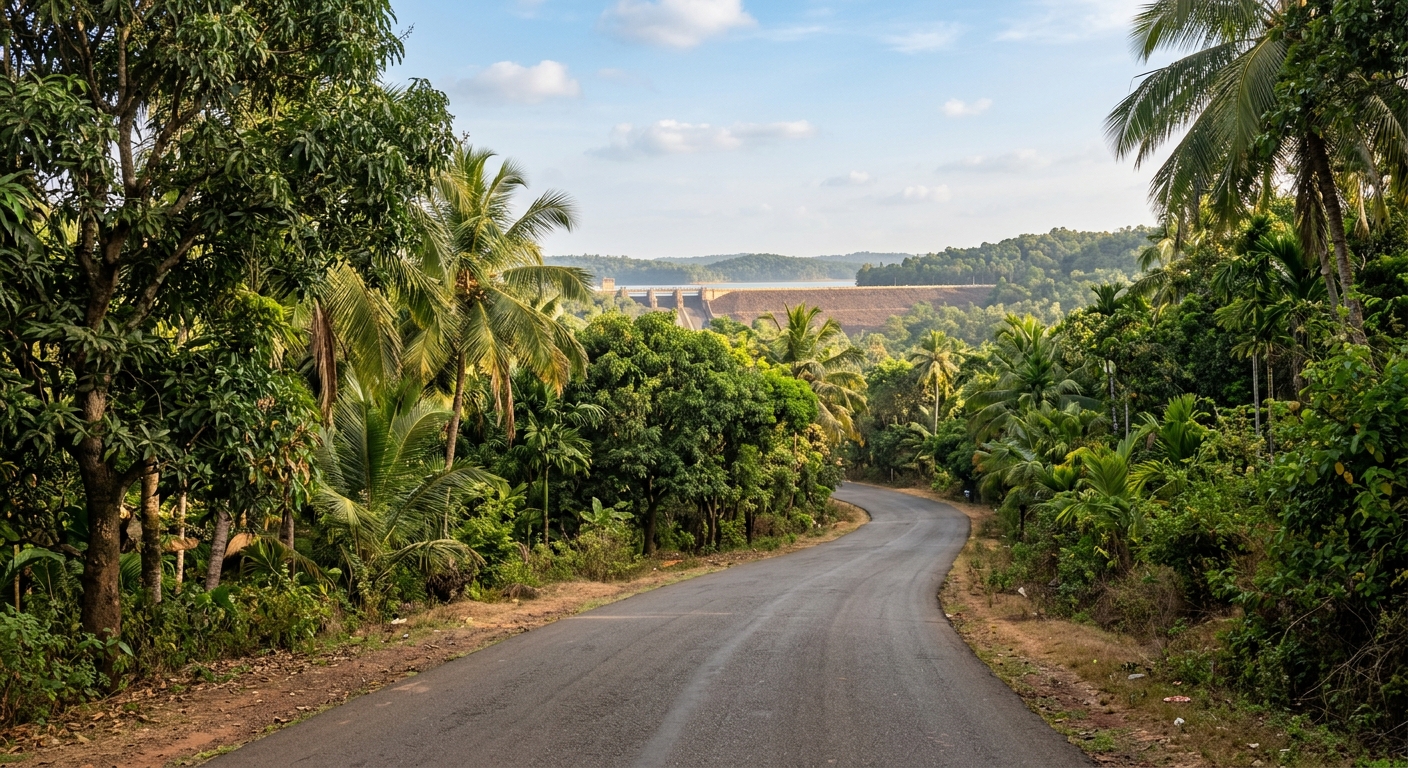
Once you spot the sign for Salaulim village, take the right turn. It’s a narrow two-lane road, lined with trees and the occasional house. The road is decent—concrete in some patches, a bit bumpy in others, but nothing a sedan can’t handle. We’ve done this drive in a hatchback multiple times.
After about 3 kilometers on this village road, you’ll start seeing water on your left. That’s the Salaulim reservoir. Follow the road until you reach a small bridge. Park near the bridge or just before it. The dam wall is right there.
Total distance from Margao: about 12 kilometers. Fuel cost for a round trip in a petrol car: around ₹80 to ₹100, depending on your mileage.
How to Reach Salaulim Dam from Panaji
If you’re based in North Goa or staying near Panaji, the drive is longer but still straightforward. Expect about 60 to 75 minutes depending on traffic, and whether you stop for photos along the way (we always do).
From Panaji, take the Ponda road (NH4A). You’ll pass through Ponda town, which is busy, congested, and full of temples. Don’t skip the famous Mahalaxmi Temple or Mangeshi Temple if you’ve got time—they’re worth a quick visit.
From Ponda, continue on NH748 towards Margao. After about 15 kilometers, you’ll reach the same Balli junction we mentioned earlier. From there, follow the exact route we described in the Margao section—right turn at Salaulim village, 3 kilometers on the village road, and you’re there.
Total distance from Panaji: about 50 kilometers. Fuel cost for a round trip: roughly ₹350 to ₹450 in a petrol car. Tolls: none on this route.
One thing we noticed—weekend mornings see more traffic on the Ponda road. If you’re leaving Panaji, start early. By 7 or 8 a.m., the roads are empty and the drive is beautiful.
How to Reach Salaulim Dam from Palolem and South Goa Beaches
If you’re staying in Palolem, Agonda, or Patnem—those gorgeous South Goa beaches—Salaulim Dam makes for a solid morning detour before you head north or back to the airport.
From Palolem, take the main road towards Canacona, then join NH66 heading towards Margao. The drive is about 40 kilometers and takes roughly an hour. Once you hit Margao, follow the same route we’ve already outlined.
From Colva or Benaulim, you’re even closer. Just head to Margao and take the NH748 route. Total time: 45 minutes to an hour.
We did this drive once after spending the night in Agonda. Left at sunrise, reached Salaulim Dam by 7:30 a.m., had the whole place to ourselves for an hour, then drove to Cola Beach for breakfast. One of our best Goa mornings.
What the Roads Are Actually Like
Here’s what nobody tells you in the glossy travel blogs—Goa’s village roads can be tricky if you don’t know what to expect.
The highways—NH748, NH66—are in great shape. Smooth, wide, well-marked. No issues there. It’s the last 3 to 4 kilometers, once you turn off towards Salaulim village, where things get real.
The village road is narrow. Two-way traffic, but barely. If a bus or a truck comes from the opposite side, someone has to slow down and edge to the side. It’s not dangerous, just requires a bit of patience.
The road surface is a mix. Some stretches are freshly concreted. Others have potholes, especially after the monsoon. We visited once in August 2024, right after the rains, and there were a few deep puddles that we had to drive through slowly. But by November, the road was fine.
Driving at night? We’ve done it once, and we wouldn’t recommend it unless you’re very comfortable with Indian rural roads. Street lights are rare, and the road can be confusing in the dark.
For bike riders—this is a fantastic route. The roads are wide enough, the scenery is beautiful, and the cool breeze near the reservoir is perfect. Just watch out for gravel and loose stones near the dam area.
Where to Park and What to Expect When You Arrive
There’s no official parking lot at Salaulim Dam. You just pull over near the bridge and park on the side of the road. We’ve never had an issue finding space, even on weekends.
The area is quiet. You’ll see a few local families, some fishermen, maybe a couple of other travelers if you’re there on a Sunday. But it’s never crowded. That’s the whole point.
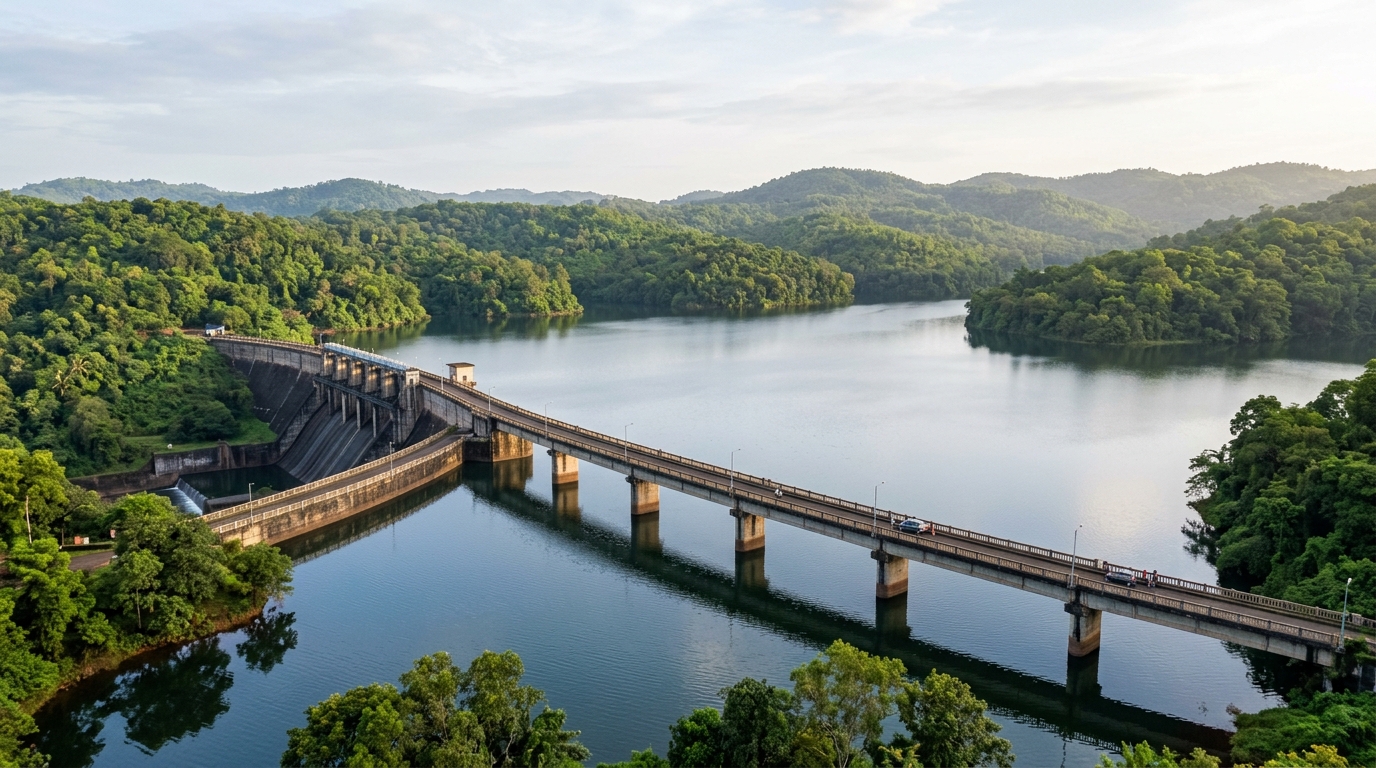
Walk onto the bridge for the best view. On one side, you’ll see the dam wall and the water spilling over it—especially dramatic during the monsoon or just after. On the other side, the reservoir stretches out, framed by hills and forest.
There are no shops, no cafes, no restrooms. Bring your own water, snacks, and anything else you need. We always pack a small cooler with cold coffee and some chips. Sit on the bridge railing, watch the water, and just breathe.
One small warning—there are monkeys around. Not aggressive, but curious. Don’t leave food in the open or your bag unattended. We learned that the hard way when a monkey made off with Samprita’s packet of biscuits.
Best Time to Visit Salaulim Dam
We’ve been to Salaulim Dam in three different seasons, and each time felt different.
Monsoon (June to September): This is when the dam is at its most dramatic. The water level is high, the spillway is active, and the sound of water crashing down is incredible. The surrounding hills are green, the air is cool, and if you don’t mind getting a little wet, it’s stunning. But the roads can be slippery, and you need to drive carefully.
Winter (October to February): The best time if you want calm, clear skies, and comfortable weather. The water level is lower than monsoon, but the area is still beautiful. This is when we usually go. Morning visits are perfect—7 to 9 a.m., before the sun gets too strong.
Summer (March to May): It’s hot. The water level drops significantly, and the surroundings look dry and dusty. We visited once in April 2025, and while the dam itself was still worth seeing, the heat made it hard to stay for long. If you go in summer, go early or late in the evening.
For first-timers, we’d say visit between November and February. You get the best weather, decent water levels, and the most pleasant experience overall.
What Else Is Nearby?
One reason we love Salaulim Dam is that it fits so easily into a broader South Goa road trip. You’re not driving an hour just for a 20-minute stop—there’s plenty around to make it a full day.
About 10 kilometers from the dam is the Netravali Wildlife Sanctuary. If you’re into nature, trekking, or birdwatching, it’s worth the detour. There’s a small bubble lake inside the sanctuary that locals swear by—we haven’t seen it yet, but it’s on our list.
Tambdi Surla Temple, Goa’s oldest temple, is about 25 kilometers from Salaulim. It’s a beautiful 12th-century stone temple tucked in the forest, and the drive there is gorgeous.
If you’re a waterfall chaser, Dudhsagar Falls is about 40 kilometers away. It’s one of India’s tallest waterfalls, and while it’s touristy and crowded, it’s still worth seeing at least once—especially in the monsoon.
And of course, you’ve got all the South Goa beaches—Palolem, Agonda, Cola, Patnem—within an hour’s drive. We usually combine Salaulim Dam with a beach day. Dam in the morning, beach by noon, sunset by the water. Perfect.
A Few Honest Tips from Our Trips
We’ve made enough mistakes at Salaulim Dam to save you from a few of them.
First, don’t rely entirely on Google Maps once you’re close. The map will get you to the general area, but the exact parking spot and the best viewpoints aren’t marked. Just follow the water, and you’ll figure it out.
Second, bring a good camera or a phone with a decent camera. The light here—especially early morning—is beautiful. The reflections on the water, the hills in the background, the bridge itself. We’ve got some of our favorite Goa photos from this spot, and they’re not the usual beach sunset shots everyone has.
Third, if you’re traveling with kids or elderly family members, be mindful. There are no railings in some parts near the water, and the area isn’t fenced. It’s safe if you’re careful, but it’s not a manicured tourist spot.
Fourth, check the weather before you go, especially in monsoon. If there’s heavy rain forecast, the roads can get tricky, and the area around the dam can be slippery.
And finally—this is a quiet, peaceful place. Don’t blast music, don’t litter, don’t disturb the locals or the fishermen. We’ve seen a few groups show up, make a lot of noise, leave plastic bottles behind, and drive off. Don’t be that traveler.
Is Salaulim Dam Worth the Drive?
Depends on what you’re looking for.
If you want Instagram-famous spots, beach shacks, and Goa’s party vibe, Salaulim Dam isn’t it. But if you want something real, something quiet, a place where you can sit for an hour without anyone trying to sell you something or take a selfie in the background, then yes. Absolutely.
It’s not going to blow your mind. It’s not going to be the highlight of your Goa trip. But it’ll be the kind of place you remember months later—the one you mention when someone asks, “Did you do anything off the beaten path?”
For us, Salaulim Dam is part of why we love Goa beyond the beaches. It’s the kind of place that reminds you Goa isn’t just coastline. There’s forest, rivers, dams, hills, villages. There’s a whole other side to the state that most travelers never see.
We’ve driven to Salaulim Dam three times now, and we’ll go again. Every time, it feels like a little secret. A quiet hour before the rest of the day starts. A place where we don’t have to perform, post, or pretend. Just us, the water, and the road that got us there.
Frequently Asked Questions
Is Salaulim Dam open to tourists throughout the year?
Yes. There’s no official gate, ticket, or restricted access. You can visit any time of the year, any day of the week. Just keep in mind that monsoon months can make the roads slippery and the area wet, so drive carefully if you’re going between June and September.
Can we swim in the Salaulim reservoir?
Technically, no one’s stopping you, but we wouldn’t recommend it. The water is deep, there are no lifeguards, and the currents can be unpredictable, especially near the dam wall. Locals fish here, and we’ve seen a few people wading near the shore, but full swimming isn’t common or particularly safe.
Are there any hotels or homestays near Salaulim Dam?
Not right at the dam, but there are a few guesthouses and homestays in the nearby villages—Sanguem and Salaulim village itself. They’re basic, clean, and run by local families. If you’re looking for more options, Margao and Palolem are within an hour’s drive and have plenty of hotels and homestays across all budgets.
How much time should we spend at Salaulim Dam?
An hour is enough to see the dam, walk on the bridge, take some photos, and soak in the quiet. If you’re someone who loves sitting by the water, you could stretch it to 90 minutes. We usually spend about an hour, sometimes less if we’re on a tight schedule. It’s a quick, peaceful stop—not an all-day destination.
Come See It Yourself—And Let Us Know
Salaulim Dam isn’t the kind of place that’ll show up in every Goa travel guide. It doesn’t have a fancy website, a ticket booth, or a TripAdvisor page filled with reviews. But that’s exactly what makes it worth visiting.
If you’re planning a trip to South Goa, carve out a morning for this. Drive slow, take the village roads, get a little lost if you have to. That’s how the best travel moments happen.
And if you do go, we’d love to hear how it was. Did you find the turnoff easily? Did the roads surprise you? Did you meet the monkeys? Tag us or drop a comment—we’re always curious to hear how other travelers experience the places we’ve written about.
At Musafir Couple, we share the roads, the confusion, the real costs, and the honest verdict. Not picture-perfect content. Just real travel, the way it actually happens.
Ketan and Samprita
Musafir Couple, powered by Travelheal