
 by
by You’re planning a spiritual trip to Gujarat. The route is clear — Somnath and Girnar. But the details? That’s where most people get stuck.
We’ve done this journey twice from Pune. Once rushed, once properly planned. The difference wasn’t just comfort — it was whether the trip actually felt spiritual or just exhausting. Here’s what we learned the hard way, so you don’t have to.

Why This Route Works for Maharashtra Pilgrims
Most Maharashtra devotees combine Somnath and Girnar because they’re only 85 kilometres apart. Makes sense on paper. But here’s the reality: Somnath is a temple visit. Girnar is a mountain trek. You need different mindsets, different prep, and honestly, different energy levels.
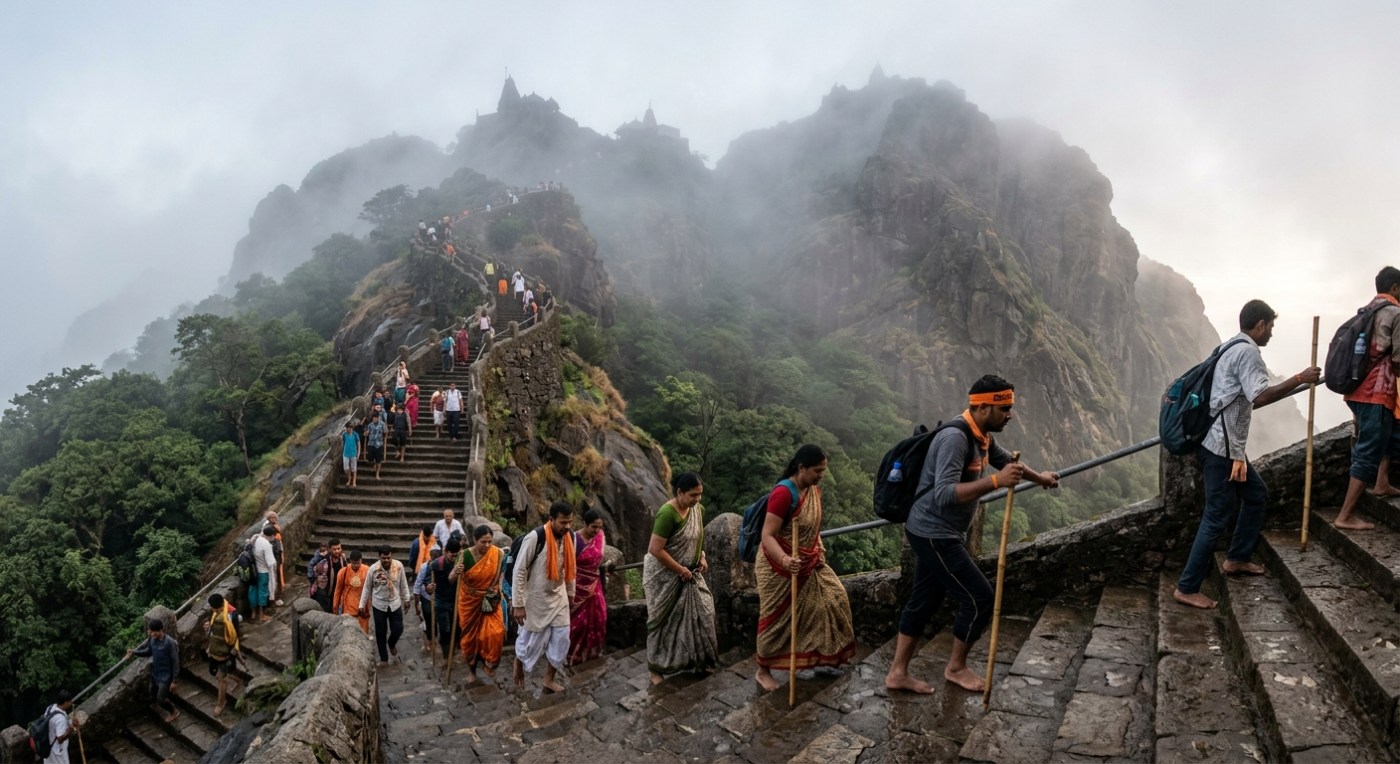
The Somnath temple pilgrimage sits on the western coast, waves crashing behind the sanctum. It’s accessible, moving, and manageable for anyone who can walk. Girnar demands 9,999 steps up the mountain, carrying your own stamina and a bit of faith. Some take the ropeway. Others climb. Both are valid.
What doesn’t work is treating them as two quick checkboxes on a Gujarat religious tour. We tried that the first time. Arrived in Somnath late evening, rushed darshan the next morning, drove to Junagadh, and started the Girnar mountain trek by noon. By step 4,000, we regretted every decision.
The second time, we gave Somnath a full evening and morning. Girnar got its own day, starting at 5 AM. That’s when the trip stopped being a task and started feeling like a journey.
Best Time to Start Your Spiritual Journey Somnath Girnar Maharashtra
Leave Pune or Mumbai early. Really early. We’re talking 4 or 5 AM if you’re driving. The route via NH48 and NH27 covers roughly 850 kilometres from Pune, about 900 from Mumbai. That’s 13 to 15 hours if you’re lucky with traffic and tolls.
Most people break the drive with a night halt in Surat or Vadodara. We stayed in Surat. Cheaper hotels, decent food, and it splits the journey into two manageable chunks — roughly 600 kilometres on day one, 300 on day two.
Winter months, November through February, are ideal. Cooler mornings for the Girnar climb. Pleasant evenings at Somnath beach. Avoid the summer trek unless you enjoy feeling like you’re climbing inside an oven.
Monsoon is tricky. The Somnath coastline is stunning, but Girnar’s steps get slippery. If you’re not steady on your feet, skip July and August.
How to Structure Your Itinerary Without Burning Out
Here’s the template that worked for us:
Day 1: Drive from Maharashtra to Surat. Check in by evening. Rest properly.
Day 2: Early start to Somnath, roughly 300 kilometres. Reach by afternoon. Check into a hotel near the temple. Evening aarti at Somnath Temple around 7 PM. This is the moment you came for. The sound of conch shells, the ocean behind you, the Jyotirlinga lit up. Don’t rush it.
Day 3: Morning darshan at Somnath if you want a quieter experience. Drive to Junagadh by late morning, about 85 kilometres. Check in near Girnar base. Rest the afternoon. You’ll need it.
Day 4: Start the Girnar Darshan Yatra by 5 AM. Early means cooler air, fewer crowds, and you’re back down before the afternoon heat crushes you. If you’re taking the ropeway, it opens around 8 AM. Either way, plan for 4 to 6 hours total.
Day 5: Drive back to Maharashtra, possibly halting again in Surat if you’re tired.
If you’ve only got four days total, skip the Surat halt on the return. Drive straight back. It’ll be long, but doable.
The Somnath Temple Pilgrimage: What to Expect and What to Skip
Somnath isn’t just another temple. It’s been destroyed and rebuilt six times. The current structure dates back to 1951. The history is heavy. The setting is stunning. The darshan itself is surprisingly quick if you time it right.
Morning darshan, between 6 and 8 AM, is the quietest. Evening aarti pulls crowds but delivers the full experience. We did both. The morning was meditative. The evening was electric.
What most guides won’t tell you: the temple complex has a sound and light show that narrates Somnath’s history. It’s in Gujarati, Hindi, and English depending on the day. Check the schedule at the ticket counter. We almost missed it. Glad we didn’t.
Nearby, there’s Triveni Sangam, where three rivers meet the ocean. Locals say it’s spiritually significant. We found it more symbolic than dramatic, but if you’ve got time, it’s a short drive.
Girnar Mountain Trek: Ropeway or Steps?
Let’s be honest. The 9,999 steps sound romantic until you’re on step 2,000 and your knees are filing for divorce.
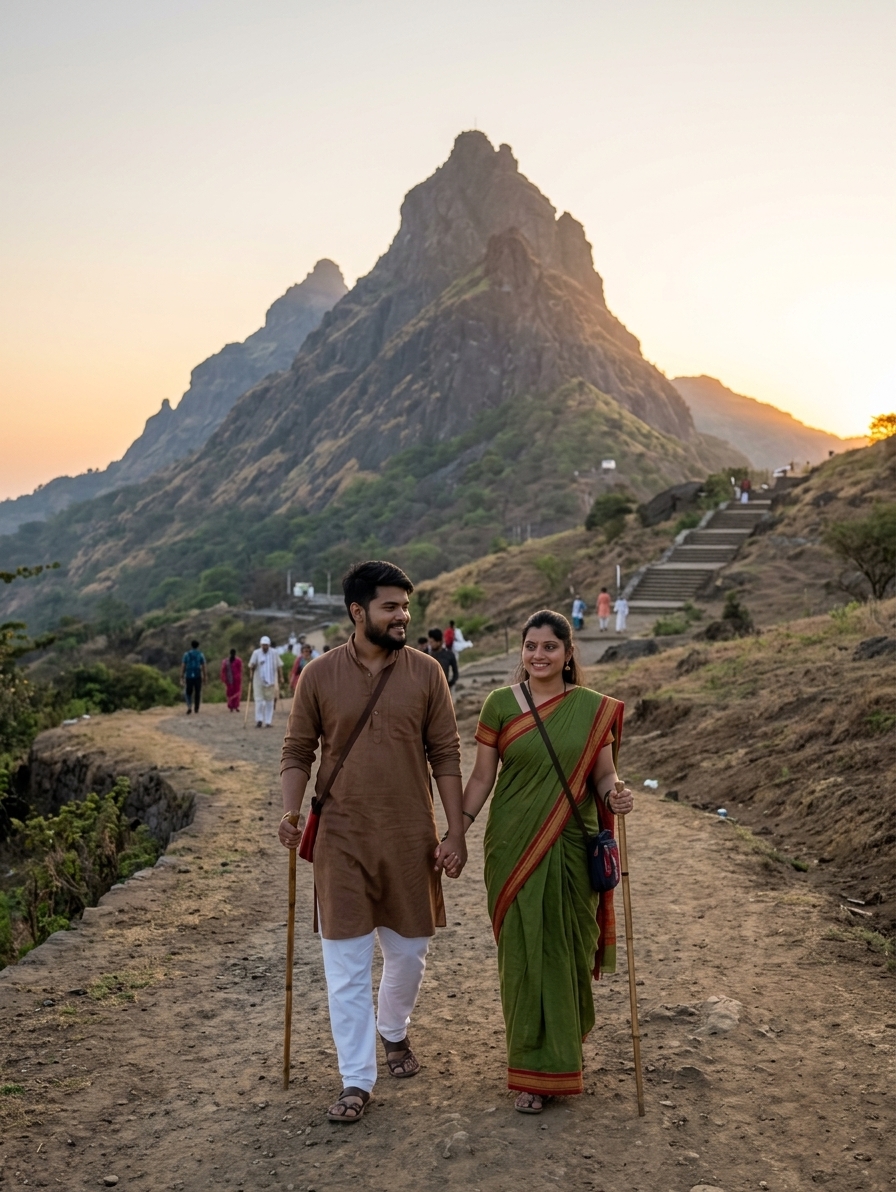
We climbed. It took us about 4 hours up, 2.5 hours down, with breaks. You pass multiple temples on the way — Amba Mata Temple around step 4,000, the main cluster of Jain and Hindu temples near the top. Each one offers a rest point, water, and sometimes tea.
The ropeway costs around ₹600 per person for a round trip as of early 2026. It drops you at a mid-point, cutting roughly 4,500 steps. You still climb the rest. It’s not cheating. It’s smart planning if you’re not in peak fitness or travelling with older family members.
Here’s what we didn’t expect: monkeys. Lots of them. Don’t carry visible food. They’re bold and faster than you think.
Also, wear proper shoes. We saw people in sandals. By step 1,000, they were limping. This isn’t a gentle temple staircase. It’s a mountain.
Real Costs for Planning Spiritual Trip from Maharashtra
Let’s break it down based on our second trip, which we actually tracked properly:
Fuel (Pune to Somnath and back, including side trips): Around ₹8,000 for a sedan, assuming current petrol rates.
Tolls (both ways): Roughly ₹2,500.
Accommodation (3 nights — Surat, Somnath, Junagadh): Budget ₹3,000 to ₹5,000 total if you’re okay with clean, basic hotels. Double it if you want comfort.
Food: About ₹500 to ₹800 per day for two people. Gujarati thalis are filling and cheap.
Girnar ropeway (if you take it): ₹1,200 for two.
Miscellaneous (parking, water, offerings, souvenirs): Another ₹1,500 to ₹2,000.
Total for two people: Around ₹18,000 to ₹25,000 depending on your choices.
Train is cheaper. The Somnath Express runs from Mumbai. But you lose flexibility, especially for Girnar. Hiring a cab locally works, but it adds ₹3,000 to ₹4,000 more.
What Most Guides Get Wrong About This Route
Everyone tells you to “combine Dwarka too.” It’s tempting. Dwarka is another 230 kilometres from Somnath. But here’s the thing: adding Dwarka turns a focused spiritual journey Somnath Girnar Maharashtra into a rushed temple marathon.
We tried. First trip. By the time we reached Dwarka, we were too tired to absorb anything. The darshan felt mechanical. The drive back felt endless.
Our advice? Do Somnath and Girnar properly. If you want Dwarka, plan it as a separate trip. Or add two more days. Don’t compress it.
Another thing most people underestimate: recovery time after Girnar. Your legs will hurt. Plan a rest day or a slow drive back. Don’t schedule anything important the day after you return.
What to Pack That You’ll Actually Use
Light cotton clothes. Temple visits mean covering shoulders and knees at both Somnath and Girnar.
A good pair of walking shoes. Not sneakers. Actual grip-soled shoes for Girnar.
A small backpack with water, glucose, and a basic first-aid kit. You’ll thank yourself around step 5,000.
Sunscreen and a cap. The climb is exposed. We got sunburnt the first time.
A power bank. Your phone will die halfway up Girnar if you’re taking photos. Which you will.
Cash. Many small shops and tea stalls on Girnar don’t take cards. ATMs exist in Junagadh, but better to carry enough.
Frequently Asked Questions
How many days do you need for Somnath and Girnar from Pune?
Minimum four full days if you’re driving. Five is better. You need one day to reach Somnath, one for Somnath darshan, one for Girnar, and at least one for the return journey. Anything less and you’re just ticking boxes, not experiencing the journey.
Is Girnar climb difficult for older people?
Yes, if they’re attempting the full 9,999 steps. The ropeway is a practical alternative, but even that requires climbing around 5,000 steps after the drop-off point. If someone has knee issues or breathing problems, consult a doctor before planning. We saw a 70-year-old complete it, but he trained for two months before.
Can you do Somnath and Girnar in one day?
Technically, yes. Realistically, no. You’d need to finish Somnath darshan by 9 AM, drive to Girnar, and start climbing by 11 AM. You’d be racing the heat and exhaustion. One or both experiences would suffer. Don’t do this unless you genuinely have no other option.
What’s the best route from Mumbai to Somnath by road?
Take NH48 through Surat and Vadodara, then switch to NH27 near Rajkot. It’s the fastest and best-maintained route. Avoid smaller state highways unless you’re familiar with them. We tried a shortcut once. Added three hours and zero joy.
Why This Trip Matters More Than You Think
We’re Ketan and Samprita. We run Musafir Couple. We’ve travelled across India chasing stories, food, and meaning. This particular journey to Somnath and Girnar changed something for us.
Not because the temples were grand. They were. Not because the climb was hard. It was. But because for once, we weren’t performing travel. We were living it. The exhaustion on Girnar, the silence at Somnath’s evening aarti, the conversations we had on the long drive back — that’s the part no itinerary can script.
If you’re planning this trip from Maharashtra, don’t rush it. Don’t treat it like a weekend task. Give it the time it needs. Start early, pack light, climb steady, and let the journey do its work.
Want more honest travel insights, real costs, and routes that actually work? Follow Musafir Couple on our YouTube channel and Instagram. We share every confusion, every bargain, every wrong turn, and every moment that made it worth it. Because that’s the only kind of travel content we know how to make.