

 by
by Top 10 Temples to Visit in India for Spiritual Journey 2026
Meta Description
Discover the 10 most powerful temples to visit in India for a transformative spiritual journey. Real experiences, practical tips, honest insights from our temple travels.
Full Article
Top 10 Temples to Visit in India That Changed How We See Faith
We stood outside Kedarnath at 4:47 AM, shivering in borrowed shawls we’d bought for ₹280 from a local vendor who swore they were “pure Himalayan wool” — they weren’t. Samprita’s phone had died somewhere during the trek. My knees were protesting every step of the climb we’d finished just hours earlier. And yet, when those temple doors opened and the first aarti bell rang, something shifted. Not in some dramatic Bollywood moment. Just a quiet, unnameable thing that made the 14-hour bus ride, the argument about packing too many shoes, and the altitude headache feel completely worth it.
That morning taught us something about spiritual travel in India. It’s never what you expect. It’s always more raw, more real, and more confusing than any Instagram reel suggests. And the temples to visit in India that actually move you? They’re rarely the ones you see on tourist brochures alone.
We’ve been documenting spiritual journeys across India for nearly four years now. Some temples left us speechless. Others left us questioning everything we thought we knew about faith, tourism, and what it means to seek something beyond the everyday chaos. This isn’t your standard “top temples” list. These are the places that demanded something from us — patience, surrender, physical effort, or just the willingness to sit in silence while our minds caught up with our hearts.
Why These 10 Temples Made Our Spiritual Journey List
Choosing temples to visit in India is personal. What moves one person leaves another cold. We get that. But after traveling to over 60 temples across 14 states, we noticed patterns in what makes a temple experience genuinely transformative versus just another photo stop.
First, energy. Walk into certain temples and you feel it immediately — not in a mystical woo-woo way, but in how people move, pray, and exist within that space. Varanasi’s Kashi Vishwanath has it. So does Madurai’s Meenakshi Temple. You can’t fake that atmosphere.
Second, effort required. The famous temples India offers that demand physical or mental effort — a trek, a fast, a specific ritual — tend to create deeper experiences. When you’ve walked 14 kilometers to reach Kedarnath or climbed 9,999 steps to Palani Murugan, you arrive differently. You’re already changed before you enter.
Third, authenticity over infrastructure. Some of the most spiritual temples India holds aren’t the most convenient. They might have confusing queues, zero English signage, or priests who’ll scold you for standing in the wrong spot. That friction? It keeps the experience real. The moment a temple becomes too tourist-friendly, something intangible gets lost.
Fourth, local integration. The best temple experiences happen when you’re not just visiting the temple but experiencing the town, the rituals, the morning chai conversations with pilgrims who’ve traveled three days by train to be there. Context matters. We learned this the hard way at our first visit to Tirupati, where we skipped the town entirely and missed half the pilgrimage story.
These ten temples checked most or all of those boxes. They’re not all remote. They’re not all ancient. But each one shifted something in how we understand faith, India, and what we’re actually seeking when we travel.
Varanasi’s Kashi Vishwanath Temple: Where Death and Devotion Meet
Let’s start with the obvious one. Kashi Vishwanath in Varanasi is one of the most famous temples India has, and for good reason. But knowing it’s famous doesn’t prepare you for the actual experience.
We arrived on a Tuesday evening during off-season — or what we thought was off-season. The lanes leading to the temple were still packed with pilgrims, vendors selling rudraksha beads, and the sharp smell of incense mixed with something less pleasant we chose not to identify. The VIP queue we’d paid ₹300 for moved only 12% faster than the regular line. That math hurt.
Inside, you get maybe 40 seconds in front of the Jyotirlinga. Maybe. A priest will push you forward. Someone behind will bump into you. You’ll try to pray, focus, feel something profound. Mostly, you’ll feel rushed. And yet somehow, in those chaotic 40 seconds, surrounded by strangers who’ve traveled from Kerala and Kashmir and everywhere in between, there’s a bizarre collective energy. Everyone there wants the same thing — a moment of connection with something larger than their daily problems.
The real spiritual experience at Kashi Vishwanath happens outside the temple. Walk the ghats at sunrise. Watch the Ganga aarti at Dashashwamedh. Sit at Manikarnika and watch the cremations — not as a morbid tourist but as a reminder of what all this worship is actually about. Impermanence. Release. The cycle we’re all part of whether we acknowledge it or not.
Practical reality: expect crowds, pushy pandas (priests), and vendors who’ll quote prices three times higher than locals pay. Go with zero expectations of a “peaceful” experience. Varanasi isn’t peaceful. It’s raw, loud, and unfiltered. That’s exactly why it belongs on any spiritual journey through Indian temples to visit.
Tirupati Balaji: The Temple That Taught Us Patience
Tirupati Balaji in Andhra Pradesh is technically the world’s most-visited religious site. Over 50,000 pilgrims daily. During festival seasons, that number jumps to 100,000. We visited during a “quiet” week in February. Quiet was relative.
The darshan (viewing of the deity) took us 6 hours and 43 minutes. We booked the ₹300 special entry ticket. The free darshan queue was 8-10 hours that day. This temple doesn’t care about your schedule, your back pain, or your phone battery. You’ll shuffle forward in serpentine queues, surrounded by families who’ve saved for years to make this pilgrimage, and you’ll question every decision that brought you there.
Then you reach the sanctum. Lord Venkateswara stands adorned in jewelry worth millions, eyes that seem to actually see you despite the rushing crowd, and for maybe 9 seconds you’re in his direct line of sight. Nine seconds after 6 hours. That ratio should feel absurd. Somehow it doesn’t.
Here’s what we learned at Tirupati: spiritual temples in India aren’t always designed for instant gratification. The waiting is part of the offering. Your patience, your discomfort, your willingness to be one among thousands — that’s the real darshan. The physical glimpse of the deity is just confirmation that you showed up.
The surrounding Tirumala hills are stunning if you have extra time. The free meals (prasadam) served to pilgrims are some of the best temple food we’ve had in India. And the head-tonsuring ritual — where devotees offer their hair as sacrifice — is one of the most humbling sights you’ll witness. Over 30,000 people shave their heads here daily. That level of devotion makes your 6-hour wait feel like nothing.
Amritsar’s Golden Temple: The One That Welcomes Everyone
Golden Temple — Harmandir Sahib — in Amritsar broke every assumption we had about pilgrimage destinations in India. First, it’s Sikh, not Hindu, which already shifts the energy. Second, there’s no entry fee, no special queues for wealthy visitors, no priests demanding donation amounts. Everyone walks the same path. Everyone sits on the same floor.
We reached at 2 PM on a Saturday. Peak tourist time. The complex was packed but never felt chaotic. There’s a system, a flow, a quiet efficiency to how thousands of people move through the space. You cover your head, remove your shoes, wash your feet, and walk onto the white marble that stays surprisingly cool even in Punjab’s summer heat.
The temple itself — gold-plated, sitting in the middle of the sacred pool — looks exactly like the photos. But photos don’t capture the sound. The continuous kirtan (devotional singing) played through speakers, the gentle splash of water as devotees take ritual dips, the shuffle of thousands of feet on marble. It’s a soundscape that puts you in a meditative state without trying.
The langar (community kitchen) is what sealed this temple’s place on our list of must-visit temples in India for spiritual journey. They serve over 100,000 free meals daily to anyone who walks in. Rich, poor, Hindu, Muslim, tourist, pilgrim — everyone eats the same dal and roti sitting on the same floor. We volunteered for 90 minutes in the dish-washing area. That experience taught us more about seva (selfless service) than any spiritual discourse ever could.
Stay for the evening ceremony when they carry the Guru Granth Sahib back to its resting place for the night. The procession, the prayers, the collective reverence — it’s one of the most beautiful rituals we’ve witnessed at any temple in India.
Madurai Meenakshi Temple: Architecture That Tells Stories
Meenakshi Amman Temple in Madurai, Tamil Nadu, isn’t just a temple. It’s a living museum, a city within a city, and one of the most architecturally stunning spiritual temples India has preserved.
The gopurams (tower gateways) are covered with thousands of painted sculptures — gods, demons, animals, mythological scenes stacked 14 stories high in vibrant blues, pinks, and golds. We spent 20 minutes just staring at one gopuram trying to count the figures. We gave up at 200-something. There are thousands across the four main towers.
Inside, the complex sprawls across 14 acres with multiple shrines, mandapams (pillared halls), and a sacred pool where, according to tradition, the Tamil Sangam poets would test their works — if the poem floated, it was divinely inspired; if it sank, it was rejected. We’re not sure how palm leaf manuscripts were expected to float, but the story remains.
The energy here is different from North Indian temples. More theatrical, more ritual-focused. There are specific pujas (prayer ceremonies) happening almost every hour. The evening ceremony where they put Lord Sundareswarar (Shiva) to sleep in Meenakshi’s chamber is famous for its elaborate procession. We caught it by accident on our second visit. Totally worth staying late for.
What makes Meenakshi one of the essential temples to visit India offers is how it integrates into daily life. This isn’t a weekend pilgrimage spot. Locals come here daily — for morning prayers, for lunch breaks, for evening walks. Children play in the courtyards. Students sit studying near the pillars. The temple isn’t separate from life; it’s woven into the fabric of Madurai itself.
Hire a guide for at least your first visit. The mythology, the architecture, the symbolism — there’s too much to catch on your own. We walked around for an hour completely lost before paying ₹500 for a guide who unlocked the entire complex for us.
Kedarnath: The Trek That Becomes the Prayer
Kedarnath in Uttarakhand is one of the twelve Jyotirlingas and easily the most physically demanding temple on this list. At 3,583 meters above sea level, surrounded by snow-capped peaks, this temple doesn’t care if you’re fit. The altitude will humble you.
The trek from Gaurikund is officially 16 kilometers. Realistically, with the breaks you’ll need, it’s a 7-9 hour journey up. You can take a helicopter (₹5,800 per person), a pony (₹2,500-3,000), or a palanquin carried by four people (₹6,000-8,000). We walked. Partly for the experience. Partly because we’d already blown our budget on the Maldives trip three months earlier.
The path is beautiful and brutal in equal measure. Every 500 meters there’s a small shop selling Maggi, chai, and glucose biscuits at prices that increase with altitude. By kilometer 10, we paid ₹80 for a packet of Parle-G that costs ₹20 in Pune. We paid happily.
The temple itself is small, ancient, and utterly unpretentious. Stone walls, a pyramidal structure, and the Jyotirlinga that’s been worshipped for over a thousand years. After the 2013 floods that devastated the region, the temple stood intact while buildings around it were destroyed. Locals will tell you it’s divine protection. Engineers will explain bedrock foundations. Both can be true.
Staying overnight in Kedarnath is essential if you can manage it. The morning aarti at 4:30 AM, when the valley is still dark and the temple bells echo across the mountains — that’s the moment this pilgrimage destination truly delivers. We were exhausted, freezing, and questioning our life choices. We’d do it again tomorrow.
Book accommodation months in advance. Weather from October to April makes the temple inaccessible. Even in season, expect basic facilities and cold nights. This is not a comfort journey. It’s one of those famous temples India protects precisely by making access difficult.
Konark Sun Temple: The One That Broke the Rules
Konark Sun Temple in Odisha is different. It’s not an active worship site — it’s an UNESCO World Heritage monument. No priests, no rituals, no prasadam. So why include it in temples to visit India for spiritual journey?
Because spirituality isn’t always about organized religion. Sometimes it’s about standing in front of human achievement so extraordinary that it reconnects you to something larger — awe, maybe, or humility at what devotion can create.
Built in the 13th century as a massive stone chariot for Surya, the sun god, Konark was designed so the first rays of sunrise would illuminate the entrance. The entire temple is covered in erotic sculptures, detailed carvings of daily life, and astronomical precision in its architecture. The wheels of the chariot are actually functional sundials. The engineering is so advanced that modern architects still study how they lifted and balanced these massive stones.
We visited at sunset — the light hits the weathered stone in this golden hour glow that makes the carvings come alive. There’s no crowd pushing you forward. No time limit. You can sit, walk, observe, photograph, think. That spaciousness is rare among spiritual temples India maintains.
The nearby beach is where locals believe Samba, son of Krishna, was cured of leprosy by worshipping the sun. The mythology layers onto the architecture layers onto the landscape. It’s all connected, even without active worship.
If you’re traveling from Kolkata or Bhubaneswar, Konark is an easy addition. If you’re choosing between this and Jagannath Temple in Puri (45 kilometers away), do both. Jagannath for the living pilgrimage experience, Konark for the contemplative one. Together, they give you the full spectrum of temple tourism India offers.
Somnath Temple: The One That Survived Everything
Somnath Temple in Gujarat is the first among the twelve Jyotirlingas and possibly the most destroyed and rebuilt temple in Indian history. Mahmud of Ghazni demolished it in 1026 CE. It was rebuilt. Destroyed again. Rebuilt. This cycle repeated at least six times before the current structure was completed in 1951.
The resilience is what makes Somnath spiritually significant beyond its religious importance. Standing in front of the temple, facing the Arabian Sea, you’re looking at faith that refused to disappear. Local guides will show you the sign marking “0 kilometers to Antarctica” — a straight line south from where the temple stands. That geographical detail somehow amplifies the temple’s symbolic weight.
The evening aarti here is one of the most peaceful we’ve experienced at any major temple. The sound of waves mixes with the bells and chants. The temple lights up against the darkening sky. It’s cinematic without feeling staged. We went three evenings in a row during our Gujarat road trip and it never got repetitive.
Nearby, the Triveni Sangam (confluence of three rivers) and the beach provide space for quiet reflection. The town itself is small, manageable, and far less chaotic than other major pilgrimage destinations. You can actually relax here, which is rare when visiting famous temples India crowds flock to.
Stay at one of the Gujarat Tourism properties near the temple. Basic but clean, reasonably priced (₹1,200-2,000 per night), and close enough to walk to the temple for early morning darshan. The local Gujarati thali at any restaurant on the main road is consistently excellent. Simple dal, roti, sabzi, and buttermilk that somehow tastes better when you’re on a spiritual journey.
Rameshwaram Temple: Where Mythology Meets the Sea
Rameshwaram in Tamil Nadu is one of the four Char Dham pilgrimage sites and one of the most unique temples to visit India has architecturally. The temple has the longest corridor among all Hindu temples in India — 1,220 meters of ornately carved pillars that seem to stretch into infinity.
According to Ramayana, this is where Lord Rama built a bridge to Lanka and worshipped Shiva before the war. The temple has 22 sacred wells (theerthams) within the complex, each with distinct water taste supposedly containing medicinal properties. The ritual bath involves pouring water from each well over yourself. It’s cold. It’s chaotic. Priests will splash you with more force than necessary. You’ll question the hygiene standards. You’ll do it anyway because somehow, surrounded by pilgrims who believe deeply in this ritual, you get swept up in the collective faith.
The Pamban Bridge connecting Rameshwaram to mainland India is an engineering marvel and a stunning sight at sunrise. The town itself feels frozen in time — small streets, local shops, minimal commercialization compared to places like Tirupati or Varanasi. That slower pace makes the spiritual experience more digestible.
Combine Rameshwaram with Dhanushkodi, the ghost town at the southeastern tip of India where the Bay of Bengal meets the Indian Ocean. The abandoned structures, the endless beach, the sense of standing at the edge of the country — it adds a contemplative layer to the temple visit. We spent an entire afternoon there just sitting, watching waves, not talking much. That silence felt like its own form of prayer.
For accommodations, the temple-run guest houses are budget-friendly (₹400-800 per night) but basic. Private hotels near the bus stand offer better comfort at ₹1,500-2,500 range. Book ahead during festival periods, especially Maha Shivaratri.
Khajuraho Temple Complex: Where Spirituality Includes Everything
Khajuraho temples in Madhya Pradesh confuse people. They’re famous for erotic sculptures carved onto temple walls — explicit, detailed, unapologetic depictions of human sexuality alongside gods, goddesses, musicians, and daily life scenes. How is this spiritual?
That question is exactly why Khajuraho made this list. It challenges every sanitized idea of what spiritual temples India should represent. These temples, built between 950-1050 CE by the Chandela dynasty, operate on a philosophy that spirituality isn’t about denying the physical world but integrating it. Desire isn’t separate from devotion. The body isn’t the enemy of the soul. Everything is part of the divine play.
The western group of temples, especially Kandariya Mahadeva Temple, showcases the peak of medieval Indian temple architecture. The sculptures are masterpieces — whether they’re depicting gods in meditation or humans in intimate acts. The artistry is the same. The divine attention to detail is the same. That’s the point.
We visited with Samprita’s conservative aunt who initially refused to look at the “shameful sculptures.” By the end of the guided tour, she was photographing them. The guide explained the tantric philosophy, the symbolism, the cultural context. Once you understand what these temples were teaching about the integration of all human experience into spiritual practice, the shock gives way to appreciation.
The light and sound show in the evening is actually well-produced (rare for government-run shows). It tells the history of the temples and the Chandela kingdom in a way that adds depth to your visit. Cost is ₹580 per person. Worth it if you’re staying overnight anyway.
Stay in Khajuraho town for at least two nights. The temples deserve a full day, and the relaxed pace helps this pilgrimage destination feel less rushed than others. Several good mid-range hotels exist (₹2,000-4,000 per night) with pools and gardens — a nice break if you’re doing a larger temple circuit across India.
Jagannath Temple Puri: The One That Tests Your Humility
Jagannath Temple in Puri, Odisha, saved for last, tested us in ways no other temple on this list did. First: non-Hindus are not allowed inside. That alone makes it controversial and traditional in equal measure. Second: the crowd management is aggressive. Third: the darshan process will humble anyone who thinks their status matters.
The deities — Jagannath, Balabhadra, and Subhadra — look unlike any other temple idols in India. Roughly carved, with large eyes and stumpy limbs, they’re intentionally unfinished according to legend. They represent the folk art tradition before Brahmanic influence, a reminder that divinity doesn’t need polish.
The Rath Yatra (chariot festival) here is one of the largest religious gatherings in India. Over a million pilgrims pull the massive wooden chariots through Puri’s streets. We weren’t there during Rath Yatra, but even regular days see tens of thousands of visitors. The mahaprasad (sacred food) tradition is unique — over 50 varieties prepared daily in earthen pots over wood fires, served to 100,000+ people. It’s considered so sacred that eating it nullifies caste distinctions.
The beach in Puri is walking distance from the temple. After the intensity of darshan, sitting by the Bay of Bengal watching fishing boats helped us process the experience. Puri beach isn’t pristine — it’s a working beach with vendors, families, and the occasional cow. That ordinariness felt grounding after the extraordinary temple visit.
Stay near the beach rather than near the temple if you want quieter nights. The temple area is lively until late with shops and street food. Budget hotels start at ₹800 per night; decent mid-range options around ₹2,500-3,500. The local rasagola (different from Bengali version) is excellent. Try it at any sweet shop on Grand Road.
Practical Reality: What Spiritual Temple Tourism in India Actually Requires
After visiting over 60 temples across India in four years, here’s what nobody tells you in the glossy travel guides:
Dress conservatively. Always. Shoulders covered, knees covered, no tight clothing. Most temples provide cloth to cover up if needed, but bringing your own dupatta or shawl saves time and hassle.
Shoes will be removed at every temple. Your feet will touch floors of questionable cleanliness. Make peace with this. Carry socks if it bothers you, though it didn’t help much at Tirupati where the floor was so crowded that wearing socks felt pointless.
Queues lie. The “30-minute queue” will take 90 minutes. The “special darshan” you paid extra for moves only marginally faster. The VIP tickets at famous temples India manages are often scams that give you 12% better access for 400% higher price. Expect waiting. It’s part of the offering.
Prasadam (sacred food) quality varies wildly. Amritsar’s langar is a full meal. Tirupati’s laddoo is legendary. Smaller temples might offer coconut pieces or plain sugar crystals. Don’t expect gourmet; expect blessed.
Photography rules are strict and often unenforced until they’re suddenly very enforced. Most temples ban photos inside the sanctum. Some ban phones entirely. We’ve had priests yell at us for accidental photos and ignore other tourists actively filming. The rules are inconsistent. When in doubt, ask. Or just experience it without documenting.
Donations are complicated. Some temples have fixed prasadam costs. Others operate on “voluntary” donations that aren’t actually voluntary. Priests will suggest amounts. You can negotiate or decline. We learned to carry specific change (₹100-500) for temple donations to avoid the “no change available” scam where you give ₹500 and somehow don’t get ₹400 back.
Scams exist around every major pilgrimage destination. Fake priests, overpriced hotels, taxi drivers who’ll take you to their cousin’s overpriced restaurant. Stay alert. Book accommodations in advance through verified platforms. Agree on transportation costs before starting. Trust your instincts.
The spiritual experience isn’t guaranteed. Some temples we visited felt deeply moving. Others felt like religious theme parks with too many selfie-takers. Your openness, timing, crowd levels, and internal state all affect the experience. Don’t force it. Sometimes you visit a temple and feel nothing. That’s okay. Come back another time or accept that this particular place isn’t for you.
What Actually Makes These Temples Worth Visiting in 2026
Looking back at our spiritual temple journeys across India, the temples that stuck with us weren’t always the most famous or the most beautiful. They were the ones that demanded something — effort, patience, openness, discomfort — and gave back something we didn’t expect.
Varanasi confronted us with impermanence. Tirupati taught patience. Golden Temple showed what radical equality in practice actually looks like. Meenakshi overwhelmed with beauty. Kedarnath proved that physical effort transforms experience. Konark reminded us that spirituality exists outside active worship. Somnath demonstrated resilience. Rameshwaram connected mythology to geography. Khajuraho challenged assumptions. Jagannath humbled us completely.
These temples to visit India preserves aren’t Instagram backdrops. They’re living, breathing spaces where millions of people bring their hopes, fears, gratitude, and desperation. You’re stepping into that stream of collective faith whether you share the specific beliefs or not. That energy is real, measurable in how people move and pray and exist within these spaces.
Temple tourism in India is not always comfortable. It’s hot, crowded, confusing, and occasionally frustrating. But the famous temples India maintains at the center of its spiritual identity offer something rare in 2026 — spaces where commerce hasn’t completely replaced community, where ancient practices continue relatively unbroken, where you can disconnect from your phone (often forcibly) and reconnect with something deeper. Whether you call that God, energy, collective consciousness, or just humanity at its most vulnerable and hopeful doesn’t matter. The experience remains.
Plan your spiritual journey knowing it won’t be perfect. Your feet will hurt. You’ll get lost. Someone will definitely try to overcharge you. And somewhere in that imperfect, messy, profoundly human experience of pilgrimage, you might find exactly what you didn’t know you were looking for.
Frequently Asked Questions
Which temple is best for first-time spiritual travelers in India?
Golden Temple in Amritsar is the best starting point for first-time spiritual travelers. It’s well-organized, welcomes all religions, has no aggressive donation demands, feeds everyone for free, and offers a genuinely peaceful experience despite large crowds. The infrastructure is tourist-friendly without losing authenticity, and the surrounding city offers good accommodation options at all budgets.
What is the best time to visit famous temples in India?
October to March is generally ideal for visiting most temples to visit India offers, with cooler weather and post-monsoon clarity. However, specific temples have optimal windows: Kedarnath (May-June or September-October before snow), Rameshwaram (November-February avoiding summer heat), Khajuraho (October-November for perfect weather and festivals). Avoid major festival periods unless you specifically want that crowd experience, as temple towns become extremely congested and accommodation prices triple.
How much does a spiritual temple tour in India typically cost?
A 10-day temple tour covering 5-6 major spiritual temples India can range from ₹35,000 to ₹90,000 per person depending on comfort level. This includes transportation (₹15,000-40,000), accommodation (₹8,000-25,000), meals (₹5,000-12,000), entry fees and special darshans (₹3,000-8,000), and guides (₹2,000-5,000). Budget travelers doing mostly train travel and basic lodges can do it for under ₹30,000. Luxury travelers preferring flights and premium hotels will spend ₹1,20,000+. The temples themselves rarely charge entry, but special queues, accommodations, and travel between distant locations drive costs up.
Are there dress codes for visiting temples in India?
Yes, most temples require conservative dress regardless of your religion or nationality. Minimum requirements: shoulders and knees covered for both men and women. Many South Indian temples are stricter, requiring traditional dress (dhoti for men, saree or salwar for women). Some temples provide covering cloths at entry. Footwear is removed at all temples. Avoid leather items at many temples as they’re considered impure. Women may face restrictions during menstruation at certain traditional temples, though this is increasingly controversial and unevenly enforced.
Can non-Hindus visit all temples in India?
Most temples welcome non-Hindus, but notable exceptions exist. Jagannath Temple in Puri strictly prohibits non-Hindus from entering the main sanctum. Some temples in Kerala like Guruvayoor Temple have similar restrictions. However, the vast majority of famous temples India is known for — including all Jyotirlingas except Puri, Meenakshi, Tirupati, Konark, Khajuraho, Golden Temple, and others on this list — welcome visitors of all faiths. When restrictions exist, there are usually viewing points outside where non-Hindus can observe the temple exterior and surroundings.
Start Your Temple Journey With Real Guidance
We’ve been where you are now — staring at a map of India wondering which temples actually deliver meaningful experiences versus which ones are overrated tourist traps. These ten temples represent four years of trial, error, incredible moments, and occasional disappointments across the country.
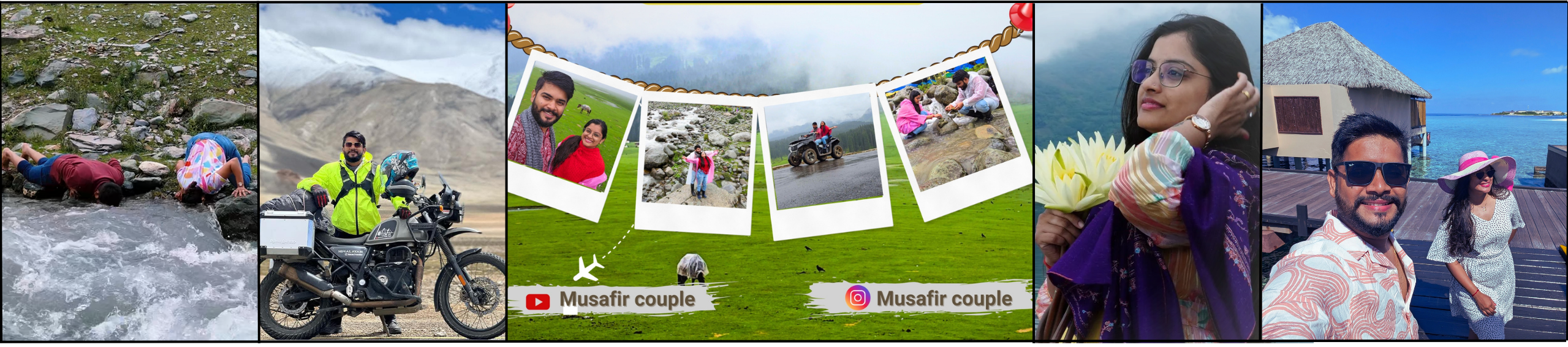
At Musafir Couple, we document these spiritual journeys with all the confusion, costs, and unexpected lessons included. No filters. No sponsored temple recommendations. Just honest experiences from two people discovering India’s sacred geography one pilgrimage at a time. If you’re planning your own temple circuit and want route suggestions, realistic budgets, or just someone to tell you which “must-visit” temples you can actually skip, connect with us on Instagram at @musafircouple. We’ve made enough mistakes that you don’t have to repeat them. And discovered enough hidden spiritual spots that deserve space on your journey.
The temples are waiting. Your timeline doesn’t need to match ours. Your reasons for going don’t need to align with traditional pilgrimage. Just go with openness and expect the journey to change you in ways you can’t predict. It did for us. It probably will for you.