


 by
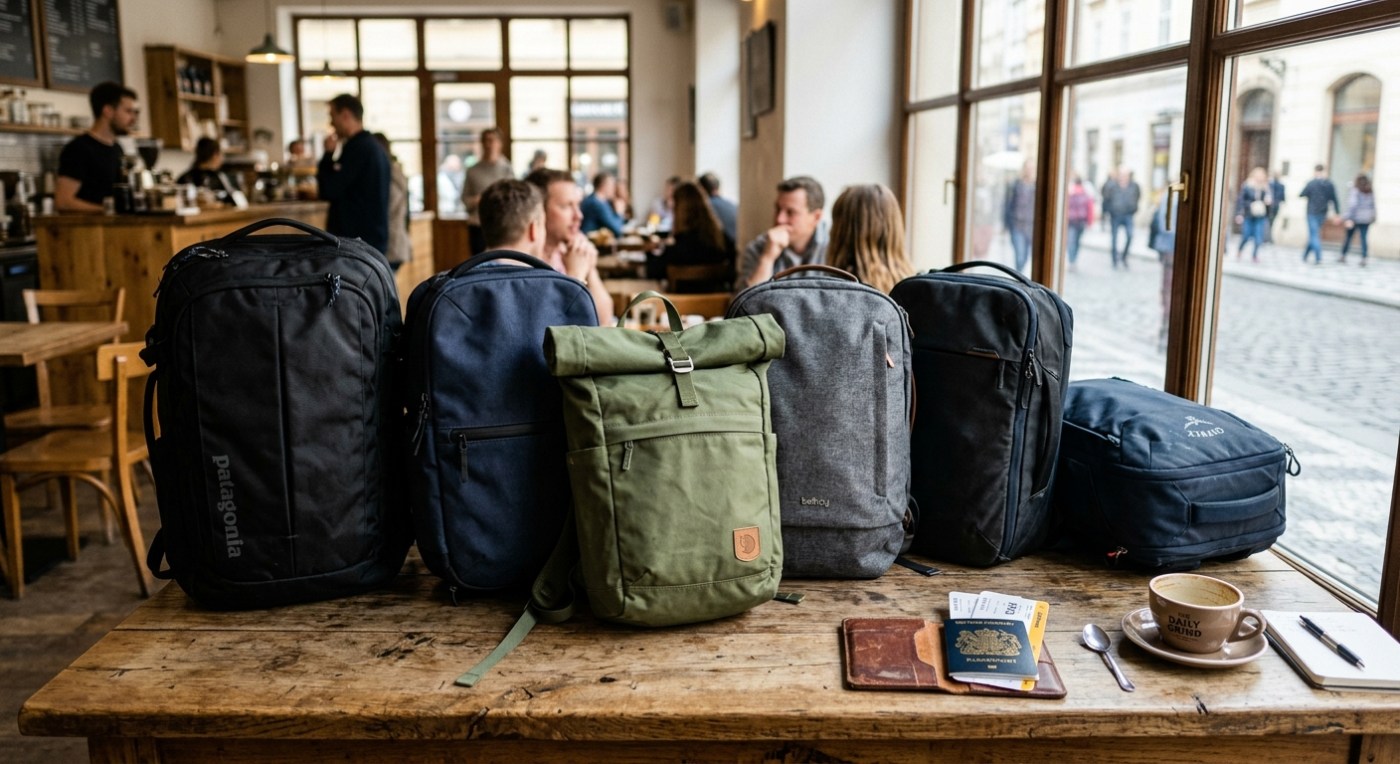
You’re overthinking the backpack.
Most travelers spend weeks obsessing over which backpack to buy, then realize three days into their Europe trip that it’s too heavy, won’t fit in the overhead bin, or turns their back into a sweaty mess on a 35°C day in Rome. We’ve done that. Multiple times. And after dragging different packs through narrow alleyways in Prague, cramped EasyJet flights, and endless train station stairs, we figured out what actually matters.
Europe isn’t Southeast Asia. You’re not trekking through jungles or staying in hostels without lockers. You’re bouncing between cities every 3-4 days, dealing with budget airline restrictions, navigating cobblestone streets with no ramps, and occasionally needing to look presentable. That changes everything about which travel backpacks for Europe actually work versus which ones just look good in Instagram photos.
Here’s what nobody tells you upfront: the best backpacks for Europe aren’t the biggest ones or the ones with 47 pockets. They’re the ones that fit airline carry-on limits, don’t scream “tourist,” open fast at security checkpoints, and distribute weight so you’re not limping by day three. Everything else is bonus.
What Actually Matters When Choosing Backpacks for European Travel
Size matters more than you think. Not because bigger is better—it’s not. Because every budget airline in Europe has different carry-on rules, and RyanAir will charge you €35 at the gate if your bag is 2cm too tall. The sweet spot is 35-40 liters. Smaller and you’re doing laundry every other day. Bigger and you’re checking bags or paying extra fees.
Weight distribution beats capacity every time. A 40-liter backpack loaded at 15kg feels manageable with proper hip belts and sternum straps. The same weight in a cheap pack without load-bearing features will wreck your shoulders before you leave the airport. We learned this the hard way in Barcelona—Ketan’s old backpack didn’t have a hip belt, and by day two, his lower back was done.
Zippers fail at the worst moments. You’re rushing to catch a train in Munich, yank the main zipper, and it snags. Or worse—it breaks. YKK zippers aren’t just brand snobbery; they’re the difference between a backpack that lasts three trips and one that survives three years. Check the zippers before you buy. If they feel flimsy in the store, they’ll be broken in Brussels.
Here’s something most packing guides won’t mention: lockable zippers don’t actually stop theft, but they do stop opportunistic grabs. On crowded metros in Paris or Rome, someone can unzip a regular backpack, grab your wallet, and vanish. Lockable zippers slow that down just enough to make you a less attractive target.

Top 10 Travel Backpacks for Europe You Can Actually Trust
1. Osprey Farpoint 40 – The Safe Bet Everyone Recommends (And They’re Right)
This is the Honda Civic of travel backpacks for Europe. Boring? Maybe. Reliable? Absolutely.
The Osprey Farpoint 40 fits every major European airline’s carry-on requirements, including RyanAir and EasyJet if you don’t overpack. It has a stowaway harness system that tucks the straps away when you check it or throw it on a luggage rack—this matters more than you’d think when straps get caught in train doors or conveyor belts.
The hip belt isn’t removable, which annoys some minimalists, but it’s what makes this pack comfortable for 8+ hour travel days. Front-loading panel access means you’re not digging through everything to find your charger at the bottom. We watched someone with a top-loading backpack unpack their entire bag on a Munich train platform just to find their passport. Don’t be that person.
Real-world test: Ketan used this across Germany, Austria, and Czech Republic for 19 days. Zero comfort issues. Zippers still work. No tears. It’s not exciting, but it works.
Downside? The water bottle pockets are useless. Too shallow. Your bottle will fall out. Use the internal organization instead.
2. Cotopaxi Allpa 35L Del Dia – If You Want Something Less Generic
The Cotopaxi Allpa 35L is what you get when a backpack actually thinks about how humans pack.
It opens completely flat like a suitcase, which makes airport security checkpoints faster and hotel packing less chaotic. The compression straps actually compress—some backpacks just have decorative straps that don’t do anything. This one cinches down to 28L when you’re not fully loaded, which is perfect for day trips after you’ve checked into your Airbnb.
The Del Dia version uses repurposed materials, so every pack looks different. You’ll recognize yours on a baggage carousel instantly. Sounds small, but when 50 black backpacks come down the belt in Amsterdam, that matters.
Build quality is absurd. We’ve seen these packs survive two years of continuous travel without the fabric wearing through. The YKK zippers haven’t failed once across multiple travelers we know who use this. At 2.86 pounds empty, it’s lighter than the Osprey Farpoint but doesn’t feel cheaper.
The hip belt is removable, which some people love and others hate. If you’re carrying 12kg+, keep it on. If you’re doing a light 7-day trip, remove it and save the bulk.
One issue: the laptop compartment fits 16″ laptops but barely. If you have a chunky gaming laptop or a 16″ MacBook Pro with a thick case, it’s tight.
3. Peak Design Travel Backpack 45L – Overpriced But Actually Worth It
Let’s get this out first: this backpack costs more than a weekend flight to Paris. But if you’re traveling Europe for 3+ weeks or doing this regularly, it pays back.
The Peak Design Travel Backpack 45L has the best organization system we’ve seen. Internal compression keeps your stuff from shifting when you’re running for a train. External expansion zipper gives you 35L to 45L capacity—so you start compact for flights, then expand when you pick up souvenirs or groceries in Croatia.
Magnetic latches everywhere. Top handle has magnets. Side handles have magnets. It sounds gimmicky until you’re one-handing your bag onto an overhead bin while holding your boarding pass and coffee. Then it’s genius.
The weatherproof shell kept everything dry during an unexpected downpour in Amsterdam when we couldn’t find cover fast enough. Most travel backpacks for Europe claim “water-resistant” but soak through in 10 minutes. This one actually works.
Ketan’s opinion: it’s the best carry-on backpack for Europe if you’re traveling for work or doing multi-month trips. But if you’re doing a single 10-day vacation, it’s overkill. Buy the Osprey or Cotopaxi and save ₹8,000.
One warning: at 45L, it’s right at the edge of carry-on limits. Don’t stuff it completely full or budget airlines will make you gate-check it.
4. Tortuga Travel Backpack Pro – Built Like It Expects Abuse
The Tortuga Pro is thicker and heavier than most packs on this list. That’s not a flaw—it’s intentional.
This backpack is designed for people who don’t baby their gear. Throw it on cobblestones in Lisbon. Shove it into undersized train luggage racks in Italy. Let it get banged around in hostel storage. It doesn’t care. The 1680D ballistic nylon is the same material used in motorcycle jackets. It doesn’t rip.
The back panel ventilation actually works. Most backpacks claim airflow but your back still sweats through your shirt in 20 minutes. The Tortuga has a suspended mesh back panel that keeps the pack off your body. You’ll still sweat in July in Spain—everyone does—but noticeably less than with flat-back designs.
Laptop compartment is TSA-approved, meaning you can leave your laptop inside during security. In practice, this saves maybe 90 seconds per checkpoint, but over a 3-week trip with 8 flights, that adds up.
The weight is the tradeoff. At 3.75 pounds empty, it’s heavier than the Cotopaxi or Peak Design before you put anything in it. If you’re trying to stay ultralight, this isn’t your pack. If you prioritize durability over weight, it’s perfect.
Also: the hip belt on this pack is serious. It’s padded like a hiking backpack. If you’re carrying 14+ kg, you’ll appreciate it. If you’re packing light at 8kg, it’s overkill.
5. Nomatic Travel Pack 30L – When You’re Pretending to Work Remotely
The Nomatic 30L looks like a sleek office backpack but works as a legitimate travel bag. If you’re doing the digital nomad thing or mixing work and travel, this is your pack.
The laptop compartment fits up to 17″ and includes a separate tablet sleeve. RFID-blocking pocket for passports and credit cards. Magnetic water bottle holder on the side that actually holds the bottle securely—a feature so rare it’s worth mentioning twice.
The organization inside is ridiculous. 20+ pockets. Some people love this. Some people (Samprita) think it’s too much and you waste time remembering which pocket has what. Know yourself before buying.
At 30L, it’s smaller than most travel backpacks for Europe, which means you’re packing light or doing laundry often. For a 10-day trip, it’s tight but doable. For 3+ weeks, you’ll struggle unless you’re extremely minimal.
The “work backpack” look is an advantage in cities. You don’t scream tourist. You blend in on metros and cafes. Less attention from pickpockets, less attention from scammers outside train stations.
Downside: no hip belt. This is a shoulder-carry bag with a sternum strap. Fine for 8kg or less. Painful for anything heavier on long travel days.
6. Cabin Max Metz – Budget Option That Doesn’t Suck
Not everyone wants to spend ₹15,000 on a backpack. If you’re doing one Europe trip and don’t plan to travel frequently, the Cabin Max Metz makes sense.
It’s designed specifically for EasyJet and RyanAir carry-on sizes, meaning it fits even the strictest budget airline rules at 44L capacity. The dimensions are 55 x 40 x 20 cm—memorize those if you fly RyanAir often, because those are their exact maximums.
Build quality is fine. Not incredible, not terrible. The zippers are decent (not YKK, but haven’t failed in moderate use). The fabric is 600D polyester, which is lighter and thinner than premium packs but handles normal travel abuse without tearing.
No fancy features. No magnetic latches, no clever organization, no RFID pockets. Just a big main compartment, a laptop sleeve, and some basic pockets. For some travelers, that’s exactly what they want.
We tested this across Poland and Hungary for 11 days. It worked. Nothing broke. Samprita’s shoulders got sore on long walking days because the straps aren’t heavily padded, but for short distances and frequent stops, it was manageable.
Biggest win: it costs about ₹4,800. If it lasts two trips, you’ve gotten your money’s worth.
7. REI Co-op Ruckpack 40 – Quietly Better Than Its Price Suggests
The REI Ruckpack 40 doesn’t show up in most European travel backpack lists, and that’s a mistake.
It’s a hiking-travel hybrid that works better in Europe than pure travel packs in some situations. The suspension system is borrowed from REI’s hiking line, meaning it carries heavy loads more comfortably than travel packs at the same price point. If you’re doing a mix of city travel and day hikes (like hiking Cinque Terre trails or exploring the Swiss Alps between city stops), this pack transitions better.
The U-zip main compartment opens wide but not completely flat like the Allpa. That’s actually fine—full clamshell opening is nice at hotels but overkill at hostels or Airbnbs where you’re living out of your pack.
Removable daypack included. It’s basic but functional for day trips once you’ve checked into your accommodation. Some travelers never use it. Others use it constantly. It doesn’t add much weight, so having the option is nice.
The straps tuck away behind a panel, similar to Osprey’s system. On train luggage racks or checked baggage, this prevents straps from getting caught or torn off.
One quirk: the front pocket is stretchy mesh, which looks weird but holds jackets, shoes, or snacks without taking up internal space. It works better than it looks.
Price is usually around ₹9,500, which lands between budget and premium. If you want Osprey-level comfort without the Osprey price, this is it.
8. Minaal Carry-on 3.0 – Overthought in the Best Way
The Minaal Carry-on 3.0 feels like it was designed by someone who got annoyed with every other travel backpack and decided to fix everything.
The quick-access laptop pocket opens from the outside so you can grab your laptop at security without opening the main compartment. Sounds small, but when you’re rushing through airport security in Frankfurt with a line behind you, it’s a relief.
Lockable main zippers with hidden anchor points for combination locks. The lock points are recessed into the fabric, so they don’t snag on things or look obvious. Doesn’t stop a determined thief with a knife, but stops casual theft on buses or hostel common rooms.
Internal compression straps everywhere. The pack doesn’t shift or sag when it’s half-full, which keeps weight balanced. Some backpacks feel fine when stuffed but awkward when you’re traveling light—Minaal fixed that.
The weird part: magnetic side handles. They snap together with magnets so you can carry it like a duffel horizontally. We thought this was gimmicky until we used it. On crowded trains where there’s no overhead space and you’re standing, carrying it horizontally at your side is way less awkward than wearing it.
Criticism: it’s expensive at around ₹18,000, and the all-black design picks up dust and looks worn faster than lighter colors. Also, no water bottle pocket at all, which is annoying.
9. Thule Landmark 40L – If You Don’t Trust Anything Else
Thule makes roof racks and bike carriers that survive years of highway abuse. They build this backpack with the same mindset.
The Thule Landmark 40L has a removable daypack that’s actually good enough to use as your daily bag, not just an afterthought accessory like some packs include. The main pack stays at your hotel, the 15L daypack comes with you for sightseeing. It zips back in when you’re traveling between cities.
Bluesign-approved fabrics, which means they meet strict environmental standards. If that matters to you, it’s a bonus. If it doesn’t, you still get tough, durable fabric that doesn’t feel cheap.
The mesh organization pockets inside are transparent, so you can see what’s in each pocket without opening them. Seems obvious, but most backpacks use opaque fabric and you’re guessing what’s where.
Load-bearing hip belt with zippered pockets. Most hip belt pockets are useless and fit maybe a credit card. Thule’s fit a passport, phone, and snacks. On long train rides, keeping essentials in the hip belt pocket means you don’t need to dig through your main bag.
The shoulder straps are wider than average, which distributes weight better but looks bulkier. It’s a tradeoff—better comfort, slightly less sleek appearance.
One downside: the color options are limited and lean toward outdoor/hiking aesthetics. If you want to blend in as a business traveler, this pack looks more “I’m about to climb a mountain” than “I’m attending meetings.”
10. Osprey Nebula – For the “I’m Only Bringing This One Bag” Minimalist
The Osprey Nebula isn’t marketed as a travel pack. It’s technically a daypack. But for minimalists doing short Europe trips (7-10 days max), it works.
At 34 liters, you’re forced to pack light. Two shirts, two pants, underwear, toiletries, electronics. That’s it. No backup shoes. No “just in case” jacket. Radical minimalism. Some travelers hate this. Others find it liberating.
The laptop compartment is suspended with extra padding, which matters if you’re carrying a ₹80,000 laptop through budget airline baggage handling. Most daypacks don’t protect electronics this well.
Front panel organization is detailed—pockets for pens, chargers, documents, all easily accessible without opening the main compartment. If you’re someone who loses your boarding pass or passport in your bag, this level of organization helps.
No hip belt, but the sternum strap is reinforced and actually stabilizes the load. At 8-10kg max capacity, you don’t need a hip belt anyway.
The catch: this only works if you pack ruthlessly. If you “might need” something, leave it home. The Nebula punishes overpacking by becoming uncomfortable fast. But if you can commit to minimal packing, it’s freeing to travel this light.
We tested this for a 9-day trip through Belgium and Netherlands. Samprita thought it was too small. Ketan loved not having extra weight. Your mileage will vary based on your packing philosophy.
What Nobody Tells You About Traveling Europe with Just a Backpack
Budget airlines will try to make you gate-check your bag even when it fits. RyanAir and Wizz Air staff sometimes eyeball bags and make judgment calls. Having a backpack that’s obviously within their size limits (check their website, not generic “carry-on size”) prevents arguments. We’ve watched travelers measure their bags with tape measures at the gate. Don’t be in that situation.
Cobblestones destroy rolling luggage wheels but don’t affect backpacks. If you’ve ever dragged a roller bag across Prague’s Old Town or Rome’s Trastevere neighborhood, you know wheels weren’t designed for 400-year-old stones. Backpacks don’t care. Carry it, walk normally, done.
Train luggage racks in Europe are smaller than you expect. Regional trains in Italy, Germany, and France have overhead racks that barely fit a 40L backpack. Larger packs get shoved into aisle floor space, which conductors sometimes complain about. Right-sized travel backpacks for Europe avoid this entirely.
Looking like a tourist makes you a target. Massive 65L hiking backpacks with stuff strapped to the outside scream “I’m lost and have expensive camera gear.” A clean 35-40L travel backpack looks like you could be a local or a business traveler. Less attention from scammers, pickpockets, and aggressive street vendors.

How We Actually Tested These Backpacks (And What We Learned)
Every backpack on this list has been used for at least one multi-city European trip—either by us or by travelers we know personally who shared detailed feedback. We didn’t just read specs online or watch YouTube reviews. These packs have been through airports, stuffed into hostel lockers, thrown onto luggage racks, and carried during 12-hour travel days.
Ketan’s method: load the pack to 12kg, wear it for 3+ hours while walking around Pune, then assess shoulder and back soreness. If it hurts after 3 hours locally, it’ll be worse after 8 hours of European travel. Simple test, reliable results.
Samprita’s method: pack it, unpack it, repack it five times like you would during a real trip. If the organization annoys you or zippers snag during calm packing at home, it’ll be infuriating when you’re rushing to catch a train in Vienna. Ease of packing matters more than most reviews admit.
The metric nobody mentions: how fast can you access your passport and phone? You’ll pull these out 20+ times per trip—security, boarding, ticket checks, hotel check-ins. If your backpack makes you dig through layers to find them, that’s 20 moments of frustration. The best backpacks for Europe have quick-access pockets that actually work.
Common Mistakes When Choosing a Backpack for European Travel
Buying based on capacity instead of dimensions. A 45L backpack might exceed carry-on size limits even when it’s not full because of its shape. Airlines measure dimensions, not liters. Check the cm/inch measurements, not just the liter capacity.
Ignoring hip belts because “I pack light.” Even 8kg feels heavy after carrying it for hours without a hip belt. Your shoulders aren’t designed to hold that weight all day. Hip belts transfer load to your hips and core, which are stronger. Don’t skip this feature.
Choosing top-loading backpacks for city travel. Top-loaders work great for hiking or long-term travel where you unpack once. For Europe where you’re hopping cities every few days, front-loading panel access is faster and less chaotic.
Buying ultralight at the expense of durability. A backpack that weighs 400 grams less but falls apart after one trip isn’t a good deal. Spending ₹12,000 on a pack that lasts 5 years beats spending ₹5,000 on one that breaks in 18 months.
Not testing the backpack loaded before your trip. Walking around a store with an empty backpack tells you nothing. Load it with 10-12kg at home and wear it for an hour. That’s when you’ll find pressure points, uncomfortable straps, or poor weight distribution.
Frequently Asked Questions
What size backpack is best for Europe travel?
35 to 40 liters is the sweet spot for most European trips. It fits airline carry-on requirements, holds enough for 2-3 weeks with laundry, and isn’t so large that you’re tempted to overpack. Larger than 45L and you’ll struggle with budget airlines. Smaller than 30L and you’re packing extremely minimal or doing laundry every few days.
Can you travel Europe with just a backpack and no checked luggage?
Yes, and it’s often better. Budget airlines charge ₹2,500-4,500 for checked bags each way. Across 4 flights in one trip, that’s ₹10,000+ wasted. A good 40L travel backpack holds everything you actually need. Plus you skip baggage claim waits, eliminate lost luggage risk, and move faster between destinations. We’ve done 21-day Europe trips with only carry-on backpacks without issues.
Are travel backpacks better than suitcases for Europe?
For city-hopping, yes. Europe has cobblestones, stairs without elevators, trains with narrow aisles, and metro stations with long walks between platforms. Rolling a suitcase through these situations is miserable. Backpacks give you mobility and speed. If you’re staying in one city the entire trip, a suitcase is fine. If you’re changing cities every 3-4 days, get a backpack.
Do I need a rain cover for my travel backpack in Europe?
Not if you buy a backpack with water-resistant fabric and weatherproof zippers. Most modern travel backpacks handle light rain without soaking through. For heavy rain, duck into a cafe or museum rather than standing in it. We’ve never used a rain cover in Europe and never had gear get wet. The exception: if you’re hiking or doing outdoor activities in Scotland or Norway, bring a cover or dry bags for electronics.
Should I get a backpack with a laptop compartment for Europe travel?
Yes, unless you’re not bringing a laptop or tablet. Most travel backpacks for Europe include padded laptop sleeves, and having dedicated protection matters during flights and rough handling. Make sure the compartment fits your device size—some are designed for 13-15″ laptops and won’t fit 16″ or 17″ models. If you’re bringing expensive electronics, don’t trust a backpack without proper padding.
Stop Overthinking It—Pick One and Go
You’ve read 3,000+ words about backpacks. You probably know more now than 90% of travelers. But here’s the truth: the backpack matters less than actually booking the trip.
Is the Osprey Farpoint 40 boring? Yes. Will it work perfectly for your Europe trip? Also yes. Does the Peak Design have cool features? Absolutely. Is it necessary? Not really. The Cotopaxi looks great and performs better than its price. The budget options work fine if you’re not traveling constantly.
Pick one. Buy it. Pack it. Go.
The best travel backpacks for Europe are the ones that disappear into the background of your trip—comfortable enough you forget you’re carrying them, organized enough you’re not digging for your passport, tough enough they don’t become a problem. Everything else is just features and marketing.
Musafir Couple has dragged various backpacks through 37 European cities over the past three years, and the biggest lesson is this: the backpack you choose matters for about 48 hours until you adapt to it. Then your trip becomes about the places, the food, the people, and the experiences.
Choose one from this list. They’re all proven. Stop researching and start packing. Europe is waiting, and your backpack—whichever one you pick—will do just fine.
Need real travel stories, honest reviews, and practical advice from couples who actually test this stuff? Connect with Musafir Couple on Instagram and YouTube where Ketan and Samprita share unfiltered Europe travel experiences including what worked, what failed, and what you can skip. No sponsored fluff—just real talk from real trips.