
 by
Mulshi Lake Resorts vs Homestays: Real Cost Breakdown 2026
Decide smarter with actual prices, hidden charges, and honest verdicts from couples who’ve stayed at both luxury resorts and budget homestays at Mulshi Lake.
We showed up at Mulshi Lake thinking we’d stay at one of those Instagram-perfect lakeside resorts. The photos looked stunning—infinity pools, private balconies, sunset views straight out of a magazine. Then we saw the bill estimate. ₹8,500 per night, excluding meals, excluding taxes. For two nights, we were looking at ₹20,000 before we even ordered breakfast.
That’s when Samprita pulled up a homestay listing. Same lake view. ₹2,200 per night with breakfast included. “Too good to be true?” we wondered. We’ve now stayed at both—luxury resorts and budget homestays around Mulshi Lake—and here’s the truth nobody tells you upfront: the “better” option depends entirely on what you actually want from your weekend, not what looks better on your feed.
Let me walk you through the real costs, the hidden charges, what you get at each price point, and which one made us feel like we spent our money right. Because at Musafir Couple, we’ve learned that “worth it” isn’t about the higher price tag—it’s about whether you’d book it again without hesitation.
What Actually Counts as a Resort vs a Homestay at Mulshi Lake
Here’s where the confusion starts. Half the properties at Mulshi call themselves resorts when they’re basically large homestays with a pool. The other half call themselves homestays but have 15 rooms and a full restaurant menu. We’ve stayed at both ends, and here’s how we draw the line now.
A resort at Mulshi Lake typically means a branded or semi-commercial property with 20+ rooms, in-house restaurant, activity coordinators, room service, and standardized pricing that doesn’t budge much. Think places like Fariyas Resort Lonavala (which technically serves Mulshi weekend visitors), Upper Deck Resort, or some of the lakefront properties near Tamhini Ghat road. You’re paying for consistency, amenities on demand, and a predictable experience.
A homestay means you’re staying in someone’s extended property—sometimes their actual home, sometimes a separate structure they built for guests—with 2 to 8 rooms max. Breakfast is cooked by the family or a dedicated cook. There’s no formal reception desk. Dinner is pre-ordered, not menu-based. You might share the space with the hosts or their family during meals. Think properties run by local Pune families who bought farmland near Mulshi Dam and converted part of it into guest accommodations.
The in-between category—let’s call them “boutique stays”—are the trickiest. They look like homestays in photos, but they operate like resorts. Fixed meal timings, multiple staff members, activities charged separately. We’ve been caught by this twice. One place near Panshet advertised itself as a “cozy homestay” but had 12 rooms and a printed rate card with 18% GST. That’s not a homestay—that’s a small resort without the honesty to call itself one. If the property has a GST number and printed menus, expect resort pricing even if they call themselves a homestay.

Real Cost Breakdown: Luxury Resorts at Mulshi Lake
Let’s start with what you’ll actually pay at a mid-to-high-end resort near Mulshi Lake. I’m talking about properties that show up first when you search “Mulshi Lake resorts” on booking platforms or Google. Not the ultra-premium Hilton-level places—those are rare here—but the well-maintained, professionally-run properties most couples consider for anniversaries or weekend escapes.
Base room tariff: ₹6,000 to ₹12,000 per night for a standard double occupancy room with a lake view or garden view. Non-lake-facing rooms drop this by ₹1,500 to ₹2,000, but honestly, why come to Mulshi and not see the lake? Peak season (October to February, long weekends, Diwali, Christmas, New Year) pushes this to ₹10,000 to ₹18,000. We once checked rates for New Year’s Eve 2025 at a popular Mulshi resort—₹22,000 per night with a two-night minimum. We skipped it.
Meals: Most resorts don’t include meals in the base tariff. Breakfast buffet runs ₹400 to ₹600 per person. Lunch or dinner à la carte costs ₹800 to ₹1,200 per person if you order mains, starters, and drinks. A couple will easily spend ₹2,500 to ₹3,000 per day just on food. Some resorts offer MAP (breakfast + one meal) or AP (all meals) packages—add ₹2,000 to ₹3,500 per person per day for that. Do the math before you assume the room rate is the full cost.
Taxes and service charges: Expect 18% GST on the room tariff. Some properties sneak in a 10% service charge on meals. Others bundle it. Either way, your ₹8,000 room becomes ₹9,440 after tax. Meals add another 18% on top. We’ve had bills jump by ₹2,000 just from taxes we didn’t account for while booking.
Activities and extras: Kayaking, cycling, bonfires, indoor games—most resorts charge separately. Kayaking costs ₹300 to ₹500 per person per hour. Bonfire with snacks: ₹1,500 to ₹2,500. Want a couple’s spa session? Add ₹3,000 to ₹5,000. Poolside bar drinks are priced like Mumbai pubs—₹300 for a beer, ₹500+ for cocktails. If you plan to do anything beyond sitting in your room, budget an extra ₹3,000 to ₹5,000 for the weekend.
Total realistic cost for a 2-night resort stay: For a couple doing a standard Mulshi resort weekend—mid-tier room, all meals at the resort, one bonfire, a couple of activities—you’re looking at ₹28,000 to ₹40,000. Peak season or luxury property? Push that to ₹50,000+.
One more thing most couples miss—checkout times. Resorts are strict. 11 AM checkout means you lose half your last day unless you pay for a late checkout (₹1,500 to ₹3,000 for a 3 PM extension). We’ve done the awkward “sitting in the lawn after checkout waiting for evening” routine. Not fun.
Real Cost Breakdown: Budget Homestays Near Mulshi Lake
Now let’s talk about the other side—homestays that actually feel like homestays, not glorified guesthouses. These are properties run by families, often on farmland they own, with 3 to 6 rooms and meals cooked in-house. This is where Musafir Couple has found some of our most memorable Mulshi stays, not because they were fancy, but because they felt real.
Base room tariff: ₹1,500 to ₹3,500 per night for a double room. The lower end (₹1,500 to ₹2,200) gets you a clean, simple room with an attached bathroom, basic furniture, and a fan or AC depending on the season. The higher end (₹2,800 to ₹3,500) usually means better interiors, a private sit-out, or a cottage-style setup. Peak season adds ₹500 to ₹800 to these rates, but it’s nowhere near the resort spike. We’ve stayed in a lovely homestay near Panshet for ₹2,000 per night in December—same weekend the nearby resort wanted ₹12,000.
Meals: This is where homestays win big. Most include breakfast—typically poha, upma, toast, eggs, and chai. Some include dinner too if you book directly and ask in advance. When dinner isn’t included, they’ll cook it on request for ₹300 to ₹500 per person—unlimited homestyle Maharashtrian thali or whatever the family is eating that day. Lunch is similar. You’re not ordering from a menu; you’re eating what’s being cooked. And honestly? Some of the best bhajiyas, dal-rice, and bhakri we’ve had at Mulshi came from homestays, not restaurants.
No hidden charges: Here’s the relief—what you see is what you pay. No GST on most small homestays (they’re below the taxable threshold). No service charge. No activity fees because there’s no formal activity setup. Want a bonfire? The host might arrange it for ₹500 to ₹800, sometimes free if you’re staying multiple nights. Ketan once asked a homestay owner if we could help cook dinner—she laughed and let us. Try that at a resort.
Flexibility: Checkout is whenever you’re ready to leave, within reason. We’ve checked out at 1 PM, 3 PM, even 5 PM without anyone charging extra. Hosts understand you’re here for the weekend, not to race against a clock. One host in Mulshi told us, “Stay as long as you’re comfortable. Just let me know when you want lunch.”
Total realistic cost for a 2-night homestay stay: A couple staying at a good Mulshi homestay for two nights, all meals included or added on request, maybe a bonfire on one evening—₹5,500 to ₹9,000 total. That’s everything. No surprise line items when you check out.
The catch? Availability is hit-or-miss. Homestays have fewer rooms, and the good ones get booked out on long weekends. You can’t just show up. Also, don’t expect room service, daily housekeeping, or someone to fix your WiFi at midnight. If something breaks, you wait till morning or fix it yourself.
What You Actually Get at a Resort That You Don’t at a Homestay
Let’s be honest—there are things resorts do better, and if those things matter to you, the price difference starts making sense.
Consistency and predictability. Every room is standardized. Check-in is smooth. Staff are trained. You know what you’re getting before you arrive. At a homestay, room quality can vary wildly even within the same property. We once stayed at a Mulshi homestay where our room was beautiful, but the room next door had a broken window latch and a dim bulb. At a resort, that doesn’t happen—or if it does, someone fixes it within the hour.
Amenities on demand. Want a midnight snack? Room service. Want extra towels? Housekeeping. Pool, gym, game room, kids’ play area—it’s all there. Homestays don’t have that infrastructure. If you want tea at 11 PM, you’re making it yourself (if the kitchen is accessible) or going without. Samprita once craved Maggi at 10 PM during a homestay stay. We walked to a nearby dhaba. That’s the vibe you sign up for.
Professional hospitality. Resort staff are trained to be polite, prompt, and invisible. Homestays are personal—sometimes too personal. Hosts might sit down and chat with you during meals. They’ll ask about your life, your trip, your plans. Some couples love that warmth. Others find it intrusive. Ketan enjoys it; Samprita sometimes just wants to eat in peace. At a resort, no one bothers you unless you ask.
Activities and experiences. Resorts organize treks, nature walks, kayaking, cycling, bonfires, DJ nights, live music—whatever fits their theme. Homestays might point you to a trail or a viewpoint, but they won’t organize anything formal. If you’re the type who wants everything planned and ready, resorts deliver. If you’re okay winging it, homestays give you the freedom to do so.
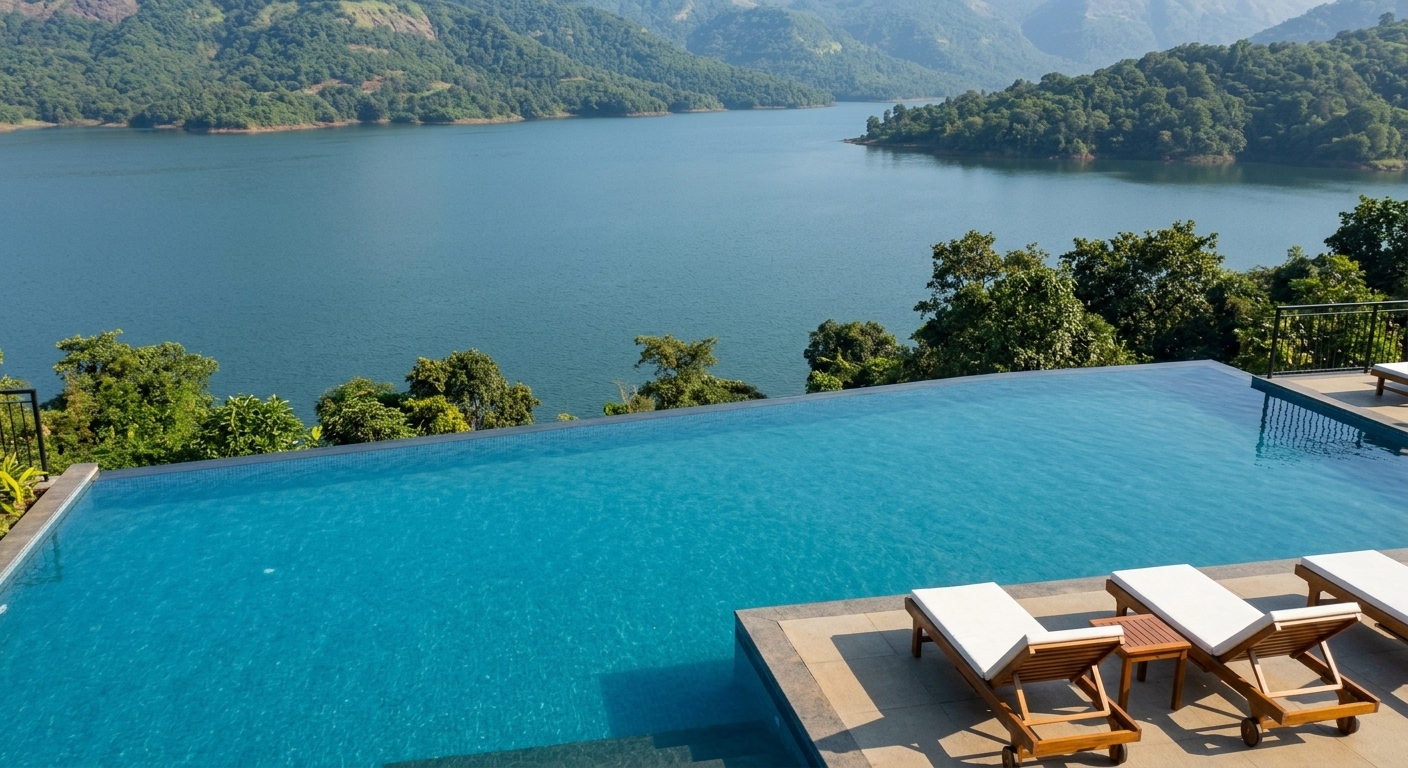
Status and aesthetics. Let’s not pretend this doesn’t matter. Posting an infinity pool photo from a Mulshi resort hits different than posting a simple room shot from a homestay. If you’re celebrating an anniversary, birthday, or just want to feel pampered, resorts set the stage better. Homestays are about comfort and connection, not optics.
We’ve learned this about ourselves—when we want to disconnect completely and just be a couple without schedules, we pick homestays. When we want to celebrate something, feel special, or bring family along who expect certain comforts, we book resorts. Neither is wrong. They’re just different tools for different trips.
What You Get at a Homestay That You Won’t at a Resort
Now flip it. There are things homestays offer that no resort will, no matter the price.
Real local connection. You’re staying with people who live here, farm here, know every trail and every local. They’ll tell you which waterfall has water in May, where to get fresh jackfruit, which temple has the best prasad. One homestay host near Mulshi Dam drove us to a spot only locals know—a hidden viewpoint where the dam backwaters meet the hills. No resort concierge is doing that.
Home-cooked food that actually tastes like home. Resort food is fine, but it’s designed to please everyone, which means it pleases no one fully. Homestay food is whatever the family eats—authentic, regional, and often made from produce grown on their land. We’ve had zunka-bhakri, varan-bhat, fresh bhaji from the farm, and masala chai that ruined Starbucks for us. You’re not ordering from a menu. You’re eating what’s cooking. That’s a completely different experience.
Quiet and slowness. Resorts are busy. People come and go. Kids run around the pool. Music plays by the lawn. Homestays are still. You hear birds, wind, water. At night, it’s so quiet you notice your own breath. If you’re burned out from city noise and just want to sit and do nothing, homestays are built for that.
Flexibility with routines. Want breakfast at 11 AM? Fine. Want to skip lunch? No problem. Want to cook your own eggs? Ask nicely and most hosts will let you. Resorts run on fixed schedules. Breakfast is 8 to 10:30, lunch is 12:30 to 3, dinner is 7:30 to 10. Miss it, and you’re ordering from a limited menu at a premium.
Lower pretense, more honesty. At a homestay, if the water heater isn’t working, the host tells you upfront and offers a workaround. At a resort, they’ll apologize profusely, promise to fix it in 15 minutes, and then you’re still taking a cold shower an hour later but now you’re annoyed because you expected better. Homestays set lower expectations and often exceed them. Resorts set high expectations and sometimes fall short. We’ve been disappointed by a ₹10,000/night resort and blown away by a ₹2,500/night homestay in the same month.

Step-by-Step: How to Choose Between a Resort and a Homestay for Your Mulshi Trip
Here’s how we decide now before every Mulshi trip—and yes, we still go back and forth depending on the weekend.
Step 1: Define your primary goal for the trip. Are you going to relax and do nothing, celebrate something special, bring kids or elderly family, disconnect from work completely, or explore hidden spots and trek? If the answer is “relax and do nothing,” homestays win. If it’s “celebrate,” resorts win. If it’s “explore,” homestays win because the hosts know the area. If you’re bringing parents who need certain comforts—AC, clean western toilets, no stairs—resorts are safer.
Step 2: Check your realistic budget including meals and extras. Don’t just look at the room rate. Add meals, taxes, activities, bonfire, one dinner outside the property if you’re planning it, and buffer for impulse spending. Write it down. If your total budget is ₹8,000 for two nights, resorts are out. If it’s ₹25,000+, you can afford a decent resort. Between ₹10,000 to ₹20,000, you’re in the boutique stay or high-end homestay zone.
Step 3: Decide how much control you need over the experience. Do you want everything—food, activities, timing—to just work without your involvement? Book a resort. Do you want flexibility to wake up late, skip meals, explore on your own time, and not stick to schedules? Pick a homestay. Ketan loves winging it. Samprita likes some structure. We’ve learned to trade off—one trip we do it his way, next trip hers.
Step 4: Search and compare at least 3 properties in each category. Use Google Maps, Instagram location tags, and direct calls. Don’t rely only on booking platforms—many good Mulshi homestays aren’t listed there. Call and ask: What’s included in the rate? Is breakfast part of it? What does the room actually look like? Can we see photos of the exact room, not just the property? What’s checkout time and is it flexible? Is there a bonfire option and how much? One 10-minute call saves you from landing at a place that’s nothing like the photos.
Step 5: Check reviews for the specific thing you care about most. If you care about food, search reviews that mention food. If you care about lake views, check if multiple reviews confirm that. We’ve learned not to trust overall ratings—read the 3-star reviews. Those are the honest ones. Someone who had a bad experience but stayed calm enough to explain it? That’s the review that tells you what’s actually off.
Step 6: Factor in travel time and accessibility. Some Mulshi homestays are 15-20 minutes off the main road on rough internal village roads. If you’re driving a sedan or arriving after dark, that’s a problem. Resorts are usually on main roads or well-marked. Ask the property: “Is the last 2 km accessible in a regular car, and is there lighting at night?” We’ve gotten stuck twice on unlit, rocky trails. One time we had to reverse 500 meters because the car was scraping.
Step 7: Book directly for homestays, compare platforms for resorts. For homestays, call directly and ask for the best rate. They’ll often drop ₹300-₹500 if you’re booking two nights and paying cash or UPI. For resorts, compare MakeMyTrip, Goibibo, Booking.com, and the resort’s own website. Sometimes the resort’s direct site has offers those platforms don’t. But check cancellation policies—direct bookings are often non-refundable.
Step 8: Confirm everything in writing before paying full advance. WhatsApp works. Get confirmation of your dates, room type, what’s included in the rate, meal costs if not included, and checkout time. We’ve had booking confusions three times—once a homestay double-booked us, once a resort claimed we booked a non-AC room when we specifically asked for AC. Screenshots saved us every time.
Common Mulshi Lake Accommodation Mistakes We’ve Made (So You Don’t Have To)
Let me share the friction points we hit before we figured out how to pick smarter.
Mistake 1: Booking based only on Instagram photos. We booked a Mulshi property once because their Instagram looked stunning—drone shots, golden hour lighting, perfectly styled rooms. We showed up and realized those were professional shoots. The actual room was half that size, the view was obstructed by a tree, and the “lake view” was visible only if you leaned out the window. Now we ask for unfiltered photos of the exact room before paying advance.
Mistake 2: Assuming “lake view” means you’re right by the lake. Half the properties near Mulshi call themselves “lakeside” or “lake view,” but they’re 2 km away from the water on a hilltop. You can see the lake, but you’re not walking down to it. If being near the water matters, ask: “How far is the property from the lake edge? Can we walk there?” Some resorts and homestays have lake access. Most don’t.
Mistake 3: Not checking meal costs upfront for resorts. We booked a ₹7,000/night resort once assuming that covered most expenses. Then we saw the breakfast menu—₹550 per person. Lunch and dinner were ala carte, and a basic meal cost ₹1,000+ per person. By the end of two days, we’d spent ₹6,000 just on food on top of the room cost. Now we always ask: “What do meals cost, and can we bring our own snacks or order from outside?” Some resorts don’t allow outside food. That’s a dealbreaker for us.
Mistake 4: Picking a homestay that was actually a poorly-run guesthouse. There’s a difference between a cozy family-run homestay and someone who built 8 rooms, hired untrained staff, and called it a homestay for marketing. We stayed at one near Lavasa Road that had “homestay” in the name but operated like a budget guesthouse. No host interaction, no homestyle food, just basic rooms and reheated meals. It wasn’t bad—it just wasn’t what we signed up for.
Mistake 5: Showing up during monsoon without confirming road conditions. Mulshi during monsoon is gorgeous but tricky. Some internal roads to homestays get flooded or turn to slush. One property we booked was unreachable without a 4×4. We had to park 1 km away and walk with our bags in the rain. The host didn’t mention this when we called. Now we ask specifically: “Is the property accessible in a sedan during heavy rain?” If they hesitate, we rebook.
Frequently Asked Questions
Is it safe for a couple to stay at a homestay near Mulshi Lake?
Yes, most homestays near Mulshi are family-run and very welcoming to couples. We’ve stayed at several without any issues. That said, do basic checks—read reviews specifically from other couples, talk to the host on a call before booking, and trust your instinct. If a property has very few reviews or the host is vague about details, skip it. Stick to homestays with at least 10-15 genuine Google or social media reviews. Safety has never been a concern for us at Mulshi homestays, but we’ve also never picked one blindly.
Can we get the same lake view at a homestay that resorts advertise?
Sometimes yes, sometimes no. A few homestays near Mulshi Dam and Panshet backwaters have direct, unobstructed lake views that rival any resort. But many homestays are set inland on farmland with distant or partial views. Don’t assume. Ask the host to send you a photo of the view from the room or balcony—taken from a phone, not a professional camera. If they hesitate or send only wide property shots, the view probably isn’t great. We’ve found stunning lake-view homestays, but we asked for proof before booking every time.
Do Mulshi homestays have WiFi and phone network?
Hit or miss. Most homestays have WiFi, but it’s slow—good enough for WhatsApp and light browsing, not for work calls or streaming. Jio and Airtel have decent coverage near the main Mulshi-Tamhini road, but signal drops as you go deeper into the village lanes. If you’re planning to work remotely or need stable internet, confirm this with the host beforehand. Resorts usually have better WiFi since they cater to business travelers too, but even there it’s not always reliable. We’ve learned to treat Mulshi as a digital detox zone.
Are there budget resorts at Mulshi Lake under ₹5,000 per night?
Technically yes, but they’re rare and often not true resorts—more like larger guesthouses with a pool and dining area. If you search hard, you might find properties in the ₹4,000 to ₹6,000 range that call themselves resorts. Just manage expectations. At that price, you’re getting basic amenities, smaller rooms, and fewer staff. If you want actual resort-level service and ambiance, budget ₹7,000+ per night. Otherwise, you’re better off with a good homestay at ₹2,500 to ₹3,500 that’s honest about what it is.
Which is better for a first-time visit to Mulshi Lake—resort or homestay?
For first-timers, we’d say homestay if you’re a couple or small group wanting a real feel of the place. Homestay hosts will guide you to hidden spots, suggest local food stops, and help you explore beyond the usual. If you’re traveling with family, elderly parents, or young kids, start with a resort for ease and comfort. Resorts are predictable and require less adjustment. You can always do a homestay on your second Mulshi trip once you’re familiar with the area.
Why Musafir Couple Picks Homestays More Often (But Not Always)
Here’s where we land after five years of Mulshi visits—we pick homestays 7 out of 10 times now. Not because resorts aren’t worth it, but because we’ve realized what we actually want from a Mulshi weekend.
We want quiet. We want to wake up without an alarm and eat breakfast at noon if we feel like it. We want conversations with locals who know which trail has the best sunrise. We want Samprita’s favorite—authentic homestyle food that doesn’t taste like it came from a commercial kitchen. And we want to spend ₹6,000 for two nights, not ₹30,000, because that extra ₹24,000 buys us two more trips later in the year.
But when we’re celebrating something—anniversary, birthday, a good month at work—we’ll book a resort. We’ll pay for the infinity pool, the bonfire setup, the room service, and the feeling of being taken care of without lifting a finger. We won’t regret it because that trip has a different purpose.
The mistake most couples make is thinking one is objectively better than the other. It’s not. A ₹12,000 resort night can feel like a waste if all you wanted was peace and space. A ₹2,000 homestay can feel underwhelming if you were hoping for Instagram-worthy aesthetics and pampering.
Know what you’re optimizing for. That’s the real decision.
If you’re planning a Mulshi Lake trip and still unsure which route to take, talk to us. At Musafir Couple, we’ve stayed at more Mulshi properties than we can count, and we’re happy to point you to specific places based on your budget and vibe. Reach out through our Instagram @MusafirCouple or check our Mulshi travel guides on the blog at travelheal.in. We’ll tell you what’s actually worth your money—and what’s just clever marketing.