

 by
by We almost drove past it. Twice.
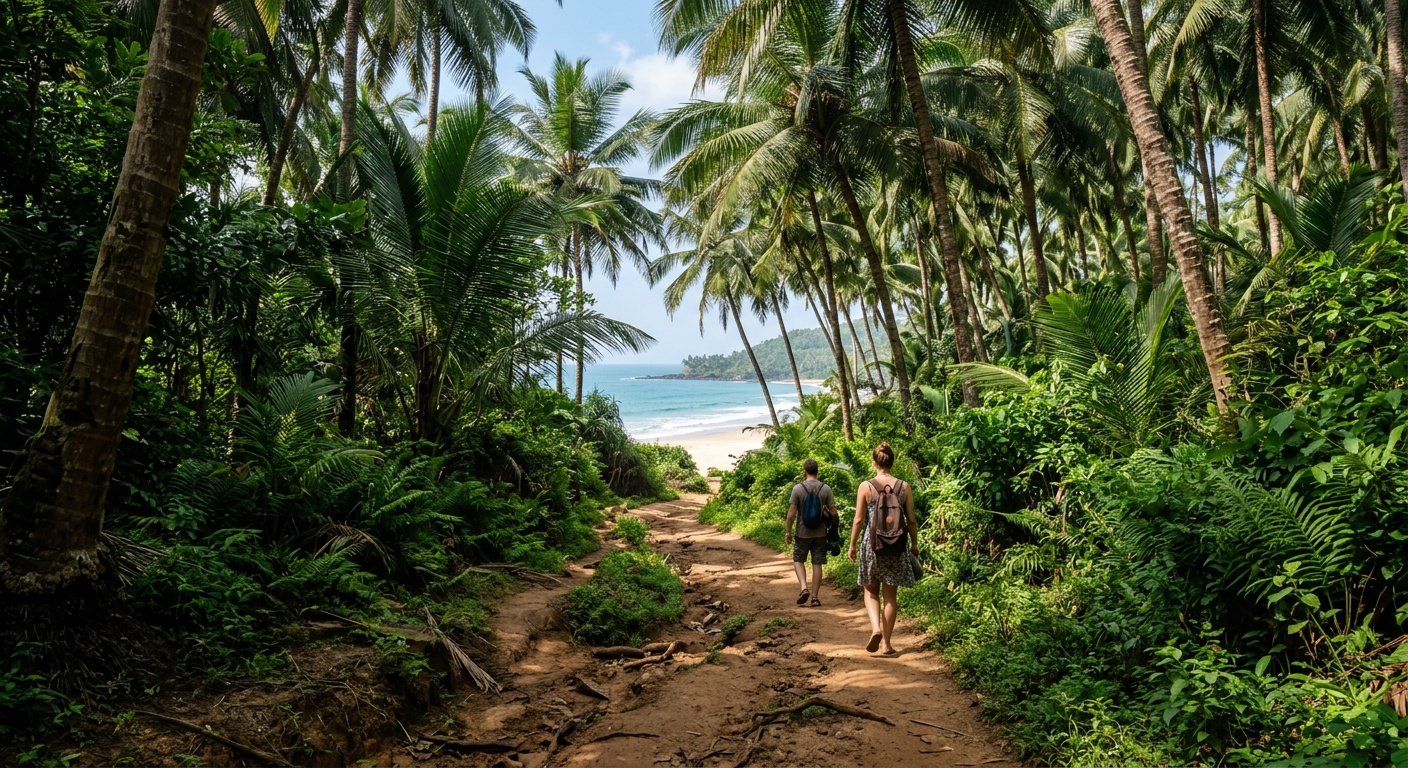
The GPS insisted we’d arrived, but all we saw was a narrow dirt path disappearing into thick palm trees. No signboard. No parking area. Just a local fisherman leaning against his bike who nodded when we asked, “Cola Beach?” He pointed down the path and said, “Two minutes. Walk only.”
That’s Cola Beach Goa for you — legitimately hidden, genuinely untouched, and nothing like the polished beach shacks of North Goa. We’d heard the whispers on travel forums, seen the aerial shots of that perfect lagoon, but standing there at the entrance, we weren’t sure if we’d found paradise or gotten lost trying.
Spoiler: We found it. And it was worth every wrong turn.
What Makes Cola Beach Different from Every Other Goa Beach
Most Goa beaches fall into two camps now. Tourist-heavy stretches with loud music and aggressive shack owners. Or “offbeat” beaches that got discovered three years ago and now have parking attendants and entry fees.
Cola Beach sits in a rare third category — genuinely undeveloped, not because it’s protecting some vibe, but because access is tricky and there’s simply not enough space for mass tourism. The beach is tiny. The lagoon behind it is shallow and brackish. There’s one resort, a handful of basic huts, and that’s it.
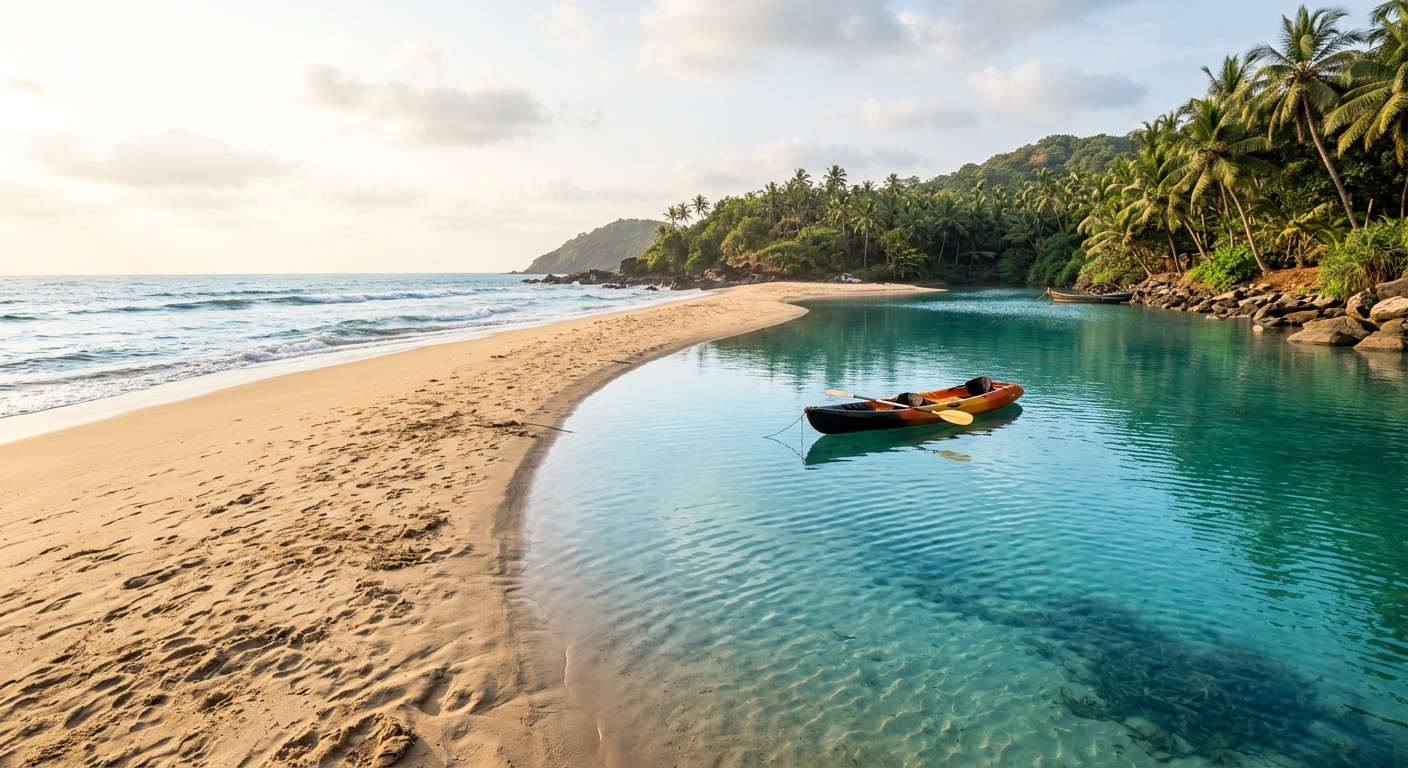
What you get instead is this: a curved stretch of sand maybe 150 meters long, bordered by rocky outcrops on both sides. Behind the beach sits a shallow tidal lagoon separated by a thin sandbank. When the tide’s right, you can wade into the lagoon where the water barely reaches your knees — it’s warm, still, and ridiculously photogenic.
No jet skis. No parasailing. No guys walking up every five minutes selling corn. It’s quiet in a way most Goa beaches stopped being a decade ago.
Here’s the tradeoff: you won’t find a bathroom within walking distance unless you’re staying at the resort. There are no shops, no ATMs, no backup plan. You bring what you need, or you do without.
How to Actually Reach Cola Beach: The Real Route, Not the Google One
Google Maps will get you close. It won’t get you there.
From Palolem Beach, the route is roughly 10 kilometers south. You’ll drive through Agonda, then Khola, then take a right turn at a junction that’s easy to miss if you’re watching the road instead of the map. Look for a small blue signboard that says “Cola Beach” — but don’t trust it completely, because two other dirt paths nearby look identical.
The correct turn is just after a small white church on the left. Once you turn, the road narrows fast. Paved tarmac becomes dirt mixed with laterite gravel. We were in a sedan and managed fine, but during monsoon or just after heavy rain, a two-wheeler or an SUV would be smarter.
Park where the road ends — there’s an informal clearing where a few bikes and cars sit under trees. A couple of local guys usually hang around. They’ll wave you into a spot and might ask for ₹50 to ₹100 for parking. We paid ₹50. No ticket, no receipt, just a nod.
From the parking area, it’s a two-minute walk down a sandy trail through the trees. You’ll hear the waves before you see the beach.
Fuel and toll costs from Pune: We started from Pune, about 470 kilometers one way. Fuel cost us around ₹3,200 for the round trip in our diesel hatchback. No tolls on the Goa stretch itself, but factor in ₹800 to ₹1,000 for Maharashtra tolls if you’re coming from Pune or Mumbai.
Timing tip: Reach before 10 AM or after 3 PM. Midday sun here is brutal — there’s very little natural shade on the sand, and the few palm trees are claimed early by the resort’s day visitors.
What We Spent: Real Costs for a Day at Cola Beach
We didn’t stay overnight, so our costs were light. Here’s the honest breakdown for two people spending roughly six hours at the beach:
Parking: ₹50
Water and snacks (carried from Palolem): ₹150
Lunch at Dwarka Eco Beach Resort: ₹850 for veg thali, fish curry rice, and two fresh lime sodas
Lagoon kayak rental (one hour): ₹300
Tip to the kayak guy: ₹50
Total: ₹1,400 for two people for the day.
If you’re staying at the resort, basic huts start around ₹3,000 per night in off-season, climbing to ₹6,000 or more in December and January. They’re rustic — sand floors, basic beds, shared bathrooms for the cheaper huts. The pricier cottages closer to the lagoon have attached baths and slightly better mattresses, but don’t expect luxury. You’re paying for location, not amenities.
We met a couple from Bangalore staying in one of the lagoon-facing huts. They’d paid ₹4,500 a night in early November and said it was worth it purely for waking up to that view. But they also warned us: if you need Wi-Fi, hot water, or a flat surface to work on, this isn’t it.
The Lagoon: The Main Reason People Come Here
The beach is nice. The lagoon is the reason you make the trip.
It’s a shallow tidal pool separated from the sea by a narrow sandbar. Depending on the tide, the water level ranges from ankle-deep to waist-deep. It’s calm, warm, and almost unnaturally still — like someone carved out a private swimming pool behind the beach.
You can wade in, float on your back, or rent a kayak and paddle around. We rented one for an hour. The lagoon isn’t big — you can cover the whole thing in twenty minutes if you’re paddling with intent — but it’s peaceful in a way that makes you want to just drift.
Kayak rental: ₹300 per hour for a double kayak. The guy running it operates out of a small shack near the resort. Cash only. No life jackets unless you ask, and even then, they’re pretty basic.
Best time to visit the lagoon is early morning or late afternoon. Midday, the water gets warm enough that it’s not refreshing anymore — it’s just wet and hot.
One thing we didn’t expect: the lagoon attracts birds. Lots of them. Early morning, we saw kingfishers, egrets, and a few species we couldn’t name. If you’re into bird photography, bring a zoom lens.
Where to Eat: Your Only Real Option
There’s one place to eat at Cola Beach, and that’s Dwarka Eco Beach Resort’s in-house restaurant. It’s open to non-guests, but seating is limited — maybe ten tables, all under a thatched roof with sand underfoot.
The menu is small. Goan fish curry rice, prawn balchão, veg thali, a few tandoori options, and basic Chinese. We ordered the fish curry rice and a veg thali. Both were honest, home-style cooking — nothing fancy, but fresh and well-spiced. The fish was local, probably bought that morning from a nearby village.
Cost: ₹400 for fish curry rice, ₹300 for veg thali, ₹75 per fresh lime soda. Total ₹850 for two, including water.
What they don’t have: No alcohol menu. You can bring your own beer, and they won’t stop you, but there’s no fridge to chill it. No espresso machine. No wood-fired pizza. If you’re expecting a beach shack vibe with cocktails and a DJ, you’re at the wrong beach.
Service is slow. Not rude, just slow. The kitchen is tiny, and they cook to order. We waited about thirty-five minutes for our food. Bring patience or order early.
If you’re planning a full day and want variety, carry your own snacks, fruit, and drinks from Palolem or Agonda. There’s a small general store in Khola village, about three kilometers back, but it’s basic — biscuits, chips, warm soft drinks.
Swimming, Safety, and What to Watch Out For
The sea at Cola Beach isn’t rough, but it’s not calm either. Waves are moderate, the shore drops off fairly quickly, and there’s no lifeguard. We saw a few people swimming, but most stuck to waist-deep water.
If you’re a confident swimmer, you’ll be fine. If you’re not, stay in the lagoon. It’s shallow, enclosed, and far safer.
What to watch for: Rocky patches on both ends of the beach. The rocks are sharp and slippery. Wear water shoes if you’ve got them, especially if you’re exploring the edges.
We didn’t see any strong currents, but a couple of locals told us that during monsoon, the sea gets unpredictable. Between June and September, the beach pretty much shuts down. The resort closes, the lagoon floods, and the access road turns into a muddy mess.
No medical facilities nearby: The closest clinic is in Agonda, about fifteen minutes by car. If you cut yourself on a rock or twist an ankle, you’re on your own until you can get back to the main road.
There are no shops selling sunscreen, Band-Aids, or drinking water on the beach. Carry a basic first-aid kit, plenty of water, and more sunscreen than you think you’ll need. We went through an entire tube between the two of us in one afternoon.
Best Time to Visit Cola Beach and When to Avoid It
We visited in early November, just as the season was starting. Weather was perfect — warm, breezy, not too humid. The beach was nearly empty. We counted maybe twelve other people spread across the sand and lagoon the whole time we were there.
Peak season (December to February): Expect more visitors, higher resort rates, and the lagoon to be busier. It’s still nowhere near crowded by Goa standards, but you won’t have the place to yourself. Hut prices double. Advance booking is necessary if you’re planning to stay overnight.
Shoulder season (November and March): This is the sweet spot. Weather’s great, prices are reasonable, and crowds are thin. We’d go back in March in a heartbeat.
Off-season (April to September): The resort shuts down. The beach is technically accessible, but the heat in April and May is oppressive, and monsoon rains from June to September make the road risky and the sea dangerous. Unless you’re a monsoon purist, skip it.
Day-trip vs overnight: We did a day trip and felt like we saw enough. If you want to wake up to the lagoon and have the place to yourself at sunrise, stay overnight. But if you’re just curious and want to tick it off, a half-day visit works.
What Cola Beach Gets Right and Where It Falls Short
What works: The seclusion is real. The lagoon is genuinely beautiful and safe for families with young kids. It’s one of the few beaches in Goa where you can still sit in silence and not hear a Bollywood remix echoing from a shack. The vibe is low-key, the views are worth the drive, and it hasn’t been ruined yet.
What doesn’t: Access is a pain if you’re not comfortable with dirt roads. There are no facilities beyond the one resort. If you need a bathroom and you’re not a guest, you’re negotiating with the resort staff or walking back to the parking area and hoping there’s a bush. There’s no mobile signal on Jio — Airtel had one bar. If you’re expecting Instagram-level service or amenities, this will disappoint you.
Our biggest frustration: No clear signage. We wasted twenty minutes driving up and down the same stretch trying to figure out which dirt path was the right one. A single proper signboard at the junction would solve that, but I doubt it’s coming.
Frequently Asked Questions
Is Cola Beach safe for kids and non-swimmers?
Yes, if you stick to the lagoon. The water is shallow, calm, and warm — perfect for young kids. The sea itself has moderate waves and no lifeguard, so keep children close or avoid it entirely. The beach is small enough that you can keep an eye on everyone easily.
Can we camp overnight at Cola Beach?
Not officially. The resort doesn’t allow independent camping on the beach, and there’s no public camping ground. You might see a few tents during peak season, but it’s a gray area. If you want to stay, book a hut at Dwarka Eco Beach Resort or one of the few other properties nearby.
Is there mobile network and internet at Cola Beach?
Barely. Airtel had weak signal. Jio had none. BSNL worked intermittently. There’s no Wi-Fi unless you’re a guest at the resort, and even then, it’s slow and unreliable. Plan to disconnect.
How far is Cola Beach from Palolem, and can we cover both in one day?
Cola Beach is about ten kilometers south of Palolem — a fifteen-minute drive on decent roads, longer if you’re on a scooter or get lost at the turnoff. You can absolutely cover both in one day. Start at Cola early in the morning, then head to Palolem for lunch and the evening. Palolem has better food options, more activity, and reliable facilities.
Should You Actually Go? Our Honest Take
Here’s the truth: Cola Beach Goa isn’t going to blow your mind if you’ve seen genuinely remote beaches elsewhere in India. It’s not Radhanagar. It’s not the beaches of Gokarna before they got discovered. It’s a small, pretty, quiet beach in South Goa with a nice lagoon and very little else.
But if you’re already in Goa, staying somewhere between Agonda and Palolem, and you want half a day away from the crowds, it’s absolutely worth the drive. The lagoon alone justifies the trip, especially if you’ve got kids or you’re traveling as a couple looking for something peaceful.
We’re glad we went. We’re also glad we didn’t build it up too much in our heads. It’s a hidden spot, yes, but it’s not a secret paradise. It’s just a quiet beach that hasn’t been overrun yet, and in Goa in 2026, that’s rare enough to be valuable.
Pack light, manage your expectations, and go early. You’ll have a good day.
Plan Your Visit to Cola Beach with Musafir Couple
If you’ve got questions about the exact route, where to stay nearby, or how to combine Cola Beach with other offbeat spots in South Goa, reach out to us at Musafir Couple. We’ve driven these roads, made the wrong turns, and figured out what works. We share honest routes, real costs, and the kind of details you won’t find in a generic travel blog — because we’ve been there, spent our own money, and dealt with the same confusion you’re probably facing now.
Check out our South Goa travel vlogs for visual route guides, or drop us a message if you’re planning a Goa road trip and want to skip the guesswork. We’ll tell you what’s worth it and what’s not — no sponsorships, no sugarcoating, just the truth from two people who actually travel this way.