

 by
by You’re ready to visit temples, find some peace, maybe get answers to questions you’ve been carrying around. But you’re staring at a hundred destinations, conflicting advice, and zero idea where to actually start your spiritual journey planning India trip.
Here’s what nobody tells you upfront: most first spiritual trips fail because people try to do too much. They book seven temples in three days, rush through rituals they don’t understand, and come back more exhausted than enlightened. We’ve done that. We fixed it. Here’s how you avoid it.
Start With One Clear Intention — Not Ten Destinations
Biggest mistake we see in spiritual journey planning India trips? People treat temples like Instagram checkboxes.
They want Somnath, Kailash Mansarovar, Varanasi, and Tirupati — all in one go. Then they spend the entire trip in cars, trains, and hotels. Zero time to actually sit, reflect, or feel anything.
Pick one spiritual goal for your first trip. Not three. One.
Want inner peace? Head to a quiet ashram in Rishikesh. Seeking blessings for a new phase in life? Choose one powerful temple cluster like the Jyotirlingas in Gujarat or the Char Dham circuit. Trying to heal from loss or grief? Places like Rameshwaram or Kedarnath offer that space.
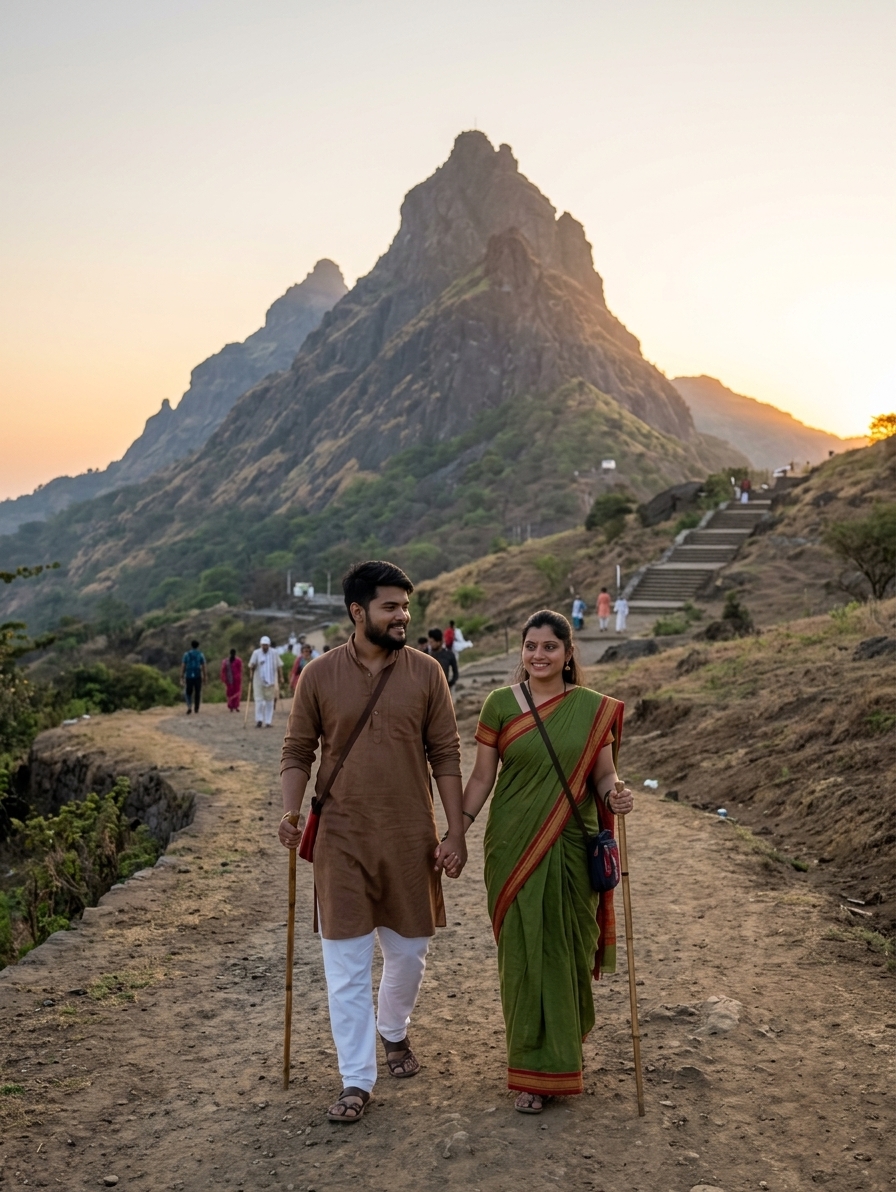
Ketan and I planned our Somnath-Girnar trip with one intention: to pause, reset, and disconnect from city chaos. We didn’t add Dwarka even though it’s nearby. That focus made the entire journey feel complete, not rushed.
Your spiritual journey planning India checklist should start with why you’re going — not where.
Choose Your First Route Based on Your Comfort Level
Not all spiritual routes are beginner-friendly. Some demand high fitness. Others need weeks of planning. Here’s the honest breakdown based on what we’ve seen couples and solo travelers actually handle on their first spiritual trip.
Easy Level (Perfect for First-Timers):
Somnath and Girnar in Gujarat. Both accessible by car, moderate walking, manageable in 3-4 days. Pune’s Ashtavinayak circuit. Eight Ganpati temples across Maharashtra, doable in two days with your own vehicle. Nashik and Trimbakeshwar. Spiritual vibe, good roads, plenty of budget stays.
Medium Level (Needs Some Prep):
Char Dham in Uttarakhand. Beautiful but physically demanding. Start small before attempting this. Varanasi and Prayagraj. Intense, crowded, overwhelming for some. Go with a local guide. Rameshwaram and Madurai. Hot, humid, long rituals. Hydration is non-negotiable.
Advanced Level (Not Recommended First Time):
Kailash Mansarovar. Requires permits, fitness training, altitude prep, and significant budget. Amarnath Yatra. High altitude, weather dependent, needs medical clearance. Kedarnath during monsoon. Landslide risks, unpredictable conditions.
We started with Somnath because it was reachable, safe, and spiritually powerful without being physically brutal. That gave us confidence to plan Kashmir and Kailash later. Don’t jump straight to Everest when you haven’t done a local hill trek.
Real Costs You Need to Budget (Based on Actual Trips)
Most spiritual tourism planning guides skip the money talk. We won’t.
Here’s what a 4-day spiritual trip for two people actually costs if you’re driving from Pune to Gujarat (Somnath-Girnar route):
Fuel: ₹6,200 for a sedan (Pune to Somnath to Girnar and back, roughly 1,840 km). Tolls: ₹1,350 one way, so budget ₹2,700 round trip. Accommodation: ₹1,800-₹3,500 per night depending on whether you pick dharamshalas, budget hotels, or decent stays. We spent ₹2,200/night average. Food: ₹800-₹1,200 per day for two (simple veg thalis, chai stops, temple prasad). Temple offerings and priest fees: ₹500-₹1,500 depending on rituals you choose. Parking at major temples: ₹50-₹100 per stop.
Total realistic budget for two people: ₹18,000-₹24,000 for four days including fuel, stay, food, and offerings.
If you’re flying and hiring local cabs, add ₹12,000-₹18,000 for flights and ₹4,000-₹6,000 for cab hire.
Pro tip from our mistakes: always carry ₹500 in coins and small notes. Prasad stalls, shoe-keepers, and small temple donation boxes don’t give change.
The Checklist Nobody Gives You (But You’ll Need)
Forget generic packing lists. Here’s the how to plan spiritual trip India checklist that actually matters:
Documents:
Original ID proofs (Aadhaar, PAN, Driving License). Some temples check. Printouts of hotel bookings. Mobile networks fail in remote areas. Vehicle registration and insurance if driving. Medical prescriptions if you’re on regular medication.
Clothing (Non-Negotiable):
Conservative outfits. Sleeveless, shorts, and torn jeans aren’t allowed in most temples. We learned this the hard way at Trimbakeshwar. Cotton outfits in light colors. You’ll be sweating and sitting on temple floors. Extra pair of socks. You’ll remove shoes often, and temple floors get scorching hot by noon. Shawl or dupatta. Required for women in many temples, useful for men in cold morning aartis.
Spiritual Essentials:
Small pooja thali if you want to do personal rituals. Incense sticks, kumkum, turmeric. Lightweight and meaningful. Notebook or journal. Spiritual trips bring up thoughts you’ll want to capture. Offline music or bhajans downloaded. Long drives need good vibes, and network is patchy.
Practical Survival Gear:
Water bottles (minimum two per person). Dehydration kills the experience faster than anything. Electral or ORS sachets. Heat, travel, and irregular meals mess with your gut. Power bank (20,000mAh minimum). Charging points are rare at temples and remote stays. Torch or headlamp. Many ashrams and temple accommodations have power cuts. Basic medical kit: Digene, Avomine, Band-Aid, antiseptic cream.
We once forgot mosquito repellent on a trip to Ganpatipule. That night was hell. Don’t skip the boring essentials.
Timing Your Trip: When to Go and When to Avoid
Spiritual journey planning India isn’t just about where — it’s about when.
Best months for most temple circuits: October to February. Pleasant weather, manageable crowds except on festival days. March and early April work for northern routes like Uttarakhand before summer heat.
Months to avoid unless you enjoy suffering: May and June. Brutal heat, especially in Gujarat, Rajasthan, and South India. July and August. Monsoon sounds romantic until you’re stuck in landslides or temple closures in Uttarakhand and Maharashtra Konkan.
Festival season: Maha Shivaratri, Navratri, Kartik Purnima, Ganesh Chaturthi — these bring incredible energy but also overwhelming crowds. If it’s your first spiritual trip, avoid peak festival dates. You want space to think, not fight for darshan.
We visited Somnath in November. Perfect weather, moderate crowd, and the sunset aarti by the Arabian Sea was surreal. Two months earlier during Shravan, the same temple had four-hour queues.
Check local festival calendars before booking. One Google search saves hours of frustration.
What to Expect (The Stuff Travel Blogs Won’t Mention)
Let’s talk about the uncomfortable truths of spiritual tourism planning that nobody warns you about.
You will feel weird at first. If you’re not used to rituals, chanting, or sitting cross-legged for long periods, the first day feels awkward. That’s normal. Give it time.
Priests will offer paid services. Some are genuine. Some are aggressive. You’re allowed to say no. We politely declined three different “special pujas” at one temple because we wanted silent time instead. Nobody cursed us.
Temple food might upset your stomach. It’s pure, sattvic, and often unfamiliar if you’re used to spicy city food. Carry digestive tablets. Always.
You’ll get unsolicited advice. Random uncles and aunties will tell you the “right” way to pray, dress, or behave. Smile, nod, do what feels right to you. Your journey, your rules.
Accommodations near temples are basic. Even the “good” ones. If you need luxury, book hotels in nearby towns and drive to temples early morning. But honestly? Staying in a simple dharamshala close to the temple gives you the real experience — early morning bells, the smell of incense, and fewer distractions.
You might cry, or feel nothing, or feel everything at once. All of it is okay. Spiritual experiences don’t follow a script.
Samprita cried at Girnar after climbing 10,000 steps. I felt absolutely nothing at a temple everyone called “life-changing.” Three hours later, sitting quietly by Somnath beach, something shifted. You can’t force these moments.
Mistakes We Made (So You Don’t Have To)
Here’s what went wrong on our first spiritual journey planning India trip — and how you avoid it.
Mistake 1: Overpacking the Itinerary
We tried cramming Somnath, Dwarka, and Girnar in two days. We saw everything and felt nothing. Cut your list in half. Spend more time at fewer places.
Mistake 2: Skipping Research on Temple Timings
We reached Trimbakeshwar at 1 PM. Temple was closed for afternoon break until 4 PM. Wasted three hours. Always check darshan timings before arriving.
Mistake 3: Not Carrying Enough Cash
Remote temple towns don’t always have working ATMs. Card machines fail. UPI doesn’t work everywhere. Carry at least ₹5,000 in cash for a 3-4 day trip.
Mistake 4: Wearing New Shoes
Ketan wore brand new sandals to Girnar. By step 3,000, he had blisters. Break in your footwear before the trip. Comfort beats style every single time.
Mistake 5: Ignoring Local Advice
A local shopkeeper told us to start the Girnar climb by 5 AM. We thought 7 AM was fine. By 10 AM, the sun was brutal and the descent was painful. Listen to locals. They know better than your travel app.
How Musafir Couple Can Help You Plan Better
We’ve done the confused first-timer thing. We’ve made the expensive mistakes, taken wrong turns, argued over directions, and figured out what actually works for real couples planning their first spiritual journey in India.
Our YouTube channel documents these trips without filters — the aartis, yes, but also the parking struggles, the “is this priest legit?” moments, and the actual road conditions nobody shows you. We share real costs down to the last toll booth, honest reviews of temple-area stays, and food spots that don’t just look good for the camera.
If you’re planning your first temple circuit — whether it’s the Ashtavinayak route in Maharashtra, the Gujarat Jyotirlinga trail, or a South India temple tour — our travel vlogs and spiritual tourism guides give you the practical checklist and the emotional prep you won’t find on generic travel sites.
We’re not gurus. We’re not selling enlightenment. We’re a Pune-based couple sharing what we learned the hard way so your spiritual journey planning India experience is smoother, more meaningful, and way less stressful.
Frequently Asked Questions
How many days should I plan for my first spiritual trip in India?
Start with 3-4 days maximum. Pick one region or circuit — like Somnath-Girnar in Gujarat or the Ashtavinayak temples in Maharashtra. Longer trips sound appealing but first-timers usually burn out by day five. Build your stamina with shorter journeys before attempting week-long or multi-state temple circuits.
Do I need a guide for spiritual journey planning India trips?
Not always. Simple circuits like Ashtavinayak or Somnath-Dwarka are easy to navigate yourself with Google Maps and local signboards. For complex routes like Char Dham, Kailash Mansarovar, or South Indian temple circuits with specific ritual sequences, a local guide helps. They explain significance, manage timings, and handle priest interactions. Decide based on your comfort with unknowns.
What’s the best spiritual route for couples visiting India for the first time?
The Somnath and Girnar circuit in Gujarat is ideal. It’s accessible by road, spiritually significant, moderately challenging, and gives you temple experiences, hillside meditation spots, and coastal serenity all in one trip. Alternatively, Maharashtra’s Ashtavinayak circuit offers eight Ganpati temples across manageable distances perfect for a long weekend. Both routes have decent accommodation, clear roads, and aren’t physically brutal.
Is it safe for women traveling on spiritual trips in India?
Yes, with standard precautions. Temple towns are generally safer than metros because of the spiritual crowd and local community vigilance. Stick to well-reviewed stays, avoid isolated spots after dark, dress conservatively to blend in, and travel in pairs when possible. We’ve done multiple temple trips as a couple and solo (Samprita), and the environment is respectful. Trust your instincts and choose popular pilgrimage routes for your first trip.
What should I avoid doing at temples during my spiritual journey?
Don’t wear leather items (belts, shoes, bags) inside temple premises — many don’t allow it. Avoid pointing your feet toward the deity while sitting. Don’t take photos inside the sanctum unless explicitly allowed. Skip loud conversations or phone calls in prayer areas. Don’t refuse prasad if offered — accept it respectfully even if you don’t consume it. And never, ever argue with priests or locals over rituals. Observe, ask politely, follow along.
Ready to Plan Your First Spiritual Journey?
Spiritual journey planning India doesn’t need to be complicated or expensive. It needs intention, honesty about your limits, and willingness to let go of perfect Instagram moments.
Start small. Pick one place that’s been calling you. Pack light. Carry cash. Expect discomfort and magic in equal measure.
If you want real route advice, honest temple reviews, or just want to see what a spiritual trip actually looks like before you book yours — follow Musafir Couple on YouTube and Instagram. We share every stumble, every breathtaking moment, and every practical detail from our own journeys across India’s spiritual landscape.
Travel with curiosity. Return with stories. That’s the only checklist that really matters.

