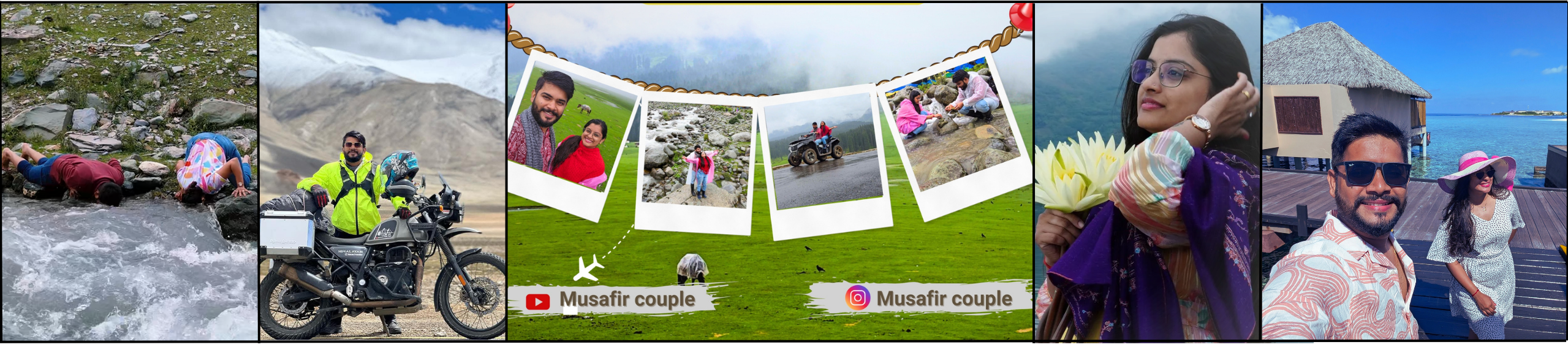


 by
We never thought we’d find ourselves sitting cross-legged in front of a temple at 5 AM.
Neither of us is particularly religious. Ketan grew up with rituals but doesn’t follow them strictly. I respect traditions but don’t consider myself a believer. Yet here we are, years into documenting travel across India, and some of our most powerful experiences happened at spiritual destinations we almost skipped. Not because we suddenly found faith, but because we discovered something we didn’t expect: spiritual travel isn’t about religion. It’s about pause, perspective, and sometimes, just showing up without an agenda.
So when couples ask us — is spiritual travel worth it if we’re not religious? — our answer surprises them. And probably us too.
Myth 1: Spiritual Travel Is Only for Believers
This is the biggest misconception we run into.
Most couples assume temple tourism or spiritual journeys are reserved for devout believers. That visiting Somnath or sitting by Dal Lake near a shrine is meaningless if you don’t pray. We thought the same thing before our Kailash Mansarovar journey. Samprita was skeptical. I was curious but not committed. Neither of us went seeking divine intervention.
What happened instead was unexpected. The silence at high altitude forced us to slow down. The physical challenge made us depend on each other differently. The shared meals with strangers from different backgrounds opened conversations we’d never had. Was it religious? Not really. Was it transformative? Absolutely.
Here’s what we learned: spiritual destinations create space. Literal physical space — away from work emails, traffic, weekend plans. And mental space — a break from the performance we maintain in regular life. You don’t have to believe in the deity to benefit from the environment these places create. The architecture, the rituals people follow, the natural beauty most spiritual sites are built around — it all adds up to an atmosphere that’s hard to find at a beach resort or city hotel.
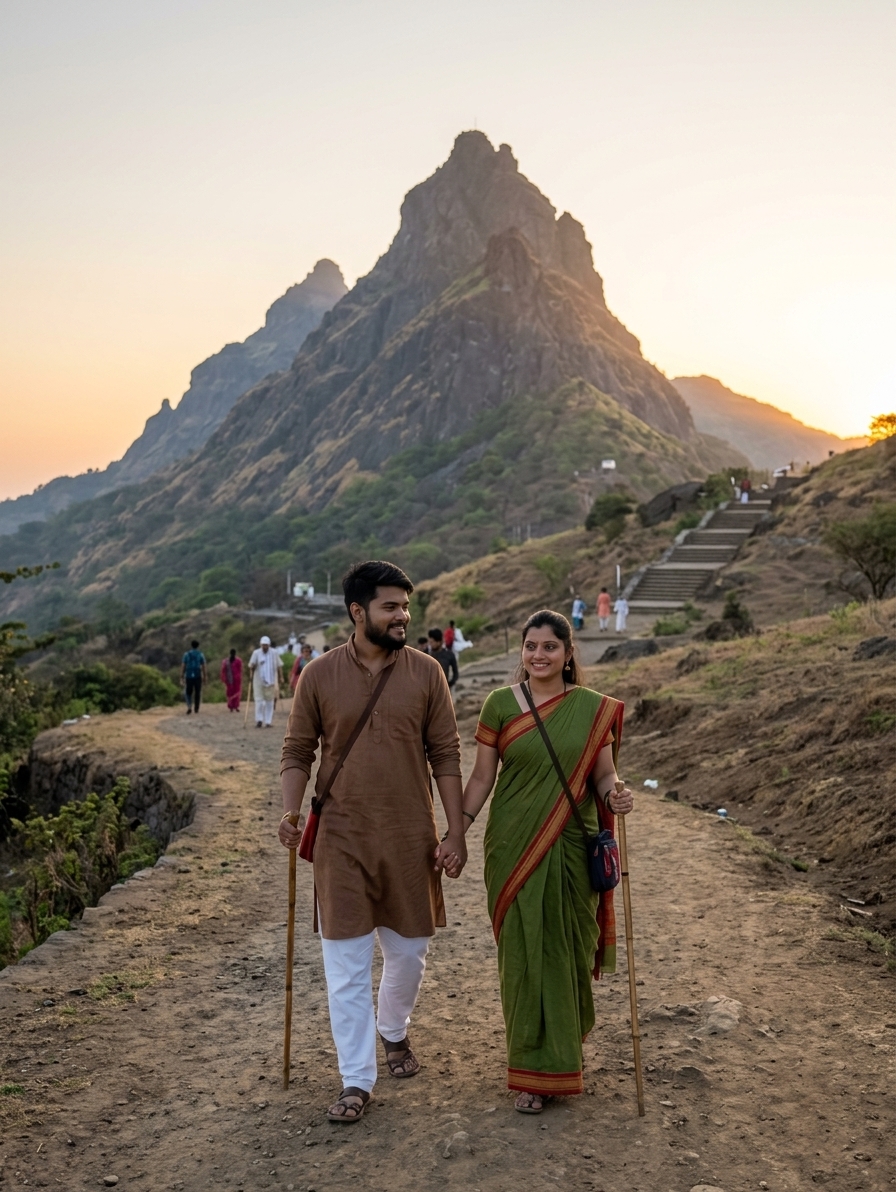
We’ve met plenty of non-religious couples at Girnar, Bedse Caves, and even smaller temples around Pune and Mahabaleshwar. Some were there for the trek. Others for the history. A few were dragged along by in-laws. But nearly everyone admitted they felt something shift, even if they couldn’t name it.
Spiritual travel for couples in India doesn’t require devotion. It requires openness.
Myth 2: It’s All Rituals and Rules You Won’t Understand
Second biggest objection: “We won’t know what to do. We’ll feel out of place.”
Fair concern. Indian spiritual sites come with rituals, customs, dress codes. If you didn’t grow up with them, it’s easy to feel like an outsider. But here’s the thing we noticed after visiting dozens of temples, ashrams, and pilgrimage spots: no one actually expects you to know everything. And most places are far more welcoming than you think.
Take Salaulim Dam near Goa. It’s a quiet spot, not a temple, but locals treat the area with a kind of reverence. We showed up in regular clothes, no idea what to do. A family invited us to join their small prayer by the water. We stood quietly. They didn’t ask if we believed. They shared prasad after. That was it.
Same thing at smaller Ganpati locations in Pune during the festival. We’ve filmed at sites where we clearly didn’t know the prayers, and families just smiled, made space, explained what was happening if we asked. The spiritual journey benefits weren’t locked behind a test of religious knowledge.
Now, there are places with stricter rules. Some temples don’t allow non-Hindus inside the sanctum. Some require specific clothing. But even then, you can experience the location — the surroundings, the community, the energy. And honestly, respecting those boundaries is part of the experience. It teaches you something about humility and context, which is valuable in itself.
One mistake we made early: overthinking it. We spent so much time worrying about doing the wrong thing that we missed the actual experience. Once we relaxed, followed basic respect (cover shoulders, remove shoes, ask before filming), everything got easier. The rituals aren’t gatekeeping. They’re invitations, and you can accept them at your own level.
Religious travel for non-believers works when you approach it with curiosity, not obligation.
Myth 3: Leisure Travel Is More Relaxing Anyway
Here’s where we disagree with most travel advice.
Everyone assumes a beach resort or hill station is more “relaxing” than a spiritual destination. And sure, if relaxation means a pool, room service, and zero effort, that’s true. But spiritual vs leisure travel isn’t actually about relaxation. It’s about different kinds of rest.
Leisure travel gives you physical rest. Spiritual travel gives you mental rest. Both are valuable. Both are needed. But they’re not the same thing.
Physical rest and mental rest often feel different. A string of back-to-back shoots at resorts or a farmhouse can leave the body rested while the same thoughts, anxieties, and habits carry on unchanged. A pilgrimage route to Somnath and Girnar, by contrast, is typically physically demanding, yet it can leave a person feeling clearer, less reactive, and more aligned with a partner. This contrast is a useful way to see that rest and reflection do different things.
Why? Because spiritual destinations strip away distractions. There’s no poolside bar to fill the silence. No scheduled entertainment to avoid real conversation. You’re left with the landscape, each other, and whatever you brought with you mentally. For some couples, that’s uncomfortable. For us, it became necessary.
The couples we see thriving on spiritual journeys are the ones who don’t treat it like a checklist. They’re not rushing from one temple to the next, ticking off Insta spots. They’re sitting. Walking slowly. Talking less but saying more.
One of our favorite moments was at Pawna Lake during sunrise, near a small temple we almost ignored. We sat there for an hour. Did nothing. Talked a bit. Watched light change. That hour did more for our relationship than three fancy dinners at high-end resorts. Not because temples are magic, but because the environment encouraged presence instead of performance.
Spiritual travel isn’t more relaxing. It’s more real. And sometimes, real is what couples need more than comfort.
Myth 4: You’ll Come Back Enlightened or It’s a Waste
The pressure to have a life-changing experience ruins most spiritual trips.
Couples go in expecting some dramatic shift. They think they’ll come back “enlightened” or “transformed” and if they don’t, the trip failed. That’s nonsense, and it sets up disappointment.
Ketan and I didn’t come back from Kanyakumari as different people. We didn’t suddenly solve our problems or unlock some hidden truth about our relationship. But we did notice smaller, quieter shifts. We argued less about silly things. We appreciated silence more. We stopped needing every moment to be documented or justified.
Those aren’t Instagram-worthy revelations. They’re just… useful. Real. The kind of thing that actually sticks.
Here’s what temple tourism for couples actually offers: time outside your routine, exposure to something bigger than your daily concerns, a chance to see how other people find meaning. That’s it. If something deeper happens, great. If not, you still spent quality time together in a place that demanded nothing from you except respect.
We’ve filmed at spiritual sites where we felt nothing. Bedse Caves on a rainy Tuesday? Honestly, we were just wet and cold. But then Cola Beach near a small shrine gave us one of those rare evenings where everything felt right. You can’t force it. You can only show up.
The couples who get the most from spiritual travel are the ones who drop the expectation of a breakthrough. They travel to observe, not to perform transformation. And ironically, that’s when real shifts tend to happen.
One couple we met at Mulshi told us they visit one spiritual site every quarter, no agenda. Not for content, not for belief, just to reset. That felt wise. Spiritual travel isn’t about one big trip. It’s about building a practice of stepping outside your normal context, together.
What We’d Tell Couples Considering It
If you’re debating whether spiritual travel is worth it, here’s our honest take.
Start small. Don’t book Kailash Mansarovar as your first attempt. Try a weekend. Pick a temple town within driving distance — Mahabaleshwar has quiet spots, Lonavala has caves, even Pune has lesser-known Ganpati sites. Go with zero expectations. Walk around. Sit. Talk. See how it feels.
Choose places with natural beauty. Spiritual sites are often built in stunning locations. Even if the rituals don’t resonate, the surroundings will. Dal Lake Kashmir, Salaulim Dam, the hills around Somnath — these places work on you whether you’re praying or not.
Don’t perform. You’re not there to prove anything. No one cares if you know the prayers or understand the history. Respect the space, be quiet, and let the place do its thing.
Go as a couple, not as individuals doing the same activity. This isn’t solo introspection. It’s shared experience. Talk about what you notice. Laugh at what confuses you. Let the strangeness bring you closer instead of driving you inward.
And be honest about what you’re seeking. If you just want a break from work, that’s fine. If you’re hoping to reconnect, say that. If you’re curious about how other people find meaning, admit it. Spiritual travel works best when you’re clear about why you’re there, even if the reason is simple.
Frequently Asked Questions
Do we need to be religious to enjoy spiritual travel in India?
No. Many couples visit spiritual destinations for the environment, architecture, and cultural experience rather than religious devotion. The key is approaching with respect and openness, not belief.
What should non-religious couples expect at temple tourism sites?
Expect rituals you may not understand, but also welcoming communities, beautiful locations, and space for reflection. Most sites are more inclusive than you’d think, and basic respect goes a long way.
How is spiritual vs leisure travel different for couples?
Leisure travel offers physical rest and distraction. Spiritual travel offers mental space and presence. Both have value, but they serve different needs in a relationship.
What are the real benefits of a spiritual journey for couples who don’t practice religion?
Shared perspective outside daily routine, deeper conversations, exposure to how others find meaning, and environments that encourage presence over performance. Benefits are often subtle but lasting.
Ready to Try It Yourselves?
Musafir Couple documents real spiritual journeys across India — the confusion, the quiet moments, and the honest verdict on whether each destination is worth your time.
We’re not preachers. We’re not believers in the traditional sense. We’re just a couple who stumbled into spiritual travel and found it valuable in ways we didn’t expect. If you’re curious, start with our Somnath and Girnar vlogs. We share the real costs, the road conditions, the moments we felt something shift, and the times we felt absolutely nothing.
Whether you’re religious or not, there’s something powerful about stepping into spaces built for meaning. You might not find God. But you might find each other again.