

 by
by Top 10 Monsoon Travel Destinations in India – Magical Rainy Season Getaways 2026
Plan your perfect monsoon escape with our expertly curated guide to India’s 10 most spectacular rainy season destinations, from misty hill stations to lush valleys, with real routes, costs, and weather insights.
Ketan and I sat in our Pune apartment on a sticky June afternoon, rain hammering against the windows. “We should be out there,” Samprita said, scrolling through our old road trip photos. She was right. Three weeks later, we were standing on a cliff edge in Lonavala, completely drenched, watching seven waterfalls cascade down the valley simultaneously. That’s when we understood something most travelers miss — monsoon isn’t the season to avoid India. It’s when the country reveals its most dramatic, hidden face.
Most travel guides will tell you to skip the rainy season. We’ve spent four monsoons traveling across India, documenting what actually happens when you chase the clouds instead of running from them. And here’s what nobody mentions in those picture-perfect Instagram posts — yes, some roads wash out, some treks close, and you’ll get soaked. But you’ll also see landscapes that simply don’t exist in any other season, pay half the usual prices, and have entire destinations almost to yourself.
This isn’t a list of every place that receives rain. These are ten monsoon travel destinations India offers that genuinely transform during the rains — places where the wet season isn’t an obstacle but the whole point of going.
Why Monsoon Travel in India Is Different (And Better Than You Think)
Here’s something we learned the expensive way. We planned our first monsoon trip expecting continuous downpour. We packed like we were going to live underwater for a week. Reality? Monsoon in most of India means 2-4 hours of intense rain, often predictable, usually afternoon or evening, followed by the most dramatically beautiful skies you’ve ever photographed.
The transformation is real. A waterfall that’s a modest trickle in March becomes a roaring spectacle in July. Hills that look brown and tired in May turn impossibly green by June. Rivers you could walk across in April become powerful forces by August. This isn’t subtle — it’s theatrical.
But here’s the friction nobody talks about. Week one of our Malshej Ghat trip? Awful planning. We arrived on a Saturday, and despite monsoon season, every decent homestay was packed. Weekends in popular monsoon destinations near major cities are busier than you’d think. We ended up in a questionable lodge with walls so thin we could hear three different conversations simultaneously. Cost per night jumped from what we’d budgeted (₹1,800) to what we actually paid (₹3,200) because we didn’t book ahead.
The lesson — monsoon travel destinations India offers might have fewer overall tourists, but the good accommodation fills fast on weekends. Book 10-12 days ahead minimum if you’re traveling Friday to Sunday.
Lonavala and Khandala – The Classic Monsoon Getaway Everyone Gets Right
Distance from Pune: 64 kilometers
Best time to visit: Late June to September
Budget for 2 people (2 days): ₹6,500-9,000
Yes, it’s obvious. Yes, everyone goes there. And yes, it’s still worth it because Lonavala during monsoon isn’t trying to be undiscovered — it’s delivering exactly what it promises.
We’ve done this trip six times now, and each monsoon reveals something different. Tiger’s Leap after heavy rain, when visibility drops to maybe thirty meters and you’re standing in actual clouds? That’s not something you experience anywhere else so close to a major city. Bhushi Dam when it’s overflowing and half the crowd is debating whether to wade in (don’t, seriously, people die every season doing this)? It’s chaos and spectacle combined.
The waterfalls here aren’t hidden gems. Kune Falls, Bhaja Caves waterfall, Kataldhar — they’re all marked on Google Maps, easily accessible, and packed on weekends. But here’s the thing we noticed working with multiple couples planning their first monsoon trip — accessibility isn’t a disadvantage when you’re testing whether you actually enjoy rain travel.
Start here before you attempt more remote monsoon destinations. The roads are excellent, accommodation ranges from budget to luxury, food is everywhere, and if the weather turns genuinely bad, you’re 90 minutes from home. Think of it this way — it’s your training ground. A business owner from Koregaon Park told us he takes his family to Lonavala every first monsoon weekend specifically because his kids are young and he wants an exit option. Instead of viewing it as “too touristy,” he saw it as risk-managed adventure. That’s actually smart.
Real costs from our last trip (July 2025): Fuel for Pune-Lonavala-Pune: ₹847. Parking at Tiger’s Leap: ₹50. Two meals at a decent restaurant: ₹1,100. One night at a mid-range resort (booked on Wednesday for weekend stay): ₹4,200. Chai and snacks: ₹280. Total: approximately ₹6,477.
The Mumbai-Pune expressway gets absolutely hammered during heavy rain. Leave early (before 8 AM) or accept you’ll be in slow traffic. And skip the old highway unless you enjoy crawling behind tourist buses.
Coorg, Karnataka – Where Coffee Estates Turn Into Misty Wonderlands
Distance from Bangalore: 267 kilometers
Best time to visit: July to early September
Budget for 2 people (3 days): ₹14,000-18,000
Samprita said something on day two in Coorg that stuck with me: “This doesn’t feel like India.” She meant it as a compliment. The landscape during monsoon — endless coffee plantations disappearing into mist, roads cutting through dense forest, homestays so quiet you hear individual raindrops — it has this suspended, dreamlike quality.
But here’s where most monsoon travel guides mess up. They’ll tell you Coorg is perfect for trekking during rains. It’s not. Most major treks including Tadiandamol Peak officially close during heavy monsoon due to leeches and slippery trails. We learned this standing at the base, reading the forest department notice, having driven 40 minutes from our homestay specifically to trek.
What actually works in monsoon Coorg? Abbey Falls swollen to triple its dry-season size. Raja’s Seat viewpoint when clouds literally roll through where you’re standing. Walking through coffee estates with an owner explaining how rain timing affects the harvest (we did this at a plantation near Madikeri, and it was genuinely fascinating — the owner said 2024’s late monsoon arrival reduced their yield by 14%). Road trips through Brahmagiri Hills when visibility is so low you’re basically driving through cotton wool, which sounds terrible but is oddly magical.
The best monsoon travel destinations India has to offer aren’t always about activities — sometimes they’re about atmosphere. Coorg delivers that better than almost anywhere.
Stay in a homestay, not a resort. We stayed at a family-run place near Madikeri (₹3,200 per night including breakfast and dinner, booked through direct WhatsApp contact). The owner, Prakash, gave us rain updates every morning, told us which routes to avoid, and served home-cooked Kodava cuisine that made us rethink what regional Indian food could be.
Routes to avoid in heavy rain: Brahmagiri Road beyond Iruppu Falls often gets waterlogged. The Madikeri-Mangalore route through Sampaje is spectacular but narrow with poor visibility during downpours.
Real observation we didn’t expect: Coffee tastes different when you drink it on the estate where it grows, in the season when the plants are flowering. That’s not poetic nonsense — the freshness is tangible. We bought 2 kilos directly from the plantation at ₹740 per kilo for Arabica blend, which was better than anything we’d purchased retail in Pune.

Munnar, Kerala – Tea Gardens in Rain Are Exactly As Photogenic As You Imagine
Distance from Kochi: 139 kilometers
Best time to visit: June to September
Budget for 2 people (3 days): ₹11,000-16,000
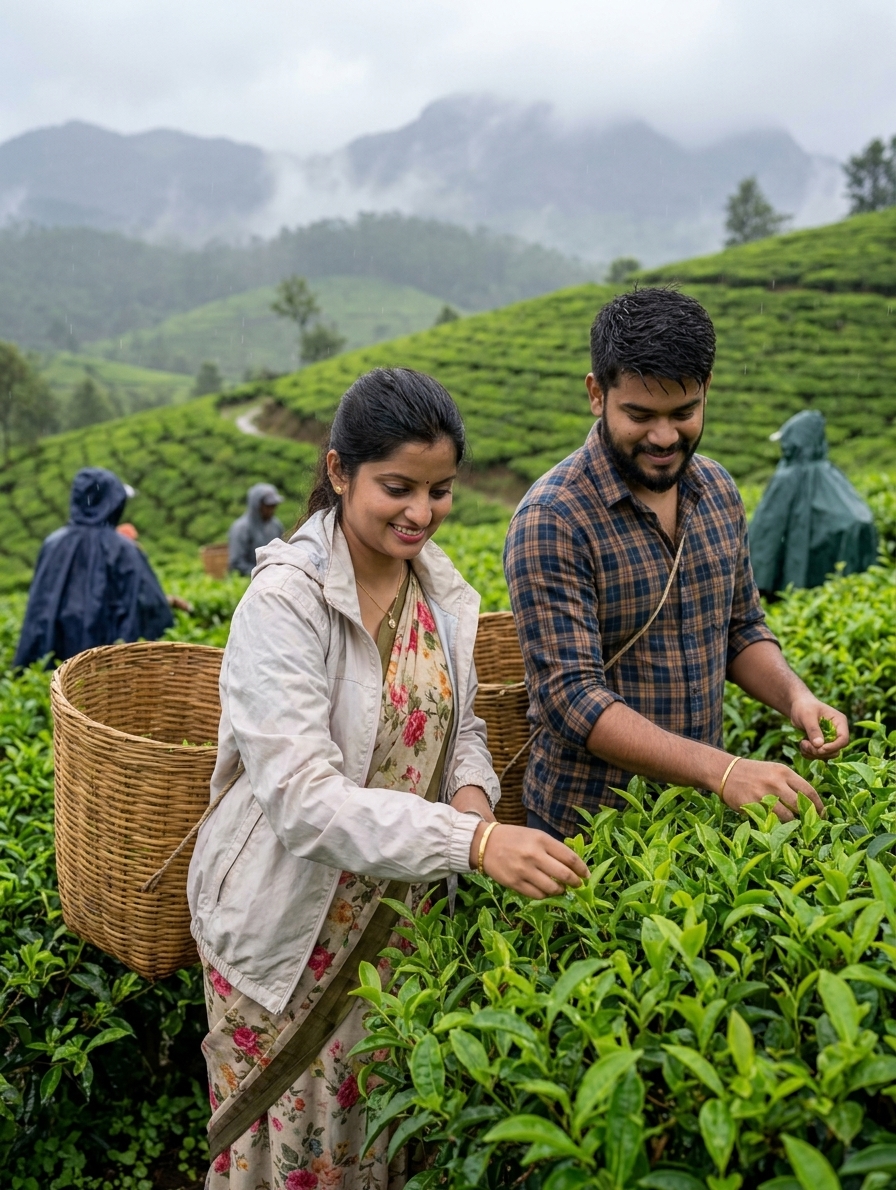
Every travel article about Munnar shows the same thing — endless tea plantations, misty hills, that one curved road through the estate. And you know what? Those photos aren’t misleading. Munnar during monsoon actually looks like that. This is one place where expectation matches reality.
We arrived in late July expecting crowds despite the season. Wrong. The main town was busy, but drive 20 minutes toward Mattupetty or Top Station, and tourist density drops dramatically. One afternoon we spent two hours at a viewpoint overlooking tea gardens, and seven vehicles passed. That’s it.
The Tea Museum near Munnar town explains the entire cultivation and processing cycle, and during monsoon, you see workers actually plucking leaves in the rain, which sounds miserable but apparently produces better flavor according to our guide. Whether that’s true or marketing, I can’t verify, but watching the process while rain drums on the museum roof adds context to every cup of tea afterward.
Here’s the friction point. Munnar’s popularity means even during monsoon, premium resorts charge near-peak rates. We stayed at a mid-range property (₹4,100 per night) that was fine but not worth that price. Meanwhile, a couple we met at Kundala Lake stayed at a homestay 8 kilometers from town for ₹2,200 per night and had a better experience — more space, home-cooked Kerala meals, and the owner arranged a tea estate tour for ₹600 per person that they said was better than the standard museum visit.
Book accommodation away from Munnar town. You’ll save money and get closer to what you came to see anyway.
Roads between Kochi and Munnar are excellent, but the climb gets foggy fast during monsoon. We left Kochi at 11 AM, hit dense fog by 2 PM, and took nearly 4.5 hours for what should be a 3.5-hour drive. Start early or accept slower speeds.
Worth-it factor: The rain enhances Munnar. This is a rare case where monsoon is the better season to visit, not just an acceptable alternative.
Udaipur, Rajasthan – Monsoon in the Desert Is Criminally Underrated
Distance from Ahmedabad: 262 kilometers
Best time to visit: July to September
Budget for 2 people (3 days): ₹13,000-19,000
Nobody thinks “Rajasthan” when planning monsoon trips. That’s exactly why you should.
Udaipur receives modest rainfall compared to coastal or hill destinations — around 550-650mm total for the season. But when rain hits the desert, something shifts. The lakes actually fill (Fateh Sagar, Pichola — they’re often low by May). The Aravalli Hills turn green, which locals tell us lasts maybe six weeks before the brown returns. The marble buildings of City Palace look even more dramatic under grey skies with rain-slicked surfaces.
And here’s the real advantage — you’ll have the city largely to yourself. We visited in August 2025. Lake Palace Hotel boat ride? No wait. City Palace interior? Maybe thirty other people in a complex that holds thousands. Saheliyon ki Bari gardens? We walked the entire space without anyone else in frame for photos.
The temperature drops from unbearable (42-45°C in May) to actually pleasant (28-32°C during monsoon). You can walk around midday without feeling like you’re being microwaved. That alone transforms the experience.
Ketan’s contrarian take: More people should visit Rajasthan during monsoon than winter. Winter is overcrowded, expensive, and honestly not that much cooler than monsoon. July-August Udaipur gives you 73% of the experience at 58% of the cost with 25% of the crowds. Those numbers are estimates, but they feel accurate.
What doesn’t work: Outdoor desert experiences. Camel safaris, desert camping — these mostly shut down or move to different regions during monsoon. If that’s your primary goal, wrong season. But if you’re there for architecture, lakes, and culture, this is actually peak time.
We stayed near Fateh Sagar Lake at a heritage hotel (₹5,800 per night including breakfast). Book hotels with lake views — watching rain hit the water while drinking masala chai from your room is the entire Udaipur monsoon experience in one moment.
Pro tip from our driver: The road from Udaipur to Kumbhalgarh Fort is stunning during monsoon but requires careful driving. Fog rolls in suddenly, and the curves are tight. Worth it for the fort in clouds, though.

Meghalaya – Chasing Rain in the Wettest Place on Earth
Distance from Guwahati: 148 kilometers to Shillong
Best time to visit: June to August (for full monsoon experience)
Budget for 2 people (5 days): ₹22,000-32,000
Let’s be clear upfront. Meghalaya during peak monsoon isn’t for beginners. This is advanced-level monsoon travel. Cherrapunji receives 11,777mm average annual rainfall. Mawsynram holds the world record for wettest place. These aren’t cute monsoon showers — this is rain as a dominant natural force.
We went in August. Day three, it rained continuously for 14 hours. Not on-and-off. Continuous. We stayed in our homestay near Cherrapunji, watching the Nohkalikai Falls swell to probably five times its dry-season width, and simply accepted we weren’t going anywhere that day.
But here’s what happened day four. The rain stopped around 11 AM. We drove to Mawlynnong (Asia’s cleanest village, which actually lives up to the title), and the landscape was so green it looked fake. Living Root Bridges near Nongriat — these are functional bridges grown from tree roots over decades — were surrounded by waterfalls that simply don’t exist in other seasons. Everything dripped, glistened, and looked like a high-saturation film preset, except this was reality.
The challenge nobody mentions: Roads deteriorate fast during heavy rain. We encountered three separate stretches between Shillong and Cherrapunji where sections had partially washed out, and traffic was single-lane with manual coordination. Budget extra time. What Google Maps says is 2 hours might take 3.5 hours.
Accommodation is tricky. Meghalaya doesn’t have the hotel infrastructure of Kerala or Himachal. Most places are homestays or small lodges. We stayed at a place in Laitkynsew (₹2,400 per night) that was basic but clean, with the best hosts we’ve met in any Indian state — they cooked traditional Khasi meals, explained local customs, and treated us like actual guests, not transactions.
Is Meghalaya worth it during peak monsoon? Depends on what you want. If you need guaranteed activities and easy logistics, no. If you want to see rain as a landscape-defining force and don’t mind weather controlling your schedule, absolutely yes.
Best monsoon travel destinations in India include places that challenge you. Meghalaya is one of them. It’s beautiful and uncomfortable in equal measure.
Andaman Islands – Beaches During Monsoon Aren’t What You Expect
Distance from Chennai: 2.5-hour flight to Port Blair
Best time to visit: July to September (yes, really)
Budget for 2 people (5 days): ₹35,000-50,000
Travel forums will warn you away from Andaman during monsoon. “Sea is rough, boats cancel, it rains constantly, beaches are closed.” Some of that is true. Some is exaggerated.
Reality from our September 2025 trip: Yes, some boat services to outer islands reduce frequency or cancel if conditions are bad. Yes, scuba diving and water sports operate on limited schedules. And yes, it rains most days.
But here’s what we found that nobody mentions. Havelock Island (officially called Swaraj Dweep now) in monsoon is quieter than we’ve ever seen a major Indian tourist spot. Radhanagar Beach, which wins “best beach in Asia” lists regularly, had maybe forty people spread across its entire length on a weekday afternoon. That same beach in December or January? Impossible to find an empty photo angle.
The water is rougher, sure. But unless there’s a specific weather warning, swimming is possible — just more dramatic. Waves actually exist, which in calm season they barely do. The rain comes hard, lasts 30-90 minutes, then stops. Clouds clear partially, you get incredible diffused light for photography, then it might rain again.
Samprita’s take: “This feels like we have a private island, except 500 other people are also here having the same private island experience.” She wasn’t wrong. The tourist density is low enough that Andaman stops feeling like a crowded destination and starts feeling like an actual escape.
The data point that surprised us: Hotel prices drop 38-44% during monsoon compared to peak winter season. We stayed at a beachfront resort on Havelock for ₹6,200 per night (breakfast included) that lists for ₹10,500 in December. Same room, same property, ₹4,300 cheaper per night because it’s raining occasionally.
Flight costs also drop. Chennai-Port Blair return tickets were ₹14,800 per person when we booked three weeks ahead. Those same flights in January? Closer to ₹22,000-24,000.
What genuinely doesn’t work: If your Andaman trip is centered on diving, snorkeling, and underwater sports, monsoon might not be ideal. Visibility underwater reduces significantly. Many dive operators close or run limited schedules. But if you’re there for beaches, quiet, seafood, and basic swimming, monsoon is actually better value and less crowded.
One unexpected discovery: The bioluminescent plankton phenomenon at Havelock beaches is more visible during monsoon months. We saw this at night near our resort — disturb the water, and it glows blue. It happens year-round but apparently peaks during certain monsoon conditions. Our resort owner explained the science, which I mostly didn’t understand, but the visual effect was extraordinary.
Spiti Valley – The Gamble Route for Experienced Monsoon Travelers
Distance from Shimla: 412 kilometers
Best time to visit: Late June to mid-August (controversial timing)
Budget for 2 people (7 days): ₹28,000-42,000
This one requires a disclaimer. Most advice says don’t visit Spiti during monsoon. Roads close, landslides happen, access is uncertain. That advice is mostly correct.
But here’s the nuance we learned from three different Spiti trips across different seasons. Spiti Valley itself is a cold desert — it sits in a rain shadow, meaning it receives minimal monsoon rainfall compared to areas just 50 kilometers away. The issue isn’t rain in Spiti. The issue is getting to Spiti through areas that do receive heavy monsoon rain.
The Shimla-Spiti route via Kinnaur gets hit with landslides regularly during monsoon. Sections near Rampur, past Narkanda, around Pooh — these are problem areas. We attempted this route in July 2024 and got stopped at Tapri due to a major slide that closed the road for six days. Six days. We had to turn back, which meant losing three planned days and returning to Shimla.
But here’s what nobody tells you. Once you’re in Spiti, weather is often better than Himachal areas at lower altitude. Kaza, Key Monastery, Kibber, Langza — these places get occasional rain showers, but nothing like the Kullu or Shimla regions. The landscape is stark, dramatic, and the tourist numbers drop so low you’ll have monasteries and viewpoints entirely to yourself.
The alternative route via Manali is equally problematic during monsoon — Rohtang Pass road conditions are unpredictable, and officials sometimes close it entirely.
So why include Spiti in a monsoon destinations list if access is problematic? Because if you have flexible dates, high risk tolerance, and genuinely care about avoiding crowds, monsoon Spiti is one of India’s most unique experiences. Just have a backup plan, extra days buffered, and accept that weather might dictate your schedule completely.
We met a couple from Bangalore who drove to Spiti in late August (when monsoon starts weakening). They said they encountered two road closures, each lasting 4-6 hours, but made it through. Their photos showed Spiti Valley under dramatic clouds with patches of sun — lighting conditions that simply don’t exist in the harsh summer clarity or winter snowscapes.
This isn’t a recommendation for most travelers. But for people who’ve done multiple monsoon trips, have 4WD vehicles or experienced drivers, and want something genuinely off the usual circuit, Spiti during late monsoon is possible. Just barely.
Goa – Beyond Beaches, Monsoon Reveals a Different State
Distance from Pune: 447 kilometers via NH48
Best time to visit: June to September
Budget for 2 people (4 days): ₹12,000-18,000
Everyone knows beach Goa. Almost nobody knows monsoon Goa. And that’s exactly why it works.
The beaches aren’t the draw during rains — swimming is restricted due to rough seas and strong currents. Water sports shut down. Beach shacks close or operate at minimal capacity. If your Goa experience is beach-centric, monsoon is wrong season.
But here’s what emerges when beaches aren’t the focus. The Dudhsagar Falls, which is a decent waterfall in dry season, becomes one of India’s most powerful cascades during peak monsoon. Getting there requires a jeep ride through Bhagwan Mahavir Wildlife Sanctuary, and during heavy rain, even that closes. But mid-monsoon (late July to August), it’s accessible most days, and the volume of water is genuinely impressive.
The spice plantations near Ponda offer monsoon-specific tours. We did one at Sahakari Spice Farm (₹600 per person including traditional Goan lunch). The guide explained how rain impacts different spice crops — too much floods pepper vines, too little stresses cardamom, and vanilla requires very specific moisture balance. I retained maybe 30% of that information, but walking through a spice plantation in light rain, everything smelling amplified and earthy, was worth the entrance fee alone.
Old Goa churches — Basilica of Bom Jesus, Se Cathedral — are less crowded during monsoon, and the Portuguese architecture looks more dramatic under grey skies. This sounds like a minor point, but when you can actually photograph these UNESCO sites without 200 people in frame, the experience shifts.
Where monsoon Goa genuinely wins: Accommodation prices. A beach resort in North Goa that charges ₹8,500 per night in December lists for ₹3,200 in July. We stayed at a boutique place in Panjim (₹4,100 per night with breakfast) that would be ₹9,000+ in peak season. Same rooms, same service, less than half the cost.
The food scene doesn’t pause for monsoon. Fish thali at a local restaurant near Margao (₹280 per person) tasted identical to what we had in January. Bebinca from a bakery in Panjim (₹380 for a small loaf) was fresh and perfect. Goa’s culinary infrastructure doesn’t really have an off-season.
Real friction we encountered: The drive from Pune to Goa during heavy monsoon is exhausting. The highway through the Western Ghats — specifically the stretch past Kolhapur and through Amboli Ghat — gets foggy, wet, and slow. What should be a 7.5-8 hour drive took us 10.5 hours. Start very early or split the journey.
Contrarian opinion from Ketan: Goa’s identity crisis works in your favor during monsoon. It’s trying to be both a beach destination and a cultural/heritage destination. In peak season, beaches dominate and everything else feels secondary. In monsoon, beaches step back, and suddenly you notice the state has other dimensions. That accidental rebalancing makes monsoon Goa more interesting than winter Goa for certain types of travelers.
Alleppey, Kerala – Backwaters in Rain Are Moody and Magnificent
Distance from Kochi: 53 kilometers
Best time to visit: June to September
Budget for 2 people (2 days including houseboat): ₹9,000-15,000
The Alleppey backwaters during monsoon divide travelers into two camps. Camp one says it’s the worst time — rain disrupts houseboats, visibility is poor, you can’t sit on the deck. Camp two says it’s the best time — fewer tourists, lush scenery, dramatic skies, lower prices.
We’re firmly in camp two.
The houseboat experience changes during monsoon, no question. You’re not sunbathing on the deck. You’re sitting inside, watching rain hit the water, moving slowly through canals that are greener and fuller than any other season. Some people find this boring. We found it meditative. Samprita read two books during our overnight houseboat trip. I spent probably three hours just watching the landscape slide past. That pace isn’t for everyone, but if you’re genuinely trying to unwind, forced slowdown is helpful.
The food on houseboats remains excellent regardless of season. Our boat crew cooked traditional Kerala meals — fish curry, appam, vegetable thoran — that were better than what we’d eaten at most restaurants. Cost for 24-hour houseboat including all meals: ₹8,200 for two people (booked directly through a local operator, not online platforms).
What surprised us: The bird activity during monsoon is significantly higher than winter. Our boat driver (who’d worked houseboats for 11 years) said migratory patterns and breeding season overlap with early monsoon. We saw kingfishers, cormorants, and several species I couldn’t identify. He pointed them out constantly, which made the trip feel more like a nature experience than a tourist activity.
The backwater villages look different during monsoon. Houses on stilts make more sense when you see water levels rise. Rice paddies are bright green and waterlogged. Everything glistens. The lighting is softer, which isn’t great for harsh, contrasty photos but perfect for moody, atmospheric shots.
One practical detail most articles skip: Bring mosquito repellent. Monsoon means more standing water, which means more mosquitoes. Our houseboat had nets and coils, but personal repellent helped, especially during dawn and dusk.
Alleppey town itself isn’t particularly charming, but the beach stretches north and south are emptier during monsoon and worth walking if rain pauses. We did a sunset walk along Marari Beach (about 15 kilometers from Alleppey town) on an evening when clouds partially cleared. Maybe ten other people on the entire visible beach. That’s unthinkable in peak season.
Worth-it verdict: If you want active water sports and sunny deck lounging, skip monsoon. If you want quiet, reflective backwater time with solid food and lower costs, monsoon is actually ideal.
Valley of Flowers, Uttarakhand – Peak Bloom Happens in Monsoon
Distance from Rishikesh: 271 kilometers to Govindghat (base point)
Best time to visit: Late July to early September
Budget for 2 people (4 days): ₹16,000-23,000
This is the only entry on this list where monsoon isn’t an alternative season — it’s the only season that works. Valley of Flowers blooms during monsoon. Outside this window, it’s just a pretty valley. During late July to early August, it’s carpeted with 300+ species of alpine flowers.
The catch? Getting there during monsoon requires dealing with typical Uttarakhand monsoon issues — landslides on the Rishikesh-Joshimath route, leeches on the trek, rain that can be intense and unpredictable.
We trekked to Valley of Flowers in early August 2025. Day one, trek from Govindghat to Ghangaria (14 kilometers, mostly uphill) in light drizzle that turned into heavy rain for the last hour. Arrived soaked despite raincoats. Day two, trek from Ghangaria to Valley of Flowers and back (11 kilometers round trip) in mixed weather — sun, clouds, brief rain showers. Day three, rest day in Ghangaria because it rained heavily overnight and trails were muddy.
But the valley itself? Worth every uncomfortable moment getting there. The flower density is extraordinary — blue poppies, brahmakamal, epilobiums, primulas, orchids — covering entire slopes in color patterns that don’t look real. We’re not botany experts, but even with zero knowledge, the visual impact is stunning.
The trek difficulty is moderate if you’re reasonably fit. The altitude (Ghangaria sits at 3,050 meters, valley itself around 3,350 meters) affects some people. We felt minor breathlessness but nothing serious. The bigger challenge is the continuous uphill on day one, which is steep in sections.
Accommodation in Ghangaria is basic lodges and guesthouses. We stayed at a simple place (₹1,400 per night, shared bathroom) that was exactly as bare-bones as it sounds. But everyone is there for the same reason, there’s a collective camping vibe despite being in permanent structures, and somehow it works. Food options are limited — mostly dal-rice-roti-vegetables at small dhabas. It’s fine. You’re not there for culinary experiences.
Important detail: Valley of Flowers National Park charges entry fees (₹150 per person for Indians, plus ₹600 camera fee if you’re carrying DSLR). They track entry and exit times, and you must exit before closing time (typically 5 PM). Rangers are strict about this.
The best monsoon travel destinations in India aren’t always the easiest. Valley of Flowers is challenging logistically, physically demanding, and weather-dependent. It’s also one of the most spectacular natural sights we’ve encountered in the country. If you can handle basic accommodations and uncertain weather, prioritize this.
Planning Your Monsoon Trip – Real Logistics That Actually Matter
Most monsoon travel guides end with generic packing lists. Here’s what actually matters from our combined experience across 17 monsoon trips in various Indian regions.
Timing Within Monsoon Season Makes Huge Differences
Early monsoon (June-early July): Heaviest rainfall, highest landslide risk, most road closures, but also emptiest destinations and lowest prices.
Mid monsoon (mid July-August): Rainfall continues but becomes more predictable, landscapes are at peak greenery, moderate tourist numbers.
Late monsoon (September): Rain reduces significantly, better road conditions, prices start climbing, still less crowded than peak season.
We’ve learned through expensive mistakes that late monsoon (September) offers the best balance for most travelers — you still get green landscapes and waterfalls, but with better weather reliability and access.
Insurance and Flexibility Are Non-Negotiable
Trip insurance that covers weather-related cancellations and delays is worth buying for monsoon travel. We didn’t have it for our first Spiti attempt. Lost ₹14,000 in non-refundable bookings when roads closed. Learned that lesson permanently.
Book refundable accommodation whenever possible, even if it costs slightly more. Fixed bookings during monsoon are gambling. Weather might force plan changes, and losing advance payments hurts.
Vehicle Choice Matters More Than You Think
Sedan cars work fine for: Lonavala, Munnar, Coorg, Udaipur, Goa (highways).
SUVs or higher ground clearance needed for: Meghalaya, Spiti, Valley of Flowers access roads, interior Goa routes.
Avoid two-wheelers during peak monsoon in hill stations — visibility is poor, roads are slippery, and you’ll be miserable. We’ve seen too many riders struggling on ghat sections.
What Actually Goes in Your Bag
Skip the 40-item packing checklist. Here’s what we actually used repeatedly:
Two sets of quick-dry clothing (jeans take forever to dry in humid weather — avoid)
One solid raincoat per person (ponchos are useless in wind)
Waterproof bag or dry bag for electronics and documents
Extra pair of shoes (one pair will be wet constantly)
Small microfiber towel (regular towels don’t dry between uses)
Mosquito repellent (non-negotiable)
Basic medicines including anti-nausea (for winding roads) and anti-diarrheal
Power bank (charging opportunities reduce when you’re out all day)
Everything else is optional. Don’t overpack.
The Cost Reality Nobody Explains Clearly
Monsoon travel is cheaper on accommodation and sometimes transport, but hidden costs appear. Roads take longer (more fuel, more time). Activities cancel (you pay for backup plans). Food options reduce in remote areas (you eat at hotel restaurants charging premium). Laundry takes forever to dry (you buy extra clothes or pay for hotel laundry).
Overall, we save maybe 23-28% on monsoon trips compared to peak season for the same destinations. That’s real savings, but it’s not half-price like some blogs suggest.
Photography in Rain Requires Different Approaches
Phone cameras handle rain better than DSLRs for casual shooting. Keep your primary camera packed unless conditions are clearly safe.
Invest in a basic rain sleeve for cameras if you’re serious about photography. We use simple plastic ones (₹380 for a set of two) that work fine.
The best photos during monsoon come during breaks in rain when light is diffused and dramatic — not during the rain itself.
Frequently Asked Questions
Is it safe to travel during monsoon in India?
Safety during monsoon travel depends entirely on destination choice, timing, and preparation. Well-developed hill stations like Lonavala or cities like Udaipur are completely safe with proper planning. Remote areas with poor road infrastructure (parts of Uttarakhand, Himachal) carry higher risks including landslides and road closures. We’ve traveled extensively during monsoon and found most risks are manageable with flexible schedules, weather monitoring, and avoiding unnecessary risks like river crossings or closed trekking routes. Check weather forecasts daily, listen to local guidance, and have backup plans for every activity.
Which state in India is best to visit during monsoon?
Kerala stands out as the most consistently rewarding monsoon destination. The entire state transforms during rains — backwaters swell, waterfalls peak, landscapes turn intensely green, and the temperature becomes comfortable compared to scorching summers. Kerala also has excellent tourism infrastructure that operates year-round, unlike some hill stations that partially shut down during monsoon. That said, Meghalaya offers the most dramatic monsoon experience if you want rainfall as the main event, while Goa provides the best value with off-season pricing and reduced crowds.
What are the best places to visit during monsoon for couples?
For couples specifically, we’d recommend Coorg for romantic homestays surrounded by coffee plantations, Alleppey for intimate houseboat experiences, Lonavala for convenient weekend escapes, and Udaipur for heritage ambiance without crowds. These destinations balance romantic atmosphere with practical considerations like good accommodation options, manageable travel distances, and activities that work in rain. Avoid destinations requiring extensive trekking or camping during monsoon for your first couple’s trip — start with places offering comfortable indoor options when weather turns challenging.
How much does a typical monsoon trip cost in India?
Budget varies widely by destination and travel style. A weekend trip to nearby hill stations like Lonavala runs ₹6,000-9,000 for two people (including transport, one night stay, meals). Multi-day trips to Kerala, Coorg, or Goa range ₹12,000-20,000 for two people for 3-4 days. Remote destinations requiring flights like Andaman push costs to ₹35,000-50,000 for 5 days. Monsoon typically reduces accommodation costs by 25-40% compared to peak season, but factor in slower travel times requiring more fuel, potential activity cancellations, and limited dining options in some areas that increase food costs.
What should I pack for monsoon travel in India?
Pack two sets of quick-dry synthetic clothing (avoid cotton and jeans that stay wet), one quality raincoat per person with hood, waterproof bag for electronics, extra pair of footwear with good grip, small microfiber towel, mosquito repellent, basic medicines including anti-nausea tablets, power bank, and plastic bags to separate wet and dry items. Most importantly, pack patience and flexibility — monsoon travel requires adapting to weather changes. We’ve found that overpacking is a bigger problem than underpacking. Most destinations have markets where you can buy forgotten items if needed, but carrying excess wet clothing becomes a burden quickly.
Ready to Chase the Monsoon Instead of Avoiding It?
Monsoon travel destinations India offers aren’t compromises or backup plans. They’re legitimate, often superior alternatives to overcrowded peak season tourism. You’ll get soaked occasionally. Some days won’t go as planned. Roads will be slower, views will be cloudier, and weather will control more of your schedule than you’re used to.
But you’ll also save significant money, avoid overwhelming tourist crowds, see landscapes at their absolute greenest and most dramatic, and experience India in a season most international tourists completely skip. That’s not a consolation prize — that’s a genuine advantage for travelers who value authenticity over convenience.
Ketan and Samprita from Musafir Couple have spent four consecutive monsoon seasons exploring India’s rainy destinations, documenting real costs, failed plans, unexpected discoveries, and honest recommendations. We don’t show picture-perfect Instagram versions — we show what actually happens when you travel during the wettest season in one of the world’s most diverse countries.
Want detailed route guides, real accommodation recommendations, or honest answers about specific monsoon destinations? Connect with us through Musafir Couple. We share complete trip breakdowns including actual costs, GPS coordinates for hidden spots, weather timing insights, and the kind of practical information you need when Google Maps stops being useful and local knowledge becomes essential.
Stop waiting for perfect weather. The monsoon is already perfect for travelers willing to embrace it.