
 by
by Scenic Drives India: 7 Routes That Changed How We See Road Trips
Meta Description
Discover India’s most stunning scenic drives from couples who’ve driven them. Real costs, road conditions, and honest reviews of beautiful highways India offers in 2026.
Full Article
Scenic Drives India: Routes That Redefine What Beautiful Highways Actually Mean
Most people think scenic drives mean perfect tarmac winding through postcard landscapes. That’s Instagram talking.
Real scenic drives in India? They’re about that moment when Ketan had to reverse 200 meters on a single-lane mountain road because a truck appeared around a blind curve. They’re about Samprita spotting a hidden waterfall that wasn’t on any map. They’re about arguing over whether to stop at yet another viewpoint because the light is just too good.
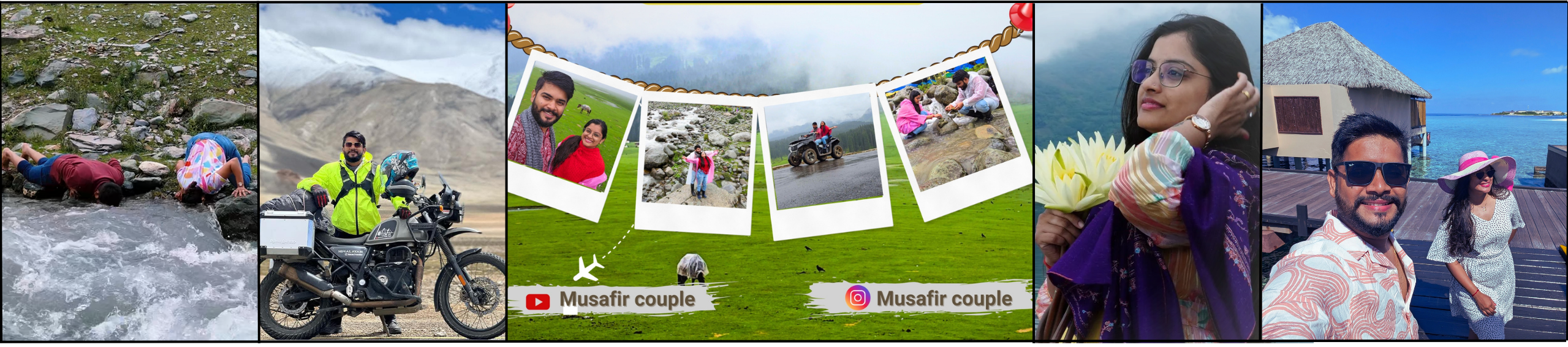
We’ve driven 47,000 kilometers across India together as Musafir Couple. Tested routes that travel blogs call “breathtaking” but turn out to be pothole nightmares. Found roads that nobody talks about but deserve their own documentary. Here’s what actually qualifies as a scenic drive worth your fuel money, time, and the inevitable couple banter that comes with navigation disagreements.
What Actually Makes a Scenic Drive Worth It vs What Travel Blogs Won’t Tell You
Here’s the truth most people skip: a beautiful highway in India isn’t just about views.
The Leh-Manali Highway gets all the glory. Deservedly so — it’s stunning. But it’s also closed seven months a year, costs ₹85,000 for a week-long trip for two people, and requires altitude acclimatization that can ruin three days if you rush it. Nobody mentions that the “scenic” parts are about 40% of the route. The rest is long stretches of brown mountainside and military checkpoints.
Compare that to the Pune to Mahabaleshwar route via Panchgani. It’s 120 kilometers. Costs ₹1,200 in fuel for a sedan. Takes three hours if you don’t stop, six hours if you do it right. The entire route is scenic. Every curve reveals something — strawberry farms, valleys dropping away suddenly, the Krishna river silver in the distance, table-top mountains that look unreal.
One is iconic. The other is actually more enjoyable as a pure driving experience.
That’s the comparison most road trip content won’t make. We learned this after our Kanyakumari drive where we chased “epic coastal views” for 14 hours and got maybe 45 minutes of actual coastline visibility. The rest was inland highways and truck traffic.
A genuinely great scenic drive needs four things: consistency of views (not just two good spots), road quality that lets you enjoy the scenery instead of dodging craters, accessibility without requiring expedition-level planning, and enough pitstops for food and fuel. Miss any of those, and you’re just driving far to take photos at one spot.
The Mumbai-Goa Highway: Where Everyone Goes Wrong With NH66
This is India’s most-driven scenic route. It’s also the most misunderstood.
Most people do it wrong. They take the new NH66 expressway because it’s faster — four hours from Panvel to Goa border. Smooth, sure. Scenic? Not even close. You’re on an elevated highway looking at nothing but tree tops and the occasional glimpse of a valley.
The old Mumbai-Goa highway via Khed, Chiplun, and Sawantwadi is slower by two hours. It’s also a completely different experience. That’s where the actual scenic drives India is known for reveal themselves — not on expressways, but on the roads that hug the Western Ghats instead of cutting through them.
We’ve done both. Three times. The expressway wins if you just want to reach Goa. The old highway wins if the drive itself matters. You’re passing through Ratnagiri with glimpses of the Arabian Sea, winding through mango orchards in Devgad, stopping at small dhabas where the fish curry tastes like someone’s grandmother made it.
Fuel cost for a sedan: ₹3,800 via expressway, ₹4,200 via old route. Toll difference: ₹500 more on expressway. Time difference: two hours. Experience difference: can’t be measured in hours.
Here’s the nuance: the expressway works for your first Goa trip when you’re excited to just get there. Take the old highway on your third or fourth trip when you’ve already seen the beaches and want to understand why this coastline has inspired centuries of traders, travelers, and poets.
Shimla-Kinnaur Highway: The Route That Actually Delivers What Manali-Leh Promises
This is the scenic drive in India that doesn’t get enough credit outside driving enthusiast circles.
Most people head to Manali-Leh for Himalayan road trip glory. We went to Kinnaur because a fellow traveler in Pune told us it’s “Leh without the crowd and half the cost.” He was right. Sort of.
The Shimla-Kinnaur highway via NH5 runs from Shimla to Reckong Peo and beyond to Chitkul (India’s last inhabited village near the Tibet border). It’s 267 kilometers of consistently stunning mountain driving. The Sutlej river follows you for most of the route, sometimes hundreds of feet below, sometimes right next to the road.
Road quality: surprisingly good. Freshly tarred in most sections as of 2026, with only small patches of rough road near landslide-prone zones. We drove it in our Hyundai Creta without any ground clearance issues.
What makes this route special compared to other beautiful highways India offers: it starts scenic and stays scenic. No long boring stretches. Every 15 minutes you’re stopping because Samprita spotted a monastery clinging to a cliff, or a waterfall cutting through rock, or a village that looks like it hasn’t changed in 200 years.
Cost breakdown for 4-day trip from Chandigarh (nearest major city):
- Fuel: ₹6,800 for sedan (round trip)
- Tolls: ₹340
- Accommodation in Reckong Peo: ₹2,500 per night for decent hotel
- Food: ₹1,800 per day for two people
- Inner line permits (required for certain areas): ₹100
Total: approximately ₹18,000 for a comfortable trip. Compare that to ₹75,000-₹90,000 for Manali-Leh.
The failure we had: underestimating how early shops close in mountain villages. We reached Kalpa at 8 PM assuming we’d find dinner easily. Everything was shut. Ended up eating Maggi at a small dhaba that took pity on us. Lesson learned: mountain scenic routes aren’t cities. Plan meal stops before 7 PM.
Agumbe Ghat: The Western Ghats Route Nobody Outside Karnataka Knows About
This is where driving skill actually matters, not just car capability.
Agumbe Ghat connects coastal Karnataka to the interior via one of the steepest, most technically challenging roads in South India. It’s only 12 kilometers. Takes 45 minutes to drive. Will test your clutch control, hill starts, and ability to reverse on 15-degree inclines when you meet a bus on a curve.
Why it’s on this list: because it’s the most beautiful 12 kilometers we’ve driven in India. Period.
The road cuts through rainforest so thick that sunlight barely reaches the tarmac. It’s called “Cherrapunji of the South” — receives over 7,000mm of annual rainfall. During monsoon (June to September), the entire route is draped in mist, with waterfalls appearing on cliff faces that were dry a month ago.
We drove it in October post-monsoon. The forest was alive. Every shade of green existed on this one road. The smell of wet earth and some flower we couldn’t identify filled the car every time we slowed for a hairpin bend — and there are 14 of them.
Here’s the contrarian take: this isn’t a road for long drives. It’s a road to drive slowly, stop frequently, and respect completely. We saw three accidents in two days — all from people driving too fast for conditions. The locals drive it like they’re meditating. You should too.
Access: Best approached from Udupi (47 kilometers away) or Mangalore (103 kilometers). Stay in Agumbe village itself — there are 4-5 homestays charging ₹1,500-₹2,500 per night. Drive the ghat in morning light, then again in evening light. It’s completely different experiences.
Not recommended during heavy monsoon unless you’re experienced with mountain driving in rain. The mist reduces visibility to 10 meters sometimes, and the road edge isn’t always visible.
The Kolkata-Darjeeling Route: For When Scenic Drives Need a Side of Culture
This is the long one. 808 kilometers. Takes 8-10 days to do properly.
Most people fly to Bagdogra and drive the last 90 kilometers to Darjeeling. They miss the entire point. The journey from Kolkata through the plains, gradually climbing into foothills, then suddenly into steep mountains — that transition itself is the experience.
The route breaks into clear phases:
Kolkata to Siliguri (565 kilometers): Mostly highway driving through rural Bengal. Not particularly scenic but culturally rich. We stopped at roadside spots selling fresh rosogolla and sandesh that put Kolkata sweet shops to shame. This section is about understanding the landscape before mountains interrupt everything.
Siliguri to Darjeeling (79 kilometers): The payoff. You’re gaining altitude fast — from 400 feet to 6,700 feet in under 80 kilometers. The road is the famous Hill Cart Road (now called Tenzing Norgay Road), with 4-5 hours of constant climbing, hairpins, and views that expand by the minute.
The optional detour — Yuksom addition (164 kilometers from Darjeeling): If you have time, continue to Yuksom in Sikkim. This adds the Teesta river drive, which is one of India’s most underrated scenic stretches. The river is violent and beautiful, crashing through gorges while the road clings to cliff sides.
We did the full route including Yuksom. Eight days. Cost for two people:
- Fuel: ₹8,900 (sedan, multiple stops for exploration)
- Accommodation: ₹16,000 (mix of homestays and mid-range hotels)
- Food: ₹7,200
- Entry permits for Sikkim: ₹200
- Miscellaneous (parking, tips, monastery donations): ₹1,800
Total: ₹34,100 for 8 days, 1,200+ kilometers.
The data-driven nuance: Most people assume flying is only slightly more expensive. It’s not. Two return flights Kolkata-Bagdogra cost ₹18,000-₹24,000 depending on season. You still need 3-4 days in Darjeeling. You still rent a car for local trips (₹3,500-₹4,000 for 2-3 days). By the time you add it up, you’ve spent ₹30,000-₹35,000 and missed 700 kilometers of beautiful highways India hides in the eastern corridor.
The drive wins on cost and experience. Flying wins on time. Choose based on what you’re actually optimizing for.
Pune to Goa via Amboli: The Route That Fixes Mumbai-Goa Highway’s Mistakes
We mentioned earlier how NH66 expressway kills the scenic potential of Mumbai-Goa. Here’s the alternative that delivers what that route should have been.
Pune to Goa via Amboli is 367 kilometers. Takes 8-9 hours. Passes through Satara, Kolhapur, and the Amboli Ghat — one of Maharashtra’s most stunning but least-known mountain passes.
The route breakdown:
- Pune to Kolhapur (233 kilometers): Highway driving through rural Maharashtra. Decent road, nothing spectacular. Stop at Kolhapur for lunch — the mutton thali culture here is serious.
- Kolhapur to Amboli (86 kilometers): The landscape changes. You start climbing into the Sahyadri range. The road quality drops slightly but becomes infinitely more interesting.
- Amboli Ghat to Goa border (48 kilometers): This is what scenic drives India should mean by default. Dense forest, mist even in winter, viewpoints every 5 kilometers, and the road descending in lazy curves instead of aggressive hairpins.
We drove this in January 2024 (testing for monsoon planning). Even in dry season, the forest canopy on Amboli Ghat creates a tunnel effect. In monsoon — June to September — this becomes one of Maharashtra’s wettest spots. Waterfalls everywhere. The mist is so thick you’re driving at 20 kmph maximum.
Cost comparison with NH66 expressway route:
- Fuel: ₹3,600 (vs ₹3,800 via expressway)
- Tolls: ₹280 (vs ₹780 via expressway)
- Time: 8-9 hours (vs 6 hours via expressway)
- Accommodation option: Stay overnight in Amboli (₹2,000-₹3,500 for good resort), break journey into two comfortable days
The friction we encountered: navigation apps kept trying to reroute us back to NH66 expressway. Google Maps doesn’t understand that “fastest route” isn’t always the right route. We had to manually select via-points to force it through Amboli.
As Musafir Couple, we’ve driven both routes four times now. We take expressway when we’re rushing to Goa for specific work. We take Amboli route when the drive is the point. That clarity saves a lot of regret later.
The Overlooked Winner: Lakeview Plots Near Mulshi to Tamhini Ghat Circuit (Pune)
This isn’t a long drive. It’s barely 140 kilometers round trip from Pune. But kilometer-for-kilometer, it might be the highest scenic-value drive in Western India.
Most people don’t consider this a “road trip” because it’s too close to Pune. That’s exactly why it works. You can do this on a random Saturday, be back by evening, and experience what people travel to Himalayas for — minus the altitude and budget.
The loop: Pune → Mulshi Lake → Tamhini Ghat → Mulshi Dam → Pune.
Mulshi has become famous recently for lakeview farmhouse plots and weekend homes. The drive around the lake — especially the stretch from Mulshi village to Panshet — is stunning. The lake is massive, with fingers of water cutting into valleys. The road sometimes hugs the shoreline, sometimes climbs hills with the lake spreading below.
Tamhini Ghat is the hidden gem. It’s a 22-kilometer ghat section that connects Mulshi plateau to the coastal side. During monsoon, this becomes one of India’s most dramatic drives — waterfalls crossing the road, mist so thick you can’t see 5 meters ahead, and a completely deserted feel because most people are too scared to drive it in heavy rain.
We’ve done this loop 11 times. Yes, eleven. It’s that close and that good.
Ideal timing:
- Post-monsoon (October-November): Waterfalls still flowing, greenery at peak, weather perfect for driving with windows down
- Monsoon (July-August): Dramatic and misty, but requires confident mountain driving
- Winter (December-February): Clear views, pleasant weather, but waterfalls reduced to trickles
Cost for a day trip from Pune:
- Fuel: ₹580 for sedan
- Breakfast/lunch: ₹900 for two at decent spot in Mulshi
- Photography stops: Free (multiple marked viewpoints)
- Total: ₹1,500 for a full day
The contrarian opinion: You don’t need to travel 500 kilometers for picturesque routes India offers. Some of the most consistent scenic drives are 2-3 hours from major cities. They don’t have the bragging rights of “I drove to Ladakh,” but they have something better — repeatability. We can do Tamhini Ghat on a whim. That changes how you think about road trips entirely.
What Route Comparisons Miss: Weather Timing Changes Everything
Here’s what nobody talks about clearly enough: the same scenic drive in different seasons is basically a different road.
We drove Lonavala-Khandala stretch (part of the Mumbai-Pune expressway old route) in August 2025 during peak monsoon. It was gorgeous — waterfalls everywhere, mist creating mystery on every curve, lush greenery making the hills look computer-generated.
Same route in April 2026. Completely different. Waterfalls gone. Greenery reduced to brown and tan. Still pleasant as a drive, but not remotely the same experience. If someone went in April based on our August recommendation, they’d think we lied.
This matters more than most travel content acknowledges. Beautiful highways India is famous for often depend entirely on when you drive them.
Month-by-month breakdown for maximum scenic value:
June-September (Monsoon): Western Ghat routes peak — Amboli, Tamhini, Agumbe, Lonavala. Risk: heavy rain can close roads temporarily, reduce visibility dangerously. You need mountain driving experience.
October-November (Post-monsoon): Best time for most routes. Water still flowing, weather stable, roads dried but views still green. This is when we schedule our longest trips.
December-February (Winter): Himalayan routes difficult or closed. Western Ghats pleasant but waterfalls minimal. Good for: coastal drives like Mumbai-Goa old highway, Konkan coast routes.
March-May (Summer): Lowest scenic value for most routes. Everything’s dry. Hill stations get crowded with heat refugees. Only advantage: certain high-altitude roads open up that were snow-blocked earlier.
We learned this the expensive way. Planned a “monsoon scenic drive” series in July 2024. Spent ₹42,000 on fuel and accommodation over two weeks. Could only complete 60% of planned drives because roads were closed or too dangerous. Had to reschedule everything for October. That ₹42,000 could’ve been ₹28,000 with better timing.
Timing isn’t a small detail. It’s the difference between a drive you’ll remember for years and one you’ll forget by next month.
The Real Cost of Scenic Drives Most Calculators Won’t Show You
Fuel and tolls are easy to calculate. It’s everything else that surprises people.
Take a typical 4-day scenic road trip in India — let’s say Pune to Goa via Amboli, with stops. Most cost calculators show:
- Fuel: ₹3,600
- Tolls: ₹280
- Accommodation: ₹8,000 (₹2,000 x 4 nights)
- Food: ₹3,600 (₹900 per day)
- Total: ₹15,480
Seems reasonable. Here’s what actually happens:
- Fuel: ₹3,600 (accurate)
- Tolls: ₹280 (accurate)
- Accommodation: ₹9,500 (you upgrade one night because the cheap hotel looked sketchy)
- Food: ₹5,200 (you stop at viewpoints with cafes, try local specialties, eat at nicer places than planned)
- Parking at various spots: ₹400
- Inner line permits if crossing state borders: ₹200
- Emergency expenses (we had a tire puncture): ₹600
- “Let’s just buy this local product” purchases: ₹1,800
- Actual total: ₹21,580
That’s 39% over budget. Not because you were reckless. Because scenic drives involve spontaneous decisions — stopping at that pottery village you didn’t plan for, eating at the hilltop restaurant because the view is too good to skip, staying an extra night because you’re exhausted and don’t want to drive tired.
We now budget 35-40% above the “calculator cost” for any road trip over 3 days. That buffer has saved multiple trips from becoming stressful when unexpected expenses hit.
The data nobody talks about: tire wear. A 2,000-kilometer road trip with mountain driving reduces your tire life by approximately 8-12% depending on road quality and driving style. That’s ₹3,000-₹4,500 in depreciation you won’t notice until months later when you need new tires earlier than expected.
Similarly, mountain driving is harder on brakes, suspension, clutch (if manual). These costs are invisible during the trip but real over time. If you’re doing serious scenic drives regularly — over 15,000 kilometers a year on mountain roads — your maintenance costs can be 40-50% higher than plain highway driving.
Not saying don’t do it. Just budget honestly. A ₹20,000 road trip costs ₹25,000 when you include everything. A ₹50,000 trip costs ₹62,000. Know that going in.
Frequently Asked Questions
What is the most scenic drive in India for first-time road trippers?
The Pune to Mahabaleshwar route via Panchgani is ideal for beginners. It’s only 120 kilometers, has excellent road quality, offers consistent views throughout, and can be completed in a day trip. Fuel costs around ₹1,200 for a sedan, with no complex permits needed. The route has multiple safe stops, good food options, and cell network coverage throughout — unlike remote Himalayan drives where help is hours away if something goes wrong.
When is the best time to drive scenic routes in Western Ghats?
October and November offer the best combination of factors for scenic drives in Western Ghats. Waterfalls are still flowing from monsoon rains, greenery is at peak, roads have dried from monsoon damage, and weather is stable for safe driving. Monsoon months (June-September) are dramatically beautiful but require experienced mountain driving and acceptance that some routes may close temporarily due to landslides or heavy rain.
How much does a 7-day scenic road trip across India typically cost for a couple?
A comfortable 7-day scenic road trip covering 1,500-2,000 kilometers costs ₹35,000-₹48,000 for a couple in 2026. This includes fuel (₹7,000-₹9,000), mid-range accommodation (₹2,500-₹3,500 per night), food (₹1,200-₹1,500 per day), tolls (₹800-₹1,500 depending on route), and 35% buffer for spontaneous stops and unexpected expenses. Budget trips can be done for ₹25,000-₹30,000 by choosing homestays over hotels and cooking some meals.
Are scenic drives in Himalayas better than Western Ghats routes?
They’re different, not better. Himalayan routes like Shimla-Kinnaur offer dramatic altitude changes, barren mountain beauty, and cultural experiences in remote villages. Western Ghat routes like Amboli or Agumbe offer dense forest, waterfalls, and biodiversity. Himalayas require more planning, higher budgets (typically 40-50% more expensive), and specific season windows. Western Ghats are more accessible, can be enjoyed year-round with season adjustments, and offer better food options along routes. Choose based on what kind of landscape moves you, not which is “better.”
Do I need a 4×4 vehicle for scenic drives in India?
No, for 80% of scenic drives in India a well-maintained sedan works perfectly fine. Routes like Mumbai-Goa, Pune-Mahabaleshwar, Shimla-Kinnaur, Kolkata-Darjeeling, and even Leh-Manali can be done in sedans with decent ground clearance. 4×4 becomes necessary only for off-road exploration beyond main routes, or extremely remote areas during monsoon. We’ve completed most routes mentioned in this article in our Hyundai Creta (not a hardcore 4×4). Good driving skills matter more than vehicle type for 90% of beautiful highways India offers.
Plan Your Next Scenic Drive With Real Couple Experience
Most travel guides list routes. We drive them, argue about which turn to take, discover the chai shop nobody mentioned, and figure out the real costs after the trip is over.
That’s what Musafir Couple brings to every destination we cover. We’re not professional drivers or photography influencers making everything look easy. We’re Ketan and Samprita from Pune, who genuinely love discovering picturesque routes India hides between the famous destinations. Sometimes the drive goes perfectly. Sometimes we get lost. Sometimes the “hidden gem” everyone talked about turns out to be overcrowded. We share it all — the good, the confusing, and the “worth it or not” verdict.
If you’re planning a road trip and want honest input from people who’ve actually driven the route — not just researched it online — reach out to us through our Musafir Couple channel. We’re always testing new scenic drives, updating costs, and learning which timing works best for which route.
Because the best scenic drives India offers aren’t always the famous ones. Sometimes they’re the Saturday morning 150-kilometer loop that becomes your reset button from city chaos. Sometimes they’re the 800-kilometer journey that teaches you more about the country than any textbook. You just need someone who’s driven both to tell you which is which.
Start planning. Check weather. Budget 35% above the calculator. And remember — the best road trips are measured in moments noticed, not kilometers covered.
