


 by
by Europe doesn’t have to cost a fortune. That’s the lie budget travel Europe blogs keep perpetuating — showing you Paris and Amsterdam while calling it “affordable.” Here’s what actually works: skip the obvious cities, hunt for the places where €30 still gets you a decent meal, a bed, and maybe a beer or two.
We’ve watched travel costs spike across Europe in the last two years. What used to be cheap — Prague, Budapest, even Lisbon — has gotten pricier. But not everywhere. Some cities remain stubbornly affordable, and a few have actually gotten better for budget travelers as the euro fluctuates and local economies shift.
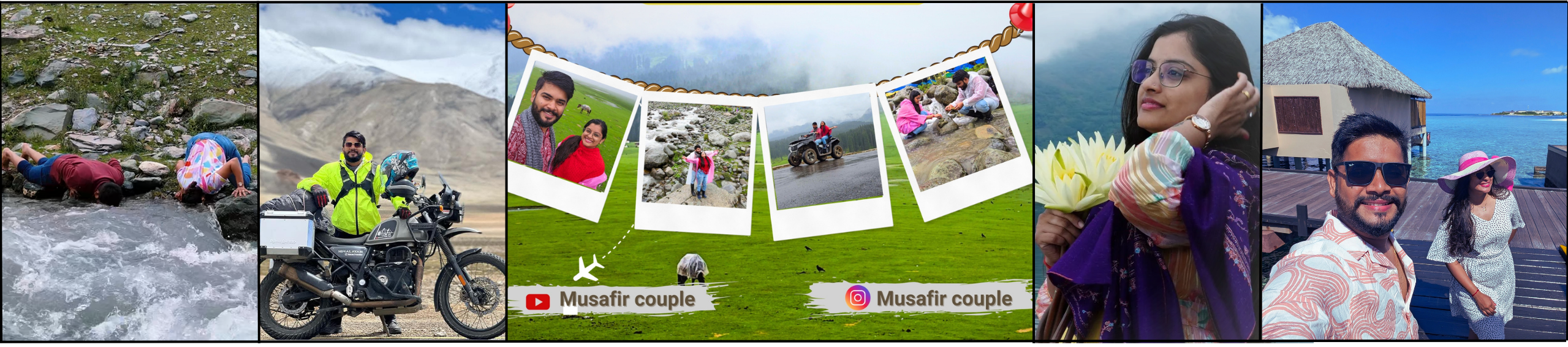
This isn’t another listicle copied from ten other websites. These are cities where real backpackers, weekend travelers, and couples like us from Musafir Couple have actually stretched their rupees without eating instant noodles for every meal. We’re talking real accommodation costs, actual metro fares, and the kind of budget travel Europe experiences that don’t require you to sleep in airports.
Why Most Budget Travel Europe Guides Get It Wrong
Here’s the problem with most cheap European destinations lists: they compare everything to Western European prices. They’ll tell you Krakow is affordable because it’s cheaper than London. That’s not helpful. What matters is absolute cost, not relative savings.
A city isn’t budget-friendly just because it costs less than Paris. It’s budget-friendly when two people can eat well for under €25, sleep comfortably for €40, and explore without spending €15 on every museum ticket.
Most guides also ignore the getting-there part. A €20/night hostel in Bergen sounds great until you realize flights from India cost ₹65,000 and the city itself will drain ₹8,000 daily. Real budget travel Europe planning accounts for flights, visa costs, transport between cities, and those hidden expenses like city taxes and tourist fees that nobody mentions.
We’ve made this mistake ourselves. Booked cheap accommodation in expensive cities. The hostel was affordable — everything else crushed our budget. The smart move? Pick cities where the entire ecosystem is cheaper, not just the bed you’re sleeping in.
1. Krakow, Poland — Where €50 Still Stretches
Krakow remains one of the best budget cities Europe has to offer, and unlike Prague, it hasn’t completely sold out to mass tourism. The Old Town still feels Polish. Local restaurants outnumber tourist traps. A decent pierogi meal costs €5, not €15.
Accommodation runs between €25-45 for a private room in a good hostel or budget hotel. That’s actual 2026 pricing, not some outdated blog post from 2019. The public transport system costs €0.80 per ride — you can walk most of the main sights anyway. Entry to Wawel Castle? €7. The entire Jewish Quarter? Free to wander.
Here’s what nobody tells you about cheap European destinations like Krakow: the longer you stay, the more you save. Supermarkets sell bread for €0.60 and local cheese for €2. Grab a bottle of Tyskie beer for €1. Make breakfast at your hostel. Suddenly your daily food budget drops from €30 to €15 without feeling like you’re rationing.
The Auschwitz day trip costs about €35 including transport and guide — sobering, essential, and honestly priced. Salt mines run €28. These aren’t budget activities, but they’re reasonable for what you get. Skip them if funds are tight — Krakow’s streets, squares, and parks cost nothing.
One friction point: summer gets crowded and prices spike 15-20%. Visit in May or September. Same experience, fewer tourists, better deals on accommodation. Musafir Couple spent four days here in early October 2025 — total spend for two people came to ₹45,000 including a splurge dinner and museum visits. That’s roughly €10,000 for everything.
2. Budapest, Hungary — The Budget Capital That’s Still Holding On
Budapest keeps appearing on budget travel Europe lists because it genuinely deserves to. Yes, prices have climbed. No, it’s not as cheap as it was five years ago. But it’s still significantly more affordable than Vienna, Munich, or Zurich — cities that are geographically close and culturally similar.
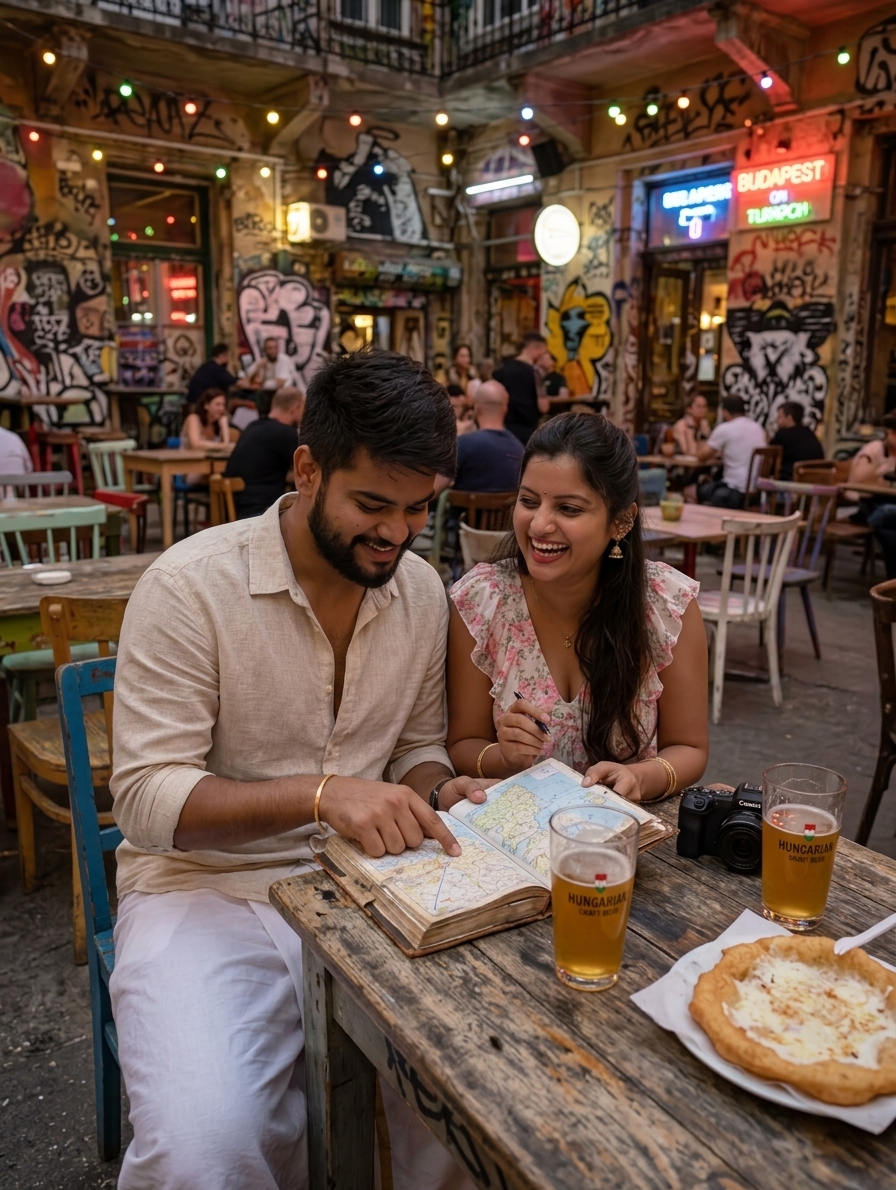
Ruin bars are the draw here. Szimpla Kert, Instant, Fogasház — these aren’t polished cocktail lounges. They’re chaotic, artistic, packed with locals and travelers, and a large beer costs around €2.50. Compare that to €7 in Amsterdam or €9 in Stockholm. The math is simple.
Thermal baths run €15-25 depending on which one you pick. Széchenyi is touristy but spectacular. Gellért is more local. Both beat the hell out of paying €40 for a spa day in Western Europe. Street food at the Great Market Hall — lángos, sausages, pastries — fills you up for €5-8. Sit-down meals in local restaurants cost €12-18 per person.
Accommodation is the wild card. Hostels start at €18-30 for dorm beds, €50-75 for private rooms. Airbnb can be cheaper if you’re staying a week. Public transport is excellent and cheap — a 72-hour pass costs €16. That covers metros, trams, buses, everything. Walk the Chain Bridge at sunset. Climb up to Fisherman’s Bastion. Wander the Jewish Quarter. All free.
Here’s the catch: Budapest has gotten touristy. The best budget cities Europe offers are the ones where you can still find authentic local experiences without paying tourist premiums. Budapest straddles that line. Stick to District VII and VIII for cheaper eats. Avoid restaurants directly on Váci Street. Book accommodation in outer districts if you want real savings — the metro connects everything.
One couple from Pune we met there spent ₹38,000 for three days including flights from Krakow. They ate one big meal daily, snacked from supermarkets, skipped the Castle District entirely. Different approach, same city.

3. Porto, Portugal — The Affordable Alternative to Lisbon
Everyone flies into Lisbon. Smart budget travelers take the train north to Porto. Same country, same pastéis de nata, 30% cheaper on average. Porto delivers the full Portuguese experience without the Lisbon price inflation that’s happened since 2022.
Wine tours in the Douro Valley start at €60 — not cheap, but manageable if you split costs with other travelers. The city itself is free entertainment. Walk along the Ribeira. Cross the Dom Luís I Bridge. Wander Livraria Lello if you don’t mind a small entry fee (€5, redeemable against book purchases). The city rewards wanderers.
Food is where Porto shines for backpacking Europe on a budget. A francesinha — Porto’s famous sandwich that could feed three people — costs €9-12. Fresh seafood at local tascas runs €15 per person with wine. Tourist restaurants near the waterfront? €25-30 and not worth it. Walk three blocks inland and prices drop immediately.
Accommodation is tricky but doable. Hostels run €20-35 for dorms, €60-80 for private rooms. Guesthouses outside the center offer better value — €50-65 for a double with breakfast. Public transport costs €1.30 per ride. Most of central Porto is walkable anyway.
Here’s where Porto beats Lisbon for budget travel Europe: you don’t feel like you’re constantly compromising. The cheap wine is still good wine. The affordable restaurants serve real food, not tourist garbage. The hostels are clean, social, well-located. You’re not scraping by — you’re just being smart about where your euros go.
Day trips to Braga or Guimarães cost under €10 return by train. Beach towns like Matosinhos are a metro ride away. The city gives you options without forcing expensive choices.
4. Sofia, Bulgaria — Europe’s Best-Kept Budget Secret
Sofia is what Krakow was eight years ago and what Prague was fifteen years ago. Genuinely cheap. Still undiscovered by mass tourism. Authentic in ways that most European capitals have stopped being. If you’re serious about cheap European destinations, Sofia should be at the top of your list.
A meal at a good local restaurant costs €6-10 per person. A beer is €1.50. Coffee is €1.20. These aren’t backpacker survival prices — this is what things actually cost. The public transport runs about €0.60 per ride. A 72-hour pass is under €4. You could stay in Sofia for a week and spend less than three days in Copenhagen.
The Alexander Nevsky Cathedral is free. So is walking Mount Vitosha for incredible city views. The city’s parks, Soviet-era monuments, and street markets cost nothing. Museums charge €2-4 entry. Even “expensive” activities like the Rila Monastery day trip run about €25 including transport.
Hostels here are €12-20 for dorms, €35-50 for private rooms. You can find clean, centrally-located budget hotels for €45-60 that would cost €120 in Prague or €180 in Munich. The metro connects the airport to the center for less than €1.
Here’s what’s changing: Sofia is getting discovered. Prices are slowly climbing as more digital nomads and budget travelers catch on. It’s still incredibly affordable in 2026, but it won’t stay this way forever. The best budget cities Europe has to offer don’t stay budget forever — they either get gentrified or they don’t develop. Sofia is developing, which means visit now before it becomes the next Prague.
Food markets like the Women’s Market sell fresh produce, cheese, meats, and baked goods at local prices. Learn three phrases in Bulgarian and vendors will practically give you free samples. This is budget travel Europe at its most authentic — engaging with locals, eating real food, experiencing a city that hasn’t been theme-parked for tourists yet.
Musafir Couple hasn’t made it to Sofia yet, but it’s on the list for exactly these reasons. Several Indian travel bloggers we follow spent ₹28,000 for four days there including accommodation, food, and activities. That’s less than what most people spend on two days in Paris.

5. Athens, Greece — Surprisingly Affordable Despite the Hype
Athens has a reputation problem. People assume Greece is expensive because Santorini and Mykonos are expensive. Athens itself? Actually one of the better budget travel Europe options, especially in shoulder season.
The Acropolis costs €20 — not cheap, but unavoidable and worth every euro. The rest of ancient Athens is either free or under €5. Wander Plaka’s old streets. Explore the flea markets in Monastiraki. Hike up Lycabettus Hill for sunset views over the city. Walk through the National Garden. Zero cost, maximum experience.
Souvlaki is the budget traveler’s best friend. A full pita wrap with meat, fries, tzatziki, and vegetables costs €2.50-4. Sit-down tavernas charge €10-15 per person for generous portions. Avoid anything with an Acropolis view — you’re paying €10 extra for the scenery. Supermarkets sell Greek yogurt for €1, fresh bread for €0.80, olives and cheese by weight at reasonable prices.
Accommodation runs €18-30 for hostel dorms, €50-70 for decent private rooms. Neighborhoods like Exarcheia or Kypseli offer cheaper options than Plaka or Syntagma, plus you’ll actually see how Athenians live. Metro day passes cost €4.50 — essential when the city is 38°C in July.
Here’s where Athens surprises you: the local experience is affordable. The tourist experience is expensive. Those are two different cities sharing the same geography. Eat where Greeks eat. Drink coffee where old men play backgammon. Take the bus to Vouliagmeni Beach instead of booking a tour. Your budget drops 40% and your experience improves 60%.
Day trips to Delphi or Sounion run €40-60. Not cheap, but comparable to what you’d pay for similar trips elsewhere in Europe. Skip them if funds are tight — Athens itself offers enough history and culture for a week.
One warning: August is brutal. Not just the heat — the prices. Hotels double their rates. Restaurants add tourist surcharges. Visit in May, June, September, or October. Perfect weather, fewer crowds, better prices on everything.
6. Tbilisi, Georgia — Off-Radar and Incredibly Cheap
Technically at the edge of Europe, but who cares about geography when you can eat like royalty for €10? Tbilisi is what happens when stunning architecture, incredible food culture, and dirt-cheap prices converge in one place. It’s not traditional backpacking Europe, but it’s one of the smartest budget travel Europe decisions you can make.
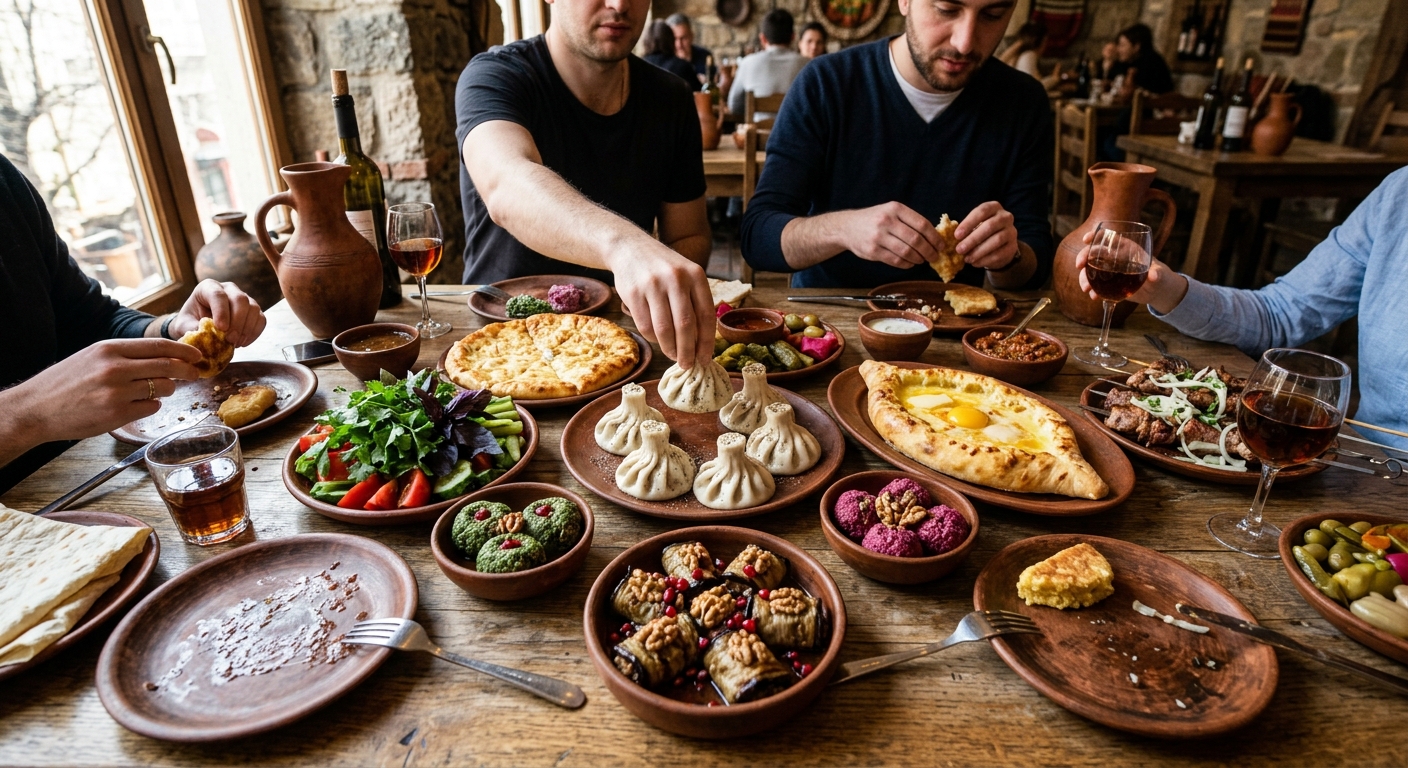
A full Georgian feast — khinkali, khachapuri, grilled meats, salads, wine — costs €15-20 for two people. Not per person. Total. Wine is cheaper than water and significantly better quality. Accommodation runs €15-25 for good hostels, €40-60 for nice private apartments. The metro costs about €0.20 per ride. You’re reading that correctly — twenty cents.
The old town is a photographer’s dream. Colorful balconies, winding streets, ancient churches next to modern art galleries. Walk everywhere — it’s compact, walkable, and safe. Take the cable car up to Narikala Fortress for ₹60 (about €0.60). Soak in the sulfur baths for €5-15 depending on private or public pools. Museums charge €2-3 entry.
Day trips to Kazbegi, Mtskheta, or Sighnaghi run €25-40 including transport and guide. The wine region tours are pricier but still under €50. Even “expensive” dining in Tbilisi — fancy restaurants with views and service — tops out at €25-30 per person. That’s starter pricing in Western Europe.
Here’s the trade-off: Tbilisi requires effort. You need a visa or e-visa depending on your passport. Flights from India aren’t as frequent as to London or Paris. English isn’t as widely spoken. But if you’re genuinely interested in cheap European destinations (or Near-Europe destinations) that deliver authentic experiences, Tbilisi punches way above its weight.
The nightlife scene around Agmashenebeli Avenue and Fabrika hostel is vibrant and affordable. Craft beer costs €2-3. Clubs don’t have cover charges. The art scene is thriving. This is a city in transition — shedding Soviet legacy, embracing modern culture, but not yet fully Westernized or expensive.
7. Sarajevo, Bosnia and Herzegovina — Beauty Born from Complexity
Sarajevo carries weight. The history here isn’t museum history — it’s lived, recent, still visible in bullet-marked buildings and reconstructed bridges. It’s also absurdly cheap and one of the most underrated best budget cities Europe has to offer.
A traditional Bosnian meal — ćevapi, pita, coffee — costs €5-8. Full sit-down dinners at good restaurants run €12-15 per person. Beer is €1.50-2. Coffee culture is strong here and a Bosnian coffee costs about €1. Accommodation ranges from €15-25 for hostels to €40-60 for private rooms in guesthouses. Public transport is cheap but most things are walkable anyway.
The old Turkish quarter, Baščaršija, is free to wander and endlessly interesting. The Latin Bridge where WWI started? Free. The Tunnel Museum costs €5 and is genuinely moving. The view from the Yellow Fortress at sunset? Free and stunning. Walking tours run on tips — join one to understand the city’s complex 20th century history.
Day trips to Mostar cost about €25-30 including transport. The iconic bridge, the old town, the surrounding scenery — worth it. Jajce or Travnik are cheaper alternatives with beautiful waterfalls and medieval history.
Here’s what makes Sarajevo special for budget travel Europe: it’s genuine. Nobody comes here to check a box or post an Instagram story. People visit because they’re curious about the history, the culture, the blend of Ottoman, Austro-Hungarian, and Yugoslav influences. That keeps it real and affordable.
The War Museum costs €3. The cable car ride up Trebević Mountain is €8 return with incredible views and abandoned Olympic facilities to explore. Even shopping is interesting — the old town bazaar sells handmade copperware, jewelry, and textiles at negotiable prices.
One reality check: infrastructure isn’t as polished as Western Europe. Wi-Fi can be spotty. Some buildings look rough. But that’s part of the trade-off for paying a third of what you’d spend in Zagreb or Ljubljana. If you need everything to be comfortable and convenient, pick another city. If you want authentic travel that doesn’t drain your savings, Sarajevo delivers.
8. Riga, Latvia — Underrated Baltic Gem
The Baltics have a reputation for being affordable, but Tallinn has gotten pricey and Vilnius is catching up. Riga remains the sweet spot — beautiful, interesting, and still budget-friendly by European standards.
Art Nouveau architecture covers entire streets. The old town rivals Prague for charm but has a fraction of the tourist crowds. Walk the central market, wander through parks, explore the wooden buildings in the quiet neighborhoods. The city rewards exploration.
Food costs €8-15 per person at local restaurants. Supermarkets are well-stocked and cheap — you can make picnic lunches for €3-4. Beer ranges from €2-4 depending on where you drink. Avoid the tourist strip along the old town square and prices drop immediately. Head to Berga Bazārs or Spīķeri area for better value and quality.
Hostels run €15-25 for dorms, €45-65 for private rooms. Transport isn’t really necessary — everything in central Riga is walkable. If you need it, trams cost about €1.50 per ride.
Museums charge €5-8 entry. The view from St. Peter’s Church tower is €9 and worth it. The nearby beach town of Jūrmala is a 30-minute train ride for under €3 — perfect for a day trip when city exploring gets tiring.
Here’s the Riga advantage for backpacking Europe: it’s easy. Clean, safe, walkable, English-friendly, and won’t exhaust you the way massive cities like London or Rome do. You can see the highlights in two days, or stay a week and dig into the cafe culture, nightlife, and day trip options.
One couple we spoke to in Budapest had just come from Riga and spent ₹32,000 for three days including accommodation, meals, and a day trip to Sigulda. They said it felt like better value than Prague, which they visited afterward and found crowded and overpriced in comparison.
9. Brno, Czech Republic — Skip Prague, Come Here Instead
Prague isn’t budget travel Europe anymore. It’s beautiful, historic, worth visiting — but it’s no longer cheap. Brno offers an alternative: Czech culture, architecture, beer, and food at prices that haven’t been inflated by ten million annual tourists.
A half-liter of excellent Czech beer costs €1.50-2.50. Traditional Czech meals run €7-12 per person. Michelin-recommended restaurants charge €20-25, which would cost €50 in Prague. Street food, bakeries, and trdelniks (if you must) cost about half what they do in the capital.
Hostels charge €15-20 for dorms, €40-55 for private rooms. Hotels in the center run €60-80 for doubles. Public transport costs €0.90 per ride, but the center is compact enough to walk.
Špilberk Castle and its museums cost about €8 combined. The bone church in nearby Sedlec is €2. Hiking around Macocha Gorge and the Moravian Karst is free and spectacular if you like nature. The old town, squares, and street markets cost nothing to explore.
Here’s the Brno pitch: you get authentic Czech experience without Prague’s crowds, scams, and tourist-trap pricing. You’re not sacrificing quality — you’re just being smarter about where you go. The downside? Brno doesn’t have Charles Bridge or Prague Castle. But it has its own Gothic and Baroque architecture, better beer culture, and locals who haven’t been ground down by overtourism.
Trains to Vienna take 90 minutes and cost under €20. Bratislava is even closer. Brno works as a base for exploring Central Europe without paying Prague prices.
10. Bucharest, Romania — Raw, Real, and Remarkably Cheap
Bucharest won’t win beauty contests. It’s gritty, chaotic, still recovering from decades of communist urban planning. But it’s also one of the absolute cheapest cities in Europe where things actually work and there’s genuine culture to explore.
Restaurant meals cost €6-10 per person at good local spots. Fancy restaurants charge €15-20. Beer is €1.50-2.50. Wine is cheap and surprisingly good. Supermarkets and bakeries sell fresh food at prices that will make you laugh after spending time in Western Europe. Make your own breakfast — bread, cheese, meat, yogurt — for under €3.
Accommodation is absurdly affordable. Hostels run €10-18 for dorms, €35-50 for private rooms. Decent hotels with good locations charge €50-70. Airbnb can be even cheaper if you’re staying multiple nights.
The Palace of Parliament costs €8 to tour and is bizarre, gigantic, and weirdly fascinating. Museums charge €2-5. Parks and communist-era monuments are free. The old town area, Lipscani, is walkable and filled with bars, restaurants, and street life. Take the metro for €0.60 per ride if you need to.
Day trips to Brașov, Sibiu, or the painted monasteries of Bucovina run €40-70. Not cheap, but manageable if you’re saving money daily in Bucharest itself. Dracula’s Castle in Bran is touristy and overpriced — skip it unless you’re really into vampire kitsch.
Here’s the trade-off with cheap European destinations like Bucharest: you’re not going to fall in love with the city itself. The architecture is a mix of beautiful old buildings and communist concrete blocks. Traffic is chaotic. Some areas feel rough. But if you’re prioritizing budget travel Europe over postcard perfection, Bucharest delivers incredible value.
The nightlife is surprisingly good. The cafe culture in areas like Dorobanți or Cotroceni feels more Parisian than Eastern European. The food scene has improved dramatically in the last five years — new restaurants, craft breweries, specialty coffee shops. This is a city evolving, which makes it interesting for travelers who want to see somewhere that’s changing rather than somewhere that’s already been perfected for tourism.
What Most Budget Travel Europe Lists Won’t Tell You
The cheapest destination isn’t always the best value. That’s the critical distinction nobody explains. Sofia might be €10 cheaper per day than Porto, but if you’re bored after two days in Sofia and enchanted for a week in Porto, which is actually the better budget choice?
Budget travel isn’t about deprivation. It’s about allocation. Spend on what matters to you, cut ruthlessly on what doesn’t. Love food? Eat one amazing meal daily and snack from supermarkets the rest of the day. Love history? Prioritize museums and skip nightlife. Love architecture? Walk everywhere with your camera and skip guided tours.
The real money drains are the invisible ones. Transportation between cities, especially trains in Western Europe, will eat your budget faster than accommodation or food. Flights within Europe can be cheap or expensive depending on when and how you book. Airport transfers, city tourist taxes, ATM fees, poor exchange rates — these add up to more than you think.
Musafir Couple learned this the hard way when we started European travel planning. We’d budget ₹3,000 daily and somehow spend ₹4,500. The difference was never the big expenses — we’d tracked those. It was the €3 here, €5 there, the coffee, the metro ride, the bottle of water, the “small” museum entry. Now we budget ₹5,000 daily and track every expense daily. That cushion keeps you sane.
Here’s the contrarian take: sometimes expensive cities are better value. Amsterdam is expensive, but bikes are cheap, museums have free hours, and the city is compact enough that you don’t burn money on transport. Meanwhile, a “cheap” destination where everything is spread out and you’re constantly paying for taxis or tours can end up costing more despite lower base prices.
Frequently Asked Questions
What is the cheapest European country to visit in 2026?
Bulgaria, Romania, and Bosnia remain the absolute cheapest European countries in 2026, with daily budgets around €30-40 covering accommodation, food, and activities. Poland and Hungary follow close behind at €40-50 daily. Western European countries like France, Germany, and the UK require €80-120 daily minimum for similar comfort levels. Choose your base destination based on what you want to experience, not just lowest cost.
How much does backpacking Europe cost for an Indian traveler?
A realistic backpacking Europe budget for Indian travelers runs ₹3,500 to ₹6,000 daily depending on destination and travel style. That includes hostel beds, local transport, two meals, one attraction, and basic expenses. Flights from India cost ₹35,000-75,000 return depending on season and booking timing. Visa fees add roughly ₹7,500. Total trip cost for two weeks typically ranges from ₹90,000 to ₹1,80,000 per person including flights.
Which European cities are cheaper than Prague?
Sofia, Bucharest, Sarajevo, and Brno all undercut Prague significantly on accommodation, food, and activity costs in 2026. Daily expenses in these cities run 25-40% lower than Prague, which has seen substantial price inflation due to overtourism. Budapest and Krakow offer similar experiences to Prague at marginally lower costs. Porto and Athens can be cheaper depending on season and specific choices.
Is budget travel Europe possible without staying in hostels?
Yes, budget hotels, guesthouses, and Airbnb offer alternatives to hostels in most affordable travel tips Europe destinations. In Eastern European cities, private rooms in budget hotels cost €45-65, only slightly more than hostel private rooms. Book accommodation outside city centers for better value. Consider apartment rentals for stays longer than four nights — cooking some meals dramatically reduces food costs and overall budget.
What are the best months for cheap travel to Europe?
May, June, September, and October offer the best balance of weather and prices for budget travel Europe. Accommodation costs 20-35% less than July-August peak season. Flights from India are cheaper outside school holidays. November through March sees lowest prices but also cold weather and shorter daylight hours. Avoid Easter, Christmas, and national holidays when prices spike across Europe regardless of weather.
Start Planning Your Budget European Adventure
Budget travel Europe isn’t about finding the single cheapest destination and suffering through a week there. It’s about choosing cities that match your interests while stretching your rupees further than they’d go in overdeveloped tourist destinations.
The cities on this list work because they deliver authentic experiences, reasonable prices, and enough to see and do that you won’t feel like you’re missing out. They’re not perfect — each has trade-offs. But they’re real, accessible, and won’t require you to eat street food for every meal or stay in sketchy hostels just to afford the trip.
Musafir Couple focuses on Indian travel destinations, but we understand the appeal of exploring beyond our borders when the opportunity arises. These cheap European destinations offer experiences that challenge your assumptions about what travel should cost and what makes a destination worth visiting. Sometimes the less-famous city delivers more than the Instagram-famous one at half the price.
Start with one or two cities from this list. Book flights early. Track prices on Skyscanner or Google Flights. Join relevant travel forums to get real-time advice from people currently traveling. Budget conservatively, pack light, stay flexible, and remember that the best experiences often cost nothing — they just require curiosity and a willingness to wander.
For more travel planning advice and honest destination reviews, explore travel resources that connect you with real experiences from travelers who’ve been there. Whether you’re exploring best budget cities Europe or planning closer-to-home adventures, authentic information makes all the difference between a trip you’ll remember and money you’ll regret spending.