

 by
by Meta Title
Budget Travel India: Complete Guide to Affordable Trips in 2026
Meta Description
Discover how to plan budget travel in India with real costs, hidden hacks, and honest tips from couples who’ve done it. Affordable travel starts here.
Full Article
Budget Travel India: The Complete Guide to Exploring More for Less
We thought Goa would drain our wallet. Three days, beach shacks, local transport, street food, and one decent hotel room — ₹8,400 total for two people. That’s when it hit us. Budget travel in India isn’t about cutting corners. It’s about knowing where money actually matters and where it absolutely doesn’t.
Most couples we meet think budget travel means compromise. It doesn’t. It means being smarter about where your rupees go. After covering over 40 destinations across Maharashtra, Gujarat, Karnataka, Goa, and Kashmir, we’ve learned this: India rewards the curious traveler who plans ahead but stays flexible. And that’s exactly what this guide is about — real numbers, real routes, and the kind of cheap travel tips India that nobody puts in glossy brochures.
You don’t need a fat bank account to see incredible places. You need a method. This is ours.
Why Budget Travel India Works Better Than Expensive Tours
Here’s the thing most travel companies won’t tell you. Expensive doesn’t mean better. It just means someone added a markup.
When we visited Mulshi for the first time, a tour package quoted us ₹12,000 for two nights including transport and meals. We booked the same homestay directly, rented a bike for ₹800, bought our own food from local spots, and spent ₹4,200 total. Same views. Same lake. Better experience because we controlled the pace.
Budget travel India isn’t about being cheap. It’s about being intentional. You skip the middleman. You talk to locals. You eat where they eat. You stay where actual travelers stay, not where tour buses drop people off. That shift in mindset changes everything.
The best part? You actually see more. Tour packages rush you through checkboxes. Budget travel lets you linger. You discover that tiny temple nobody mentions. You stop at roadside dhabas where the chai costs ₹10 but tastes better than any five-star breakfast. You meet people. Real people. Not other tourists doing the same scripted itinerary.
And the numbers don’t lie. A typical 7-day Maharashtra road trip with accommodation, fuel, food, and entry fees? Under ₹15,000 for a couple if you plan it right. The same trip through an agent? Easily ₹35,000 or more.
How to Plan Your Budget Trip Planning the Right Way
Planning is where most people either save thousands or waste them. We learned this the hard way in Ahmedabad. Booked everything last minute. Paid peak prices. Regretted it.
Start with your destination list. Write down three places you actually want to see — not places Instagram tells you to see. Check travel distance between them. Google Maps is your best friend here. Factor in real drive time, not optimistic calculations. If it says 4 hours, budget 5.
Book accommodation at least 10-14 days ahead. Not three months early like some blogs suggest, and definitely not the night before. That two-week window hits the sweet spot. Prices are reasonable. Good places are still available. You have flexibility if plans change.
Here’s a framework we use for every trip:
The 60-20-20 Budget Split
60% goes to accommodation and transport. These are your fixed costs. Book early, compare options, lock them in.
20% is food and daily expenses. This stays flexible. Some days you’ll spend more, some less.
20% is buffer. For that unplanned boat ride. That local handicraft you fall in love with. That extra night because you don’t want to leave yet.
Use booking platforms for research, but always check if you can book directly. Call the homestay. Message the hotel on WhatsApp. Ask for their direct rate. You’d be surprised how often it’s ₹500-800 less per night than MakeMyTrip or Booking.com. That’s not a hack. That’s just how commissions work.
For transport, compare all options. Sometimes trains make sense. Sometimes buses. Often, renting a bike or car and splitting costs between two people beats everything else. We’ve done 1,200 km road trips where fuel and tolls combined cost less than two train tickets.
Track your spending. Not obsessively, but enough to know where money goes. We use a simple notes app. Every expense over ₹100 gets logged. End of the trip, you see patterns. You realize you spent ₹2,400 on bottled water and ₹1,100 on actual attraction tickets. Next trip, you carry a filter bottle.
Finding Cheap Accommodation Without Compromising Safety
Accommodation is where most budget travelers panic. They either overspend on hotels or end up somewhere sketchy trying to save ₹300.
The truth? There’s a massive middle ground. You just need to know where to look.
Start with Airbnb and filter by Superhosts. Not for fancy apartments — for local homestays and simple rooms with good reviews. Look for places with 30+ reviews and at least 4.7 stars. Read the negative reviews first. If someone complains about “basic bathroom” but loved everything else, that’s a green flag for budget travel. If they mention safety concerns or cleanliness, skip it.
OYO gets a bad reputation, but it’s not all terrible. Avoid the ₹800-per-night properties. Look at the ₹1,400-1,800 range. Check photos carefully. Read reviews from the last 30 days only — properties change management frequently. If you see recent reviews mentioning staff by name positively, that’s usually a good sign.
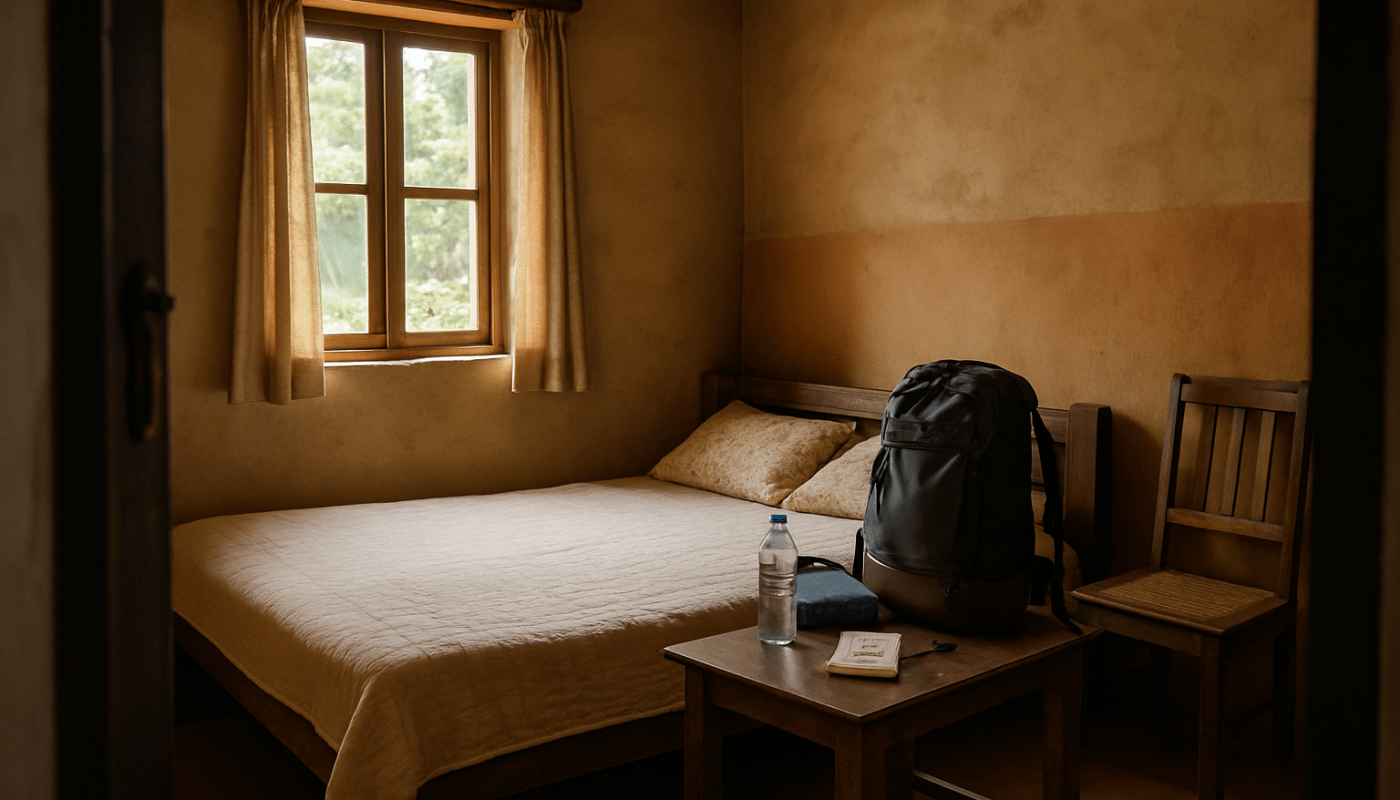
Hostels aren’t just for backpackers anymore. Zostel, Moustache, Roadhouse — these chains have private rooms now. You get hostel prices with hotel-like privacy. We stayed at a Zostel in Goa for ₹1,600 per night with breakfast. Clean, safe, great location. Would’ve cost ₹4,000 at a regular hotel.
For hill stations and rural destinations, look for homestays run by locals. These rarely show up on major booking sites. Search “[destination name] homestay” on Google Maps. Check Facebook groups dedicated to that region. Ask in travel communities. Some of the best places we’ve stayed — a farmhouse near Bedse Caves for ₹1,200, a cottage in Mulshi for ₹1,800 — we found through local recommendations, not apps.
One rule we never break: always check the area on Google Maps before booking. See what’s around. Are there shops? Restaurants? Other hotels? If it’s completely isolated with no recent reviews, that’s a risk we don’t take to save ₹400.
Low Cost Travel India: Transport That Won’t Break Your Budget
Transport kills budgets faster than anything else. Flights, cabs, last-minute bookings — these add up brutally.
Here’s what actually works. Book trains 2-3 weeks in advance. Sleeper class for overnight journeys, AC 3-tier if you’re traveling more than 8 hours during the day. Use the IRCTC app directly, not third-party booking sites that charge convenience fees. If Tatkal tickets stress you out, book general quota early and upgrade if needed.
Buses are underrated. State transport corporations — MSRTC in Maharashtra, GSRTC in Gujarat, KSRTC in Karnataka — run decent sleeper and semi-sleeper services between major cities. They’re cheaper than trains, often faster, and bookings open earlier. A Pune to Goa sleeper bus costs ₹800-1,200. Same journey by train can hit ₹1,500-2,000 in AC class depending on availability.
For local transport, two-wheelers beat everything else. Renting a bike or scooter costs ₹400-800 per day depending on the city. No meter hassles. No waiting for cabs. No ₹200 auto rides for 3 km. We rented a bike in Goa for 5 days at ₹500 per day. Covered over 300 km. Total fuel cost? ₹850. Try doing that in cabs.
Car rentals make sense if you’re a group of 4-5 people or covering serious distance. Self-drive through Zoomcar or similar platforms runs ₹1,500-2,500 per day for a hatchback. Split between four people, that’s ₹375-625 per head. Add fuel, and you’re still under what individual train tickets would cost for the same flexibility.
Some affordable travel India transportation hacks we’ve learned:
Share rides strategically. If you’re going from one tourist town to another — say Lonavala to Mahabaleshwar — check Blablacar or local Facebook groups. Shared rides cost less than buses and are usually faster.
Walk more than you think you should. Most tourist areas are compact. That ₹100 auto ride from your hotel to the viewpoint? It’s probably a 15-minute walk. You see more, spend nothing, and get your steps in.
For longer road trips, calculate fuel costs before deciding. Current petrol prices, your vehicle’s mileage, total distance — do the math. A 600 km round trip in a bike giving 35 km/liter at ₹105 per liter costs roughly ₹1,800 in fuel. Add ₹300 for tolls. ₹2,100 total. Now compare that to bus or train for two people.
Eating Well on a Budget: Food Hacks That Actually Work
Food is where budget travel either becomes miserable or becomes the best part of your trip. We’ve done both. Eating sad packed sandwiches? Not worth the ₹200 saved. Eating fantastic local meals at half the price of tourist traps? That’s the goal.
Avoid hotel breakfasts unless they’re included. That ₹300-per-person buffet is usually cold toast, watery eggs, and juice from concentrate. Walk 5 minutes in any direction and you’ll find local joints serving hot puris, sabzi, and chai for ₹80 per person. Better food, better experience, massive savings.
Lunch is your big meal. Eat at dhabas, local restaurants, or places where you see office workers and families — not just tourists. A full thali costs ₹100-180 depending on the state. That’s unlimited servings of dal, sabzi, roti, rice, and buttermilk. You’re set for the afternoon.
Dinner can be lighter and cheaper. Street food, local snacks, or a simple meal at your accommodation. We often grab vada pav, bhel, or local chaat for ₹50-80 per person. It’s filling enough after a big lunch, and you get to try authentic street food without the all-day guilt of overordering at restaurants.
Carry snacks. Not fancy protein bars. Normal stuff — bananas, biscuits, roasted chana, homemade laddoos if someone’s generous. This saves you from desperation buying at highway rest stops where a basic sandwich costs ₹150.
Water is where many budgets leak slowly. ₹20 per bottle twice a day for a week is ₹560 just for water. Carry a reusable bottle. Fill it at your hotel. Most restaurants will give you drinking water for free if you ask. If you’re worried about water quality, carry a SteriPEN or purification tablets. Costs ₹500 once, saves thousands over multiple trips.
Tea and coffee addiction? Budget ₹30-40 per day for local chai stops instead of ₹150 Starbucks-style cafe coffees. The chai tastes better anyway. We’ve had some of our best conversations with locals at ₹10 chai stalls that Instagram cafes could never match.
What to Skip and What to Splurge On
Not everything deserves your money. And some things absolutely do. The trick is knowing which is which.
Skip fancy guided tours unless the destination genuinely needs expertise. Temples don’t need guides explaining architecture you can Google. Forts have information boards. Wildlife sanctuaries — okay, maybe get a naturalist. But that ₹1,200 “heritage walk” through old Ahmedabad? You can do the same route yourself with a ₹50 guidebook or free walking tour apps.
Skip souvenir shops in tourist centers. That wooden handicraft at Lonavala’s main market for ₹800? Same thing is ₹250 at a shop three streets away. Always walk away from the first shop. Browse. Compare. Buy from local artisans if you can find them, not resellers.
Skip entry fees to places that are clearly tourist traps. We learned this at some viewpoints that charge ₹50 per person to see the same view you can see from the free public road 200 meters away. If locals aren’t going there, question why you should.
Splurge on experiences you can’t repeat. That boat ride at sunrise in Pawna. That meditation session at Girnar. That cooking class in a local home. These cost ₹500-1,500 typically and create memories no amount of hotel luxury can match.
Splurge on safety and comfort where it matters. Good tires for bike rentals. Decent brakes. Helmets that actually fit. That extra ₹200 for a room with an attached bathroom instead of a shared one down the hall. These aren’t luxuries when you’re traveling for multiple days. They’re basics.
Splurge on local food specialties. If you’re in Gujarat, eat the thali. If you’re on the coast, eat the seafood. These meals might cost ₹300-500 instead of your usual ₹150, but they’re the reason you traveled in the first place. Budget travel doesn’t mean never spending money. It means spending it on things that matter.
Real Costs: What Budget Travel India Actually Looks Like
Let’s get specific because vague advice helps nobody.
Weekend Getaway (2 nights, 3 days) — Mulshi or Pawna
- Bike rental: ₹800 total
- Fuel (200 km round trip): ₹600
- Accommodation (2 nights): ₹3,600
- Food (6 meals for two): ₹1,800
- Snacks, chai, miscellaneous: ₹600
- Total: ₹7,400 for two people
Week-long Road Trip (7 days) — Maharashtra Circuit
- Car rental (self-drive hatchback): ₹12,600 (₹1,800 x 7)
- Fuel (1,400 km at ₹9 per km): ₹12,600
- Accommodation (6 nights): ₹10,800 (averaging ₹1,800/night)
- Food (21 meals for two): ₹6,300 (₹150 per person per meal)
- Entry fees and parking: ₹1,200
- Buffer for miscellaneous: ₹2,500
- Total: ₹46,000 for two people (₹23,000 per person)
Budget Goa Trip (4 nights, 5 days)
- Bus tickets (round trip): ₹2,400
- Bike rental (4 days): ₹2,000
- Fuel: ₹1,000
- Accommodation (4 nights): ₹7,200
- Food (15 meals): ₹4,500
- Beach activities and water sports: ₹3,000
- Nightlife and extras: ₹2,500
- Total: ₹22,600 for two people
These are real numbers based on trips we’ve done in 2025 and early 2026. Your costs might vary by 10-15% depending on season, specific choices, and how much you haggle. But this is the ballpark. This is what cheap travel tips India actually look like when you execute them.
Notice what’s not here — no ₹200 bottled water every day. No ₹500 tourist menu lunches. No ₹2,000 “private beach access” scams. Just honest spending on real needs.
Common Budget Travel India Mistakes We Made So You Don’t Have To
We’ve messed up plenty. Here’s what not to do.
Booking accommodation too far from main areas to save ₹300. We stayed 18 km outside Mahabaleshwar once. Saved ₹400 per night on the hotel. Spent ₹600 per day extra on transport back and forth. Net loss: ₹200 per day plus wasted time. Proximity has value. Don’t underestimate it.
Skipping breakfast to save money then overordering at lunch because we’re starving. You know what’s cheaper than a ₹450 lunch? A ₹80 breakfast and a ₹200 lunch. Your stomach doesn’t care about your budget strategy. Feed it regularly and it’ll cooperate.
Not carrying enough cash in rural areas. UPI is everywhere now, except when it’s not. We’ve been stuck at tiny villages where card machines don’t work, UPI is patchy, and the nearest ATM is 25 km away. Carry ₹5,000 in cash for any trip outside major cities. Just do it.
Trusting Google Maps blindly for mountain routes. Maps suggested a “shortcut” near Mulshi that turned into a dirt path only villagers and goats should use. Cost us 2 hours and genuine fear for our rented bike’s suspension. Always check recent reviews or ask locals before taking alternate routes in hills.
Overpacking. Budget travel often means moving around more. That extra pair of shoes and backup jacket you think you need? You don’t. Less stuff means easier transport, cheaper porter charges if any, and more space for things you buy along the way. One medium backpack per person is enough for a week.
Not confirming bookings directly. We once reached a homestay we’d booked online only to find they had no record. System glitch. We had to scramble for alternatives at peak pricing. Now we always message or call the property 2 days before arrival to confirm. Takes 5 minutes. Saves potential disasters.
Budget Travel Apps and Tools That Actually Help
Most travel apps are bloated nonsense. These few are genuinely useful.
Google Maps — Obvious, but use it right. Save offline maps before trips to areas with poor connectivity. Drop pins at every place you want to visit. Share your location with someone back home for longer drives. Mark petrol pumps and ATMs along your route.
Rome2Rio — Tells you every possible transport option between two places with approximate costs. You see train, bus, flight, taxi options all at once. Helps with planning before you commit to a route.
Splitwise — If you’re traveling with friends or another couple, this stops the “I paid last time” arguments. Everyone logs expenses as they happen. App calculates who owes whom. Settle up at trip end. Simple.
MapsMe — Better than Google Maps for hiking trails and offbeat locations. Uses OpenStreetMap data which has more local detail for non-touristy areas. Works completely offline once you download the region.
Trail Wallet — Dead simple expense tracking. You set a daily budget. Log expenses. It shows if you’re over or under. We used it religiously for 3 months and identified we were spending 37% of trip budgets on accommodation when we’d planned for 40%. That clarity helped us optimize.
YourStory WhatsApp group or Telegram channel — Not an app, but behavior. Join local travel groups for regions you’re visiting. Ask questions. Get real-time advice. Someone who was at your destination last week gives better beta than any blog.
Don’t download 15 travel apps. Download these six. Use them. Delete the rest.
How Musafir Couple Does Budget Travel Without Sacrificing Experience
We’re not special. We just learned what works through trial, error, and a lot of average experiences before the good ones.
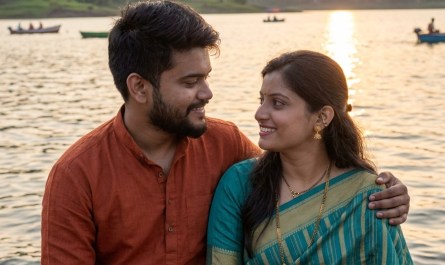
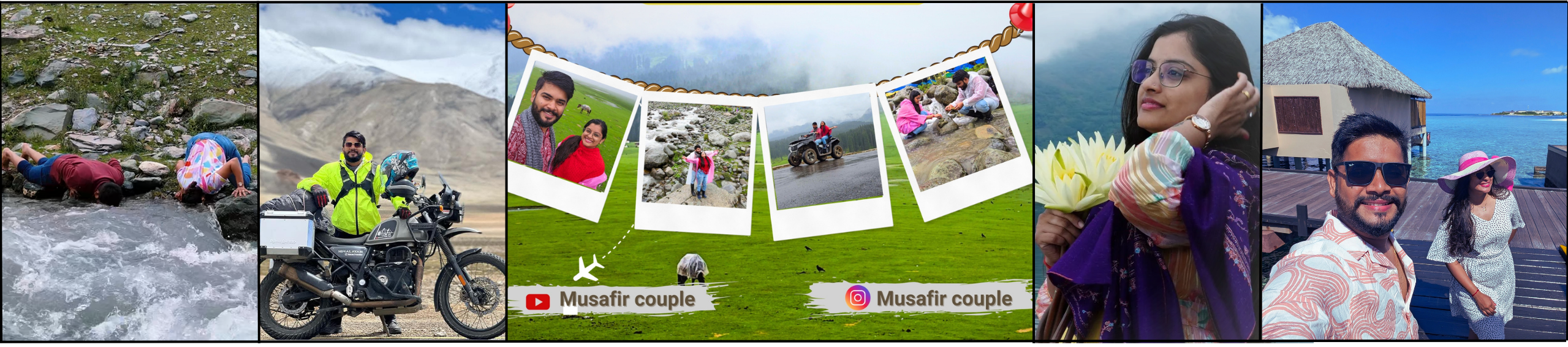
Musafir Couple, powered by Travelheal, started because Ketan and I (Samprita) got tired of travel content that looked perfect but felt fake. We wanted to show what budget travel in India actually is — real people, real confusion, real bargaining, real joy when you find that perfect homestay for ₹1,400 that feels like ₹4,000.
Our method is simple. We plan routes based on curiosity, not checklists. We stay in places regular travelers can actually afford. We eat where locals eat. We show the receipts — literally. Fuel bills, hotel tariffs, food costs. If we can’t afford it on a middle-class budget, we don’t feature it unless we’re clear about the splurge.
You’ll see this in our vlogs and guides. When we visited Salaulim Dam, we showed the exact route, the ₹30 parking fee, the local shack where puri-bhaji cost ₹40 per plate. When we stayed at Cola Beach, we mentioned the ₹2,200 per night room, the walk down to the beach, the ₹150 breakfast from the shack guy who’s been there for 20 years.
That’s the content approach. Nothing polished. Nothing hiding the boring parts. Because affordable travel India isn’t about perfect Instagram frames. It’s about going more, seeing more, feeling more — without the financial anxiety.
We share travel vlogs not to flex destinations but to give you the roadmap. The kind of advice you’d get from friends who just got back from a trip. The “we messed up here but figured it out” stories. The “this place isn’t worth it” honesty that saves you wasted money.
Budget travel works when you know someone’s actually done it, messed up parts of it, and still came back happy. That’s what we document. Not highlights. Full stories.
Frequently Asked Questions
What is the cheapest way to travel in India for couples?
Train travel in sleeper class combined with budget homestays and local food keeps costs lowest. For a week-long trip, expect ₹12,000-18,000 per couple covering transport, accommodation, and food if you avoid peak season and tourist traps. Renting a two-wheeler for local transport instead of cabs saves another ₹2,000-3,000 easily.
How much does a budget trip to India cost for 7 days?
A realistic budget for 7 days covering 2-3 destinations ranges from ₹15,000 to ₹25,000 per person depending on distance and destination type. Hill stations cost slightly more due to accommodation prices. Coastal areas like Goa or Gokarna can be done cheaper with beach shacks and hostels. This includes all transport, stay, food, and basic activities.
Which month is cheapest to travel in India?
June to September (monsoon season excluding July peak) and February to March (post-winter, pre-summer) offer the best deals on accommodation and transport. Avoid December-January (peak season), April-May (summer vacation rush), and October-November (festival season) when prices jump 40-60% across most destinations. Book Tuesday through Thursday for best online deals.
How can I save money while traveling in India?
Book accommodation 10-14 days ahead through direct contact rather than booking platforms. Eat at local restaurants where families dine, not tourist-facing menu places. Travel by state transport buses instead of private operators. Carry reusable water bottles. Split transport costs by traveling with another couple. Skip paid guided tours for self-exploratory destinations. These changes typically cut trip costs by 35-40%.
Is budget travel in India safe for couples?
Yes, with basic precautions. Stay in accommodations with recent positive reviews mentioning safety. Avoid arriving at new destinations after 10 PM. Share live location with family during long drives. Trust your instinct — if a place feels off, leave. Use registered transport options. We’ve covered 40+ destinations as a couple without incidents by following these simple rules. Common sense beats paranoia every time.
Start Your Budget Travel India Journey Today
You’ve got the framework now. Real costs. Real mistakes to avoid. Real methods that work. What you don’t have is the experience — that only comes from actually booking the trip and going.
Most people overthink this. They wait for the perfect budget. The perfect destination. The perfect season. Meanwhile, weekends pass. Months pass. The trip never happens.
Here’s what we learned after 4 years of traveling across India: the perfect time is usually next month. Not next year. Not when you save ₹50,000. Next month with whatever you have now.
Budget travel isn’t a compromise. It’s a different lens. You see places most tourists miss. You talk to people expensive tours shield you from. You eat food Zomato hasn’t rated yet. You figure things out. That’s the entire point.
Musafir Couple exists to show you this version of travel is possible, enjoyable, and honestly more rewarding than the ₹2 lakh vacation packages that put you in bubbles. Whether you’re planning a weekend escape to Lonavala or a week-long exploration through Gujarat, we’ve been there, filmed it, budgeted it, and shared the honest version.
Start small if you’re nervous. Pick a destination 3-4 hours from your city. Book a decent homestay for two nights. Rent a bike. Carry this guide’s principles. Try it. You’ll either love it or learn what to adjust next time. Both outcomes move you forward.
Need specific route suggestions, hidden destination guides, or just want to see real couples doing real budget travel? Our channel and content platform has over 150 documented trips with actual costs, real-time confusion, and the kind of unpolished honesty you won’t find in travel magazines.
Budget travel India works. We’ve proven it dozens of times. Now go prove it for yourself. Book something this weekend. See where ₹5,000 can take you. You’ll surprise yourself.
Musafir Couple — Real travel. Real budgets. Real India.
Connect with us for route advice, destination breakdowns, or just to share your own budget travel stories. We’re always on the road, always discovering, always happy to help fellow travelers skip the mistakes we already made.