

 by
by Complete Guide to Spiritual Travel in Gujarat: Somnath to Girnar Temple Route
Spiritual travel in Gujarat isn’t just about temples. It’s about the entire journey through dusty roads, unexpected conversations with locals, and those moments when your phone has no signal but you feel more connected than ever.
We’ve driven this Gujarat pilgrimage route four times now. Ketan and I. Each time, we learn something new about the road, the temples, or ourselves. This isn’t the picture-perfect spiritual journey you see in brochures. It’s the real one — with wrong turns, expensive parking that nobody warned us about, and local food spots that changed everything we thought we knew about Gujarati cuisine.
The route from Somnath to Girnar temple covers roughly 270 kilometers, but that number means nothing. What matters is how you experience each sacred site Gujarat offers along this stretch. We’ve made the mistakes so you don’t have to. Got scammed once at a dharmshala booking. Paid triple for aarti tickets we could’ve gotten free. Missed the sunrise trek because nobody told us the gate timings changed.
This guide covers the actual route, real costs including fuel and tolls, where to stay without getting ripped off, and the spiritual experiences worth your time versus the tourist traps designed to empty your wallet.
Why This Spiritual Route Through Gujarat Actually Matters
Most pilgrimage guides tell you about temple history and architectural details. That’s Wikipedia stuff. What they don’t tell you is why thousands of couples and families keep returning to this exact route despite Gujarat having hundreds of other temples.
The Somnath to Girnar corridor represents something specific in Indian spirituality. It’s not just Shiva worship or Jain pilgrimage. It’s the combination of coastal devotion meeting mountain asceticism. Sea-facing temple energy versus cliff-top meditation. Two completely different spiritual frequencies in one journey.
When we first planned this route in 2023, we thought we’d knock out both temples in two days. Three years later, we’re still discovering layers. The small Hanuman temple between Veraval and Una that locals never miss. The sunrise point near Junagadh that isn’t marked on any map. The sweet shop in Prabhaspatan where the mohanthal actually tastes like the version our grandmothers described.
Here’s what nobody admits: spiritual travel Gujarat style works because the infrastructure is excellent but not overdeveloped. You get good roads and decent hotels, but the temples haven’t been turned into amusement parks yet. That balance won’t last forever.

Starting Point: Somnath Temple — What You Need to Know Before You Go
Somnath isn’t just the first Jyotirlinga. It’s a masterclass in resilience. Destroyed seventeen times, rebuilt seventeen times. That history hits different when you’re standing in front of it at 6 AM with the Arabian Sea behind you and the morning aarti starting.
Park at the main parking lot — ₹50 for two-wheelers, ₹100 for cars. Don’t fall for the “special parking” guys who charge ₹200 and leave you half a kilometer away. The official lot is 400 meters from the temple entrance. You’ll walk anyway.
Temple timings are 6 AM to 9:30 PM, but here’s what matters: reach by 5:45 AM for morning aarti or after 7 PM for evening aarti. The middle hours are tourist chaos. We tried visiting at 11 AM once. Took ninety minutes just to reach the sanctum. At 6 AM, we were in and out in forty minutes with actual time to sit and absorb the space.
No phones inside. They’re strict about it. There’s a cloakroom that charges ₹10 per item. Leather belts, wallets, bags — everything goes there. Samprita lost a branded watch once because the cloakroom doesn’t take responsibility for valuables. Wear minimal jewelry. Carry minimal cash.
The real Somnath experience isn’t inside the main temple. It’s on the western side, where you can sit on the steps facing the ocean. That’s where the energy actually settles. We’ve sat there for an hour just watching waves crash against the temple wall. No crowd. No rush. Just that specific combination of devotion and nature that defines coastal temples.
Food and stay options in Somnath town are plenty. We’ve stayed at Hotel Sukh Sagar (₹1,800 per night, decent rooms, walking distance to temple) and The Fern Residency (₹4,500 per night, unnecessary luxury for a pilgrimage but the breakfast spread is genuinely excellent). Budget travelers should check Shree Somnath Trust’s guesthouses — ₹500 to ₹800 per night, basic but clean.
The Route: Somnath to Girnar — Roads, Stops and Real Fuel Costs
Here’s the ground reality. Somnath to Junagadh, which is your base for Girnar temple trek, is 270 kilometers if you take the direct NH51 route through Una and Kodinar. That’s the fast option. Four and a half hours with one chai break.
The better route is longer but worth it. Somnath to Diu (95 km), Diu to Una (30 km), Una to Junagadh (145 km). Total distance jumps to 270 kilometers but the experience changes completely. You get a coastal stretch, a union territory vibe in Diu, and better food stops.
We drive a mid-size sedan. Fuel cost for the direct route runs around ₹1,600 to ₹1,800 depending on current petrol prices. Toll is minimal — one toll plaza near Una, ₹75. If you’re on a bike, cut fuel costs in half but add two hours to travel time because highway wind batters you between Kodinar and Junagadh.
Stop at Chorwad Beach if you take the coastal route. It’s 40 kilometers from Somnath, completely off tourist radar, and has a small fishing village vibe that reminds you why Gujarat’s coastline is underrated. We’ve bought fresh pomfret directly from fishermen there for ₹200 a kilo. Your hotel in Junagadh will cook it for another ₹150.
Una has a small Somnath temple replica and decent dhabas. The Highway King dhaba right after the Una junction serves proper Gujarati thali for ₹140. Unlimited. That’s your lunch sorted.
Don’t speed between Kodinar and Junagadh. The road is excellent but local buses appear out of nowhere, and the highway patrol actually checks speed. We got fined ₹500 once for doing 95 in an 80 zone.
Reach Junagadh by 4 PM if you’re planning the Girnar trek next morning. You’ll need to rest, eat properly, and sleep early. The trek starts before sunrise.

Girnar Temple Trek — The Truth About 10,000 Steps and What Actually Awaits
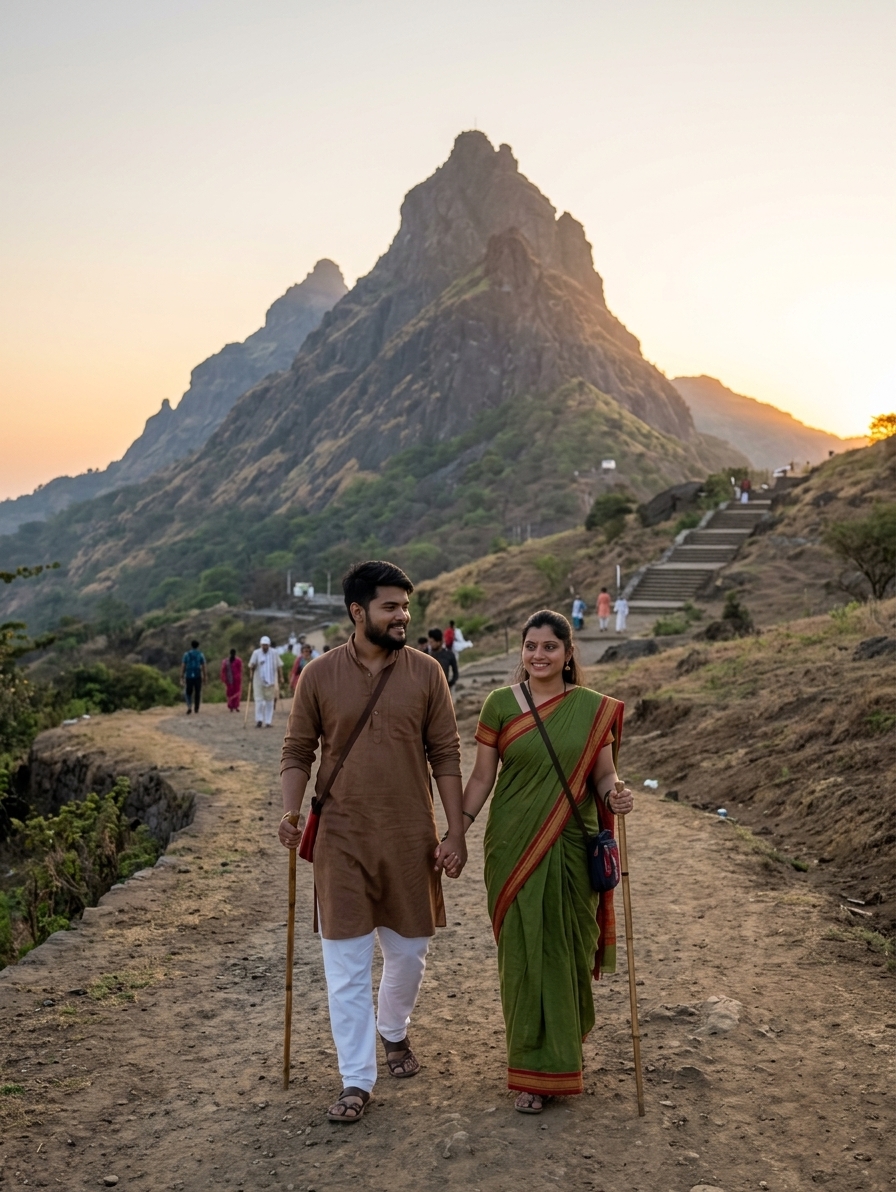
Let’s be direct. The Girnar temple trek isn’t for everyone. It’s 10,000 stone steps carved into a mountain. Vertical gain is about 1,000 meters. If you’re not regularly active, this will hurt.
But here’s what the brochures don’t mention — you don’t have to climb all 10,000 steps. The main temples are at different levels. Amba Mata Temple is at step 4,000. Most pilgrims stop there. The Neminath Jain Temple at 7,000 steps is where serious climbers pause. The absolute summit with Dattatreya Temple is at 10,000, and honestly, only trekkers and peak spiritual seekers go that far.
We’ve done the full climb twice. Took us five hours up, three hours down the first time. By the second attempt, we cut it to four hours up because we knew where to pace ourselves and which rest stops actually have clean water.
Start at 4 AM. Not 5 AM. Not “early morning.” Exactly 4 AM. The gates open at 4 AM during peak season (October to March) and 5 AM off-season, but the local priest we met told us guards let serious pilgrims in from 3:30 AM if you explain you’re aiming for the summit. The reason is simple — you want to reach Amba Mata by sunrise. That view is why people attempt this trek.
Carry two liters of water per person. Not one. Not one and a half. Two full liters. There are water stops, but they’re crowded and the water quality is questionable. We carry a LifeStraw bottle now after Ketan had stomach issues from refilling at step 5,000.
Wear proper trekking shoes. Samprita tried the climb in regular sneakers once. Blisters by step 3,000. Someone sold her cheap canvas shoes at a rest stop for ₹400. She still couldn’t walk properly for two days. This isn’t a temple visit. It’s a mountain trek disguised as pilgrimage.
The ropeway to Amba Mata Temple exists but runs irregularly. It costs ₹350 round trip. We’ve never taken it. Not out of pride, but because half the spiritual experience is the physical effort. Your legs burn. Your lungs work. That discomfort clears your head in ways an air-conditioned ropeway ride won’t.
Food on the trek is basic. Dry poha, bananas, biscuits. Don’t expect hot meals until you’re back down. Pack energy bars or dry fruits. Your body will thank you at step 6,000 when temple prasad isn’t enough to keep you going.
Sacred Sites Gujarat Pilgrims Miss Between Somnath and Girnar
The famous temples get all the attention. Meanwhile, some of Gujarat’s most powerful sacred sites sit right on this route, completely ignored because they’re not in the guidebooks.
Between Somnath and Una, there’s a small shrine to Triveni Sangam at Chorwad. Three rivers meeting the ocean. Zero crowd. We stumbled onto it during our second trip and ended up spending an hour there just watching the water confluence. A local priest explained the significance — fresh water meeting salt water represents the merger of individual soul with universal consciousness. That’s the kind of conversation you miss when you rush between famous spots.
Near Kodinar, the Navi Bandar area has an ancient Dattatreya temple that predates most of the reconstructed temples in Gujarat. It’s small, unimpressive from outside, but the energy inside is different. We’ve met couples who specifically stop there before heading to Girnar because the temple priest performs a specific blessing for safe travel and successful pilgrimage. It takes ten minutes. Nobody charges you anything. You leave whatever you want as offering.
Junagadh itself has Damodar Kund, Revati Kund and Moti Baug — three temple-plus-water-tank complexes that locals consider essential before attempting Girnar. We skipped them our first visit. Regretted it. The second time, we spent an evening walking through all three. The architecture is stunning, and the evening aarti at Damodar Kund has maybe twenty people versus the thousands at famous temples.
Uparkot Fort in Junagadh isn’t a temple, but it has two massive stepwells — Adi Chadi Vav and Navghan Kuwo — that feel more sacred than half the temples on tourist maps. The acoustics inside these stepwells create this echo effect that locals say is divine frequency. Scientific or spiritual, standing inside that space affects you.
The Ashok Shilalekh near Girnar base isn’t religious, but Emperor Ashoka’s edicts carved into rock connect you to 2,300 years of continuous spiritual seeking in this region. That historical weight matters when you’re about to climb a mountain because millions before you did the same thing for the same reasons.

Where to Stay: Junagadh Base for Girnar Trek
Junagadh isn’t Somnath. Hotel options are limited, and during peak pilgrimage season (Mahashivratri, Navratri, Kartik Purnima), everything books out fast. We’ve learned this the hard way.
Budget stays: Dharamshalas near Girnar base charge ₹300 to ₹600 per night. Basic rooms, shared bathrooms sometimes, but you’re literally five minutes from the trek start point. Shri Girnar Tirth Vikas Mandal runs a decent guesthouse. Book directly, not through apps.
Mid-range reliable: Hotel Lotus (₹1,400 per night), Hotel Haveli (₹1,800 per night), and Girnar Hotel (₹1,600 per night) are walking distance from both the bus stand and Girnar base. Rooms are clean, water is hot, food is available. That’s all you need.
The only upscale option is The Fern Gir Forest Resort, but it’s 40 kilometers outside Junagadh near Sasan Gir. Pointless for Girnar pilgrims unless you’re combining this with a safari trip.
Here’s what matters more than hotel stars — stay as close to Girnar base as possible. You’re waking up at 3:30 AM. You don’t want a 20-minute auto ride in pitch darkness. We stayed at Hotel Haveli last time, walked to the trek start in eight minutes, and were on the steps by 4:05 AM.
Food in Junagadh is simple. Most hotels serve Gujarati thali for ₹150 to ₹200. Pethapur Sweets near Kalwa Chowk has the best fafda-jalebi breakfast we’ve found in Gujarat. Load up on carbs before the trek. Your legs will need it.
Best Time for Spiritual Travel Gujarat: Somnath to Girnar Route
October to February is standard advice. We’ll tell you why that’s only half right.
November to January is peak season. Weather is perfect — cool mornings, pleasant days, no rain. The downside is crowds. Somnath sees 20,000+ visitors daily during this window. Girnar trek turns into a queue. Hotels charge peak rates and still sell out.
We prefer late February to mid-March. Weather is warming but not brutal yet. Crowd density drops by sixty percent. You get better hotel rates, shorter temple queues, and the Girnar trek feels like actual meditation instead of endurance event in a crowd.
Monsoon (July to September) is beautiful but risky. The trek becomes slippery. Several people have fallen and gotten seriously injured. Somnath during rains has this raw, powerful energy with waves crashing hard against the temple, but if you’re not comfortable with heavy rain and slippery temple floors, skip it.
April to June is hot. 38 to 42 degrees Celsius. We attempted the Girnar trek in May once. Started at 3:30 AM, still felt like we were melting by 7 AM. Not recommended unless you’re highly heat-tolerant.
Festival timing changes everything. Mahashivratri at Somnath is an experience, but you’re dealing with 100,000 pilgrims. Kartik Purnima brings similar crowds. If you want the festival energy, book hotels two months ahead and accept that nothing will be peaceful.
For couples seeking actual spiritual experience rather than pilgrimage tourism, we recommend mid-February or late October. You get decent weather, manageable crowds, and the mental space to actually connect with these places instead of just checking them off a list.
Real Costs: Complete Budget Breakdown for This Spiritual Journey
Everyone asks this. Nobody gives straight answers. Here’s exactly what we spent on our last trip in February 2026 as a couple from Pune.
Transport (Pune to Somnath to Girnar to Pune): We drove our own car. Fuel cost ₹6,200 total. Tolls ₹850. Parking across all locations ₹400. If you’re flying, Rajkot is nearest airport, 200 kilometers from Somnath. Add ₹8,000 for flights, ₹3,500 for cab to Somnath, another ₹2,500 for local transport.
Accommodation (4 nights total): Two nights in Somnath at Hotel Sukh Sagar (₹3,600), two nights in Junagadh at Hotel Haveli (₹3,200). Total ₹6,800. Budget option would be ₹2,400 total. Luxury option crosses ₹18,000.
Food: We ate simple. Breakfast ₹200 per day, lunch ₹350, dinner ₹400. Snacks and chai ₹150. Four days came to ₹4,400. You can cut this to ₹2,000 if you eat only thalis and skip restaurants.
Temple offerings and donations: We gave ₹500 at Somnath, ₹300 at Girnar temples, ₹200 across smaller shrines. Total ₹1,000. This is personal choice.
Miscellaneous (cloakroom charges, guides we didn’t need but tipped, water bottles, emergency medicines): ₹800.
Total trip cost for two people: ₹19,650. Round it to ₹20,000.
Solo travelers can do this in ₹12,000 if staying in dharamshalas and eating basic. Luxury travelers will spend ₹40,000+ if flying and staying at premium properties.
The expensive mistake we made first time: hiring a guide for Girnar trek. Paid ₹1,200. He told us nothing we couldn’t have learned from talking to fellow pilgrims. The route is straightforward — you follow the steps up, you follow them down. Save that money.
Local Food You’ll Regret Missing on This Route
Spiritual travel doesn’t mean surviving on temple prasad and glucose biscuits. Gujarat’s local food culture is half the journey.
In Somnath, the Kathiawadi thali at Somnath Trust Bhojanalay (walking distance from temple) is ₹140 for unlimited servings. But the real find is a small place called Khodiyar Kathiyawadi Dhaba on the Veraval road. Their bajra rotla with jaggery and ghee, plus ringan bharta (smoked eggplant), is what home-cooked Gujarati food should taste like. Ignore the ambiance. Focus on the food.
Chorwad village has fresh seafood that costs nothing. We’ve bought pomfret, surmai, and prawns directly from fishermen. Ask your hotel to cook it. Most will do it for ₹150 to ₹200. You get a seafood meal that would cost ₹1,200 in a Mumbai restaurant.
Between Una and Junagadh, stop at any local dhaba and order the yellow dal-rotli-shaak-chaas combination. ₹100 total. That simple meal tastes better after 150 kilometers of driving than any fancy restaurant spread.
Junagadh is famous for its kachori and jalebi. We tried seven different places. The best is still the unnamed stall outside Majevdi Gate that only opens at 6 AM. ₹40 for four kachoris and two jalebis. That’s your pre-trek fuel.
After you descend from Girnar, your body craves protein and sugar. There’s a small shop at the base that makes fresh penda and mohanthal. We buy half a kilo every time. ₹180. It tastes like celebration.
One rule we follow: eat local, avoid hotel restaurants unless it’s breakfast. The real food is always in the small joints locals eat at. Ask your auto driver, ask the temple flower seller, ask anyone who looks like they’ve lived there for decades. They’ll send you to places Google Maps doesn’t know exist.
What Nobody Tells You: Practical Tips That Actually Matter
Carry enough cash. Most small temples, dharamshalas, and local food places don’t take cards or UPI. We carry ₹5,000 in cash minimum. Withdraw before leaving Pune or Ahmedabad. ATMs in Somnath and Junagadh run out of cash during peak season.
Phone network is patchy near Girnar base. Jio works consistently. Airtel is hit or miss. During the trek, forget connectivity until you descend. Tell family you’ll be unreachable for six hours.
Temple politics are real. Somnath has different priests managing different sections. Some will try to pull you aside for “special darshan” that costs ₹500. You don’t need it. The regular queue gives you the same access.
The Girnar trek has unofficial porters who carry people in sling chairs. They charge ₹3,000 to ₹5,000 depending on your weight and how far you want to go. We’ve watched people attempt this and regret it halfway up because the carriers rush and the experience becomes terrifying. If you can’t climb, take the ropeway to Amba Mata and skip the rest.
Best time to visit Somnath temple is late evening after the tourist buses leave. 7:30 PM onwards, the crowd thins dramatically. The evening aarti at 7 PM is powerful but packed. Go at 8 PM instead. You get a calmer space, better darshan time, and the ocean view under lights is surreal.
Women pilgrims: period-friendly facilities are limited. Somnath temple has decent washrooms. Girnar trek has basic toilets at major rest stops but carry your own supplies. We’ve learned to pack extra everything.
Water quality varies. Drink only bottled water. We got sick once from refilling bottles at a public tap near Una. That mistake cost us two days of the trip lying in a hotel room with food poisoning.
Sadhus and self-proclaimed holy men at both Somnath and Girnar base will offer blessings and then demand ₹500. Real sadhus don’t demand anything. If someone gets aggressive about money, walk away.
Photography inside Somnath temple is banned. Guards are strict. We’ve watched people get their phones confiscated. Outside photography is allowed. At Girnar, you can take photos everywhere except inside the main sanctums. Respect that.
Frequently Asked Questions
How many days do you need for Somnath to Girnar spiritual route?
Minimum three days, ideally four. Day one for Somnath darshan and local exploration, day two for travel to Junagadh with stops at smaller temples, day three for Girnar trek, day four buffer for rest or return journey. Rushing this in two days kills the spiritual purpose.
Is Girnar trek difficult for beginners?
Yes. Ten thousand steps with 1,000-meter elevation gain isn’t beginner-level trekking. But you don’t need to climb all 10,000 steps. Amba Mata Temple at step 4,000 is achievable for anyone with moderate fitness. Start slow, take breaks every 500 steps, carry enough water, and listen to your body.
What is the best month to visit Somnath temple?
November to February for weather, but expect heavy crowds. Late February or early March gives you better balance of pleasant climate and manageable pilgrim numbers. Avoid April to June due to extreme heat.
Can we complete Girnar trek in one day?
Yes. Most pilgrims do it as a day trek starting 4 AM and finishing by noon or 1 PM. The full 10,000-step climb takes five to six hours up and three to four hours down. If you’re only going to Amba Mata Temple, you can finish the round trip in five hours total.
Are there hotels near Girnar temple base?
Yes, Junagadh has multiple hotels and dharamshalas within one to two kilometers of Girnar base. Book ahead during festival seasons. Budget options start at ₹500 per night, mid-range at ₹1,400 to ₹1,800.
Start Your Gujarat Pilgrimage with Musafir Couple
This route isn’t just about temples. It’s about the conversations you have while climbing 10,000 steps together, the chai breaks at roadside stalls, the moments when you stand facing the Arabian Sea at sunrise and something inside you shifts.
Ketan and I from Musafir Couple have traveled this spiritual route multiple times, made the mistakes, found the shortcuts, discovered the food spots nobody talks about, and learned which experiences are worth the effort versus which ones are just tourist traps. We share all of it — the real costs, the actual road conditions, the honest “is it worth it” verdict — because spiritual travel Gujarat style deserves better than generic temple guides and filtered Instagram posts.
If you want more unfiltered travel experiences, real couple moments, and practical tips for destinations across India, follow Musafir Couple on YouTube and Instagram. We document everything — the beautiful parts, the confusing parts, and the parts where we got completely lost but found something better. That’s real travel. That’s real pilgrimage.
Need specific help planning your Somnath to Girnar route? Questions about road conditions, hotel bookings, or trek difficulty? Reach out to us through our social media channels or website. We’re always up for helping fellow travelers experience these sacred sites the right way — with honesty, respect, and zero unnecessary spending.


