


 by
by Cola Beach Goa
Cola Beach Goa – Hidden Gem or Tourist Trap? Honest Review
Ketan and Samprita from Musafir Couple visit Cola Beach Goa to separate the Instagram hype from reality. Real costs, access, crowd levels, and our honest verdict.
Cola Beach Goa
Cola Beach reviews, best beaches in Goa, Goa hidden gems, Cola Beach tourist trap
Cola Beach Goa: Hidden Gem or Overhyped Tourist Trap – Honest Review
We almost didn’t go.
After seeing the tenth Instagram reel of Cola Beach Goa showing pristine sand, zero people, and that famous lagoon glowing at sunset, Samprita looked at me and said what we were both thinking: “This feels too good to be real.” We’d been burned before by “secret beaches” that turned out to be crowded parking lots with trash. But Cola kept showing up in our research. Local friends mentioned it. Travel groups debated it. So in February 2026, on our way back from Palolem, we took the turn. What we found wasn’t quite what Instagram promised. It was something else entirely.
Myth 1: Cola Beach Is Still a True Hidden Gem That Nobody Knows About
Let’s kill this one first.
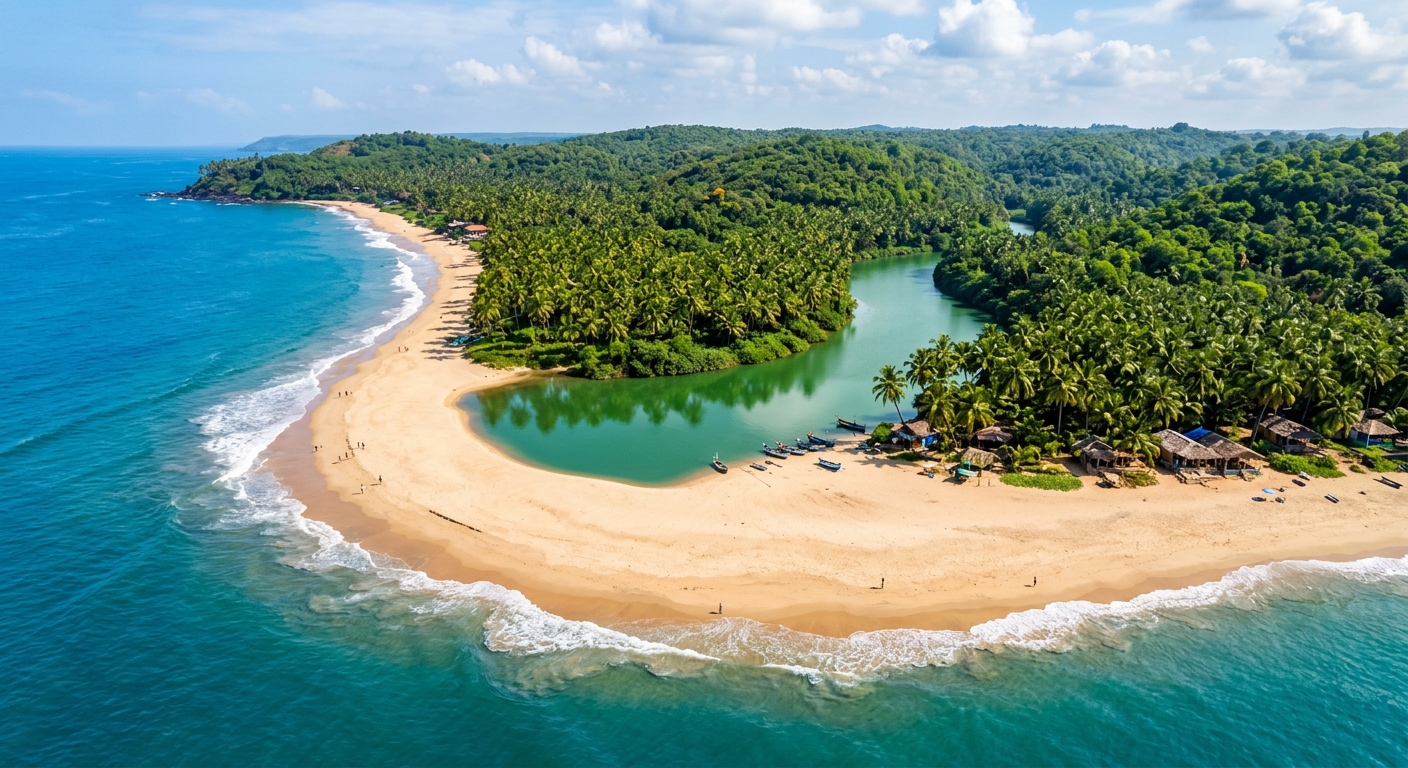
Cola Beach isn’t hidden anymore. It hasn’t been for at least three years. The Instagram algorithm made sure of that. What started as a quiet spot known mostly to locals and long-term Goa travelers became a social media darling around 2023. The “secret lagoon” aesthetic was too perfect to stay secret. By 2026, Cola gets mentioned in almost every “offbeat Goa” listicle. Tour operators include it in South Goa packages. Weekend warriors from Bangalore fly in specifically for it.
But here’s the nuance most articles miss. Cola isn’t crowded like Baga or Calangute. Not even close. The access keeps casual tourists away. You can’t just drive up and park fifty meters from the shore. The road is bad. Actually, bad doesn’t cover it—the last two kilometers from the main Canacona road to Cola Beach is a dirt track with potholes that could swallow a scooter. We saw three cars turn back. One couple on a rented Activa looked genuinely terrified.
This terrible road is Cola’s accidental gatekeeper. It filters out families with toddlers, elderly tourists, anyone in heels or formal wear, and basically anyone not committed enough to handle ten minutes of bone-rattling. Our advice? If you’re on a scooter, go slow. If you’re in a hatchback, you’ll make it but your undercarriage will hate you. We went in our Thar and still felt every single bump.
The result is selective crowds. On the Saturday we visited, there were maybe forty people spread across the entire beach and lagoon. Enough that you’re not alone, but sparse enough that you can shoot photos without strangers in every frame. Mornings, locals say, are even quieter. Ten people maximum before 9 AM. By noon, the Instagram pilgrimage begins. By 4 PM, sunset chasers arrive. But compared to mainstream beaches? Cola still wins the “relative isolation” contest.
So is it hidden? No. Not anymore. Is it still quieter than ninety percent of Goa beaches? Absolutely. That’s the truth nobody puts in the headline.
Myth 2: The Lagoon Is the Main Attraction and the Beach Doesn’t Matter
Wrong again. And this myth cost us two hours.
Every Cola Beach review obsesses over the sweet water lagoon. The crescent-shaped pool separated from the sea by a narrow sand strip. The calm, shallow water perfect for non-swimmers. The reflections at golden hour. All true. The lagoon is gorgeous. We spent an hour there, wading, floating, taking the mandatory couple shots with the palms in the background.
But the actual beach—the Arabian Sea side—is where the magic really is. And most people barely give it twenty minutes.
Here’s what happened. We followed the crowd to the lagoon first. Did our Instagram duties. Then walked over the sandbar to the ocean side, expecting just waves and nothing special. What we found was one of the cleanest, least commercialized stretches of sand we’ve seen in Goa. No shacks blasting Bollywood remixes. No hawkers selling fruit. No jet ski operators. Just waves, sand, and a handful of people actually swimming instead of posing.
The beach curves beautifully. The sand is a deep orange-brown, not white, which gives it a raw, unpolished look. Samprita pointed out there was almost no plastic trash—something we can’t say about Anjuna or even parts of Palolem. The waves are strong. Not dangerous, but strong enough that weak swimmers should stick to the lagoon. I went in up to my chest. The pull was real. Respect the water here.
And here’s the kicker: the sunsets hit differently on the beach side. Everyone crowds the lagoon for sunset because it’s Instagram-famous. But the actual horizon, the place where the sun dips into the Arabian Sea, is visible from the beach. We sat on the sand with maybe five other people and watched the sky turn from orange to purple to ink. No elbowing for space. No tripods blocking the view. Just us and the ocean doing what it’s been doing for centuries.
If you go to Cola and only see the lagoon, you’re seeing half the place. Maybe the lesser half, depending on what you value. The lagoon is pretty. The beach is peaceful. Choose accordingly.
Myth 3: Cola Beach Is Perfect for a Quick Half-Day Visit
This is where planning falls apart for most people.
We’ve seen itineraries that list Cola as a “stop for an hour on the way to Palolem.” That’s a mistake. Not because Cola is huge—it’s not—but because getting there and back eats more time than you think, and the place rewards lingering.
Let’s talk real numbers. From Palolem, which is the closest tourist hub, Cola is about twelve kilometers. Sounds like fifteen minutes, right? It’s not. You take the main road toward Agonda, then turn off toward Khola. The last stretch, like we mentioned, is rough. Budget twenty-five to thirty minutes from Palolem. From Margao, it’s about forty-five kilometers and roughly ninety minutes depending on traffic through Canacona.
We reached around 2 PM. Spent an hour at the lagoon, thirty minutes exploring the beach, another thirty just sitting and doing nothing. By the time we walked back to where we parked, it was past 5 PM. And honestly, it felt rushed. If we’d come earlier, we would’ve stayed longer. The place has a pull. It’s quiet enough that you don’t feel the need to move to the next spot.
Here’s the other time factor nobody mentions: food and facilities. There are beach shacks at Cola, but they’re minimal. Blue Lagoon and one or two others. The menus are basic—Goan fish curry, fried fish, rice, maybe a thali. We ordered kingfish fry and rice. Took forty minutes to arrive. It was fresh, well-cooked, no complaints about taste. But if you’re starving and in a hurry, you’ll be frustrated. The vibe here is slow. Order food, wade in the lagoon, come back when it’s ready. If you’re on a tight schedule, eat before you come.
Also, don’t expect Western toilets or changing rooms with mirrors and outlets. There’s a basic toilet near the shacks. It works. It’s clean enough. But it’s not a resort. Bring wet wipes if you’re particular.
Our recommendation? Give Cola a minimum of four hours. Better yet, plan it as your main activity for the day. Come around 11 AM. Swim in the lagoon. Eat lunch slowly. Nap under a palm if you want. Walk the beach. Stay for sunset. Leave after dark. That’s how you actually experience the place instead of just checking it off a list.
Myth 4: Cola Beach Is Free from Commercialization and Overdevelopment
Partially true. And that “partially” is doing a lot of work.
Yes, Cola Beach is far less developed than North Goa or even Palolem. There are no big resorts lining the shore. No beach clubs with entry fees. No loud music or neon signs. The southern end, where the lagoon meets the sea, feels genuinely untouched. Walk far enough and you’ll find stretches where you’re the only person in sight.
But let’s not pretend it’s pristine wilderness. The Blue Lagoon shacks have been there for years, and in 2026, we noticed they’ve expanded. More huts. More seating. A bigger kitchen setup. There were also a couple of new semi-permanent structures being built further up the beach. Local staff told us a small eco-resort is coming—exact timeline unclear, but construction materials were stacked near the access road.
This is the pattern we’ve seen across Goa. A place gets popular. Infrastructure follows. It’s not always bad. The shacks provide employment. They make the beach accessible for people who want shade and food. But it does change the vibe. Five years ago, according to locals we spoke with, Cola had maybe one shack. Now there are three or four, depending on the season.
And then there’s the trash issue. It’s better than most beaches, but it’s not zero. We found plastic wrappers near the lagoon edge. A few glass bottles half-buried in sand. To be fair, the shack owners do clean up. We saw staff collecting trash in the evening. But the more people come, the harder it is to keep up. We carried our own trash back. If you go, do the same. Don’t be the reason the next traveler sees litter.
Here’s our take: Cola isn’t pristine and it isn’t overdeveloped. It’s somewhere in the middle. A beach in transition. Still worth visiting, but visit soon. Because if Instagram keeps doing its thing, the “eco-resort” we saw being built won’t be the last one.

What We Actually Spent at Cola Beach Goa
Let’s put actual numbers down. Because “budget-friendly” means different things to different people.
Our costs for two people on a Saturday in February 2026:
Fuel from Palolem and back: ₹120 (Thar, roughly 24 km round trip)
Parking: ₹50 (informal parking near the beach access—guy with a notebook, no official receipt)
Kingfish fry and rice for two: ₹500
Two fresh lime sodas: ₹100
Coconut water: ₹60
Bathroom use: ₹10 per person (₹20 total)
Grand total: ₹850 for an afternoon and evening.
If you’re staying overnight, the Blue Lagoon huts range from ₹2,500 to ₹4,500 depending on the season and hut type. We didn’t stay, but a couple we met there said they paid ₹3,200 for a beach-facing hut in mid-February. Basic, but clean. Right on the sand. No AC, just fans. They seemed happy with it.
Compare that to Palolem, where similar beach huts start around ₹4,000 in season, or Agonda, where you’re looking at ₹3,500 minimum. Cola is still cheaper if you’re staying. But the gap is closing.
One cost people forget: vehicle wear. If you’re in a rented scooter, that road will test it. We saw a guy with a flat tire near the entrance. No puncture shop nearby. He had to push the scooter back to the main road. If you’re renting, check your spare tire situation before heading to Cola.
So, Is Cola Beach Goa Worth It?
Depends what you’re comparing it to.
If you’re expecting an untouched paradise with crystal-clear water and zero people, you’ll be disappointed. That version of Cola, if it ever existed, is gone. But if you’re coming from the chaos of Baga or Calangute, or even the mild commercialization of Palolem, Cola will feel like a breath of air.
We’d go back. Probably not on a weekend, though. A weekday morning in the off-season would be ideal. That’s when you’d get closer to the experience the early travel blogs described. As it stands in 2026, Cola is still one of the better beaches in South Goa for couples who want some peace without driving all the way to Galgibaga or Talpona.
But go soon. Because every article that calls it a “hidden gem” makes it a little less hidden. Including this one, ironically. The road won’t stay bad forever. The shacks will multiply. The eco-resorts will open. In five years, Cola might look very different.
For now, it’s in that sweet spot. Known enough that it has basic facilities. Unknown enough that it’s not swarming. It’s not a hidden gem. But it’s not a tourist trap either. It’s just a good beach that’s still figuring out what it wants to be.
We’d call that worth the bumpy ride.
Frequently Asked Questions
Is Cola Beach Goa safe for swimming?
The lagoon is completely safe—shallow, calm, no currents. Even non-swimmers can wade comfortably. The ocean side is a different story. The waves are strong and the undertow is real. If you’re a confident swimmer, it’s fine, but stay aware. We wouldn’t recommend it for kids or weak swimmers. No lifeguards on duty, so you’re responsible for your own safety.
Can I reach Cola Beach on a scooter?
Yes, but go slow and be prepared for a rough ride. The last two kilometers are unpaved and full of potholes. If you’re not confident riding on broken roads, consider hiring a cab or going in a car. We saw scooters make it, but also saw a couple turn back halfway. Check your vehicle before you go—working brakes and decent tires are non-negotiable.
Are there accommodations directly at Cola Beach?
Yes. Blue Lagoon and a couple of other operators rent beach huts ranging from ₹2,500 to ₹4,500 per night depending on season and location. They’re basic—fans, mosquito nets, shared or attached bathrooms. Don’t expect luxury, but if you want to wake up to the sound of waves, it works. Book ahead during peak season (December to February) as there aren’t many huts total.
What’s the best time to visit Cola Beach to avoid crowds?
Early morning, before 9 AM, is the quietest. Weekdays are significantly less crowded than weekends. If you can visit during the shoulder season (late October or early March), even better. Avoid Saturdays and Sundays in peak season unless you’re okay with moderate crowds—still far fewer people than mainstream beaches, but you won’t have the place to yourself.
Ready to Explore Cola Beach and Beyond?
If this honest take on Cola Beach Goa helped you figure out whether it’s worth your time, you’ll probably like how Musafir Couple approaches the rest of Goa and beyond. We don’t do picture-perfect travel content. We do real roads, real costs, real confusion, and real opinions. Ketan and Samprita travel, discover, and share what actually happens—including the parts that don’t make it to Instagram.
Looking for more unfiltered destination reviews, hidden spots in Maharashtra and Goa, or road trip itineraries with actual fuel costs and timing? Head over to the Musafir Couple YouTube channel and website. We’ve covered everything from Mulshi farmhouses to Salaulim Dam, spiritual journeys to weekend escapes, always with the same question: is it actually worth it?
Got questions about Cola Beach or planning a South Goa trip? Drop a comment on our latest vlog or reach out through our social channels. We’re just a couple figuring this out as we go—and we’re happy to help you do the same.
Travel real. Travel honest. That’s the only way we know how.