

 by
by We pulled up to what was supposed to be a “secret beach” in South Goa. The blog post we’d followed promised untouched sand and zero crowds. What we found? Three shacks, a parking attendant demanding ₹100, and a lineup of taxis waiting to ferry the next batch of “secret seekers.” That’s when it hit us—everyone’s chasing the same hidden gems, and most of them aren’t hidden anymore.
Here’s the thing: Goa’s real magic doesn’t live in the places that show up on page one of Google. It lives in the wrong turns, the conversations with locals who don’t run beach shacks, and the willingness to skip what everyone else is doing. After dozens of trips across North and South Goa, we’ve learned that finding authentic experiences Goa isn’t about knowing where to go—it’s about knowing how to look.
Why Most “Hidden Gem” Lists Lead You Straight to Tourist Traps
Let’s be honest. Every travel blog claims to reveal off-the-beaten-path Goa. Then they list the same twelve spots everyone else does. Cola Beach was genuinely quiet five years ago. Now it’s got organised parking, signboards, and weekend crowds from Bangalore. That’s not anyone’s fault—it’s just what happens when a place gets written about enough times.
The problem isn’t the destinations. It’s the method.
Most people research Goa the same way: Google a phrase, click the top three results, screenshot the names, and call it a plan. They’re not finding hidden gems in Goa—they’re following a digital trail that thousands walked before them. We did this too. Week one of our first Goa trip was a parade of disappointment. Palolem was packed. Anjuna felt like a carnival. Even the “quiet” spots had tour groups.
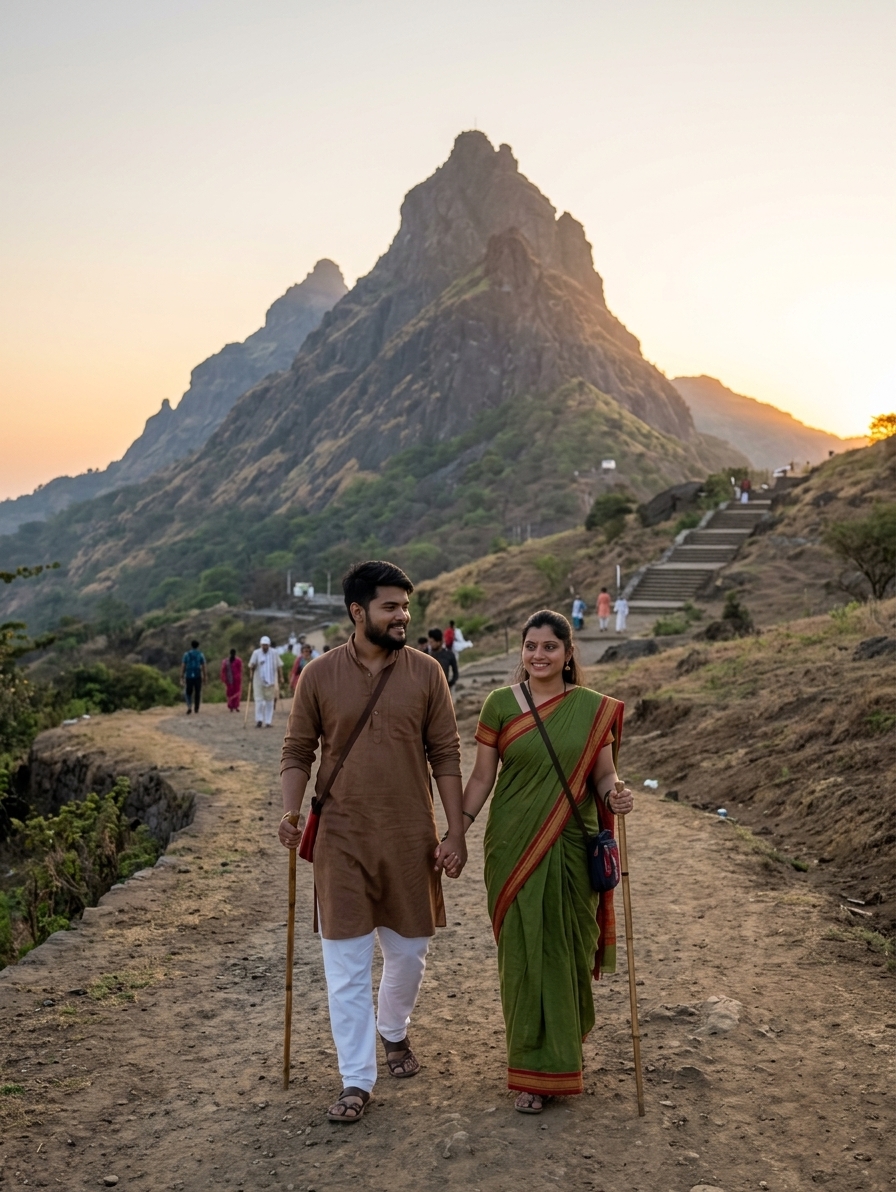
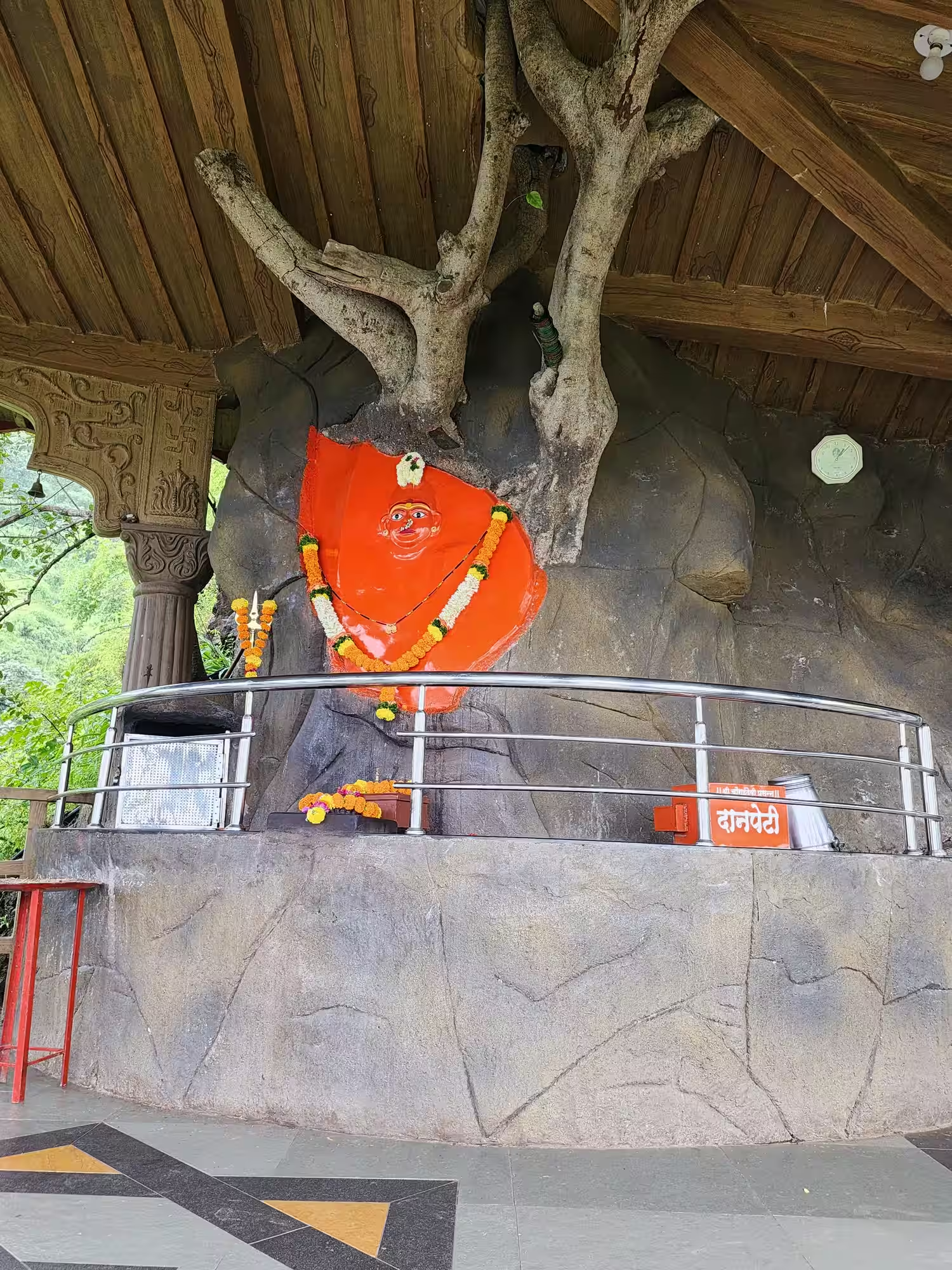
The shift happened when Samprita got talking to a woman selling bangles near Chapora Fort. Not about travel. Just about life, family, the rains. Twenty minutes in, the woman mentioned a tiny Ganesh temple her grandfather built, tucked near Siolim, where hardly anyone goes. No Instagram geotag. No review on Google Maps. Just a real place that mattered to real people. We went the next morning. It was ours alone.
That’s the difference. Tourist traps are designed to be found. Hidden gems reveal themselves when you stop hunting and start talking.
Talk to People Who Don’t Benefit From Your Tourism Spend
This sounds obvious, but most travelers in Goa only talk to people selling them something—shack owners, taxi drivers, tour guides, hotel staff. All lovely people. All economically tied to showing you what’s already popular. They won’t send you somewhere obscure because obscure doesn’t pay their bills.
The locals who’ll actually point you toward authentic experiences Goa are the ones with nothing to sell. Fishermen mending nets at dawn. Elderly folks sitting outside their homes in Aldona. Shopkeepers in Mapusa Market who’ve been there thirty years. Aunties buying vegetables in Ponda. These conversations take longer. They require patience, a few words of Konkani if you can manage, and genuine curiosity—not just “where should I go?”
We’ve learned more about local attractions Goa from a fifteen-minute chat with a bus conductor than from any curated blog post. He told us about a small waterfall near Netravali that flows year-round, accessible only by a narrow village road most tourists would never notice. No entry fee. No vendors. Just water, rocks, and quiet. It’s not on any list because it doesn’t need to be.
Start your mornings at local markets—Mapusa, Margao, Ponda—not the Saturday Night Market in Arpora. Ask someone buying fish where they go when they want peace. You’ll get better answers than any search engine can provide.
Go Where Roads Get Worse, Not Better
Here’s a pattern we noticed: the moment a Goa destination gets popular, the road improves. Paving happens. Signboards go up. Google Maps adds the route. That’s your signal that you’re late to the party.
The hidden gems in Goa still live at the end of roads that make you second-guess your suspension. Narrow lanes through paddy fields. Unsigned turns off the main highway. Routes where you have to stop twice and ask directions because your GPS gave up.
We found one of our favorite homestays near Pale, inland from Anjuna, purely because we took a wrong turn trying to avoid highway traffic. The road wasn’t on our map. It wasn’t even properly tarred in patches. But it led us to a family-run property with three rooms, home-cooked Goan fish curry, and a grandfather who told stories about pre-tourism Goa while we sat on the veranda. Cost? ₹1,200 a night. Booking? A phone call, not an app.
That same week, we tried a “boutique eco-resort” we’d seen on Instagram. Gorgeous photos. Great reviews. The road leading to it was a smooth four-lane highway with clear signs every hundred meters. The place itself was fine—well-designed, professionally run—but it felt like a product, not a discovery.
If you want to avoid tourist traps Goa, follow this rule: when the road gets questionable, keep going. The good stuff is almost always another kilometer past where most people turn around.
Use Google Maps Backwards—Look for the Gaps
Everyone uses Google Maps to find places. We use it to find emptiness. Open the satellite view. Zoom into coastal or inland Goa. Don’t look at the pins—look at the spaces between them. The patches of green with no labels. The coastline with no beach shack clusters. The villages with one small road in and no tourist infrastructure visible.
That’s where off-the-beaten-path Goa actually is. Not hidden in the sense of secret—just unmarketed.
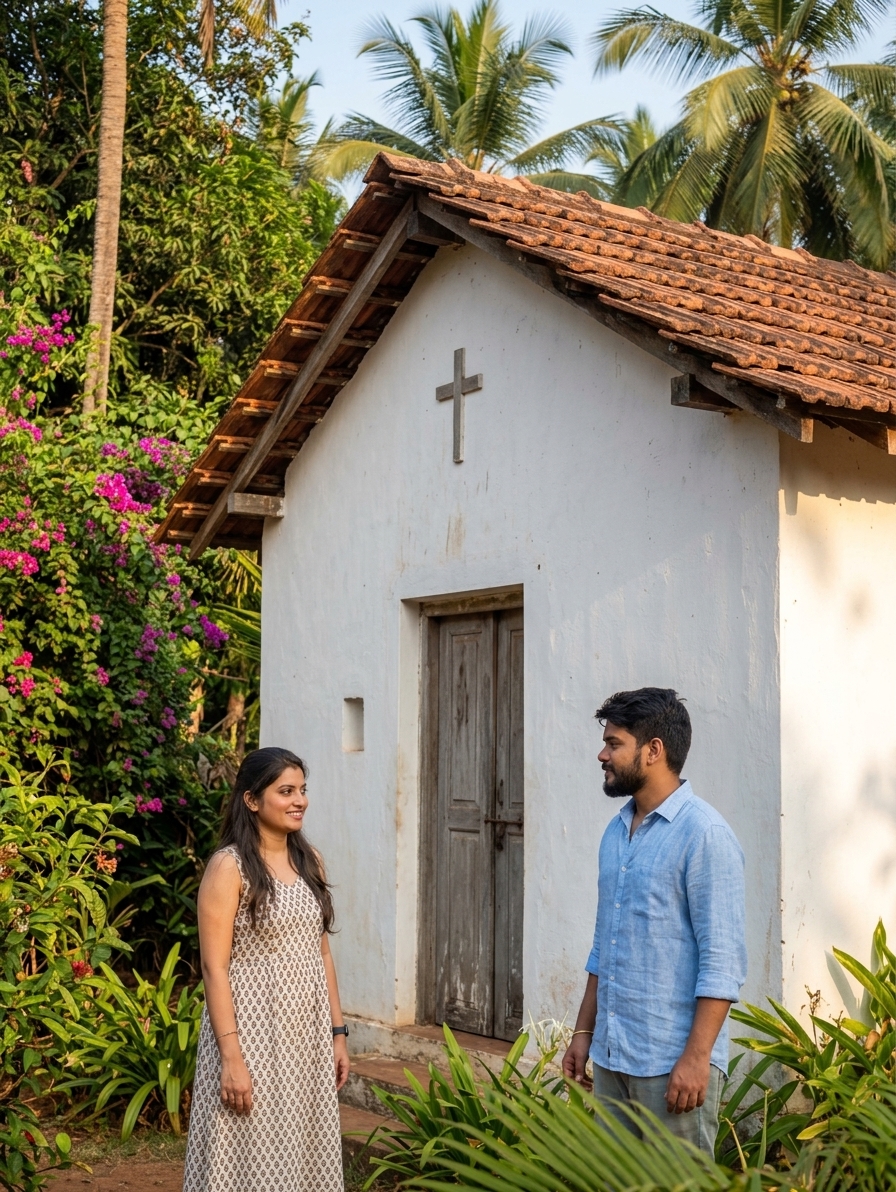
We discovered a tiny chapel near Divar Island this way. Satellite view showed a structure surrounded by trees, no road access marked, just a footpath from the ferry point. We took the ferry across, asked a local if the path was walkable, and spent an hour there completely alone. The chapel’s been there since the 1600s. It just doesn’t have a gift shop or a parking lot.
Same method led us to a quiet riverside spot near Aldona where locals come to fish in the evenings. No name. No reviews. Just a clearing by the Mandovi with a couple of benches and the kind of stillness you don’t find at popular sunset points.
This approach works because most travelers start their search with “things to do” or “places to visit.” They’re looking for destinations that already exist in the tourism economy. You’re looking for geography that hasn’t been monetized yet.
One warning: some of these gaps are private property or protected areas. Always ask before entering, and respect when someone says no. The goal is authentic, not intrusive.
Ignore Sunset Points—Find Your Own
Every Goa itinerary includes a sunset point. Chapora Fort. Vagator cliff. Cabo de Rama. These are beautiful spots, no question. They’re also full of people doing the exact same thing at the exact same time, all holding phones at the same angle.
We stopped going to designated sunset points in 2024. Not because they’re bad—because they’re performed. Everyone knows what they’re supposed to do there. The experience is pre-scripted.
Instead, we started asking a simple question every evening around 5:30 PM: where are we right now, and can we see the horizon from somewhere nearby? Sometimes that’s a random curve on a coastal road. Sometimes it’s a hilltop in Ponda with zero views of the ocean but a stunning spread of laterite hills turning orange. Once, it was the rooftop of our homestay in Saligao, with nothing but paddy fields and distant palms.
One of the best sunsets we’ve watched in Goa happened at a small clearing near Morjim, not the main beach strip but a patch of sand accessed through a fishing village where we’d stopped to buy fresh prawns. No other travelers. Just a few boats pulled up on shore and two fishermen chatting while the sky turned purple. No performance. Just light.
Finding local attractions Goa isn’t about knowing the names. It’s about being somewhere unplanned at the right time and noticing what’s in front of you. Your own sunset point beats a famous one every single time.
Eat Where There’s No Menu in English
Food is the fastest way to separate tourists from locals. If the menu’s in English, laminated, and features “continental options,” you’re eating tourism. If it’s handwritten in Konkani or Marathi with a couple of English translations scribbled in the margin, you’re eating Goa.
The best xacuti we’ve had was at a small joint in Ponda that didn’t even have a signboard. We found it because Ketan asked a shopkeeper where he eats lunch. The place had four tables, zero ambiance, and a single cook making everything fresh. The menu was verbal. You sat down, and she told you what was ready. That day: fish curry, chicken xacuti, sol kadhi, rice. That’s it. ₹180 for two people, including buttermilk and pickle.
Compare that to a beach shack in Calangute where the same xacuti cost ₹420 per plate, tasted fine, and came with a side of loud music and table service that felt like a transaction, not a meal.
To find authentic experiences Goa through food, follow this: eat where locals eat lunch, not where tourists eat dinner. Lunch spots turn over fast. They can’t afford to coast on location or Instagram appeal—they need to be good, cheap, and quick. Dinner spots can get away with average food and strong lighting.
Mapusa Market has half a dozen small canteens tucked behind the main vegetable section. Margao has roadside spots near the old market that serve Goan breakfast—poie, terrem, and chai—for under ₹50. Ponda has pure-veg places that serve the best amboli and ussal you’ll find. None of them look like much. All of them taste real.
Also: if the restaurant has a name like “Goan Spice Garden” or “Sunset Beach Kitchen,” skip it. If it’s called “Anita’s” or “Martins” or just “Laxmi Pure Veg,” you’re probably in the right spot.

Visit Temples and Churches That Aren’t in the Guidebook
Goa’s popular temples and churches are spectacular—Basilica of Bom Jesus, Shree Manguesh, Shanta Durga. But they’re also crowded, and the experience can feel more like sightseeing than connection.
The hidden gems in Goa’s spiritual landscape are the small, village-level temples and chapels that serve local communities, not tourist itineraries. These places don’t have gift shops or audio guides. They have caretakers who’ve lived there their whole lives and are genuinely surprised when someone from out of state shows up.
We’ve stumbled into tiny roadside temples in Quepem and Canacona where the only other person present was the priest, who spoke to us for twenty minutes about the deity, the annual festival, and how the village funds the upkeep. No entry fee. No photography rules. Just trust that you’ll be respectful.
Same with churches. There’s a small chapel near Cortalim, tucked into a hillside, that we found while driving back from Vasco. It was open, empty, and incredibly peaceful. The altar was simple. The walls were whitewashed. It felt like a place of actual worship, not a monument.
These aren’t attractions. They’re active sites of faith. That’s exactly why they feel different. You’re not observing Goa’s culture—you’re brushing against it quietly, on its own terms.
Always dress modestly, ask before taking photos, and if there’s a donation box, contribute. These places run on community support, not ticket sales.
Time Your Visit Around Local Festivals, Not Peak Tourist Season
Most people visit Goa between November and February because that’s when the weather’s perfect and the beaches are gorgeous. It’s also when prices double, crowds triple, and every experience is designed for maximum tourist throughput.
We’ve had our best Goa trips in late September and early October—just after monsoon, when everything’s green, waterfalls are actually flowing, and locals have their towns back. Yes, some beach shacks are closed. Yes, it rains occasionally. But the Goa you’ll see is closer to the Goa people actually live in.
Even better: plan around local festivals that aren’t marketed to tourists. Sao Joao in late June, where villages celebrate with well-jumping and coconut offerings. Ganesh Chaturthi in September, with neighborhood processions and homemade modaks. Diwali in November, but experienced in a village home, not a resort event.
These festivals aren’t performances. They’re traditions. Locals are often happy to have visitors who show genuine interest—but you need to approach respectfully, not like you’re attending a cultural show. Ask if you can join. Don’t assume.
We spent Sao Joao in a small village near Siolim in 2025. A family we’d met a few days earlier invited us to their home. We helped make sannas, watched the young men jump into the well (fully supervised and traditional), and stayed for a meal that went on for three hours. Zero tourists. Just us, the family, and their neighbors. It’s still one of the most authentic experiences Goa has given us.
Timing matters. Go when locals are living their lives, not when the tourism calendar says you should.
Stop Chasing Beaches—Explore Inland Goa
Everyone comes to Goa for beaches. That’s fine. But if you never leave the coast, you’re missing more than half of what makes Goa interesting.
Inland Goa—Ponda, Sanguem, Canacona interior, Bicholim—is where you’ll find off-the-beaten-path Goa without even trying. Spice plantations that aren’t tourist traps, just working farms. Quiet villages with laterite homes and tiled roofs. Rivers and streams you can actually hear. Temples surrounded by forest. Roads that don’t have a single beach shack for fifty kilometers.
We spent two days based in Ponda earlier this year. No beach in sight. Instead: we visited the Tambdi Surla temple, a 12th-century stone structure deep in the forest. We drove through areca nut plantations. We stopped at a small wildlife sanctuary where we saw a family of monkeys and not a single other human. We ate at roadside dhabas where the specialty was Goan Hindu vegetarian food—not fish curry and feni, but bhaji, kadhi, and coconut rice.
It felt like a completely different state. Because in many ways, it is.
Most tourists see coastal Goa—beaches, shacks, parties, sunsets. Locals live in both coastal and inland Goa. If you want to avoid tourist traps Goa, spend at least two days away from the ocean. Rent a scooter or car and just drive. Take random turns. Stop when something looks interesting. Talk to people.
The Dudhsagar waterfalls are popular, yes, but the roads leading to them pass through villages that see almost no tourism. The drive itself is more interesting than the destination. Same with the Bhagwan Mahavir Wildlife Sanctuary—most people go for the falls and skip the forest trails, which means the trails are nearly empty.
Inland Goa won’t give you sunset photos for Instagram. It’ll give you the quiet, the green, and the sense that you’ve actually left the tourist circuit behind.
Rethink What “Hidden” Really Means
Here’s the truth: truly hidden places in Goa don’t stay hidden once you write about them. The moment something gets named in a blog post, shared on social media, or tagged on Google Maps, it enters the tourism economy. That’s not bad. It’s just how it works.
So maybe the goal isn’t to find hidden gems in Goa that no one else knows about. Maybe it’s to change how you experience the places you visit—popular or not.
We’ve been to Palolem a dozen times. It’s not hidden. It’s not quiet. It’s absolutely a tourist spot. But we’ve also watched sunrise there with almost no one around, had conversations with fishermen who’ve worked that beach for forty years, and eaten at a family-run shack so far from the main strip that most people never walk that far.
Same beach. Different experience. Because we went early, stayed late, walked past the crowds, and asked questions.
You can do this anywhere. Anjuna Flea Market is packed on Wednesday evenings—so go Thursday morning when vendors are packing up and you can actually have a conversation. Chapora Fort is full at sunset—so visit at 7 AM when it’s just you, the wind, and maybe one local walking their dog. Dudhsagar is a zoo on weekends—so go midweek, hire a local jeep driver who knows alternate entry points, and see it differently.
The hidden part isn’t always the place. Sometimes it’s the timing, the approach, or the willingness to stay longer than the Instagram moment requires.
Frequently Asked Questions
What are some lesser-known hidden gems in Goa that most tourists miss?
Divar Island, accessible by ferry, is a quiet village with old Portuguese homes, churches, and zero commercial tourism. Netravali’s Budbudyanchi Tali (a bubbling spring inside the Sahyadri forest) and the nearby small waterfalls are beautiful and rarely crowded. Pale village near Anjuna offers lush paddy fields and homestays far from the beach chaos. The laterite caves near Arvalem are fascinating but seldom visited. Spend time in Ponda’s village temples—many are architecturally stunning and see almost no tourists.
How can I avoid tourist traps Goa during peak season?
Travel inland instead of sticking to coastal hotspots. Visit beaches early morning or late afternoon, not midday. Eat where locals eat—look for Konkani menus and no English signboards. Skip organized tours and rent a scooter to explore on your own. Talk to non-tourism workers—shopkeepers, market vendors, bus drivers—for real recommendations. Book homestays in villages, not resorts in tourist zones. Go to festivals and religious sites that aren’t in guidebooks.
Are off-the-beaten-path Goa locations safe for couples traveling alone?
Yes, but use common sense. Stick to daylight hours in isolated areas. Inform your homestay or hotel when exploring remote spots. Avoid completely deserted beaches after dark. Inland villages and lesser-known temples are generally very safe and locals are welcoming. We’ve traveled across Goa as a couple for years without any safety issues. That said, always trust your instinct—if a place feels wrong, leave. Respect local customs, dress modestly in villages and religious sites, and you’ll be fine.
What’s the best time to find authentic experiences Goa without crowds?
Late September to early November, right after monsoon. The landscape is green, waterfalls are full, and tourist infrastructure is just reopening—but crowds haven’t arrived yet. Prices are lower, locals are more relaxed, and you’ll see Goa in a quieter, more authentic state. June to August is monsoon—some places close, but it’s beautiful and empty if you don’t mind rain. Avoid December to January unless you’re okay with peak crowds and inflated pricing.
Ready to See the Goa Most People Miss?
Finding hidden gems in Goa isn’t about secret coordinates or insider lists. It’s about slowing down, talking to real people, taking wrong turns on purpose, and choosing experience over itinerary. It’s about eating where there’s no English menu, visiting temples with no gift shop, and watching sunsets from places that don’t have a name.
We’re Ketan and Samprita from Musafir Couple, and we’ve been exploring Goa this way for years—not as influencers chasing content, but as travelers chasing connection. Every trip we take, we share the real routes, the honest costs, the confusion, and the moments that don’t fit into a highlight reel. Because that’s what actual travel looks like.
If you want more stories like this—off-the-beaten-path Goa, hidden temples, real homestays, inland routes, local food spots, and the kind of travel that doesn’t feel performed—follow Musafir Couple on Instagram and YouTube. We don’t sell you Goa. We share the Goa we’ve lived. And if you’ve found your own hidden gems in Goa that changed how you see this place, tell us. We’re always listening.

