
 by
by We’d been to mountains. We’d chased beaches. But when Ketan and I planned our Kanyakumari temple tour itinerary, we didn’t realize how different a spiritual journey feels compared to a regular vacation. The roads are the same. The planning looks similar. But something shifts when you’re traveling to connect rather than just explore.
Most couple travel guides show you scenic viewpoints and romantic dinners. This one’s different. We’re sharing our actual 3-day Kanyakumari trip, temple by temple, with real costs, what worked, what didn’t, and why this route matters if you’re looking for something deeper than just ticking off destinations.
Why Kanyakumari Works for Spiritual Couples (Not Just Tourists)
Here’s what we noticed. Kanyakumari isn’t built for Instagram. It’s built for pilgrims.
When we rolled into town after a 10-hour drive from Pune, the vibe was instantly different from our usual beach getaways. No loud music. No party crowds. Just waves, temples, and people who came here for something bigger than a weekend break.
The southernmost tip of India has this raw, unpolished energy. You’re standing where three seas meet, where Swami Vivekananda meditated on a rock in the middle of the ocean, where the Kumari Amman Temple has stood for centuries. It’s not a couples’ retreat in the usual sense. But if you’re okay with early mornings, walking barefoot on hot temple floors, and actually talking about what faith means to both of you, this place nails it.
What surprised us? How well the Kanyakumari temple route works for couples. You’re not separated by gender rules in most temples. You walk together, pray together, and process it together. That shared experience — especially at sunrise or during evening aarti — hits differently.
Day 1: Arrival, Kumari Amman Temple, and Vivekananda Rock
We reached Kanyakumari around 4 PM. Checked into a budget hotel near the beach (₹1,200 per night, basic but clean). First mistake: we thought we’d rest and start fresh the next day.
Don’t do that.
The best time to visit Kumari Amman Temple is late evening when the crowds thin out and the energy shifts. We walked there around 6 PM. Entry is free, but you’ll stand in a long queue if you don’t time it right. Weekdays are better than weekends. Avoid full moon days and festival dates unless you’re comfortable with massive crowds.
Inside, the temple is small but powerful. The deity — Goddess Kanya Kumari — faces the ocean. Cameras aren’t allowed inside the main sanctum. Phones stay outside. It’s just you, the priest chanting, and the smell of sandalwood and jasmine everywhere.
Samprita found it moving in a way she didn’t expect. I’ll admit, I was skeptical about temple visits being “spiritual experiences,” but something about the simplicity here works. No gold plating. No fancy decorations. Just raw devotion.
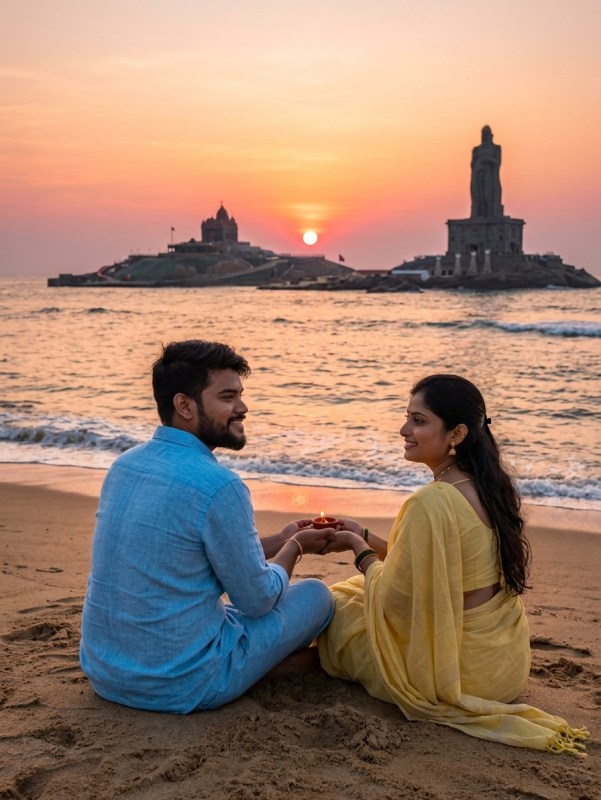
After darshan, we walked to the shore. Kanyakumari beach isn’t for swimming. It’s rocky, the waves are rough, and the undertow is dangerous. But the view — especially at sunset — is worth every second. We sat there, didn’t talk much, just watched the light change.
That evening, we skipped Vivekananda Rock because the ferry timings had ended (last ferry is around 4 PM, depending on the season). That became our Day 2 plan.
Dinner was at a local vegetarian spot near the temple — simple South Indian thali for ₹120 per person. Most restaurants near the temple close by 9 PM. This isn’t a late-night town.
Day 1 Cost Breakdown:
- Accommodation: ₹1,200
- Meals: ₹240
- Local transport (auto from hotel to temple): ₹50
- Temple offerings: ₹100
- Total: ₹1,590
Day 2: Vivekananda Rock, Thiruvalluvar Statue, and Suchindram Temple
We woke up at 5 AM for sunrise. Not because we’re morning people. Because missing sunrise at Kanyakumari is like visiting Goa and skipping the beach.
The beach was already filling up. We found a spot near the rocks, sat down, and waited. When the sun came up from the ocean — the only place in India where you can watch both sunrise and sunset over water — it felt like the whole trip made sense. Couples were sitting quietly. Families were taking photos. Pilgrims were chanting.
It wasn’t loud. It wasn’t performative. Just real.
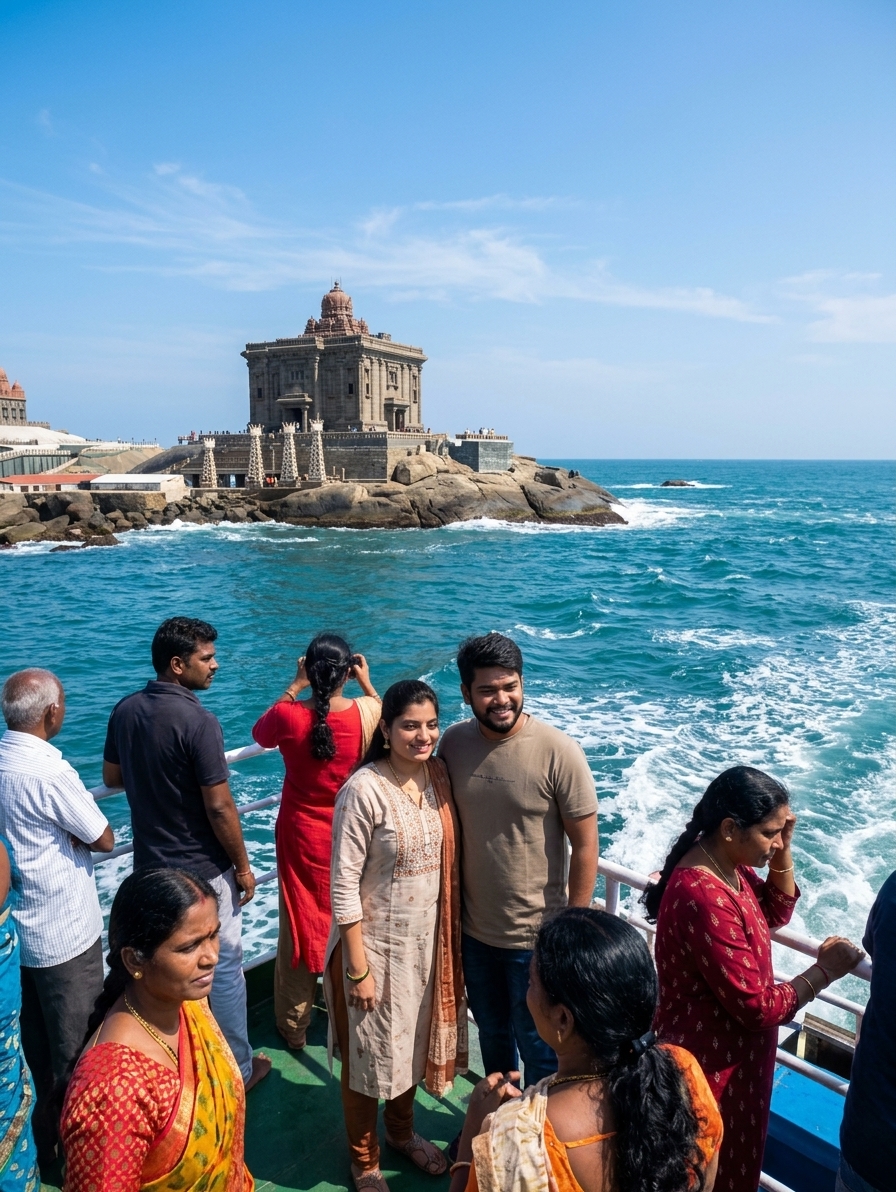
After breakfast (idli-vada-coffee for ₹80), we headed to the Vivekananda Rock ferry point. Tickets are ₹50 per person for the ferry, plus ₹20 for the rock memorial entry. The queue can get long by 9 AM, so we reached by 8 AM and got through in about 20 minutes.
The ferry ride takes roughly 10 minutes. The sea is choppy. If you’re prone to motion sickness, carry a lemon or ginger candy.
Vivekananda Rock Memorial is where Swami Vivekananda meditated in 1892 before heading to the World Parliament of Religions in Chicago. The architecture is stunning — a mix of different Indian styles. Inside, there’s a meditation hall. We sat there for about 15 minutes. Silence rule is strict. Guards will ask you to leave if you talk.
From the rock, you can see the Thiruvalluvar Statue — a 133-foot-tall structure honoring the Tamil poet-saint. You can visit it on the same ferry trip (combined ticket available for ₹70). We skipped it because we’d read it’s more of a monument than a spiritual site, and we were saving energy for the afternoon temple run.
Back on shore by 11 AM. We grabbed lunch and then drove 13 kilometers to Suchindram Thanumalayan Temple.
This temple is underrated. Most Kanyakumari temple route guides skip it, but it’s one of the oldest temples in Tamil Nadu. The carvings are incredible. The musical pillars — yes, they actually produce different sounds when tapped — are fascinating. The deity here represents Brahma, Vishnu, and Shiva in one form, which is rare.
It’s less crowded than Kumari Amman Temple. You’ll actually have space to walk around, sit, and absorb the architecture. We spent close to an hour here. Entry is free, but there’s a ₹50 camera fee if you want photos of the exterior.
Day 2 Cost Breakdown:
- Sunrise spot (no cost, just wake up early): ₹0
- Breakfast: ₹80
- Ferry and rock memorial tickets (both): ₹140
- Lunch: ₹200
- Fuel to Suchindram (13 km): ₹50
- Temple offerings: ₹50
- Dinner: ₹250
- Total: ₹770
Day 3: Padmanabhapuram Palace, Thanumalayan Temple, and Return Prep
Most couples wrap up Kanyakumari in two days. We added a third because we wanted to visit Padmanabhapuram Palace, which is technically in Kerala (16 kilometers from Kanyakumari) but culturally tied to the region.
It’s not a temple. It’s a 16th-century wooden palace that was the seat of the Travancore rulers. If you’re into history and architecture, it’s a must-visit. If you’re only doing a spiritual journey, you can skip it.
We reached around 9 AM (it opens at 9 AM and closes by 4:30 PM, closed on Mondays). Entry is ₹35 per person for Indians, ₹250 for foreigners. Photography inside is not allowed.
The palace is massive. Wooden ceilings, carved pillars, a prayer room with Belgian mirrors, an underground chamber that stays cool even in summer — it’s beautiful. The guide (₹200, optional but recommended) explained the history and took us through rooms we would’ve missed otherwise.
We spent about 90 minutes there. By 11 AM, we were back on the road.
Our last spiritual stop was Thanumalayan Temple in Suchindram again, but this time for the evening aarti. The energy in the evening is completely different from midday visits. Lamps are lit, chanting echoes through the halls, and the whole space feels alive.
We also visited the smaller Nagaraja Temple inside the complex, dedicated to the serpent deity. It’s quieter, less crowded, and Samprita found it strangely calming.
By 7 PM, we were back at our hotel, packing up for the drive back the next morning.
Day 3 Cost Breakdown:
- Padmanabhapuram Palace entry and guide: ₹270
- Fuel (round trip to palace, 32 km total): ₹120
- Breakfast: ₹100
- Lunch: ₹220
- Evening temple visit (offerings): ₹50
- Dinner: ₹200
- Total: ₹960
What This 3-Day Kanyakumari Trip Taught Us About Couple Spiritual Journeys
We’ve done beach trips where we barely talked. We’ve done road trips where we argued about directions. But this felt different.
Spiritual travel slows you down. You can’t rush through a temple. You can’t scroll through Instagram during aarti. You’re forced to be present, and that presence spills over into how you connect with each other.
Ketan and I aren’t overtly religious. We don’t do daily prayers or follow strict rituals. But standing together at the edge of India, watching the sunrise, sitting silently in a meditation hall — it reminded us why we travel together in the first place. Not just to see new places, but to experience something bigger than our routine.
Would we recommend this 3-day Kanyakumari trip for every couple? No. If you’re looking for luxury resorts, nightlife, or constant activity, this isn’t it. But if you’re okay with simple stays, vegetarian food, early mornings, and a slower pace, Kanyakumari delivers something rare: space to reflect together.
Practical Tips We Wish Someone Had Told Us
Dress Code Matters
Most temples have strict dress codes. Men need to wear dhotis or loose pants (jeans are usually okay). Women need to cover shoulders and knees. Samprita wore long kurtas and it worked fine. Leggings and sleeveless tops will get you stopped at the entrance.
Temple Timings Are Non-Negotiable
Kumari Amman Temple opens around 4:30 AM and closes by 12:30 PM, then reopens around 4 PM. Vivekananda Rock Memorial ferry operates from 8 AM to 4 PM. Suchindram Temple is open most of the day, but evening aarti is around 6 PM. Plan your day around these timings, not the other way around.
Food Is Simple, Embrace It
You won’t find continental breakfasts or wood-fired pizzas here. It’s South Indian vegetarian food — idli, dosa, sambar, rice, curd. We loved it, but if you’re a picky eater, carry snacks.
Accommodation Isn’t Fancy
We stayed at a budget hotel because we knew we’d only use it to sleep. If you want better options, book early. Mid-range hotels (₹2,000–₹3,500 per night) fill up fast during peak season (October to February).
The Sea Is Rough
Don’t underestimate the waves. We saw tourists trying to wade in, and lifeguards had to pull them back. The ocean at Kanyakumari is not for swimming. Respect it.
Cash Over Cards
Many small temples, local eateries, and auto drivers don’t accept cards or UPI. We carried around ₹5,000 in cash and used most of it.

Best Time to Visit for a Kanyakumari Temple Route
We went in December. Weather was perfect — cool mornings, warm afternoons, pleasant evenings. Crowds were moderate.
Peak season (October to March) brings more tourists but also better weather. If you’re okay with crowds, this is when you should go.
Monsoon (June to September) is risky. Ferries to Vivekananda Rock often get canceled due to rough seas. Temple visits are fine, but the overall experience takes a hit.
Summer (April to May) is hot. Really hot. Temple floors get scorching by midday, and walking barefoot becomes painful. If you’re visiting in summer, plan temple visits for early morning or late evening only.
Total Cost for 3-Day Kanyakumari Trip (Couple Budget)
Here’s the honest breakdown:
- Accommodation (2 nights): ₹2,400
- Meals (3 days, both): ₹1,290
- Temple entries and offerings: ₹500
- Ferry and monument tickets: ₹210
- Fuel (local travel, excludes long-distance drive): ₹220
- Guides and extras: ₹200
- Miscellaneous: ₹300
Total: ₹5,120 for two people
This excludes fuel for the long-distance drive from Pune (roughly ₹6,000 for a round trip of 1,900 kilometers in our hatchback). If you’re flying to Trivandrum and taking a cab to Kanyakumari (90 kilometers), add ₹2,500–₹3,000 for transport.
It’s not an expensive trip. It’s not a luxury trip. But it’s a trip that stays with you.
Common Myths About Spiritual Places in Kanyakumari
Myth: You need to be religious to enjoy it.
Not true. We met couples who came purely for the history, the architecture, and the ocean views. The spiritual vibe is there, but it doesn’t demand anything from you.
Myth: Kanyakumari is just one temple.
The Kumari Amman Temple is the main draw, but Suchindram, Padmanabhapuram, and the rock memorial all add depth. If you only visit one spot, you’re missing the point.
Myth: It’s too conservative for couples.
We were worried about this. But couples are everywhere. Holding hands isn’t frowned upon. Sitting together at temples is normal. Just dress respectfully and you’re fine.
Why We’re Glad We Did This
When we packed up on Day 3, Samprita said something that stuck with me: “This trip didn’t feel like a break from life. It felt like a reset.”
That’s it. That’s the whole point of a couple spiritual journey in Kanyakumari.
You’re not escaping. You’re pausing. You’re sitting together at the southernmost tip of India, watching the ocean, visiting temples that have stood for centuries, and reconnecting — not just with each other, but with something bigger.
Would we do it again? Absolutely. Would we add more days? Probably. Would we recommend it to couples who usually do resort vacations? Only if they’re ready for something completely different.
This isn’t a trip you post 100 Instagram stories about. It’s a trip you talk about months later, when you’re sitting at home and someone asks, “What was your favorite travel moment this year?”
And you’ll say Kanyakumari. Not because it was the prettiest or the most comfortable. But because it mattered.
Frequently Asked Questions
Is Kanyakumari temple tour itinerary suitable for first-time spiritual travelers?
Yes, absolutely. We weren’t experienced temple travelers before this trip, and the route felt manageable. The temples aren’t overly complicated, locals are helpful, and everything is concentrated in a small area. Start with Kumari Amman Temple and Vivekananda Rock, then add others if you’re comfortable.
How many days do you need for a complete Kanyakumari temple route?
Three days is ideal if you want to visit the main spiritual places in Kanyakumari without rushing. Two days works if you skip Padmanabhapuram Palace and focus only on temples. One day feels too rushed and you’ll miss the sunrise, evening aartis, and the chance to actually absorb the experience.
What’s the dress code for temples in Kanyakumari?
Men should wear full-length pants or dhotis (available for rent outside temples for ₹10–₹20). Women need to cover shoulders and knees — long kurtas, sarees, or salwar kameez work best. Avoid shorts, sleeveless tops, and tight leggings. Most temples will not let you enter if you’re not dressed modestly.
Can couples stay together in Kanyakumari hotels near temples?
Yes, married couples have no issues. Most hotels near the temple area ask for ID proof. We stayed at a budget hotel and faced zero problems. If you’re an unmarried couple, some smaller lodges might ask questions, but mid-range hotels are generally fine.
Ready to Plan Your Kanyakumari Spiritual Journey?
If you’re a couple looking for a travel experience that’s more than just sightseeing, Kanyakumari delivers. It’s raw, it’s real, and it asks you to slow down and pay attention.
We’ve shared our exact 3-day Kanyakumari trip itinerary, costs, timings, and honest takes because we know how hard it is to find real information that isn’t just “Top 10 Things to Do” lists.
At Musafir Couple, we don’t do picture-perfect travel content. We share what actually happened — the good parts, the confusing parts, the moments that surprised us. If you want more honest travel stories, couple itineraries, and real costs from our journeys across India, check out our YouTube channel and follow along.
Planning your own couple spiritual journey to Kanyakumari? Have questions about the temple route, timings, or anything we missed? Drop a comment or reach out. We’re here to help — because the best travel advice comes from people who’ve actually done it.


