
 by
Gujarat isn’t just about the Somnath Temple or the Dwarka seafront. Those are on every itinerary. They’re crowded, predictable, and honestly, they don’t leave much room for quiet reflection or the kind of moments couples actually remember. After years of documenting spiritual journeys across Gujarat — from the crowded ghats to the forgotten hilltop shrines — Ketan and I have found that the real magic sits in places most people drive right past. Small temples with zero crowd management issues. Lakes where you can sit in silence. Villages where the priest knows every visitor by face.
This list skips the obvious. You won’t find Ambaji or Palitana here. Instead, you’ll find seven places that let you breathe, connect, and actually feel something beyond the tourist checklist. We’re sharing real costs, the best time to visit, and the logistical details nobody mentions until you’re already lost on a mud road with no phone signal.
Shamlaji Temple and Meshwo River
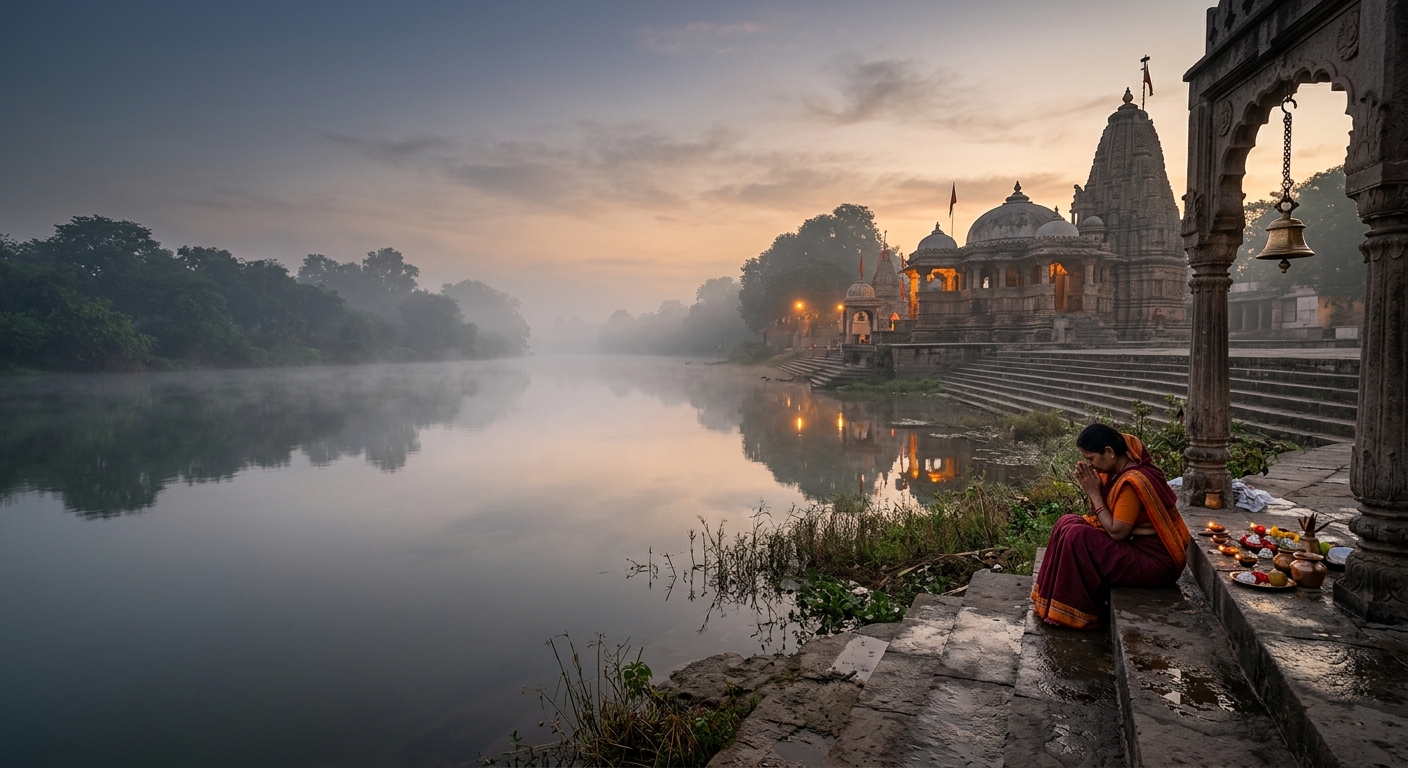
Most couples who visit Gujarat’s spiritual circuit miss Shamlaji entirely. It’s tucked away in Aravalli, about 130 kilometres from Ahmedabad, and the drive itself filters out the casual crowd. The temple sits on the bank of the Meshwo River, and unlike the big-name sites, you’ll actually find space to sit by the water without someone’s selfie stick in your frame.
The deity here is a black stone idol of Shamlaji, a form of Vishnu. But honestly, the temple architecture isn’t what makes this place stick with you. It’s the riverbank. Early mornings, before 8 AM, the water is still, the light is soft, and you can hear the temple bells from across the ghats. Ketan and I sat there for nearly an hour on our first visit, and not a single person asked us to move or tried to sell us prasad.
Timing matters here. Visit between October and February. Summers turn the riverbed into a dust bowl, and monsoons make the road from Ahmedabad a gamble. The temple is free to enter. Parking costs ₹20. If you’re driving from Pune, plan for an overnight stop in Ahmedabad — it’s a 700-kilometre stretch, and you don’t want to rush this one.
Taranga Hill Jain Temple
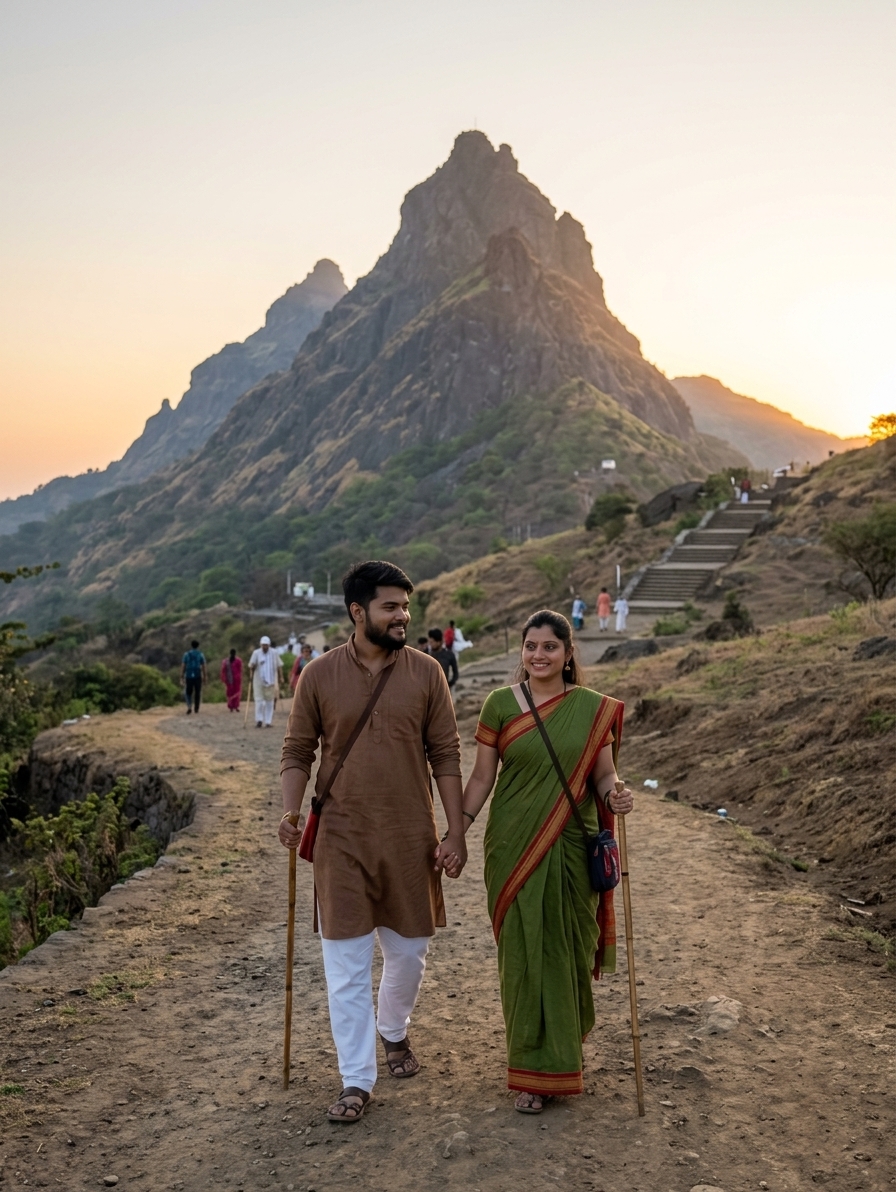
This one requires effort. Taranga Hill sits near Mehsana, about 120 kilometres from Ahmedabad, and the temple sits at the top of a 3000-step climb. Most people turn back after the first 500 steps. That’s exactly why couples who make it to the top get the place almost to themselves.
The temple is dedicated to Ajitnath, the second Jain Tirthankara, and the carvings inside are intricate — pillars, arches, ceiling work that feels impossibly detailed for a temple this remote. But the real reward is the view. From the top, you see the Aravalli range stretching out in every direction, and if you time it for late afternoon, the light turns the hills copper.
We made a mistake here. We visited in May. Don’t do that. The climb in summer heat is brutal, and there’s no shade past the halfway point. Go between November and February. Carry water — there’s one small shop at the base, but nothing reliable on the way up. Entry is free. The climb takes about 90 minutes at a comfortable pace. If you’re not used to stairs, your calves will remind you of this for two days.
Rani ki Vav to Sahastralinga Talav (Patan)
Rani ki Vav gets attention because it’s a UNESCO site. Fair enough — the stepwell is stunning, and the carvings deserve every bit of the recognition. But almost no one walks the extra kilometre to Sahastralinga Talav, a man-made reservoir from the 11th century that sits quietly on the edge of Patan town.
Sahastralinga Talav translates to “lake of a thousand lingas,” and the name isn’t an exaggeration. The base of the lake has hundreds of small Shiva lingas carved into the stone, most of them submerged now, but visible when the water level drops in winter. The place has an eerie calm to it. No hawkers, no crowds, just a wide open water body and ruins that make you wonder how something this significant got left off the tourist maps.
Visit Rani ki Vav first. It opens at 8 AM, and you’ll want to see it before the tour buses arrive around 10. Then walk to Sahastralinga Talav — it’s a 15-minute walk, and locals will point you in the right direction. Entry to Rani ki Vav is ₹40 for Indians. Sahastralinga Talav is free. The best months are December to February when the water is low and the carvings are partially exposed. If you’re driving from Ahmedabad, Patan is about 130 kilometres and makes for an easy day trip.
Gopi Talav (Dwarka Outskirts)
Everyone goes to Dwarka. Not everyone makes it to Gopi Talav, which sits about 5 kilometres outside the main temple area. The story behind it is rooted in Krishna lore — this is supposedly where the gopis tried to wash away their separation from Krishna. Whether you buy the mythology or not, the lake itself is peaceful, and the small temple complex around it feels almost forgotten.
The gopis’ story gives this place a romantic angle that most spiritual sites in Gujarat don’t really lean into. Couples visit, sit by the lake, and it’s one of the few places where holding hands or sitting close doesn’t draw stares. There’s something about the setting — old trees, still water, a handful of locals who come to feed the fish — that just works.
Avoid peak pilgrimage season. Janmashtami turns Dwarka into a logistical nightmare, and Gopi Talav gets crowded too. Visit between November and March. The lake is best in the early morning or late afternoon. Entry is free. Parking near the main Dwarka temple costs ₹50, and from there you can hire an auto to Gopi Talav for about ₹100 return.
Modhera Sun Temple and Stepwell
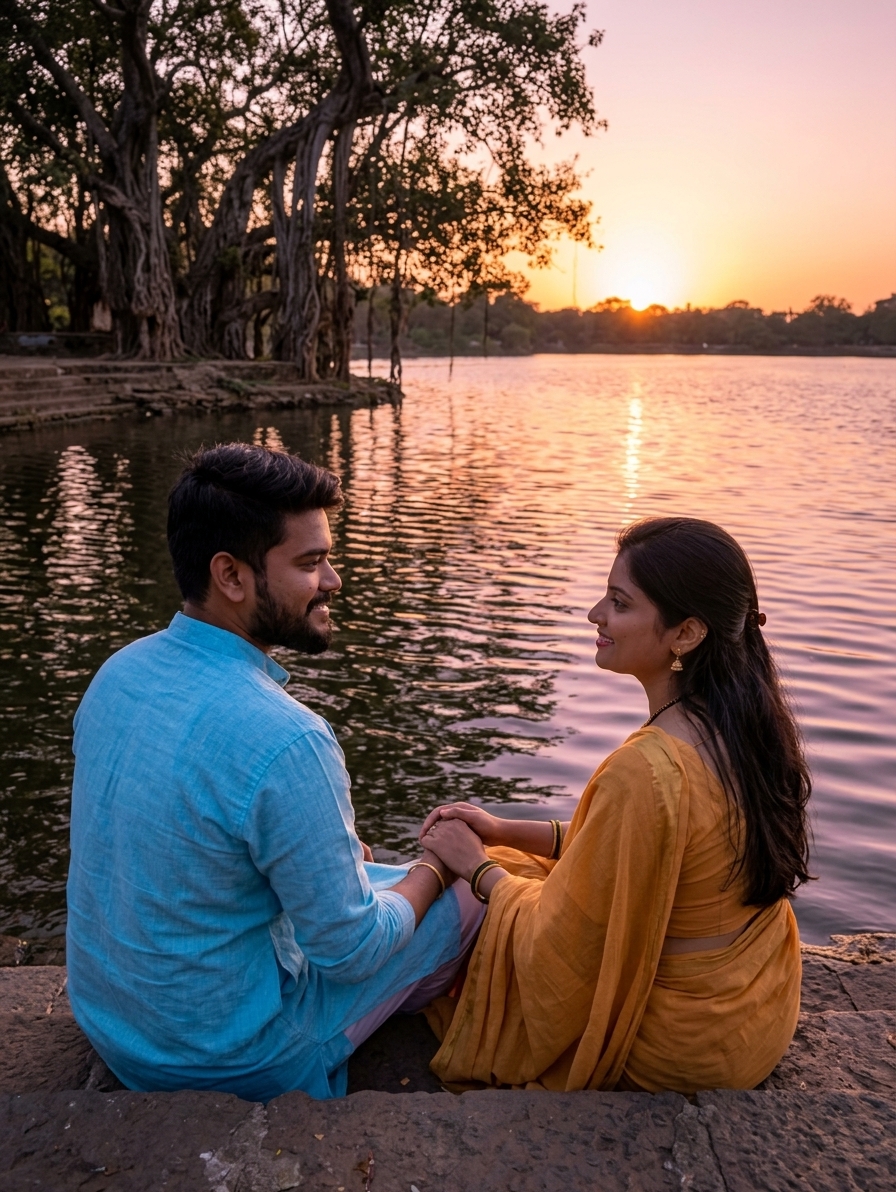
Modhera is famous, but not crowded. That’s a rare combination. The Sun Temple here was built in 1026, and unlike most spiritual sites in Gujarat, it’s not an active place of worship. It’s a monument now, which means you get the architecture without the chaos.
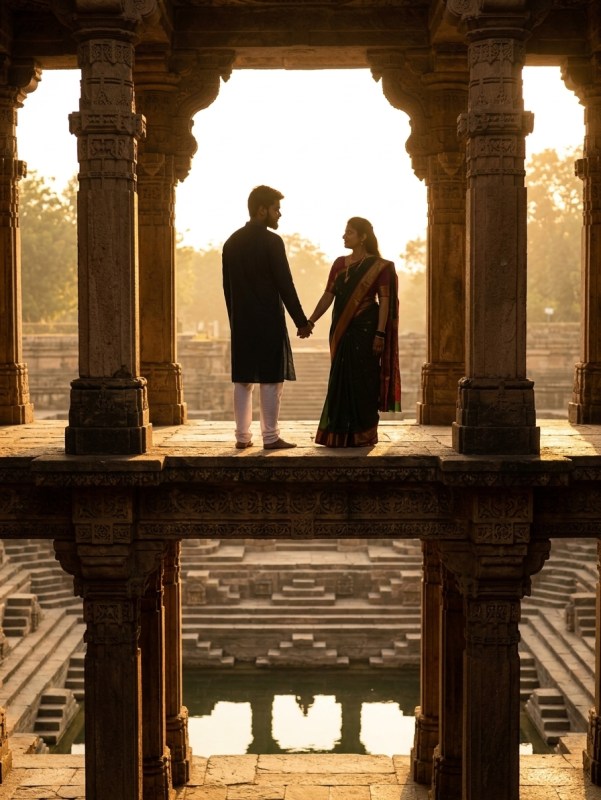
The temple faces east, designed so that the first rays of sunrise light up the sanctum during equinoxes. We timed our visit for winter solstice, and honestly, we got there too late to catch the exact moment, but even at 7:30 AM the way the light moves through the pillars is worth the early wake-up. The stepwell next to the temple — Surya Kund — is equally impressive, with symmetrical staircases and carved panels that somehow survived centuries of neglect.
This is a place where you can walk slowly, take your time, and not feel rushed. Most visitors finish their circuit in 30 minutes. Stay longer. Sit on the steps of the kund. Notice the details.
Entry is ₹25 for Indians. The site opens at 6 AM. Get there by 6:30 if you want it quiet. By 9 AM, school groups and tour buses arrive. Modhera is about 100 kilometres from Ahmedabad, and the roads are excellent. If you’re combining this with Patan, the two sites are about 50 kilometres apart — an easy two-destination day.
Bhavnath Mahadev Temple (Junagadh)
Bhavnath sits at the base of Girnar, one of Gujarat’s most important pilgrimage hills. Most people know Girnar for the 10,000-step climb to the Jain temples at the top. Fewer people spend time at Bhavnath itself, which is a mistake.
The temple is dedicated to Shiva, and during Mahashivratri the area transforms into a massive fair with sadhus, pilgrims, and traders. That’s not when you want to visit as a couple. Go in the off-season — September to November or January to March — and you’ll get the temple to yourself. The setting is dramatic. Girnar looms behind the temple, the Mrigi Kund (a small sacred pond) sits to the side, and the entire area has this raw, slightly wild energy to it.
We visited during the morning aarti in October. There were maybe eight people in the courtyard. The priest performed the ritual with the same intensity he probably brings during Mahashivratri, and the sound of the bells echoed off the hills. It felt personal in a way big temples rarely do.
Entry is free. If you’re planning to climb Girnar, start from Bhavnath — it’s the traditional route. The climb takes about 4-5 hours one way, and it’s genuinely tough. If you’re only visiting the temple, an hour is enough. Junagadh is about 100 kilometres from Rajkot and 330 kilometres from Ahmedabad. The drive from Ahmedabad takes about 5-6 hours, so plan for an overnight stay.
Becharaji Temple (Mehsana)
Becharaji is local. This isn’t a tourist temple. It’s where families from Mehsana and the surrounding villages come to fulfill vows, celebrate milestones, and seek blessings. The deity is Bahucharaji, a folk goddess with a devoted regional following, and the temple itself is modest — no grand architecture, no towering gopuram, just a simple shrine that feels lived-in.
What makes this place interesting for couples is the atmosphere. There’s no pressure to perform religiosity. You’re not expected to follow a specific ritual or hire a priest. You walk in, observe, and leave. The courtyard has a big open space where people sit, chat, and wait for the aarti. It’s less about the divine spectacle and more about being present.
The temple is busiest on weekends and during Navratri. If you want quiet, visit on a weekday morning. Entry is free. Parking is ₹20. Becharaji is about 100 kilometres from Ahmedabad, and the roads are decent. If you’re visiting Modhera or Patan, Becharaji is roughly on the same route — easy to combine into a two or three-stop day.
Frequently Asked Questions
Are these spiritual destinations suitable for non-religious couples?
Yes. Most of the places on this list work even if you’re not particularly religious. They’re quiet, scenic, and offer a break from the usual tourist crowds. Places like Sahastralinga Talav and Gopi Talav feel more like heritage sites or nature spots than active temples. You don’t need to participate in rituals to appreciate the setting.
What’s the best time to visit spiritual destinations in Gujarat?
November to February is ideal. The weather is cool, the roads are in good condition, and most temples see manageable crowds outside of major festival dates. Avoid May and June — the heat makes outdoor sites like Taranga Hill and Modhera almost unbearable.
Can we visit all seven destinations in one trip?
Not comfortably. These places are spread across Gujarat, and trying to cover all seven in one go will turn the trip into a checklist exercise. Pick three or four based on your route, and spend actual time at each. If you’re starting from Ahmedabad, Patan, Modhera, and Becharaji make a good cluster. From Rajkot or Junagadh, focus on Bhavnath and Gopi Talav.
Are these places safe and accessible for couples traveling alone?
Yes. We’ve traveled to each of these as a couple, often without a guide, and never felt unsafe. The roads are well-marked, locals are helpful, and most sites have basic facilities nearby. That said, carry your own water and snacks — small temple towns don’t always have reliable food options.
Plan Your Gujarat Spiritual Journey with Musafir Couple
We’ve spent years exploring Gujarat’s hidden corners, documenting the places that don’t make it to the glossy travel brochures. These seven destinations aren’t just spiritual — they’re personal, quiet, and real. If you’re planning a trip and want honest advice, route suggestions, or just want to know which places are actually worth the drive, reach out to us. We’re Ketan and Samprita from Musafir Couple, and we share real travel experiences, complete with costs, routes, and the kind of details that only come from actually being there. Follow our journey, ask questions, and let’s help you plan a Gujarat trip that’s more than just temple-hopping.


