

 by
by Kanyakumari Sunrise Experience
Kanyakumari Sunrise: Real Couple’s Honest Travel Guide
We’re Ketan and Samprita from Musafir Couple, and after chasing sunrises across India, the Kanyakumari sunrise experience genuinely surprised us—not always in the ways Instagram promised.
Most travel blogs tell you what time to wake up and which spot to stand at. Nobody mentions the 4 AM chaos outside hotels, the crowd politics at Sunrise Point, or that cloud cover can ruin everything and you’ll still feel it was worth the trip. Nobody talks about the locals who’ve watched a thousand tourists miss the actual magic while fighting for the “perfect” photo angle.
We drove from Pune to Kanyakumari in January 2025—2,100 kilometers of highway tolls, terrible roadside dhabas, and growing excitement. The sunrise was our main target. What we got was half what we expected and twice what we needed. That’s the Kanyakumari sunrise experience in one sentence.
The Crowd Reality at Sunrise Point Nobody Mentions
You’re not watching the sunrise alone. Accept that first.
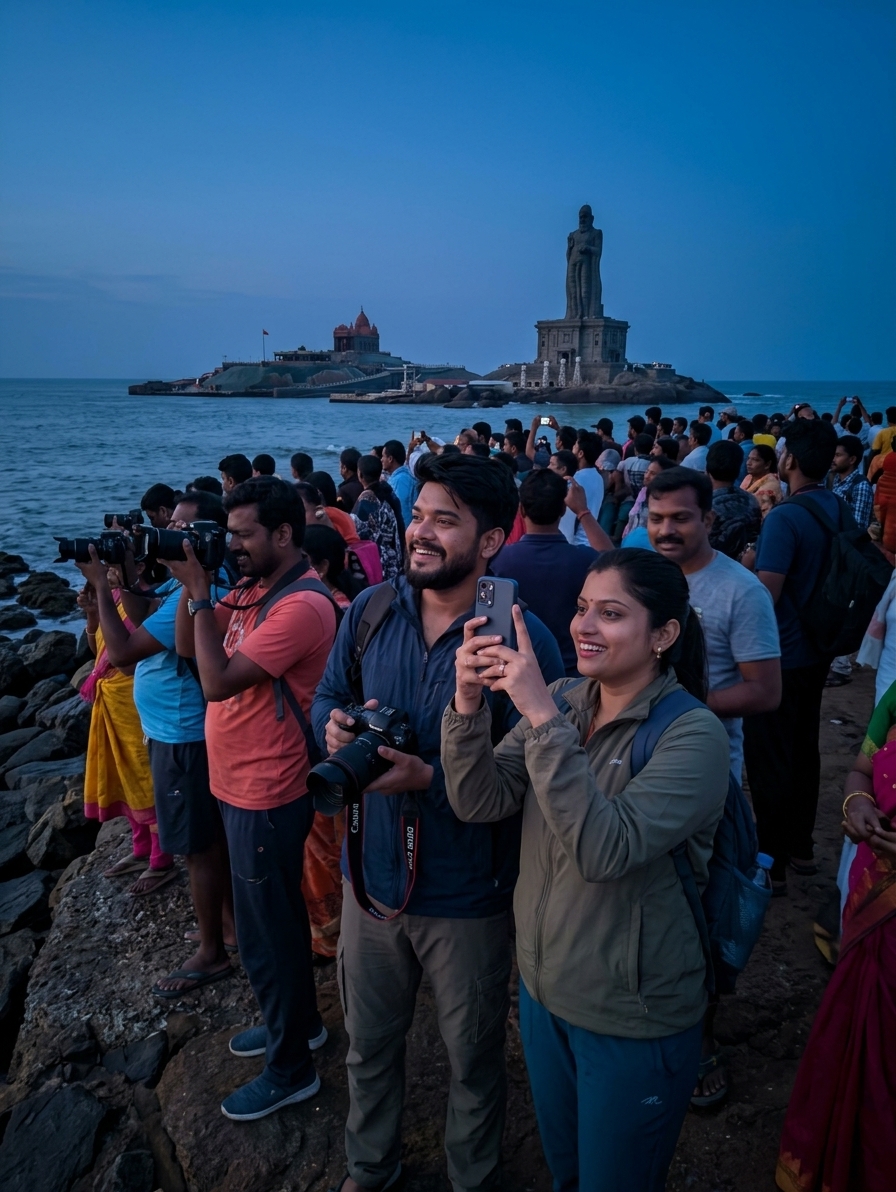
Between 5:30 AM and 6:15 AM, Sunrise Point at Kanyakumari transforms into a mosh pit disguised as a spiritual gathering. Couples, families, solo travelers, photography enthusiasts with tripods taller than children, selfie stick warriors—everyone’s there. The result? You’re standing shoulder-to-shoulder with 300 strangers, many of whom think their phone screen is more important than the actual horizon.
We arrived at 5:40 AM. Big mistake. Every decent vantage point was taken. The rocks closest to the water? Occupied since 5 AM by groups who’d brought flasks of chai and weren’t moving. The elevated platform? A gridlock of tourists trying to angle their cameras above other people’s heads.
Here’s what worked: we walked 200 meters south along the coastline, away from the official “point.” Found a small cluster of rocks, fewer people, better view. Still crowded, but breathable. The sunrise looks identical from there—the sun doesn’t care which rock you’re standing on.
Pro tip from our Kanyakumari travel tips vault: if you’re visiting during peak season—December to February or any long weekend—arrive by 5:15 AM, or skip Sunrise Point entirely and head to the Gandhi Mandapam terrace. Not many tourists realize you can watch from there. Clean view, almost no crowd, and you’re standing inside a monument with actual historical significance instead of jostling on slippery rocks.
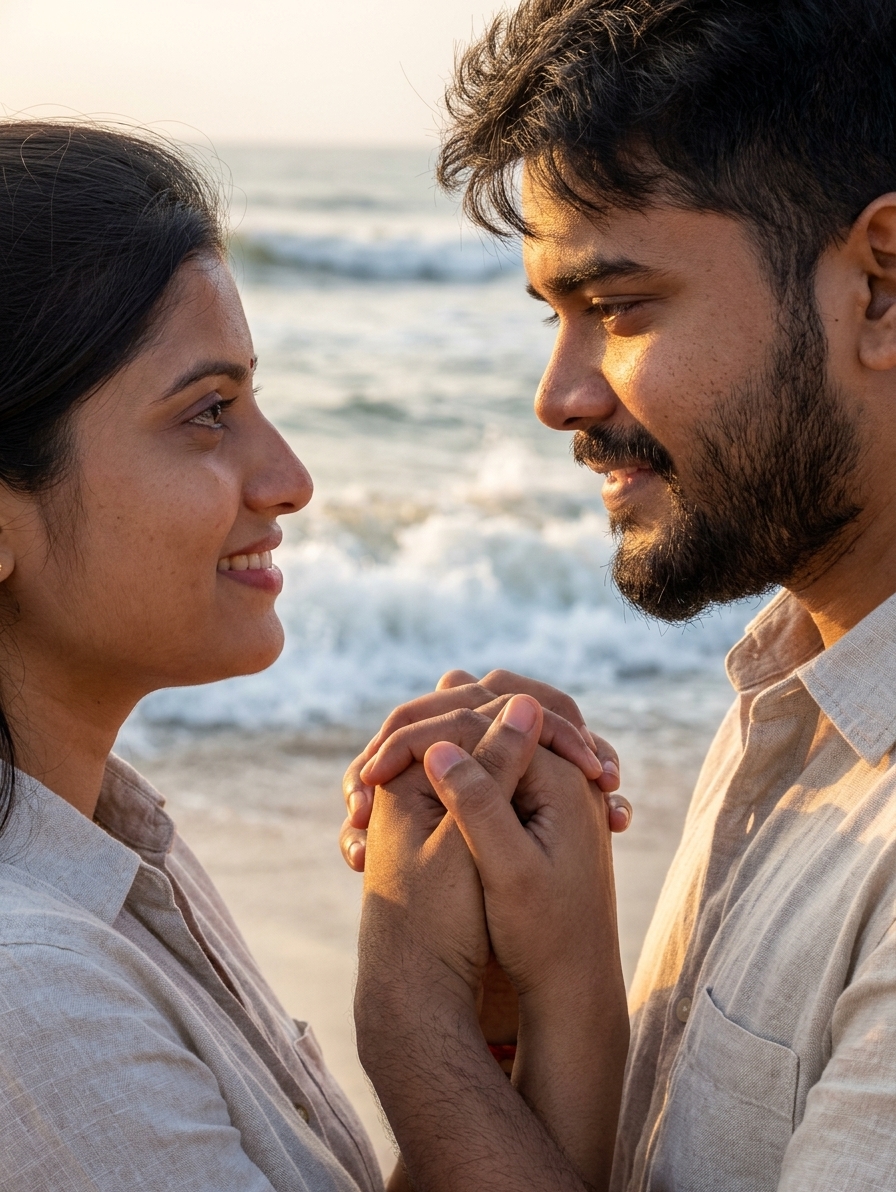
One honest truth about couple travel to Kanyakumari: this isn’t the romantic, hand-in-hand sunrise moment you’re picturing. It’s logistical. It’s crowded. It’s slightly chaotic. But if you let go of the Instagram fantasy and just watch the light change over three seas, it hits different. Samprita spent the first ten minutes annoyed at the crowd. By the time the sun actually broke the horizon, she’d forgotten everyone else existed.
Best Time to Visit Kanyakumari for Clear Sunrise Views
Cloud cover is your real enemy. Not crowds, not timings—clouds.
We visited in January. Locals told us we picked the worst month. “October to March,” they said, “is when clouds block the sunrise most often.” We didn’t believe them. We’d checked weather apps, read blogs, cross-referenced forecasts. Everything pointed to clear skies.
Morning of the sunrise? Thick cloud bank sitting right on the horizon. The sun rose somewhere behind it—we saw the sky turn gold and pink, saw the light spread, but the actual sun? Hidden until it climbed above the clouds around 6:35 AM. By then, half the crowd had left, disappointed.
But here’s the thing: even with cloud cover, the Kanyakumari sunrise experience delivered. The way the light changed the color of the water—from black to deep blue to shimmering silver—was more beautiful than the sun itself. The fishermen’s boats cutting through the early morning waves, the sound of the ocean against the rocks, the collective silence when the first rays broke through—you don’t get that from a postcard.
Best time to visit Kanyakumari if sunrise is non-negotiable? April to June. Summer months. Less rain, fewer clouds, hotter days. Most travelers avoid this period because of the heat, which means smaller crowds. The sunrise is clearer, more reliable. Downside: you’re walking on sand that’s already warm by 7 AM, and daytime sightseeing becomes a sweaty ordeal.
Monsoon—July to September—is a gamble. Rain, heavy clouds, unpredictable weather. But if you’re okay with the risk, the post-rain mornings are stunning. The air is clean, the colors are sharper, and there’s something raw about watching the sunrise with the possibility of rain on your back.
We learned this from a local tea vendor near the beach: “Tourists come for the sunrise photo. Locals come for the morning itself.” He’d watched the sunrise maybe 5,000 times in his life. He said some of the best ones had no visible sun at all—just light doing things light does when water and sky are the only witnesses.
Couple travel to Kanyakumari taught us this: if your entire trip depends on one perfect sunrise, you’re setting yourself up for disappointment. Plan for two mornings if possible. Give yourself a second chance.
The Actual Costs Nobody Breaks Down
Let’s talk money. Real numbers.
Parking near Sunrise Point: ₹50 for two-wheelers, ₹100 for cars. Unofficial guys will try to charge you ₹200—don’t pay it. Walk 100 meters further and you’ll find the official lot.
Entry to Gandhi Mandapam: free, but they’ll try to sell you flowers and offerings at the entrance. Politely decline unless you actually want them.
Hotel costs if you’re staying near the beach: ₹1,500 to ₹3,500 per night depending on the season and how close you want to be to the water. We stayed at a modest place called Sea View Lodge—₹1,800 per night, 5-minute walk to Sunrise Point, hot water worked exactly once. Kanyakumari isn’t a luxury destination unless you’re paying ₹6,000+ for a resort room.
Breakfast after the sunrise: ₹80 to ₹150 per person at local spots. The Saravana Bhavan near the temple serves solid South Indian breakfast—₹140 for two, unlimited filter coffee. Worth it.
Fuel from Pune to Kanyakumari (round trip): ₹12,000 for our sedan, including detours. Highway tolls: ₹2,400 one way, so budget ₹5,000 for tolls alone round trip. Nobody mentions this when they romanticize road trips.
Miscellaneous: bottled water, snacks, tips for parking attendants, random temple donations you’ll feel obligated to make—add another ₹500 to ₹800 to your budget.
Our total spend for a 3-day Kanyakumari trip, including the sunrise, all meals, accommodation, fuel, and tolls: ₹18,500. That’s for two people, mid-range choices, no splurging. If you’re doing this on a tight budget, you can shave ₹5,000 off by staying further from the beach and eating only at local joints.
One hidden cost: photography hustlers. Guys with DSLRs will offer to take your “professional” couple photos during the sunrise. They’ll click 50 shots, show you two good ones, and ask for ₹500. We said no. Use your phone. The lighting’s tricky anyway, and a DSLR won’t save a bad composition.
What to Actually Expect When the Sun Rises
You’ll feel cold. Sounds obvious, but at 5:30 AM by the ocean, it’s colder than you think. Carry a light jacket or shawl. We didn’t. Samprita shivered through the first 20 minutes.
The sky changes in phases. First, it’s pitch dark. Then a faint grey line appears where the water meets the horizon. Around 6 AM, the sky starts turning pale blue, then pink, then orange. The actual sunrise—the moment the sun’s edge breaks the horizon—happens fast. Maybe 90 seconds from first glimmer to full disc. If you blink, you miss the transition.
Everyone claps. It’s spontaneous and surprisingly moving. Strangers clapping for a sunrise they’ve traveled hundreds of kilometers to see. It feels communal in a country where travel often feels transactional.
The real Kanyakumari sunrise experience starts after most people leave. Between 6:30 and 7 AM, when the crowd thins, the beach becomes quieter. That’s when we walked along the shore, watched fishermen pull in their nets, saw the morning light settle on the Vivekananda Rock Memorial. That’s when Samprita said, “This is the part I’ll remember.”
You’ll also see trash. Plastic bottles, snack wrappers, disposable cups. The municipality cleans it up by 8 AM, but early morning reveals how little some tourists care about the places they visit. Carry a bag, collect your own waste, don’t add to it.
Photos will be mediocre unless you know what you’re doing. Smartphone cameras struggle with low light and high contrast. The sun will either blow out your exposure or turn everything else into silhouettes. We got maybe 3 usable photos out of 50 attempts. That’s fine. Some moments aren’t meant to be captured, just witnessed.
One thing surprised us: how emotional it felt. We’re not particularly sentimental travelers. But standing at the southern tip of India, watching the day begin over three seas, holding hands while 300 strangers did the same thing nearby—it mattered. Not in a Facebook post way. In a “we drove 2,000 kilometers and we’d do it again” way.
Where to Actually Stay for Easy Sunrise Access
Proximity matters. Waking up at 4:30 AM is hard enough—don’t make it harder with a 30-minute drive.
We recommend staying within a 10-minute walk of Sunrise Point. The hotels clustering around the beach road—Seaview, Sangam, Tri Sea, Sparsa—are your best bets. Prices range from ₹1,500 to ₹4,000 depending on season and view. None of them are fancy. You’re paying for location, not luxury.
If budget is tight, stay near the bus stand area—Hotel Narmada, Hotel Saravana—rooms start at ₹800 per night. You’ll need an auto to reach the beach (₹50 at 5 AM), but it’s doable. Just book the auto the night before. Early morning autos are rare.
One lesson from multiple Kanyakumari travel tips forums that actually proved true: avoid the hotels with “sea view” in the name unless you’ve seen recent photos. Half of them have a “sea view” that requires leaning out the window at a 45-degree angle and squinting past a construction site.
Best romantic sunrise destinations India lists always include Kanyakumari, but the accommodations rarely match the hype. Manage your expectations. You’re here for the sunrise, the tip of India, the confluence of three seas. Your hotel is just a place to sleep for 5 hours before waking up in the dark.
If you want actual comfort, book the Hotel Sparsa or the TTDC Hotel Tamilnadu. Both are government-managed or reputable chains, rooms are clean, hot water is reliable, and they’re a 7-minute walk from Sunrise Point. We didn’t stay there—budget constraints—but we met a couple from Bangalore who did, and they had zero complaints.
One non-negotiable: confirm your check-out time. Some budget hotels have a strict 24-hour check-out policy. If you check in at 2 PM, you need to leave by 2 PM the next day. That’s a problem if you want to watch the sunrise, come back, nap, then explore the town. Negotiate a late check-out or an extra half-day rate when you book.
The Other Things Worth Doing Besides the Sunrise
Vivekananda Rock Memorial. You take a ferry—₹50 per person, runs from 7 AM to 4 PM. The ferry ride itself is worth it. Ten minutes on choppy water, spray hitting your face, the memorial growing larger as you approach. The rock is where Swami Vivekananda meditated in 1892 before heading to the West. The structure built on it is simple, clean, and offers 360-degree ocean views. We spent an hour there. Peaceful, grounding, no crowd pressure.
Thiruvalluvar Statue is on the adjacent rock. Same ferry, combined ticket. The statue is 133 feet tall, representing the 133 chapters of the Thirukkural, the ancient Tamil text. Impressive to see up close, though climbing up and around it in the heat can get exhausting.
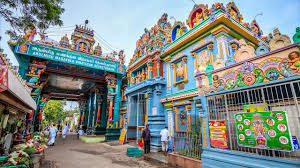
Kanyakumari Temple dedicated to the virgin goddess Kanyakumari. Situated right on the shore. Men need to remove their shirts before entering—bare-chested, dhoti or pants only. Women need to be modestly dressed. No photos allowed inside. The temple is small, perpetually crowded, but culturally significant. We went at 9 AM, spent 20 minutes inside, felt the energy of a place that’s been a pilgrimage site for centuries.
Gandhi Mandapam. Built where Mahatma Gandhi’s ashes were kept before immersion. The architecture is designed so that on his birthday—October 2—the sun’s rays fall exactly on the spot where the urn was placed. Even if you’re not particularly into history, the structure is beautiful and the view from the terrace is one of the best in Kanyakumari.
Sunset at the western shore. Yes, you can watch both sunrise and sunset in Kanyakumari. The sunset beach is less crowded, more relaxed. We went at 6 PM, sat on the sand, watched the sun dip into the Arabian Sea. Different vibe than the sunrise—less hype, more introspection.
Our honest Kanyakumari travel tips: if you only have one day, prioritize the sunrise and the Vivekananda Rock. If you have two days, add the temple and Gandhi Mandapam. Skip the wax museum and the aquarium unless you’re traveling with kids who need a distraction.
The Emotional Bit Nobody Talks About
Musafir Couple started because we wanted to document real travel—the confusion, the bargaining, the “this isn’t what we expected” moments. Kanyakumari gave us a different kind of real.
We expected the sunrise to be the highlight. It was, but not how we thought. The highlight wasn’t the sun breaking the horizon—it was Samprita turning to me at 6:05 AM and saying, “We’re at the bottom of the map.” It was realizing we’d driven the length of peninsular India to stand at the point where it ends. It was the strange satisfaction of reaching a geographical extreme just because we could.
Travel does that sometimes. The thing you plan for becomes secondary. The thing you didn’t expect—a conversation with a fisherman, the taste of fresh coconut water at dawn, the sound of temple bells mixing with ocean waves—that’s what sticks.
Couple travel to Kanyakumari taught us to care less about the photo and more about the feeling. We’re guilty of chasing content—vlogs, reels, YouTube thumbnails. But some mornings, you just put the camera down and watch. That’s what Kanyakumari asked of us.
Would we recommend the Kanyakumari sunrise experience? Absolutely. Would we tell you to manage your expectations, prepare for crowds, accept the possibility of clouds, and focus on the experience rather than the perfect shot? Also absolutely.
It’s not the best sunrise in India—we’ve seen more dramatic ones in Ladakh, quieter ones in the Andamans. But it’s the most meaningful geographically. You’re watching the day begin at the edge of the country. That resonance—that sense of standing at a threshold—makes it worth the 4 AM wake-up call.
Frequently Asked Questions
Is Kanyakumari sunrise better than sunset?
Different, not better. The sunrise is more crowded, more hyped, and requires an early wake-up. The sunset is quieter, more accessible, and lets you relax on the beach without the rush. If you can only pick one, choose based on your energy levels—sunrise for the full experience, sunset for ease.
What if it’s cloudy on the morning I visit?
It happens often, especially between November and March. The light show is still beautiful even if you don’t see the actual sun. Stay for the entire duration—clouds shift, and you might get lucky. If not, the experience of being there at dawn is still worth it.
Can I visit Vivekananda Rock during sunrise?
No, the ferry service starts at 7 AM. You’ll need to watch the sunrise first, then head to the rock. Plan for at least 2 hours for the rock and statue visit, including ferry wait times.
Is Kanyakumari safe for couples traveling alone?
Yes. We felt completely safe. The area is heavily tourist-focused, well-policed, and locals are used to couples visiting. Standard travel precautions apply—don’t leave valuables unattended, avoid isolated areas late at night—but overall, it’s one of the safer destinations in South India.
Reach the Tip of India with Musafir Couple
If you’re planning couple travel to Kanyakumari or any offbeat destination across India, follow Musafir Couple on YouTube and Instagram for real, unfiltered travel stories—no filters, no fake budgets, just honest experiences from two people discovering India one road trip at a time.
We share complete itineraries, actual costs, road conditions, and the kind of Kanyakumari travel tips you won’t find in generic listicles. Based in Pune, we’ve covered everything from hidden beaches in Goa to spiritual journeys across Gujarat, always with the same promise—if we recommend it, we’ve done it ourselves.
Planning your own sunrise trip? Drop us a message on Instagram @musafircouple or visit our website powered by Travelheal. We’ll share our exact route, hotel recommendations, and the mistakes we made so you don’t have to. Because the best time to visit Kanyakumari is when you stop waiting for perfect conditions and just go. The sunrise will meet you halfway.
Kanyakumari sunrise experience
Kanyakumari sunrise timing, couple travel to Kanyakumari, best time to visit Kanyakumari for sunrise, romantic sunrise destinations in India, Kanyakumari travel tips for couples