

 by
You’ve landed at Dabolim, driven past billboards for beach shacks, and spotted ten tour buses at Baga. That’s when it hits you — everyone’s here.
So where do you go when every main beach feels like Marine Drive on a Sunday? The real Goa isn’t gone. It’s just hiding. We’ve spent years road-tripping through Goa’s coastline — not for vlogs, but because we genuinely wanted to sit on a beach without elbowing strangers for sand space. What we found were stretches of coast that don’t make it to Google’s first page, beaches where you might be the only couple for hours, and coves that still feel like discovery instead of a destination.
This isn’t a list of “underrated” beaches that actually pull 200 people a day. These are the spots we’d tell a friend — the ones that take effort, where access isn’t perfect, and where you won’t find a beach shack every 50 meters. Some aren’t even signposted properly. And that’s exactly why they work.
Why Hidden Beaches in Goa Still Exist in 2026
Most travelers stick to what’s easy. Calangute’s got parking. Anjuna’s got the flea market. Palolem’s got the Instagram aesthetic. So that’s where the crowds pile up, season after season.
The offbeat goa beaches we’re covering aren’t hard to reach because they’re remote — Goa’s small enough that nothing’s truly remote. They’re quiet because they require intention. A 20-minute walk from the road. A bumpy internal lane that Google Maps half-abandons. A boat ride that isn’t always running. The effort filters people out, and what you get is the Goa that existed before package tourism rewrote the coastline.
We’ve seen this firsthand. On a December morning, we walked into Butterfly Beach expecting at least a handful of other travelers. We were alone for 90 minutes. No seller, no shack, no Bluetooth speaker. Just us, the cliffs, and a shoreline that felt unbroken. That doesn’t happen at Baga. It happens here because most people won’t walk 15 minutes when they can park at Palolem instead.
Cola Beach – Sweet Water Lagoon Meets the Arabian Sea
Cola Beach isn’t one beach. It’s two.
There’s the main shoreline — clean sand, decent waves, a handful of bamboo huts on the hillside. And then there’s the lagoon, separated by a narrow stretch of sand, where a freshwater stream pools before spilling into the sea. You can swim in both within five minutes of each other, and the lagoon’s so calm it feels like a private backwater.
Getting there takes commitment. The access road from the main Canacona–Agonda route is rough — deep ruts, loose gravel, sections where you’ll slow to walking pace if you’re in a sedan. We made it in a hatchback, but we also scraped the underbelly twice. A two-wheeler handles it better. If you’re not comfortable driving it, park at the top and walk the last stretch. It’s steep, but short.
Cola’s not completely unknown — a few beach huts operate during season, and on weekends you might spot other couples. But compared to Palolem, just 15 minutes north, it’s a different planet. The lagoon especially stays quiet. Most visitors stick to the sea-facing side.
One honest note: the huts here aren’t luxe. They’re basic bamboo setups with shared bathrooms. If you’re expecting a resort vibe, this isn’t it. But if you want to wake up 50 meters from that lagoon with almost nobody around, it’s worth every bump on that road.
Kakolem Beach – The One You’ll Work For
Kakolem — also called Tiger Beach — is the kind of spot that separates casual beachgoers from people who actually want solitude.
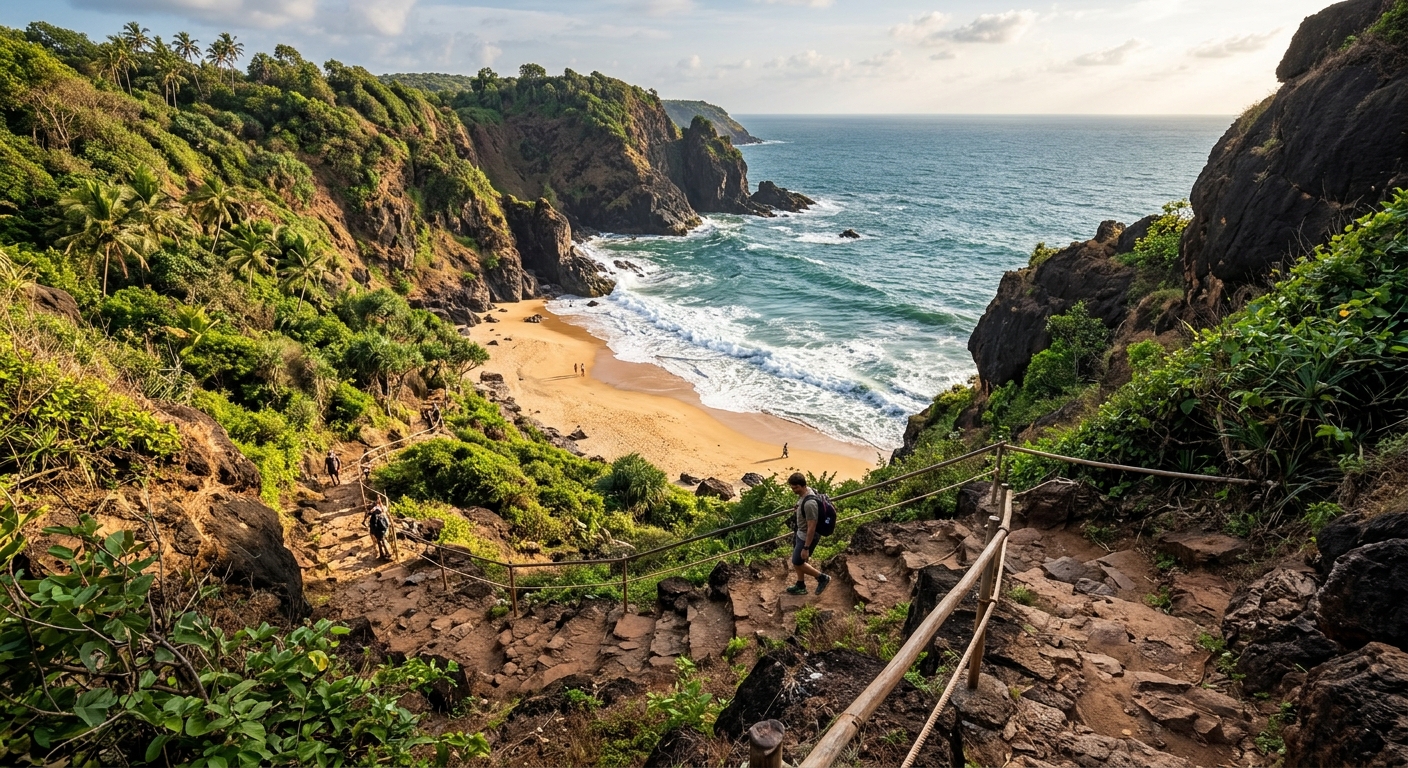
There’s no road to the beach. You park near Cabo de Rama Fort, ask a local where the trail starts (because it’s not marked), and then descend a steep, uneven path through dense scrub for about 20 minutes. The trail’s rocky, sometimes slippery if it’s rained recently, and there’s no railing or signage. You’re on your own.
When you reach the sand, you’ll understand why almost nobody’s there. It’s a small cove, hemmed in by rocky headlands on both sides, with dramatic cliffs rising behind. The water’s deep close to shore — this isn’t a paddling beach. Waves can get strong, especially in the afternoon. We’ve been twice, once in early morning and once around 4 p.m. Morning was calmer.
There’s no shack. No toilet. No freshwater tap. Bring everything you need — water, snacks, sunscreen — and carry your trash back up. The few people who make it here tend to respect that unspoken code, which is probably why it’s stayed clean.
Is it worth the climb? If you want a beach to yourself and you’re okay with zero infrastructure, yes. If you need convenience or aren’t comfortable with a steep descent and ascent in heat, skip it. We loved it, but we also turned back halfway the first time because Samprita’s sandals weren’t up to the task. Came back the next day in proper shoes. Lesson learned.
Butterfly Beach – The Boat-Access Beauty Near Palolem
Butterfly Beach sits between Palolem and Agonda, tucked into a curve of coastline that’s invisible from the main road. You can hike in — it’s about 40 minutes through forest and rocks from the Palolem end — but most people take a boat.
Local fishermen run quick trips from Palolem Beach. We paid ₹300 per person for a drop-and-pick service — they leave you there for two to three hours and come back at the agreed time. The boat ride itself is short, maybe 10 minutes, with decent views of the cliffs and forested hillside that back the beach.
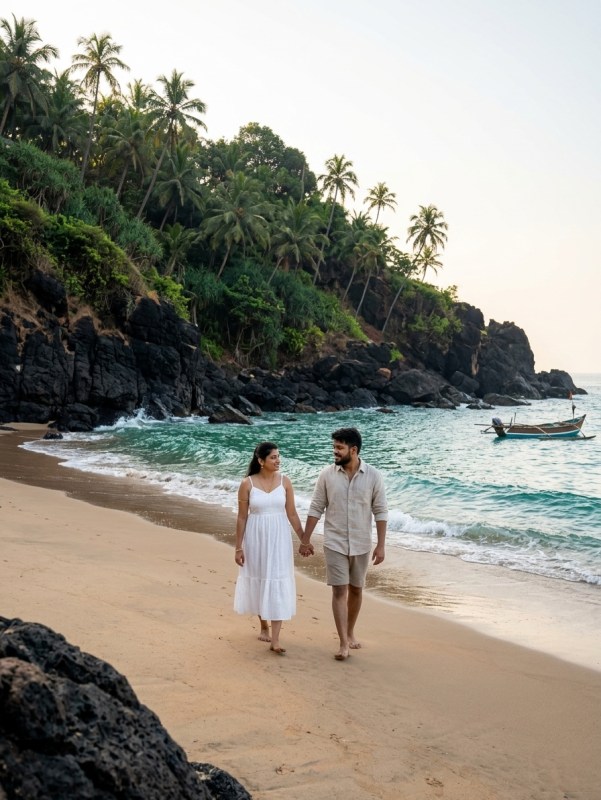
The beach is small — a crescent of sand maybe 150 meters long, bordered by rocks and greenery. The name comes from the butterflies that apparently gather here in certain months, though we didn’t see swarms when we visited in January. What we did see: clean sand, gentle waves, and maybe eight other people spread across the entire stretch.
There’s one small shack that serves basics — chai, Maggi, cold drinks. It’s not a full menu, and it’s not always open. Don’t count on a meal. The real draw here is the setting. It feels enclosed, almost private, like a beach that was designed for couples who just want to sit and talk without a crowd three meters away.
One thing to watch: departure times. The boatmen will tell you when they’re coming back, but stick to it. If you miss the return trip, the hike out isn’t fun in afternoon heat. We’ve heard of people getting stuck and having to negotiate a separate pickup at a markup. Confirm the return timing twice.
Hollant Beach – The Rocky Cove Near Bogmalo
Hollant isn’t a classic Goa beach. It’s a small rocky cove backed by the Western Ghats, more dramatic than pretty, and almost nobody goes there because Bogmalo — the bigger, sandier beach — is a two-minute drive away.
Access is through a narrow path that starts near the Naval Aviation Museum. You’ll see a gap in the vegetation and a dirt trail heading down toward the water. Follow it for about five minutes, scrambling over a few rocks at the end, and you’ll drop onto a small stretch of sand framed by large boulders. The water’s clear but the seabed’s uneven — rocks, pebbles, patches of sand. Not ideal for long swims.
We came here on a Wednesday morning and had the entire cove to ourselves for over an hour. Eventually, one other couple showed up. That’s typical. Hollant doesn’t pull crowds because it’s not comfortable. There’s no shade unless you sit against the rocks, no food, no facilities. It’s raw coastline.
But if you’re in South Goa, based near Vasco or Bogmalo, and you want a 20-minute escape that feels nothing like the main beaches, Hollant delivers. It’s more about the landscape than the beach experience — cliffs, rocks, isolation. Bring water and a hat. Don’t expect comfort.
Kalacha Beach and Sweet Water Lake – Arambol’s Quieter Neighbour
Kalacha sits just beyond Arambol’s main beach, separated by a rocky headland. Most people stop at Arambol, which has gotten busier every year. Kalacha stays quieter because it takes a 20-minute walk along the coast to reach it — and the path isn’t always easy.
You start at the northern end of Arambol Beach and walk along the shoreline, then over rocks, sometimes through shallow water depending on the tide. Wear sandals you’re okay getting wet. The trail’s manageable, but it’s not a paved walkway.
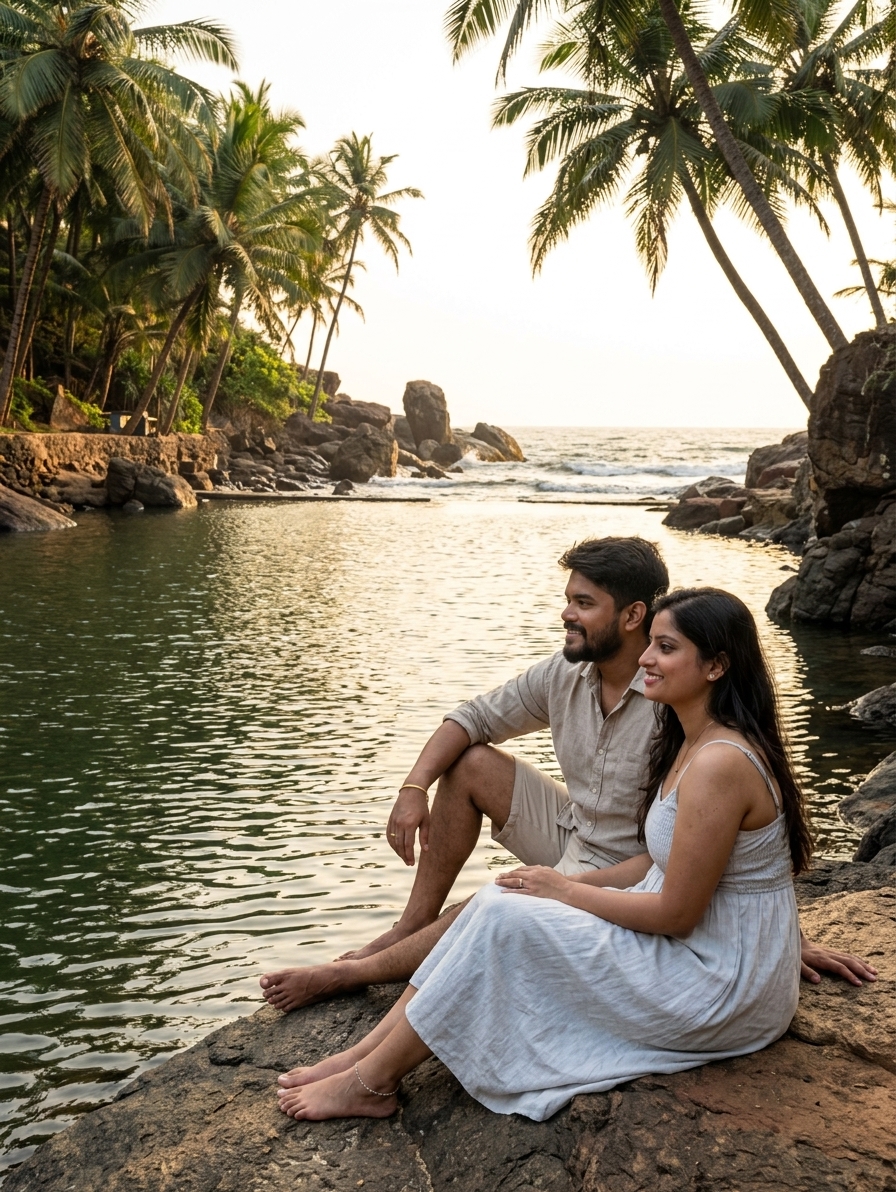
What makes Kalacha special is the freshwater lake — locals call it Sweet Water Lake — that sits just behind the beach, fed by a spring. It’s small, shallow enough to wade through, and surrounded by palms and low vegetation. In the late afternoon, the lake turns golden in the slanting light. We sat there for an hour just watching the colour shift. No photo does it justice.
Kalacha Beach itself is a decent stretch of sand, much less developed than Arambol. There’s usually one small shack serving snacks and drinks, but it’s low-key. The crowd here tends to be backpackers, long-term travelers, and the occasional couple who’ve heard about the lake. It’s not a party beach. It’s the kind of place where people read books and nap in hammocks.
Timing matters. Go in the late afternoon if you want the lake at its best light. Go early morning if you want the beach nearly empty. Midday can get warm with limited natural shade — the lake area has some cover, but the beach is exposed.
Velsao, Cansaulim, and Arossim – The Overlooked South Goa Stretch
These three beaches — Velsao, Cansaulim, and Arossim — run almost back-to-back along a quiet stretch of South Goa coastline between Bogmalo and Majorda. They’re not hidden in the trekking sense. They’re hidden because they’re stuck between bigger names and most tourists skip right past them.
Velsao is the northernmost. Long, wide, clean sand, barely any commercial activity. A few beach shacks operate during season, but nothing overwhelming. The shoreline’s flat, the water’s calm most of the year, and you can walk the length of it without seeing more than a handful of people. We’ve been here on a Saturday in peak season and still found space to spread out.
Cansaulim is similar — slightly shorter, quieter still. There’s a small church near the beach access, and a couple of local shacks. It’s popular with a few expats and long-term visitors who stay in private villas nearby, but day tourists rarely come. The water’s cleaner than Calangute, the sand’s softer, and there’s zero hustle.
Arossim borders a couple of high-end resorts, so the southern stretch sees resort guests. But the northern part, closer to Cansaulim, stays open and quiet. The three beaches blend into each other — you can walk from one to the next along the sand without obstruction.
Why they stay quiet: no nightlife, no flea markets, no famous shacks. If you want Goa for the beach and nothing else, this stretch is ideal. If you’re looking for “things to do,” you’ll be bored in half a day.
How to Actually Find These Secret Beaches Goa Without Getting Lost
Google Maps will get you close, but not all the way. For beaches like Kakolem, Hollant, and Kalacha, the last stretch is either unmarked or requires local knowledge.
Here’s what worked for us. When you’re within a kilometre or two, stop and ask. Locals know the trails, and they’ll point you in the right direction — sometimes they’ll even walk with you to the trailhead. We’ve had shop owners, bike mechanics, and random uncles give us better directions than any app.
For boat-access spots like Butterfly Beach, talk to the boatmen directly on Palolem Beach. Don’t book through a middleman or a tour operator — you’ll pay double. Walk up to the boats in the morning, ask the rate, confirm the return time, and settle it face-to-face.
Timing affects access. Some trails get overgrown or muddy during monsoon. Some beaches are difficult to reach at high tide. We’ve learned to check tide timings before heading out — a free tide app saves you from turning up to a beach that’s underwater or inaccessible.
Pack light but pack smart. Water, a hat, sunscreen, and a small towel are non-negotiables. For the beaches with no facilities, carry snacks. Don’t expect to buy anything on-site. And carry a bag for your trash — there’s no sweeper coming.
When’s the Best Time to Visit the Unexplored Goa Coastline
November to February is the obvious answer — weather’s perfect, water’s calm, and even the hidden beaches see a trickle of visitors. But we’ve found that March and early April work just as well, sometimes better. The crowds thin out after Holi, prices drop, and the beaches that were “discovered” in December go quiet again.
Monsoon — June to September — is tricky. Some of these beaches become dangerous. Waves get rough, trails turn slippery, and boat services stop. Kakolem and Butterfly Beach are not accessible safely during peak monsoon. Cola’s lagoon might flood. If you’re visiting in monsoon, stick to the easier beaches like Velsao or Arossim where access doesn’t depend on trails or boats.
October’s a wildcard. Early October still sees some tail-end rains. Late October — post-Diwali — is beautiful. The landscape’s green, the air’s fresh, and tourist season hasn’t fully kicked in yet. We’ve had some of our best Goa trips in late October. The only downside: some shacks and huts haven’t fully opened yet.
Weekdays always beat weekends. Even the hidden beaches in goa see a small weekend bump, especially if they’re within an hour of Panjim or Margao. A Tuesday morning at Kalacha or Cola feels emptier than a Sunday afternoon.
Why Musafir Couple Keeps Coming Back to Goa’s Hidden Corners
Goa’s easy to write off as “over.” We’ve heard that take a hundred times. And yeah, if you only see Baga and Calangute, you’d believe it.
But the quieter coastline is still there. It hasn’t disappeared — it’s just stopped announcing itself. The beaches we’ve covered here aren’t Instagram-perfect. Some are rocky. Some require effort. A few don’t even have a shack. But they give you what the main beaches can’t anymore: space, silence, and that feeling of finding something instead of following a crowd to it.
Ketan and I have been documenting travel across India since we started Musafir Couple, and Goa remains one of the few places where you can still genuinely explore — not because it’s remote, but because most people stop looking after the first search result. The couple of hours we spent at Kakolem, the morning we had Butterfly Beach to ourselves, that late afternoon glow at Sweet Water Lake — those weren’t accidents. They happened because we drove past the main beaches and kept going.
Goa’s changed, no question. But if you’re willing to walk 20 minutes, take a boat, or drive down a road that Google marks in pale yellow, you’ll still find the version of Goa that feels like it’s just yours.
Frequently Asked Questions
Which is the least crowded beach in Goa in 2026?
Kakolem Beach remains one of the least crowded because it requires a steep 20-minute trek with no road access, which filters out most tourists. Cola Beach’s lagoon section and Hollant Beach near Bogmalo also see very few visitors throughout the year due to rough access roads and minimal facilities.
Are hidden beaches in Goa safe for couples?
Yes, the beaches covered here are generally safe during daytime. We’ve visited all of them as a couple without issues. That said, avoid isolated beaches after sunset, carry a fully charged phone, inform someone of your location, and for beaches like Kakolem or Butterfly Beach, go during morning or early afternoon when other travelers are more likely to be around.
Can you reach secret beaches in Goa without a vehicle?
Some, yes — but it’s harder. Butterfly Beach is reachable by boat from Palolem. Kalacha is a walk from Arambol. But beaches like Cola, Kakolem, and Hollant require either your own two-wheeler, a rented scooter, or a hired cab willing to take rough internal roads. Public transport won’t get you to the trailheads.
Do hidden beaches in Goa have food and water available?
Most don’t. Butterfly Beach has one small seasonal shack. Kalacha has limited snack options. Cola has a couple of beach huts. But Kakolem, Hollant, and the Velsao–Cansaulim–Arossim stretch have either no facilities or very minimal ones. Always carry your own drinking water, snacks, and sunscreen when heading to offbeat goa beaches.
Visit Goa’s Hidden Coastline with Musafir Couple
If you want the real Goa — the one that doesn’t show up on every travel listicle — these beaches are where you start. They’re not polished. They’re not easy. But they’re still worth it.
Musafir Couple documents honest, unfiltered travel across India, with a focus on hidden gems, real costs, and practical routes. We’re Ketan and Samprita, and we share what actually worked — and what didn’t — so you can travel smarter. Follow us for more offbeat destinations, road trip guides, and the kind of travel storytelling that skips the filters and gives you the truth.


